/


![123 In/at/on (position] 1](https://djvu.online/jpg3/1/i/8/1i8hARH4H29C7/257.webp)



Текст
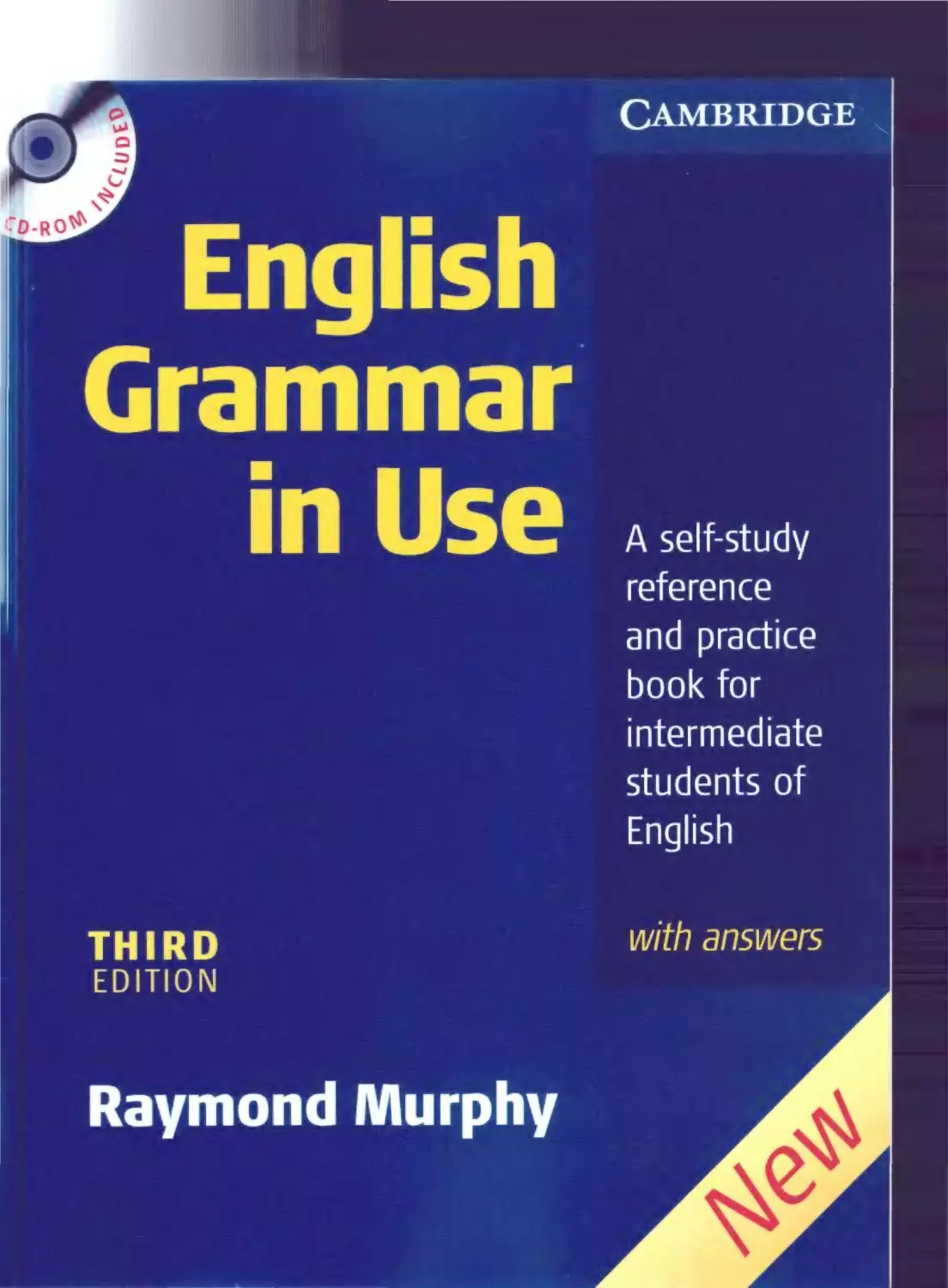
Cambridge
English
Grammar
in Use
A self-study
reference
and practice
book for
intermediate
students of
English
THIRD
EDITION
with answers
Raymond Murphy
English
Grammar
in Use
A self-study
reference
and practice
book for
intermediate
students of
English
with answers
THIRD
EDITION
Raymond Murphy
Cambridge
UNIVERSITY PRESS
CAMBRIDGE UNIVERSITY PRESS
Cambridge, New York, Melbourne, Madrid, Cape Town, Singapore, Sao Paulo
Cambridge University Press
The Edinburgh Building, Cambridge CB2 2RU, UK
www.cambridge.org
Information on this title: www.cambridge.org/9780521532891
© Cambridge University Press 2004
This publication is in copyright. Subject to statutory exception
and to the provisions of relevant collective licensing agreements,
no reproduction of any part may take place without the written
permission of Cambridge University’ Press.
First published 2004
7th printing 2005
Printed in Singapore by KHL. Printing Co Pte Ltd
A catalogue record for this publication is available from the British Library
ISBN-13 978-0-521-53289-1 Edition with answers
ISBN-10 0-521-53289-2 Edition with answers
ISBN-13 978-0-521-53290-7 Edition without answers
ISBN-10 0-521-53290-6 Edition without answers
ISBN-13 978-0-521-53762-9 Edition with CD-ROM
ISBN-10 0-521-53762-2 Edition with CD-ROM
ISBN-13 978-0-521-84311-9 Hardback edition with CD-ROM
ISBN-10 0-521-84311-1 Hardback edition with CD-ROM
ISBN-13 978-3-12-534086-2 Klett edition with CD-ROM
ISBN-10 3-12-534086-1 Klett edition with CD-ROM
ISBN-13 978-3-12-534084-8 Klett edition
ISBN-10 3-12-534084-5 Klett edition
Contents
Thanks vii
To rhe student viii
To rhe teacher \
Present and past
I Present continuous (I am doing)
2 Present simple (I doi
3 Present continuous and present simple I lam doing and I do)
4 Present continuous and present simple 2 {I am doing and 1 do)
5 Past simple |I did)
6 Past continuous «1 was doing
Present perfect and past
Present perfect 1 (1 have done)
8 Present perfect 2 (I have done)
9 Present perfect continuous (I have been doingl
10 Present perfect continuous and simple (1 have been doing and I have done)
I 1 How long have you (been) ... ?
12 For and since When ... ? and How long ... ? •
13 Present perfect and past I if have done and I did)
14 Present perfect and past 2 ,1 have done and I did)
15 Pasr perfect (I had done)
I t> Pasr perfect continuous (1 had been doing)
1" Have got and have
18 Used to ।do)
Future
19 Present tenses (I am doing /1 doi tor rhe future
20 (I’m। going to idol
21 Will/shall 1
22 Will/shall 2
23 I will and I’m going v>
24 Will be doing and will have done
25 When I do I When I’ve done When and if
Moda Is
26 Can. could and (be) able to
2“ Could (do) and could have (done)
28 Must and can’t
29 Mav and might 1
30 May and might 2
31 Have to and must
32 Must mustn’t needn’t
33 Should 1
34 Should 2
35 Had better It’s rime ...
36 Would
3” CanCouldAXould you ... ? etc. Requests, offers, permission and invitations)
If and wish
38 If I do... and If I did...
39 If 1 knew ... I wish I knew ...
40 If I had known ... 1 wish I had known ...
41 Wish
Passive
42 Passive I (is done / was done)
43 Passive 2 (be done / been done / being done)
44 Passive 3
45 It is said that... He is said to ... He is supposed to ...
46 Have something done
Reported speech
47 Reported speech 1 (He said that ...)
48 Reported speech 2
Questions and auxiliary verbs
49 Questions I
50 Questions 2 (Do you know where ... ? / He asked me where ...)
51 Auxiliary verbs (have/do/can etc.) I think so I I hope so etc.
52 Question tags (do you? isn’t it? etc.)
-ing and the infinitive
53 Verb + -ing (enjoy doing / stop doing etc.)
54 Verb + to ... (decide to ... / forget to ... etc.)
55 Verb (+ object) + to ... (I want you to ... etc.)
56 Verb + -ing or to ... 1 (remember/regret etc.)
57 Verb + -ing or to ... 2 (try/need/help)
58 Verb + -mg or to ... 3 (like / would like etc.)
59 Prefer and would rather
60 Preposition (in/for/about etc.) + -ing
61 Be/get used to something (I’m used to ...)
62 Verb + preposition + -ing (succeed in -ing I accuse somebody of -mg etc.)
63 Expressions + -mg
64 To ... , for ... and so that ... (purpose)
65 Adjective + to ...
66 To ... (afraid to do) and preposition + -ing (afraid of -mgi
67 See somebody do and see somebody doing
68 -ing clauses (Feeling tired. I went to bed early.)
Artic les and nouns
69 Countable and uncountable 1
70 Countable and uncountable 2
71 Countable nouns with a/an and some
72 А/an and the
73 The 1
74 The 2 (school / the school etc.)
75 The 3 (children / the children)
76 The 4 (the giraffe / the telephone I the piano etc., the + adjective)
77 Names with and without the 1
78 Names with and without the 2
“9 Singular and plural
80 \oun + noun a tennis ball / a headache
81 -4 (your sister’s name' and of ... (the name of rhe book)
Pronouns and determiners
82 MyseU7yourself7themselves etc.
83 X friend of mine My own house On my own / by myself
84 There ... and it ...
85 Some and any
86 No/none/any Nothing/nobody etc.
8“ Much, many, little, few. a lot. plenty
88 All / all of most / most of no / none of etc.
89 Both / both of neither / neither of either / either of
90 All, every and whole
91 Each and every
Relative clauses
92 Relative clauses 1: clauses with who/that/which
93 Relative clauses 2: clauses with and without who/that/which
94 Relative clauses 3: whoseAvhom/where
95 Relative clauses 4: extra information clauses (11
96 Relative clauses 5: extra information clauses (2)
9~ -ing and -ed clauses (the woman talking to Tom, the boy injured in the accident)
Adjectives and adverbs
98 Adjectives ending in -ing and -ed bonng/bored etc.)
99 Adjectives: a nice new house, you look tired
100 Adjectives and adverbs 1 iquick/quicklyl
101 Adjectives and adverbs 2 (vvell/fast/late, hard/hardly}
102 So and such
10 3 Enough and too
104 Quite, pretty, rather and fairly
105 Comparison 1 (cheaper, more expensive etc.)
106 Comparison 2 (much better / anv better I better and better ' the sooner the better)
10“ Comparison 3 (as ... as I than)
108 Superlatives (the longest, the most enjoyable etc.)
109 Word order I: verb + object; place and time
110 Word order 2: adverbs with the verb
111 Still, yet and already Any more / anv longer / no longer
1 12 Even
Conjunctions and prepositions
113 Although I though / even though In spite of / despite
114 In case
115 Unless As long as Pros ided^providing
116 As (As I walked along the street ... / As I was hungry ...)
11" Like and as
118 As if / as though / like
119 For. during and while
120 By and until By the time ...
Prepositions
121 At/on/in (time)
122 On time and m time At the end and in the end
123 In/at/on (position) I
124 In/at/on (position) 2
125 In/at/on (position) 3
126 To/at/in/into
127
128
129
130
131
132
133
134
135
136
In/at/on (other uses)
By
Noun + preposition (reason for, cause of etc-.)
Adjective + preposition 1
Adjective + preposition 2
Verb + preposition 1
Verb + preposition 2
Verb + preposition 3
Verb + preposition 4
Verb + preposition 5
to and at
about/for/of/after
about and of
of/for/from/on
in/into/with/to/on
Phrasal verbs
137 Phrasal verbs 1 Introduction
138 Phrasal verbs 2 in/out
139 Phrasal verbs 3 out
140 Phrasal verbs 4 on/off ( 1)
141 Phrasal verbs 5 on/off (2)
142 Phrasal verbs 6 up/down
143 Phrasal verbs 7 up (1)
144 Phrasal verbs 8 up (2)
145 Phrasal verbs 9 away/back
Appendix 1
Appendix 2
Appendix 3
Appendix 4
Appendix 5
Appendix 6
Appendix 7
Regular and irregular verbs 292
Present and past tenses 294
File future 295
Modal verbs (can/could/will/would etc.) 296
Short forms (Гт I you’ve I didn r etc.) 297
Spelling 298
American English 300
Additional exercises 302
Study guide 326
Key to Exercises 336
Key to Additional exercises 368
Key to Study guide 372
Index 373
Thanks
1 wrote rhe original edition of English Grammar in Use when 1 was a teacher ar rhe Swan
School of English, Oxford. I would like to repeat my thanks to my colleagues and students at
the school for their help, encouragement and interest at that time.
More recently I would like to thank all the teachers and students I met and who offered their
thoughts on the previous edition. It was fun to meet you all and extremely helpful for me.
Regarding the production of this third edition, I am grateful to Alison Sharpe, Liz Driscoll,
Jane Mairs and Kamae Design. I would also like to thank Cambridge University Press for
permission to access the Cambridge International Corpus.
Thank you also to the following illustrators: Paul Fellows, Gillian Marrin, Roger Penwill,
Lisa Smith and Simon Williams.
This book is for students who wain help with English grammar. It is written for you to use
without a teacher.
The book will be useful for you if you are not sure of the answers to questions like these:
□ What is the difference between I did and I have done?
□ When do we use will for the future?
□ What is the structure after / wish?
□ When do we say used to du and w hen do we say used to doing?
□ When do we use the?
□ What is the difference between like and as?
These and many other points of English grammar are explained in rhe book and there are
exercises on each point.
Level
The book is intended mainly for intermediate students (students who have already studied rhe
basic grammar of English). It concentrates on those structures which intermediate students want
to use, but which often cause difficulty. Some advanced students who have problems with
grammar will also find rhe book useful.
The book is not suitable for elementary learners.
How the book is organised
1 here are 14,5 units in rhe book. Each unit concentrates on a particular point of grammar. Some
problems (for example, the present perfect or rhe use of the) are covered in more rhan one unit.
For a list of units, see the Contents at rhe beginning of rhe book.
Each unit consists of two facing pages. On rhe left there are explanations and examples; on rhe
right there are exercises. At the back of the book there is a ke\ tor vou to check your answers
to rhe exercises (page 336).
There are also seven Appendices ar rhe back of rhe book ipages 292-301). These include
irregular verbs, summaries of verb forms, spelling and American English.
Finally, there is a detailed Index ar rhe back of the book (page 373).
How to use the book
The units are not in order of difficulty so it is not intended that you work through the book
from beginning to end. Every learner has different problems and \ ou should use this book to
help you with the grammar that yon find difficult.
Ir is suggested that you work in this way:
□ Use the Contents and/or Index ro find which unit deals with the point you are interested in.
If you are not sure which units you need ro study, use rhe Study guide on page 326.
□ Study rhe explanations and examples on the left-hand page of the unit you have chosen.
C Do rhe exercises on the right-hand page.
□ Check your answers with the Key.
□ If your answers are not correct, study rhe left-hand page again to see what went wrong.
You can of course use the book simply as a reference book without doing the exercises.
Additional exercises
At the back of rhe book there are Additional exercises (pages 302-325). These exercises bring
together some of rhe grammar points from a number of different units. For example. Exercise
16 brings together grammar points from Units 26-36. You can use these exercises for extra
practice after you have studied and practised the grammar in the units concerned.
CO Rom
The book is sold with or without a CD Rom. On the CD Rom you will find more exercises on
all the units (different from those in the book). There are also 1,700 test questions, and you can
use these to make your own tests. The CD Rom can also be bought separately.
ix
English Grammar in Use was written as a self-study grammar book, bur teachers may also hnd
it useful as additional course material in cases where further work on grammar is necessary.
1 he book will probably be most useful at middle- and upper- intermediate levels (where all or
nearly all of the material will be relevant), and can serve both as a basis for revision and as a
means for practising new structures. It will also be useful for some more advanced students who
have problems with grammar and need a book for reference and practice. I he book is not
intended to be used by elementary learners.
The units are organised m grammatical categories (Present and past. Articles and nouns.
Prepositions etc.). They are not ordered according to level of difficulty, so the book should not
be worked through from beginning to end. It should be used selectively and flexibly tn
accordance with the grammar syllabus being used and rhe difficulties students are having.
The book can be used for immediate consolidation or for later revision or remedial work. It
might be used by the whole class or by individual students needing extra help. The left-hand
pages (explanations and examples) are written for rhe student to use individually, bur they may
of course be used by rhe teacher as a source of ideas and information on which to base a lesson.
The student then has rhe left-hand page as a record of what has been taught and can refer to it
in the future. The exercises can be done individually, in class or as homework. Alternatively
(and additionally), individual students can be directed to study certain units of rhe book bv
themselves if they have particular difficulties not shared bv other students in their class. Don't
forget rhe Additional exercises at rhe back of rhe book (see To the student).
I he book is sold w'ith or without a CD Rom. This contains further exercises on all rhe units in
the book, as well as a bank of 1,700 test questions from which users can select to compile their
own rests. The CD Rom is also available separately.
An edition of English Grammar in Use without the Key is also available. Some teachers may
prefer this for use with rheir students.
English Grammar in Use Third Edition
This is a new edition of English Grammar in Use. The differences between this edition
and the second edition are:
□ There are eight new units on phrasal verbs (Units 138-145). There is also a new unit
on wish (Umi 41). Units 42-81 and 83-137 all have different numbers from the
second edition.
_i Some of the material has been revised or reorganised, and m most units there are
minor changes in the examples, explanations and exercises.
О The Additional exercises have been extended. The new exercises are 14-16, 25, 30-31,
and 37-41.
□ The book has been redesigned with new colour illustrations.
□ There is a new CD Rom with further exercises to accompany the book.
English
Grammar
in Use
Present continuous il am doing
Study this example situation:
Sarah is in her car. She is on her way to work.
She is driving to work.
This means: she is driving how, at the time of speaking.
The action is nor finished.
Am/is/are + -ing is rhe present continuous:
I am (= I’m)
driving
he/she/it is (= he’s etc.) working
we/you/they are (= we’re etc.) doing etc.
I am doing something = I'm in the middle of doing it; I've started doing it and 1 haven't
finished yet: ,
□ Please don’t make so much noise. I’m trying ro work, (not I trv)
□ 'Where's Mark?’ ‘He’s having a shower.’ (not He has a shower)
L Let's go our now. It isn't raining any more, (лог It doesn't rain)
□ (at a party) Hello, Jane. Are you enjoying the party? (not Do you enjoy)
L What’s all that noise? What’s going on? (= What's happening?)
I'he action is not necessarily happening at the time of speaking. For example:
Steve is talking to a friend on rhe phone. He says:
I’m reading a really good book at the moment,
It’s about a man who ..
Steve is not reading the book ar the rime ot speaking.
He means rhar he has starred it, bur has not finished it yer.
He is in rhe middle of reading it.
Some more examples:
□ Kate wants to work in Italy, so she’s learning Italian, (bur perhaps she isn't learning
Italian at rhe time of speaking)
□ Some friends of mine are building their own house. They hope to finish it next summer.
You can use the present continuous with today / this week I this year etc. (periods around now):
П A: You’re working hard today, (not You work hard today)
B: Yes, I have a lot to do.
□ The company I work for isn’t doing so well this year.
We use the present continuous when w'e talk about changes happening around now, especially
with these verbs:
get change become increase rise fall grow improve begin start
□ Is your English getting better? (not Does your English ger better)
□ The population of the world is increasing very fast, (not increases)
□ At first I didn't like my job, but I'm beginning to enjoy it now. (not I begin)
1.1 Complete the sentences with the following verbs m the correct form:
get happen look lose make start stay try work
I ‘You . 9 hard today ' ‘Yes, 1 have a lot to do.'
2 1 ....................... tor Christine. Do you know where she is?
3 Ir...................... .„. ... dark, bhall I turn on rhe light?
4 They don't have anyw here to Ine at the moment. I hey ... —...with friends
until they find somewhere.
5 Things are nor so good ar work. The company -------------- money.
6 Have you got an umbrella? It .... --- — to rain.
You............................a lot of noise. Can you be quieter? I-------------------------
to concentrate.
8 \\ hy are all these people here? V hat .— --- — —........... ?
1.2 Put the verb into the correct form. Sometimes you need the negative (I'm not doing etc.).
1 Please don't make so much noise. 1 m (try) to work.
2 Let's go out now. Ir * r i (rain) any more.
3 ^ou can turn off the radio. I ..... __ _______________(listen) to it.
4 Rate phoned me last night. She's on holiday in France. She ____ „.. ............ (have)
a great time and doesn't want to come back.
5 1 w’ant to lose weight, so this week I...... .„ _________(ear) lunch.
6 Andrew has just started evening classes. He______________ ___________ (learn) German.
Paul and Sally have had an argument. 1 hey _ _______________________(speak) to each other.
8 I — ................(get) tired. I need a rest.
9 Tim _. ........ (worki this week. He's on holiday.
1.3 Complete the conversations.
I A: 1 saw Brian a tew days ago.
B: Oh, did you? к * 3 these days? (what/he/do)
A: He's at university.
B: .... ........................ ? (what / he / study)
A: Psychology.
B: — ... ._ ........... it? (he / enjoy)
A: Yes, he say s it's a very good course.
2 A: Hi, Liz. How ---------------—----------------in your new job? (you / get on)
B: Nor bad. It wasn't so good at first, bur better
now. (things / get)
A: What about Jonathan? Is he OK?
B: Yes, but ..—--------- his work ar the moment, (he / not / enjoy)
He's been in rhe same job tor a long time and________________________________to ger
bored with it. ihe / begun
1.4 Complete the sentences using the following verbs:
begin change get increase rise
1 The population of the world k- very fast.
2 The world ... .......... .... . Things ne\er stay the same.
3 I he situation is already bad and ir______________._..______ W’orse.
4 I he cost of In ing ---------------- Every year things are more expensive.
5 I he w’eather _________to improve. The rain has stopped, and the wind isn’t
as strong.
Present simple (I do)
Study this example situation:
Alex is a bus driver, bur now he is in bed asleep.
Ile is not dm ing a bus. (He is asleep.)
but He drives a bus. i He is a bus dm er. i
Drive(s)/workts)/do(es' ere. is the present simple:
l/we/you/they drive/work/do etc.
he/she/it drives/works/does etc.
We use rhe present simple to talk about things in general. We use н to say that something
happens all the time or repeatedly, or that something is true in general:
□
□
□
Nurses look after patients in hospitals.
I usually go away at weekends.
The earth goes round the sun.
The cafe opens at 7.30 in the morning.
Remember:
1 work ... but He works ... They reach ... but My sister teaches ...
For spelling (-s or -es), see Appendix 6.
We use do/does to make questions and negative sentences:
do does l/we/you/they he/she/it work? drive? do?
work
I/we/you/rhey don’t drive do
he/she/it doesn’t
A
□
□
c
I come from Canada. Where do you come from?
I don’t go away very often.
What does this word mean? (not What means this word?)
Rice doesn’t grow in cold climates.
In the following examples, do is also rhe main verb (do you do I doesn’t do etc.):
□ ’What do you do?’ ‘I work m a shop.'
□ He’s always so lazy. He doesn’t do anything to help.
We use the present simple to say how often we do things;
□ 1 get up at 8 o’clock every morning.
□ How often do you go to rhe dentist?
□ Julie doesn’t drink tea very often.
□ Robert usually goes away two or three times a year.
E
I promise / I apologise etc.
Sometimes we do things by saying something. For example, when you promise to do something,
vou can say ‘1 promise ...’; when you suggest something, you can say T suggest ...’:
□ I promise 1 won’t be late, (not I'm promising)
□ ‘What do you suggest I do?’ ‘I suggest that you ..."
In the same way we say: 1 apologise ... 11 advise ... /1 insist ... /1 agree ... /1 refuse ... etc.
2.1 Complete the sentences using the following verbs:
causeis) connects) drinkis) live(s) open(s) -speakfs) take(s)
1 Tanya „.spcaJcs German very well.
2 I don't often ............ .....coffee.
3 The swimming pool _______ at "30 every morning.
4 Bad dn\mg.. ________ ... many accidents.
5 My parents__________ — . in a very small flat.
6 The Olympic Games ... place every four years.
7 The Panama Canal ... the Atlantic and Pacific oceans.
2.2 Put the verb into the correct form.
1 Julie drink . (not / drink) tea very often.
2 What time ........................................(the banks / close) here?
3 I’ve got a computer, but I________________________________________(not / use) it much.
4 ‘Where----------------------------------------(Martin / come) from?" ‘He’s Scottish.’
5 ‘What------------------------------------------(you / do)?’ ‘I’m an electrician.’
6 It______________________________________(take) me an hour to get to work. How long
-------------------------------------(it / take) you?
Look ar this sentence. What_______________________„_________________(this word / mean)?
8 David isn’t very fit. He........—______________________________(not / do) any sport.
2.3
Use the following verbs to complete the sentences. Sometimes you need the negative:
believe eat flow go -grow
1 The earth .....^round the sun.
2 Rice doesr. throve jn Britain.
3 The sun _____________________in the east.
4 Bees---------------------honey*.
5 Vegetarians---------------------meat.
6 An atheist_____________________in God.
make rise tell translate
7 An interpreter.................... from one
language into another.
8 Liars are people who.....................
the truth.
9 The River Amazon.......................
into the Atlantic Ocean.
2.4 You ask Liz questions about herself and her family. Write the questions.
1 You know that Liz plays tennis. You want ro know how often. Ask her.
How often ...........................„........................... ?
2 Perhaps I iz’s sister plays tennis too. You want to know. Ask Liz.
..........................your sister........................................... ?
3 You know rhai Liz reads a newspaper every day. You want to know which one. Ask her.
4 You know that Liz’s brother works. You want to know what he does. Ask I iz.
____________________________________________________________ >
5 You know that 1 iz goes to rhe cinema a lot. You want to know how often. Ask her.
5
6 You don't know where Liz’s grandparents live. You want ro know. Ask Liz.
э
2 5 Complete using the following;
1 apologise 1 insist 1 promise I recommend I suggest
1 It’s a nice dav. suggest we go out for a walk.
2 I won't tell anvbody what you said. _______________________
3 (in a restaurant) You mu^t let me pay for rhe meal. .......................
4 ............... ™ for what 1 did. It won’t happen again.
5 The new restaurant in Hill Street is very good......................it.
Present continuous and present simple 1
(I am doing and I do)
Compare:
Present continuous (I am doing)
We use rhe continuous for things happening
ar or around the time of speaking.
The action is nor complete.
I am doing
past now future
□ The water is boiling. Can you turn ir off?
□ Listen to those people. What language
are they speaking?
J Let’s go out. It isn’t raining now.
□ ‘I’m busy.’ ‘What arc you doing?'
□ I’m getting hungry. Let’s go and eat.
□ Kate wants to work in Italy, so she’s
learning Italian.
□ The population of the world is
increasing very fast.
We use rhe continuous for temporary
situations:
□ I’m living with some friends until I find
a place of my own.
□ A: You’re working hard today.
B: Yes, I have a lot to do.
See Unit 1 for more information.
Present simple (I do)
We use the simple for things in general or
things that happen repeatedly.
••------------------| do---------------------*
past now future
Water boils at 100 degrees Celsius.
Excuse me, do you speak English?
It doesn’t rain very much in summer.
What do you usually do at weekends?
С 1 always get hungry in the afternoon.
Most people learn to swim when they
are children.
□ Every day the population of the world
increases by about 200,000 people.
We use the simple for permanent situations:
My parents live in London. They have
hx ed there all their lives.
John isn't lazy. He works hard most of
rhe time.
See Unit 2 for more information.
I always do and I’m always doing
I always do (something) = I do it every time:
П 1 always go to work by car. [not I’m always going)
‘I’m always doing something’ has a different meaning. For example:
I've lost my pen .again. I'm
always losing things.
I’m always losing things = I lose things very often,
perhaps too often, or more often than normal.
Two more examples:
□ You’re always watching television. You should do something more active.
(= You watch television too often)
□ Tim is never satisfied. He’s always complaining. (= He complains too much)
3.1
Are the underlined verbs right or wrung? Correct them where necessary.
1 Water boils ar 100 degrees Celsius. ...Q&.....................-———
2 The water boils. Can you turn it off? ...^.„bpiung.............. .........
3 Look! That man tries to open rhe door of your car. ............_...............................
4 Can you hear those people? \X har do they talk about? .........................................
5 The moon goes round rhe earth in about 27 days. .................... „.......................„.
6 I must go now. It gers late. ..............-.......................
7 I usually go to work by car. ..................................-...
8 ‘Hurry up! It’s time to leave.' ‘OK, I come.' .......................................
9 I hear you've got a new job. How do you get on? ..................................................
10 Paul is never late. Hej always getting to work on rime...................................—.......
11 They don't get on well. They're always arguing. .......................................
3.2
Put the verb into the correct form, present continuous oi present simple.
1 Let’s go out. Ir .£111 ... (not I rain) now.
2 Juha is very good at languages. She .... (speak) four languages very well.
3 Hurry up! Everybody ........................(wait) for you.
4 ‘ ........... ............. (you I listen) to the radio?’ ‘No, you can turn it off.’
5 ........................_... (you / listen) to the radio every day?’ ‘No, just occasionally.’
6 The Ri\er Nile .....................(flow) into the Mediterranean.
7 I he river.......................(flow) very fast today - much faster than usual.
8 We usually ...................... igrow) vegetables in our garden, but this year we
................. _...........(not / grow) any.
9 A: How’s your English?
B: Nor bad. I think it ................... (improve) slowly.
10 Rachel is in London at the moment. She.........................(stay) ar rhe Park Hotel.
She always .......................(stay) there when she's in London.
1 1 Can we stop walking sHon? I ....................... (start) to feel tired.
12 A: Can you drive?
В: 1..................... (learn). My father.......................(teach) me.
13 Normally I ......................(finish) work ar five, but rhis week 1
....„................ (work) until six to earn a little more money.
14 My parenrs..... ..........(live) in Manchester. They were born there and have never
lived anywhere else. Where ................................... (your parents / live)?
15 Sonia.......'...............(look) for a place to live. She...................(stay) with
her sister until she finds somewhere.
16 A: What ....................................(your brother /do)?
B: He's an architect, but he ..........................— (not I work) ar the moment.
17 (at a party! I usually.._...................(enjoy) parties, but I —........................
mot / enjoy) rhis one very much.
3.3 Finish H‘s sentences. Use always -ing.
1 A: I've lost my pen again.
B: Not again! You re losing gour, pen
2 A: The car has broken down again.
B: Thar car is useless. It ......................
3 A: Look! You've made rhe same mistake again.
B: Oh no, nor again! I........................-..
4 A: Oh, I've forgotten my glasses again.
B: Typical! ............_........................
Present continuous and present simple 2
(I am doing and I do)
We use continuous forms for actions and happenings that have started bur not finished (they are
eating / it is raining etc.). Some verbs (for example, know and like) are nor normally used in this
way. We don’t say ‘1 am knowing' or ‘they are liking’; we say ‘I know*, ’they like'.
The following verbs are nor normally used in the present continuous:
like love hate want need prefer
know realise suppose mean understand believe remember
belong fit contain consist seem
[ ] I’m hungry. I want something to eat. (not Гт wanting)
t] Do you understand what I mean?
П Ann doesn’t seem very happy at the moment.
Think
When think means ‘believe’ or ‘have an opinion', we do not use the continuous:
□ I think Mary is Canadian, but Гт not sure, (not Гт thinking)
□ What do you think about my plan? (= What is your opinion?)
W'hen think means ‘consider’, rhe continuous is possible:
□ Гт thinking about what happened. 1 often think about it.
П Nicky is thinking of giving up her job. (= she is considering it)
He is selfish and He is being selfish
He’s being = He’s behaving / He’s acting. Compare:
□ I can’t understand why he’s being so selfish. He isn’t usually like that.
(being selfish = behaving selfishly ar rhe moment)
□ He never thinks about other people. He is very selfish, (not He is bemg)
(= He is selfish generally, not only at ihe.moment)
We use am/is/are being to say how somebody is behaving. It is nor usually possible in
other sentences:
□ It’s hot today, (not It is bemg hot)
□ Sarah is very tired, (not is bemg tired)
See hear smell taste
We normally use the present simple (not continuous) with rhese verbs:
□ Do you see that man over there? (not Are you seeing)
□ This room smells. Let’s open a window.
We often use can + see/hear/smell/taste:
□ I can hear a strange noise. Can you hear it?
Look feel
You can use rhe present simple or continuous ro say how somebody looks or feels now:
rj You look well today, or You’re looking well today.
□ How do you feel now? or How are you feeling now?
but
□ 1 usually feel tired in the morning, (not I'm usually feeling)
4.1 Are the underlined verbs right or wrong? Correct them where necessary.
I Nicky is thinking of giving up her job. .....QK.......................... -..................
2 Are you believing in God? ................-.................................
3 I'm feeling hungrx. Is there an\ thing to eat? ................................................
4 This sauce is great. It’s tasting really good..................................................
5 I’m thinking this is your key. Am I right? .................................-..................-
4.2 Use the words in brackets to make sentences. (You should also study Unit 3 before you do
this exercise.)
4.3 Put the verb into the correct form, present continuous or present simple.
I Are you hungry? .....£?.? 39.У. AOrt. (you / want) something to ear?
2 Don’t put the dictionary away. I....v......................(use) it.
3 Don't put the dictionary away. I..„.....................— (need) it.
4 Who is that man? \X hat...........................(he / want)?
5 Who is that man? Why ....................„........ (he I look) at us?
6 Alan says he's SO \ears old, but nobody ...................-.... (believe) him.
7 She told me her name, but I..........................I nor / remember) it now.
S I (think) of selling my car. Would you be interested in buying it?
4 I ............... ....... (think) you should sell \our car. You..........................
(nor / use) it very often.
10 Air ..........(consist) mainly oi nitrogen and oxygen.
4.4 Complete the sentences using the most suitable form of be. Sometimes you must use the simple
(am/is/are) and sometimes the continuous is more suitable (am/is/are being).
I I can t understand \\h\ ие ? .. so selfish. He isn't usually like that.
2 Sarah very nice to me at the moment. I wonder why.
3 You'll like Debbie when you meet her. She...............—......—....very nice.
4 You're usually very patient, so why .......................so unreasonable about waiting
ten more minutes?
5 XX’hx isn't Steve at work roda\ ? ......................ill?
Past simple I did)
Study this example:
Wolfgang Amadeus Mozart was an Austrian
musician and composer. He lived from 1"56 to
1791. He started composing ar the age of five
and wrote more than 600 pieces of music.
He w as on I) 35 years old when he died.
Lived/started/wrote/was/died are all past simple.
Very often the past simple ends m -ed (regular verbs):
□ 1 work in a travel agency now'. Before that I worked in a department store.
□ We invited them to our party, but rhey decided not to come.
□ The police stopped me on my way home last night.
□ Laura passed her examination because she studied very hard.
For spelling (stopped, studied etc.), see Appendix 6.
But many verbs are irregular. The past simple does not end in -ed. For example:
write —* wrote □ Mozart wrote more than 600 pieces of music.
see -» saw □ We saw Rose in town a few days ago.
go -* went □ 1 went to rhe cinema three rimes last week.
shut -* shut □ It was cold, so 1 shui the window.
For a list of irregular verbs, see Appendix 1.
In questions and negatives we use did/didn’r + infinitive (enjoy/see/go etc.):
1 enjoyed you enjoy?
e saw did she see?
Y went rhey go?
1 she rhev didn’t enjoy see go
□ A; Hid you go out last night?
B: Yes, 1 went to the cinema, but I didn't enjoy the film much.
□ ‘When did Mr Thomas die?’ ‘About ten years ago.'
□ They didn't invite her to the party, so she didn't go.
□ ‘Did you have time to write rhe letter?’ ‘No, I didn’t.’
In the following examples, do is the main verb in the sentence (did ... do / didn’t do):
Li Whar did you do ar rhe weekend? (not What did you at rhe weekend?)
□ 1 didn’t do anything, (not I didn't anything)
The past of be (am/is/are) is was/were:
l/he/she/ir was/wasn’t was I/he/she/ir?
we/you/they wcre/w eren Y were w'e/you/they?
Note that we do not use did in negatives and questions with was/were:
□ 1 was angry because they were late.
□ Vias rhe w'eather good when you were on holiday?
□ They weren’t able to come because rhev were so busy.
i. Did you go out last night or were you too tired?
Past simple and past continuous -* Unit 6 Past simple and present perfect -* Units 12-14
5.1
Read what Laura says about a typical working day:
Laura
/^usually get up at 7 o’clock and have a big breakfast I walk to
work, winch takes me about half an hour. I start work at 8 45.1
never have lunch. I finish work at 5 o'clock. I'm always tired when
I get home. I usually cook a meal m the evening. I don't usually
go out. I go to bed at about II o'clock, and I always sleep well.
Yesterday was a typical working day for Laura. Write what she did or didn’t do yesterday.
1 . ...She. gob up....at 7...o’clock................ 7 ...............................at 5 o’clock.
2 She..........-..................a big breakfast. 8 ...................tired when................home.
3 She .............-............................. 9 ..................... a meal yesterday evening.
4 It ............. ,.......... to get ro work. 10 ..........................out yesterday evening.
5 at 8.45. 11 .................................. at 11 o’clock.
6 lunch. 12 .................................well last night.
5.2 Complete the sentences using the following verbs in the correct form:
buy catch cost fall hurt sell spend teach throw write
1 Mozart w-rrr. more than 600 pieces of music.
2 ‘How did you learn to drive?' ‘My father................ me.’
3 We couldn't afford ro keep our car. so we •. ....... it.
4 Dave _______________ down rhe stairs this morning and....................his leg.
5 Jim rhe ball ro Sue. who ..... it.
6 Ann ........ a lor of money yesterday. She..................a dress which
........£100.
5.3 You ask James about his holiday. Write your questions.
Hi. How are things?
Fine, thanks. I’ve just had a great holiday.
I Where W. 9е ?
To rhe U.S. We w’enr on a trip from San Francisco ro Denver.
2 How ............................. .......... ? By car?
Yes, we hired a car in San Francisco.
3 It's a long way to drive. Ho'w long................................. ?
• Two weeks.
4 Where......................................... ? In hotels?
Yes, small hotels or motels.
5 .... ........ ...-...„....................’... ?
Yes, bur ir w as very hot - sometimes too hot.
6 the Grand Canyon? .
Of course. It was wonderful.
5.4 Complete the sentences. Put the verb into the correct form, positive or negative.
1 Ir was warm, so I took off my coat. (take)
2 The film wasn't very good. I ’ t,„&»i|Qy. it very much, (enjoy)
3 I knew Sarah was very busy, so I ..............her. (disturb)
4 I was very tired, so I .............. rhe party early, (leave)
5 The bed was very uncomfortable. I ........................very well, (sleep)
6 The w indow was open and a bird .........................into rhe room, (fly)
The hotel wasn't very expensive. It.....~.................— very' much, (cost)
8 I was in a hurry, so I..................... time to phone you. (have)
9 h was hard carrying the bags. I hey....—.................very heavy, (be)
Past continuous (I
Study this example situation:
was doing)
Yesterday Karen and Jim played tennis. Thcv began ar
10 o’clock and finished at 1 1.30.
So, ar 10.30 they were playing tennis.
They were playing = they' were in rhe middle ot
playing. They had nor finished plaving.
Was/were -ing is the past continuous:
— I/he/she/ir was we/you/rhey were playing doing working etc.
1 was doing something = 1 was m rhe middle of doing something ar a certain tune. The action or
situation had already started before this time, but had not finished:
1 started domg
I was doing
i --
1 finished doing
past
This time last year 1 was living m Brazil.
What were you doing at 10 o’clock last night?
I waved to Helen, but she wasn’t looking.
past
now
Compare the past continuous (1 was doing) and past simple (I did):
□
□
Past continuous (in rhe middle of an action)
□ 1 was walking home when 1 met Dave,
(in the middle of an action)
□ Kate was watching television when
we arrived.
Past simple (complete action)
I walked home after rhe parry last night.
(= all rhe way, completely)
Kate watched television a lot when she
was ill last vear.
We often use the past simple and the past continuous together to say that something happened
in the middle of something else:
□
□
C
Matt phoned while we were having dinner.
It was raining when I got up.
1 saw you in the park yesterday. You were sitting on the grass and reading a book.
1 hurt my back while 1 was working in rhe garden.
But we use rhe past simple to say that one thing happened atrcr another:
□ 1 was walking along the road when I saw Dave. So I stopped, and we had a chat.
Compare:
□ When Karen arrived, we were having
dinner. (= we had already started before
she arrived)
\X hen Karen arrived, we had dinner.
(= Karen arrived, and then we had
dinner)
Some verbs (tor example, know and want) are nor normally used in the continuous (see Unit 4A):
□ We were good friends. We knew each other well, (not We were knowing)
t' I was enjoying rhe party, bur Chris wanted to go home, (not was wanting)
6.1 What were you doing at these times? Write sentences as in the examples. The past continuous
is not always necessary (see the second example).
1 (at 8 o’clock yesterday evening) . J. ....................................
2 (at 5 o'clock last Monday) .!....w^...on..^..bU5 .........................
3 (at 10.15 yesterday morning) .........................................................
4 lat 4.30 this morning) ..............._........„......................................
5 (at “.45 yesterday evening) ..........................................................
6 (half an hour agoj ...................................... „..................
6.2
6.3
Use your own ideas to complete the sentences. Use the past continuous.
1 Man phoned while we dxr.ner.................................................
2 The doorbell rang while I ............................................................ ..
3 We saw an accident w hile we ..............................._..................................
4 Ann fell asleep while she......................................................................
5 The television was on, but nobody..................................................... _..
Put the verb into the correct form, past continuous or past simple.
I -Лл isee) Sue in town
yesterday, but she............
.......(not / see) me.
She.................... (look)
the other way.
I...................(meet) Tom
and Jane at the airport a tew
w eeks ago. They ...............
...............(go) to Paris and 1
...............(go) to
Rome. We........(have)
a chat while we ................
(wait) for our flights.
I ............. (cycle) home
yesterday when a man
..............(step) out
into the road in front of me. )
.........(go) quite fast,
but luckily I.
(manage) to stop in time and
.._..........(not / hit) him.
i
6.4 Put the verb into'the correct form, past continuous or past simple.
1 Jenny (wait) for me when 1 ... (arrive).
2 AX hat ..... (you / do) at this time yesterday?’ ‘I was asleep.’
3 ‘ ................. (you I go) out last night?' ‘No, 1 was too tired.’
4 How fast ...............................(you / drive) when the accident.........................
(happen)?
5 Sam ...................... (rakei a photograph of me while I...........—.............'........
(nor I look).
6 We were in a very difficult position. We................................ (not I know) what to do.
7 I haven’t seen Alan tor ages. When 1 last ........................(see) him, he
.............................(try) to find a job.
8 1 ........................... (walk) along the street when suddenly I..........................
(hear) footsteps behind me. Somebody..............-.......................(follow) me. I was scared
and I.....................-.. (start) to run.
9 When I was young, I .. ......................(want) to be a pilot.
10 Last night I................ ...........(drop) a plate when 1...................................- (do)
the washing up. Fortunately it..................................(not / break).
Additional exercise 1 (page 302)
13
Present perfect 1 (I have done)
Study this example situation:
Tom is looking for his key. He can't find ir.
He has lost his key.
He has lost his key = He lost ir recently, and he still
doesn't have it.
Have/has lost is rhe present perfect simple:
I/we/rhey/you have (= I've ere.)
he/she/ir has (= he’s ere.)
finished
lost
done
been etc.
The present perfect simple is have/has + past participle. The past participle often ends in -ed
(finished/decided etc.), but many important verbs are irregular (lost/done/written etc.).
For a list of irregular verbs, see Appendix I.
When we say that ‘something has happened’, this is usually new information:
□ Owl I’ve cut my finger.
□ The road is closed. There’s been (there has been) an accident.
□ {from the news) Police have arrested two men in connection with the robben.
When we use the present perfect, there is a connection with now. The action in the past has a
result now:
□ ‘Where’s your key?’ ‘I don't know. I’ve lost it.’ (= 1 don’t have it now)
□ He told me his name, but I’ve forgotten it. (= 1 can’t remember it now)
□ ‘Is Sally here?’ ‘No, she’s gone out.’ (= she is out now)
□ I can’t find my bag. Have you seen it? (= Do you know where it is noir?)
You can use the present perfect with just, already and yet.
Just = a short rime ago:
□ ‘Are you hungry?’ ‘No, I’ve just had lunch.
□ Hello. Have you just arrived?
We use already to say that something happened sooner than expected:
□ ‘Don't forget to send the letter.' ‘I’ve already sent it.’
□ ‘What time is Mark leaving?' ‘He’s already gone.'
Yet = until now. Yet shows that the speaker is expecting something to happen. Use yet only
in questions and negative sentences:
□ Has it stopped raining yet?
□ I’ve written the letter, bur I haven’t sent ir y et.
Note the difference between gone (to) and been (to):
□ Jim is on holiday. He has gone to Italy. (= he is there now or on his way there)
□ Jane is back home now. She has been to Italy. (= she has now come back)
Present perfect -* Units 8, 11 Been to — Units 8A, 126B Present perfect continuous -> Units 9-10
Present perfect and past -* Units 12-14 Yet and already -> Unit 111 American English -* Appendix 7
Read the situations and write sentences. Use the following verbs:
arrive break fall go up grow improve
1 Tom is looking for his key. He can't find it.
2 Margaret can't walk and her leg is in plaster.
3 I ast week rhe bus rare was 80 pence. Now ir is 9().
4 Maria's English wasn’t very good. Now it is better.
5 Dan didn't have a beard before. Now he has a beard.
b This morning 1 was expecting a letter. Now 1 have it.
The temperature was 20 degrees. Now it is only 12.
lost
He lost „Ис5„ ...........
She............................ ...
The bus fare........................
Her English........................
He..................................
The letter..........................
The.................................
7 2
Complete B’s sentences. Use the verb in brackets + just/already/yet.
Would you like something to eat?
I ve just had Lunch
(I / just / have / lunch)
Do you know where Julia is?
Yes, _..............................................
(I / just / see / her)
4
5
6
What time is David leaving?
W hat's in the newspaper today?
Is Sue coming to the cinema w ith us?
Are vour friends here ver?
the I already / leave)
I don't know..........................................
< I / not / read / ir ver)
No,..................—.....................—..........
tshe / already / see / the film)
Yes, .................................................
(they / just / arrive)
W hat does Tim think about vour plan?
(we / not / tell / him yet)
7.3 Read the situations and write sentences with just, already or yet
I After lunch you go ro see a friend at her house. She says, ‘Would you like something to eat?'
You say: No thank you. '/'ъа -‘•'M' . (have lunch)
2 Joe goes our. Five minutes later, rhe phone rings and the caller says, ‘Can I speak ro Joe?'
You say: I’m afraid.................. ................................................. (go out)
3 Abu are earing m a restaurant. The waiter thinks you have finished and starts to rake your
plate away. Abu say: Wait a minute! ...............-................................ (not / finish)
4 Abu are going ro a restaurant tonight. Abu phone to reserve a table. Later your friend says,
‘Shall I phone to reserve a table.' You say: No.......................................... (do it)
5 Abu know that a friend of vours is looking for a place to live. Perhaps she has been successful.
Ask her. Abu say: . ............................................................ ? (find)
b Abu are still thinking about where ro go for your holiday. A friend asks, ‘Where are you going
for y our holiday?' Abu say: .................................................. (not /decide)
Linda went ro the bank, but a few minutes ago she returned. Somebody asks, ‘Is Linda still at
the bank?' Abu say: No,...................................................... (comeback)
7 4 Put in been or gone.
1 Jim is on holiday. He's to Italy.
2 Hello! I've just to rhe shops. I ve bought lots of things.
3 Alice isn't here at the moment. She’s.................to the shop to get a newspaper.
4 Tom has our. He'll be back in about an hour.
5 ‘Are you going to the bank?' ‘No, I’ve already ...................ro the bank.'
Present perfect 2 (I have done)
Study this example conversation:
DAVE: Have you travelled a lot, Jane?
JANE: Yes, I've been to lots of places.
DAVE: Really? Have you ever been to China?
JANE: Yes, I’ve been to China twice.
DAVE: What about India?
JANE: No, 1 haven’t been to India.
Jane's life
(a period until now)
past now
When we talk about a period of rime that continues from the past until now, we use rhe
present perfect ihave been / have travelled etc.). Here, Dave and Jane are talking about rhe
places Jane has visited in her life (which is a period rhar continues until now ).
Some more examples:
П Have you ever eaten caviar? (in your life)
□ We’ve never had a car.
□ ‘Have you read Hamlet?' ‘No, 1 haven’t read any of Shakespeare s plays.’
□ Susan really loves that film. She’s seen ir eight rimes!
□ What a boring film! Ir's the most boring film I’ve ever seen.
Been (to) = visited:
□ I’ve never been to China. Have you been there?
In the following examples too, the speakers are talking about a period rhar continues until now
(recently / in rhe last few days I so far I since breakfast etc.):
□ Have you heard from Brian recently?
□ I’ve met a lot of people in the last few days.
□ Everything is going well. We haven’t had any problems
so far.
П I’m hungry. I haven’t eaten anything since breakfast.
(= from breakfast until now)
□ It's good to see you again. We haven’t seen each other
---------recently----------►
— in the last few days —*•
— since breakfast--------►
past now
for a Jong time.
В
We use the present perfect with today / this evening / this year etc. when these periods are not
finished at the time of speaking (see also Unit 14B):
□ I’ve drunk four cups of coffee today. □ Have you had a holiday this year (yet)? — — today 1—*
past now
П I haven’t seen Tom this morning. Have you?
□ Rob hasn’t studied very hard this term.
C
We say: It’s the (first) time something has happened. For example:
□ Don is having a driving lesson. Its his first one.
It’s the first rime he has driven a car. (not drives)
or He has never driven a car before.
□ Sarah has lost her passport again. This is rhe second
rime this has happened, [not happens)
□ Bill is phoning his girlfriend again. That's the third
nme he’s phoned her this evening.
Present perfect 1 -*• Unit 7 Present perfect + for/since -* Units 11-12
Present perfect and past -* Units 12-14
8.1 You are asking people questions about things they have done. Make questions with ever using
the words in brackets.
1 ride / horse') Have evet rutden a liorse?
2 (be / California?! Have......................................................................
3 (run / marathon?) .............. _.......................................................
4 (speak / famous person?) ..... .............................................................
5 (most beautiful place / visit?) What's .... „............................-...................
8 2 Complete B's answers. Some sentences are positive and some negative. Use the following verbs:
be be eat happen have A meet play read see see Ль try
1 What’s Mark's sister like? 4’ve no idea. ,L‘y«? met her.
2 How is Diane these days? I don't know. 1 her recently.
3 Are you hungry ? Yes. 1 much today.
4 Can you play chess? Yes, but .. for ages.
5 Are you enjoy mg your holiday ? Yes, it's rhe best holiday .. for a long time.
6 \\ hat's that book like? 1 don't know'. ir.
7 Is Brussels an interesting place? I've no idea there.
8 Mike was late tor work again today. Again? He every day this week. - late
9 Do you like cav lar? I don't know-. it.
10 1 hear your car broke down again yesterday. Yes, it's the second rime this week.
11 Who's that woman by rhe door? 7 J don't know. ... her before.
8 3 Complete the sentences using today I this year I this term etc.
I I saw Tom yesterday, bur . ........................................
3 J read a newspaper yesterday, bur I...................................................today.
4 Last year the company made a profit, bur this year ..........................................
4 Tracy worked hard at school last rerm, but...................................................
5 It snowed a lor last winter, but ....................................._......................
6 Our football ream won a lot of games last season, but we.....................................
8 4 Read the situations and write sentences as shown in the example.
1 Jack is driving a car, but he's very nervous and not sure what to do.
You ask- Have ijCiA driven a car before?
He says* No, this the first tore I’ve driven a car.
2 Ben is playing tennis. He's not good at it and he doesn't know the rules.
You ask: Have....................._......................................................._...
He says: \o. this is rhe first ...............................................................
3 Sue is riding a horse. She doesn’t look very confident or comfortable.
You ask: ......... ...........................................................................
She says: ................................ —...........-...-........-......................
4 Maria is in London. She has just arrived and it's very new for her.
You ask: .....................-....................-..........................................
She says: ....................................................................................
Present perfect continuous
(I have been doing)
It has been raining
Study this example situation:
Is it taming?
No, bur rhe ground is wet.
It has been raining.
Have/has been -ing is the present perfect continuous:
।---------------------------------L_-----------.------
I/we/thev/vou have (= I’ve etc.)
he/she/it has (= he’s etc.) beCn V’""8
playing <
We use the present perfect continuous for an activity that has recently stopped or just stopped.
There is a connection with now:
□ You’re out of breath. Have you been running? (= you’re out of breath now)
□ Paul is very tired. He’s been working very hard. (= he’s tired now)
□ Why are your clothes so dirty? What have you been doing?
□ I’ve been talking to Amanda about the problem and she agrees with me.
□ Where have you been? I’ve been looking for you everywhere.
It has been raining for two hours.
Study this example situation:
It began raining two hours ago and it is still raining.
How long has it been raining?
Ir has been raining for two hours.
We use the present perfect continuous in this way with
how long, for ... and since ... . The activity is still
happening (as in this example) or has |ust stopped.
□ How Jong have you been learning English? (= you’re still learning English)
□ Tim is still watching television. He’s been watching television all day.
□ Where have you been? I’ve been looking for you for the last half hour.
□ Chris hasn’t been feeling well recently.
You can use the present prefect continuous for actions repeated over a period of time:
□ Debbie is a very good tennis player. She’s been playing since she was eight.
□ Every morning they meet in rhe same cafe. They’ve been going there for years.
Compare I am doing (see Unit 1) and I have been doing:
I am doing
present continuous
I
now
C Don’t disturb me now. I’m working.
□ We need an umbrella. It’s raining.
□ Hurry up! We’re waiting.
I have been doing
present perfect continuous
now
Z I’ve been working hard. Now I’m going
to have a break.
The ground is wet. It’s been raining.
Z We’ve been waiting for an hour.
9.1 What have these people been doing or what has been happening?
9 2 Write a question for each situation.
1 You meet Paul as hr is leaving the swimming pool.
You ask: (you / swim?) .......................................................-.....................
2 You have just arrived to meet a friend who is waiting tor you.
You ask: (you / wait / long?) ...................................................................
3 You meet a friend in the street. His face and hands are very dirty.
You ask: (what / you I do?) ..............................................................„......
4 A friend of yours is now working in a shop. You want to know how long.
You ask: (how long I you / work / there?) ........................................................
5 A friend tells you about his job - he sells computers. You want to know how long.
You ask: (how long / vou / sell / computers?) ....................................... .........
9 3 Read the situations and complete the sentences.
1 Jr’s raining. The rain started two hours ago.
It $....1?.$££! ... for two hours.
2 \\c are waiting for rhe bus. We starred waiting 20 minutes ago.
We ........... '............... ....................................for 20 minutes.
3 I’m learning Spanish. I started classes in December.
1 ........................................................since December.
4 Mary is working in London. She started working there on 18 January.
—........................................................... since 18 January.
5 Our friends always spend their holidays m Italy. The\ started going there years ago.
~....—.........................................._.............for years.
9 4 Put the verb into the present continuous (I am -mg) or present perfect continuous
(I have been -mg).
1 ...Ь'лпл л$..Ь.?§£ (Maria I learn) English for two years.
2 Hello. Tom. ................................(I / look) for you. Where have you been?
3 Why _ ..........................(you / look) at me like that? Stop it!
4 Linda is a teacher. ............................ (she / teach) for ten years.
5 (I / think) about what you said and I’ve decided to take your
advice.
6 ’Is Paul on holiday rhis week?’ ‘No,................................- (he / work).’
Sarah is very tired. ....................... (she/ work) very hard recently.
Present perfect continuous and simple
(I have been doing and I have done)
Study this example situation:
The ceiling was white. Now it is red.
She has painted rhe ceiling.
Has painted is the present perfect simple.
1
Kate’s clothes are covered in paint.
She has been painting rhe ceiling.
Has been painring is rhe present perfect
continuous.
We are interested in rhe activity. It does nor
matter whether something has been finished
or not. In this example, rhe activity (painting
rhe ceiling) has not been finished.
Here, the important rhmg is that something
has been finished. Has painted is a completed
action. We are interested in the result of rhe
activity (the painted ceiling), nor the activity
itself.
Compare these examples:
□ My hands are very dirty. I’ve been
repairing rhe car.
□ Joe has been eating too much recently.
He should eat less.
□ It’s nice to see you again. What have \ou
been doing since we last met?
□ Where have you been? Have \ ou been
playing tennis?
□ The car is OK again now. I’ve
repaired it.
C Somebodx has eaten all my chocolates.
The box is empty.
C Where's the book I gave you? What
have you dune with it?
Have you ever played tennis?
We use the continuous to say bow long (tor
an activity that is still happening):
□ How long have you been reading
that book?
□ Lisa is still writing letters. She’s been
w riring letters all day.
□ They’ve been playing tennis since
2 o’clock.
□ I’m learning Spanish, but 1 haven’t been
learning it very long.
We use the simple to say how mtich„ how
many or how many times (for completed
actions):
C How much of rhar book have you read?
□ Lisa has written ren letters today.
They’ve played tennis three times this
week.
I'm learning Spanish, but I hasen't
learnt very much vet.
Some verbs (for example, know/like/believe) are nor normally used in the continuous:
□ I’ve known about it for a long time, {not I’ve been knowing)
For a list of these verbs, see Lin it 4Л. But note that you can use w ant and mean in the present
perfect continuous:
□ I’ve been meaning to phone Jane, but I keep forgetting.
Present perfect simple -* Units 7-8 Present perfect continuous -* Unit 9
Present perfect + for/since -* Units 11-12
10.1 For each situation, write two sentences using the words in brackets.
1 Toin started reading a book two hours ago. He is still reading it and now he is on page 53.
(read / tor two hours) .... ...He.has.been.hours...........................„.......................
tread / 53 pages so far) ... He has ..read. 5.3 pa^es.. so. far:......................„.........
2 Rachel is from Australia. She is travelling round Europe at the moment. She began her trip
three months ago.
(travel / for three months) She ........................... „..................................
(visit / six countries so far) .................................................................
3 Patrick is a tennis player. He began playing tennis when he was ten years old. 1 his year he is
national champion again - for the fourth tune.
(w in / rhe national championships / four tunes) ...............................................
(play / tennis since he was ten) ...............................................................
4 \X hen they left college, Lisa and Sue started making films together. They still make films,
(make I five films since rhey left college) They...............................................„...
(make I films since they left college) .................................„.......................
10.2 Fnr each situation, ask a question using the words in brackets.
1 You have a friend who is learning Arabic. You ask:
(how long / learn / Arabic?) Hpw....lpng...have....you. been^ ....................
2 You have just arrived to meet a friend. She is waiting for you. You ask:
(wait/long?) Have ..............................................................................
3 You see somebody fishing by the river. You ask:
(catch / any fish?) ........... ...................................................................
4 Some friends of yours are having a party next week. You ask:
(how many people / invite?) .......................................................................
5 A friend of yours is a teacher. You ask:
(how long / reach?) ............................. ............................................
b You meet somebody who is a writer. You ask:
(how many books I write?) ............................................................... „...
(how long / write I books?) ....................................................................
A friend of vours is saving money to go on holiday. You ask:
(how long I save?) ...„........„..................................„.............................
(how much monev / save?) ...........................................„.................„.........
10.3 Put the verb into the more suitable form, present perfect simple (I have done) nr continuous
[I have been doing).
1 \\ here have you been? . Have you been paujing (you / play) tennis?
2 Look! .......„.............................(somebody / break) that window.
3 You look tired................................... (you / work) hard?
4 * ................................(you / ever / work) in a factory?' ‘No, never.’
5 ‘Liz is away on holiday.' ‘Is she? Where............................. „...(she I go)?
6 My brother is an actor. ............................... (he I appear) in several films.
7 ‘Sorry I'm late.’ 'That’s all right.......................................(I / not / w’ait) long.’
8 ‘Is it still raining?’ "No,.............................„(it/stop).’
9 ..................................(J / lose) my address book....................................
(you I see) it?
10 ..........„......................(I / read) the book you lent me, but ........................
(I / not / finish) it yet. Ir’s very interesting.
11 ................. ................(1 / read) the book you lent me, so you can have it back now.
How long have you (been) ... ?
Study this example situation:
Dan and Jenny are married. They got married exactly
2U years ago, so today is their 20th wedding anniversary.
1 hey have been married for 20 years.
We say: 1 hey are married, (present)
but How long have they been married? (present perfect!
(not How long are they married?)
They have been married for 20 years.
(not Thev are married for 20 years)
We use the present perfect ro talk about something that began in rhe past and still continues
now. Compare the present and rhe present perfect:
□ Bill is in hospital.
but He has been in hospital since Monday.
(not Bill is in hospital since Monday)
present
□ Do you know each other well?
but Have you known each other for a long time?
(not Do you know) present perfect
C She’s waiting for somebody.
but She’s been waiting all morning. 1
□ Do they have a car?
but How long have they had their car?
1 have know n/had/lived eu. is the present perfect simple.
I have been learning / been waiting / been doing etc. is rhe present perfect continuous.
When we ask or say 'how long’, rhe continuous is more usual (see Unit 10):
□ I’ve been learning English for six months.
□ It’s been raining since lunchtime.
□ Richard has been doing the same job for 20 years.
□ 'How long have you been driving?’ ‘Since 1 was 17.’
Some verbs (for example, know/like/believe) are nor normally used in the continuous:
□ How long have you known Jane? (not have you been knowing)
□ I’ve had a pain in my stomach all day. (not I’ve been having)
See also Units 4Л and 10C. For have, see Unit 17.
You can use either rhe present perfect continuous or simple with live and work:
□ Julia has been living I has lived in Paris for a long time.
□ How long have you been working / have vou worked here?
But we use rhe simple (I’ve lived / I’ve done etc.) with always:
□ I’ve always lived in rhe country, (not always been living)
We say T haven’t done something since/for ...’ (present perfect simple):
□ I haven’t seen Tom since Monday. (= Monday was the last lime I saw him)
□ Sue hasn’t phoned for ages. (= rhe last time she phoned was ages ago)
11.1
Are the underlined verbs right or wrong? Correct them where necessary.
1 Bob is a friend of mine. I know him very well.
2 Bob is a friend of mine. I know him for a long time.
3 Sue and Alan are married since July.
4 The weather is awful. It's raining again.
5 The weather is awful. Its raining all day.
6 I like your house. How long are you In mg there?
Gary is working in a shop for the last few months.
8 1 don’t know Tim well. We’ve only met a few times.
9 I gave up drinking coffee. 1 don’t drink it for a year.
10 That’s a very old bike. How long do you have it?
OK..........
l’ve known hun
11.2 Read the situations and write questions from the words in brackets.
I John tells you that his mother is in hospital. You ask him:
(how long/be/in hospital?) your mother been in hospital..................
2 You meet a woman who relk vou that she reaches English. You ask her:
(how long I reach / English?) ........._.........................................................
3 You know that Jane is a good friend of Caroline's. You ask Jane:
(how long / know / Caroline?) ... ...............................................................
4 Your friend s brother went to Australia some time ago and he’s still there. You ask your friend:
(how long / be / in Australia?) ' .........„..........................................
5 Tim always wears the same jacket. It’s a very old jacket. You ask him:
(how long / have / that jacket?) ................................................................
6 You are talking ro a triend about Joe. Joe now works at the airport. You ask your friend:
(how long I work I ar rhe airport?) ......... ..............................................
A friend ot yours is learning ro drive. You ask him:
(how' long / learn I ro drive?) ...............................................................
8 You meet somebody on a plane. She says that ъЬе lives in Chicago. You ask her:
(always / live / in Chicago?) ... .... ... ........................................
11.3
Complete B's answers to A's questions.
1
2
4
5
6
8
9
10
11
12
13
14
AY\
Bill is in hospital, isn't he?
Do you see Ann very often?
Is Margaret married?
Are you waiting tor me?
You know Linda, don't vou?
Do you still play tennis?
15 Jim watching TV?
Do you watch TV a lot?
Have you got a headache?
George is never ill. ь he?
Are you feeling ill?
Sue lives in London, doesn't she?
Do you go to the cinema a lot?
Would you like ro go ro New
York one
_____________________ лТв
/Ses, he Ьееи in hospital since Monday.
No, I ..her for three months.
Yes. she .. ............... married for ten years.
Yes, 1 ......................for rhe last half hour.
Yes, we .................. each other a long rime.
No, I ...........................tennis for years.
Yes, he..........................TV all evening.
No. I.............................. TV for ages.
Yes. 1 ............. a headache all morning.
No, he .ill since I’ve known him.
Yes, 1................................. ill all day.
Yes, she..............................in London
for the last tew years.
No, I .................... to the cinema for ages.
Yes, I....................... ro go to New York,
к (use always / want)
For and since
When
? and How long ... ?
A
We use for and since to say how long something has been happening.
We use for + a period of tune (two hours,
six weeks etc.):
□ I've been waiting for two hours.
We use since + the start of a period
(8 o’clock, Monday, 1999 etc.):
I've been waiting since 8 o’clock.
for two hours
since 8 o’clock
8 o'clock
HOW
two hours ago
HOW
for
two hours a long time a week
20 minutes six months ages
five days 50 years years
8 o’clock
Monday
12 May
since
April
1985
Christmas
lunchtime
we arrived
I got up
1
□ Sally has been working here for six
months, (not since six months)
□ I haven’t seen Tom for three days.
(ho! since three days)
□ Sally has been working here since April
(= from April until now)
1 haven't seen Tom since Monday.
(= from Monday until now)
24
It is possible to leave out for (but not usually in negative sentences):
□ They've been married (for) ten years, (with or without for)
□ They haven’t had a holiday for ten years, (you must use for)
We do not use for + all ... (all day I all my life etc.):
□ I’ve lived here all my life, (not for all my life)
Compare when ...?(+ past simple} and how long ... ? (+ present perfect):
\: W hen did it start raining?
B: It started raining an hour ago / at 1 o'clock.
A: How long has it been raining?
B: It's been raining for an hour / since 1 o’clock.
A: When did Joe and Carol hrst meet?
B: Thev hrst met
a long rime ago.
when they were at school.
How long have they known each other?
В: I hev 've know n each other
for a long time.
since they were at school.
We say ‘It’s (a long time I two years etc.) since something happened’:
□ It's two years since 1 last saw Joe. (= 1 haven’t seen Joe for two years)
□ It's ages since we went to the cinema. (= We haven’t been to rhe cinema for ages)
You can ask How long is it since ... ?’:
□ How long is it since you last saw Joe? (= When did you last see Joe?)
□ How long is it since Mrs Hill died? (= When did Mrs Hill die?)
You can also say 'It’s been (= It has been) ... since ... ’:
П It’s been rvvo years since J last saw Joe.
How long have you (been) ? -* Unit 11
C
12.1 Write for or since.
1 It's been raining $-*'ce lunchtime.
2 Sarah has lived in Pans .......... 1995.
3 Paul has lived in London ............ ten years.
4 I'm tired of waiting. We've been sitting here.............an hour.
5 Kevin has been looking for a job............... he left school.
6 I haven't been to a parry ..........ages.
I wonder where Joe is. I haven't seen him...... last week.
8 Jane is away. She's been away............ Friday.
9 The weather is dry. It hasn’t rained ... a few weeks.
12.2 Write questions with how long and when.
1 It's raining.
ihow lone? । .....Hp£<tong. №.....................
iwhen?) . ....... ...............................................
2 Kate is learning Japanese.
(how long / learn?) ...........................................................................
(when /start?) ....._..........................................................................
3 1 know Simon.
(how long / you I know?) .....—................................................................
I when / you / first I meet?) ............ ....................................................
4 Rebecca and David are married.
(how long?) ...................................................................................
(when?) .......................................................................................
12.3 Read the situations and complete the sentences.
I It's raining. It's been raining since lunchtime. It ^tart^. racing................at lunchtime.
2 Ann and Sue are friends. They first met years ago. They've . K*2Qwn. each,. other, .for..years.
3 Joe is ill. He became ill on Sunday. He has............................................Sunday.
4 Joe is ill. He became ill a few days ago. He has ...............................a few days.
5 Liz is married. She's been married for a year. She got ......................................
6 You have a headache. It started when you woke up.
I've...................................-...........I woke up.
7 Sue has been in Italy for the last three weeks.
She went.......................................................................................
8 You're working in a hotel. You started six months ago.
I've...........................................................................................
12.4 Write B's sentences using the words in brackets.
1 A: Do you often go on holiday?
в- (no I five vears) No, I haven't hod a hciulay for five-years.
2 A: Do you often see Sarah?
B: (no / about a month) No...................................................................—
3 A: Do you often go to the cinema?
B: (no / a long rime) .........................................-............................
4 a: Do you often eat in restaurants?
B: (no / ages) No, I.........................................................................
Now write B's answers again. This time use It's... since ....
5 ,| No, it's five gears since I had a holiday.................................................
6 2 No,..................................................——.......-............................
7 (Ji .....................-...................................................................
8 141 No, it's.......— ........................................................................
Present perfect and past 1
I have done and I did)
Study this example situation:
lorn is looking tor his key. He can't find it.
He has lost his key. {present perfect)
This means that he doesn't have his key non .
Ten minutes later:
Now Tom has found his key. He has it now.
Has he lost his key? No, he has found it.
Did he lose his key? Yes. he did
I Ie lost his key {past simple)
bur now he has found it. {present perfect}
В
The present perfect (something has happened 1 is a present tense. It always tells us about the
situation now. ‘Tom has lost his key’ = he doesn't have his key note (see Unit 7).
The pasr simple (something happened) tells us only about rhe past. If somebody says ‘lorn lost
his key’, rhis doesn’t tell us whether he has rhe key now or nor. Ir tells us only that he lost his
key at some rime in the past.
Do not use rhe present perfect if the situation now is different. Compare:
О They’ve gone away. They’ll be back on Friday, (they arc away now)
They went away, bur I think they’re back ar home now', {not They’ve gone)
C It has stopped raining now, so we don't need the umbrella, (ir isn't raining now)
It stopped raining for a while, bur now it’s raining again, {not It has stopped)
You can use the present perfect for new or recent happenings:
□ ‘I’ve repaired the TV. It’s working OK now.’ ‘Oh, that’s good.’
□ Have you heard the news? Sally has won rhe lottery!
Use rhe past simple {not the present perfect) for things that are nor recent or new:
□ Mozart was a composer. He wrote more than 600 pieces of music.
(not has been ... has written)
□ My mother grew up in Scotland, (not has grown)
Compare:
□ Did you know that somebodx has invented a new type of washing machine?
□ Who invented rhe telephone? {not has invented)
c
We use the present perfect to give new information (sec Unit 7). But it we continue ro talk
about it, we normally use ihe past simple:
□ A: Ow! I’ve burnt myself.
B: How did you do that? {not have you done)
A: I picked up a hot dish, (not have picked)
□ A: Look! Somebody has spilt something on rhe sofa.
B: Well, it wasn’t me. I didn’t do it. (not hasn’t been ... haven’t done)
Past simple -* Unit 5 Present perfect -* Units 7-8 Present perfect and past 2 -* Unit 14
American English -* Appendix 7
13.1
Complete the sentences using the verbs in brackets. Use the present perfect where possible.
Otherwise use the past simple.
13 2 Put the verb into the correct form, present perfect or past simple.
I Ir sapped raining for a while, bur now it's raining again. (stop)
2 The town is very different now. Ir ,1Л- changed a lot. (change)
3 I did German ar school, bur I most of it now. (forger)
4 The police three people, bur later they let them go. (arrest)
5 \\ hat do you think of my English? Do vou rhink ir .. ? (improve)
6 Are \ou still reading the paper?
B: No, I with it. You can have it. (finish)
1 * for a iob as a tourist guide, but I wasn’t successful, (apply)
8 \X here's my bike? Ir .... outside the house, but it's not there now. (be)
9 I ook! There's an ambulance over there. I here ....... an accident, (be)
10 a: Have you heard about Ben? He his arm. (break)
B: Really? How ............ rhar ? (happen)
A: He . offaladder, (fall)
ft
13.3 Are the underlined parts of these sentences right or wrong? Correct them where necessary.
1 Do you know about Sue? She's given up her job. ......................
2 My mother has grow n up in Scotland. ...........................
3 How mam plays has Shakespeare written? ...........................................
4 Ow ! I've cut my finger. It's bleeding. .. ........................
5 Drugs have become a big problem everywhere. ..................................................
6 The Chinese have invented paper. ...........................................
Where have you been born? -... ......................................
8 Mary isn’t at home. She's gone shopping. .......................................-
9 Albert Einstein has been the scientist who —........................................
has developed the theory of relativity. ...........................................
Present perfect and past 2
(I have done and I did)
Do not use rhe present perfect (I have done) when you talk about a finished time (for example,
yesterday / ten minutes ago / m 1999 I when 1 was a child). Use a past tense:
□ It was very cold yesterday, (not has been)
□ Paul and Lucy arrived ten minutes ago. (not have arrived)
□ Did you eat a lot of sweets when you were a child? (not have you eaten)
□ I got home late last night. 1 was very tired and went straight to bed.
Use the past to ask When ... ? or What rune ... ?:
□ When did your friends arrive? (not have ... arrived)
□ What time did you finish work?
Compare:
Present perfect
□ Tom has lost his key. He can't ger into
the house.
L. Is Carla here or has she left?
Past simple
- Tom lost his key yesterday. He couldn't
get into rhe house.
□ When did Carla leave?
Compare:
Present perfect (have done)
C I’ve done a lot of work today.
We use rhe present perfect for a period of
time that continues until now, For example:
today / this week / since 1985.
ritnfinished-i
------1-----
tot|ay
past now
□ It hasn't rained this week.
□ Have you seen Anna this morning?
(it is still morning)
□ Have you seen Tim recently?
□ I don't know where I isa is. I haven’t
seen her. (= 1 haven’t seen her recently)
□ We’ve been waiting for an hour, (we
are still waiting now)
□ Ian lives in London. He has lived there
for seven years.
J 1 have never played golf, (in my life)
□ It's the last day of your holiday. You
say: It’s been a really good holiday.
I’ve really enjoyed it.
Past simple (didi
1 did a lot of work yesterday.
We use rhe past simple for a finished rime in
the past. For example:
yesterday / last week / from 1995 to 2001.
r— finished —|
yesterday
past now
It didn’t rain last week.
Did you see Anna rhis morning?
(it is now afternoon or evening)
□ Did you see Tim on Sunday?
X: Was Lisa at rhe party on Sunday?
В: I don't think so. 1 didn’t see her.
~ We waited (or were waiting) for an
hour, (we are no longer waiting)
. Ian lived in Scotland for ten years.
Now he Ines in London.
Z I didn't play golf last summer.
After you come back from holiday you
say: Ir was a really good holiday. I
realh enjoyed it.
28
Past simple -* Unit 5 Present perfect -> Units 7-8 Present perfect and past 1 -» Unit 13
14.1 Are the underlined parts of these sentences right ur wrong? Correct them where necessary.
1 I've lost my key. 1 can't rind it anywhere. ......QK............................
2 Ha\ e you eaten a lot of sweets w hen you were a child? .PL*. У.О^... .....................
3 I've bought a new car. You must come and see ir. ..........................................
4 I've bought a new car last week. .....................................
5 W here have you been yesterday evening? ........................„...........
6 Lucv has left school in 1999. ....................................
I'm looking for Mike. Have you seen him? ....................................
8 ‘Have you been to Pans?' "Yes, many times.’ ....................................
9 I'm very hungry. I haven't eaten much today. ....................................
10 XX hen has this book been published? ....................................
14.2 Make sentences from the words in brackets. Use the present perfect or past simple.
I lit / not / rain / this week) .... IL.b4^.n’t..raxried.„we£k................................
2 (the weather / be / cold / recently» The weather...........................................
3 lit / cold / last week) It.........„.......................................................
4 (I / nor / read / a newspaper yesterday) I.................................................
5 (I / not / read / a newspaper today) ......................................................
6 tEmily / earn / a lot of money / this year) .................................................
I she / nor / earn / so much / last year) ..........„......................................
8 |you / have / a holiday recently?) ....‘ .................................................
14 3 Put the verb into the correct form, present perfect or past simple.
1 1 don't know where I isa is. Haye ijou seen (you / see) her?
2 XX hen I — .... ......... (get 1 home last night, I .................... (be) very
tired and I ...... ... ..............(go) straight ro bed.
3 .......................... (you / finish) painring the bedroom?
B: Nor yet. I'll finish it tomorrow.
4 George .......... ............. (nor / be) very well last week.
5 Mr Clark ....... (work) in a bank for 15 years. Then he gave it up.
6 Molly lives in Dublin. She .... (live) there all her life.
7 A: ....... (you / go 1 to rhe cinema last night?
B: Yes. but ir .................. 1 be) a mistake. The film......„............ (be) awful.
8 My grandfather ...................... (die) before I was born. I
........ (never / meet) him.
9 I don't know Carol's husband. I ......................... (never I meet) him.
10 A: Is Martin here? B: No. he .......................... (go) out.
A: XX hen exactly ......... (he / go) our? B: About ten minutes ago.
11 A: XX here do you live? B: In Boston.
A: How long ................. (you I live) there? B: Five years.
A: XX here....................... (you / live) before that? в: In Chicago.
A: And how long ......... (you / live) in Chicago? B: Two years.
14.4 Write sentences about yourself using the ideas in brackets.
1 (something you haven't done today) ....jvig .fruit.tpdzuj...................................
2 (something you haven't done today) ........................................................
3 (something you didn't do yesterday) .......................................................
4 (something you did yesterday evening) .....................................................
5 (something you haven't done recently) .......-.............................................
6 (something you've done a lot recently) ....................................................—
Past perfect I had done)
Study this example situation:
at 10.30 at 11.00
PAUL SARAH
Sarah went to a parry last week. Paul went to the
parry roo, hut they didn't see each other. Paul left rhe
party ar 10.30 and Sarah arrived ar 1 1 o'clock. So:
When Sarah arrived at rhe party, Paul wasn't there.
He had gone home.
Had gone is the past perfect (simple):
I/we/they/you
he/she/it
had (= I’d etc.) (= he’d etc.) gone seen finished etc.
The past perfect simple is had + past participle igone/seen/finished ere).
Sometimes we talk about something that happened in the past:
□ Sarah arrived ar the party.
This is the starring point of rhe story. Then, it we want to talk about things that happened
before this time, we use rhe past perfect (had ...):
□ When Sarah arrived at the party, Paul had already gone home.
Some more examples:
□ When we got home last night, we found that somebody had broken into the flat.
□ Karen didn't want to go to the cinema with us because she’d already seen the Him.
□ Ar first 1 thought I’d done the right thing, bur 1 soon realised that I'd made a big mistake.
□ The man sitting next to me on the plane was very nervous. He hadn't flown before.
or ... He had never flown before.
В
Compare the present perfect (have seen etc.) and rhe past perfect (had seen etc.):
Present perfect
have seen
c
Past perfect
had seen
past now
C Who is that woman? I’ve never seen
her before.
□ We aren’t hungry. We've just had lunch.
□ The house is dirty. They haven’t cleaned
it for weeks.
past
now
I didn't know who she was. I’d never
seen her before. (= before that time)
We weren't hungry. We’d just had lunch.
Z The house was dirty. J’hey hadn’t
cleaned it for w eeks.
Compare the past simple (left, was etc.) and
□ A: Was Tom there when you arrived?
B: Yes, but he left soon afterwards.
□ Kate wasn’t at home when I phoned.
She was at her mother’s house.
the
past perfect (had left, had been etc.):
X: Was Tom there when you arrived?
B: No, he had already left.
Kate had just got home w hen I phoned.
She had been at her mother’s house.
30
Pasi perfect continuous -* Unit 16 Irregular verbs (qone/seen etc.) -* Appendix 1
15.1 Read the situations and write sentences from the words m brackets.
1 You went to Sue’s house, but she wasn’t there,
(she I go / out) .....She ±0^.40*<?.....QUt ...................................................—......
2 You went back to your home town after many years, к wasn’t rhe same as before,
(it / change / a lor) ...........„.................................................................„..
3 I inxited Rachel to rhe partv. bur she couldn't come,
(she I arrange / to do something else) ...............................................................
4 You went to the cinema last night. You gor to the cinema late,
(the film / already / begin) .........................................................................
5 It was nice to see Dan again after such a long time.
(1 / not I see / him for five years) ....................................................._...........
6 I ottered Sue something to eat. bur she wasn't hungry,
(she / just / have I breakfast) ..................................... .......................
15.2 For each situation, write a sentence ending with never... before. Use the verb in brackets.
1 The man sirring ne\r ro vou on the plane was very nervous. It was his first flight,
(fly) never (мп before^
2 A woman walked into rhe room. She was a complete stranger ro me.
(seel I ......................................................................................... before.
3 Sam played tennis yesterday. He wasn't very good at it because ir was his first game,
(play) He.............................................................................................
4 Last year we went ro Denmark. Ir was our first time there.
<be there) We.........................................................................................
15.3 Use the sentences on the left to complete the paragraphs on the right. These sentences are in
the order in which they happened - so (1) happened before (2), (2) before (3) etc. But your
paragraph begins with the underlined sentence, so sometimes you need the past perfect.
1 i Somebody broke into rhe office during
the night.
2 Wg armed at work in the morning.
3 We called the police.
2 1 Laura went out this morning.
2 I trivd to phone her.
3 There was no answer.
3 I Jim came back from holiday a few
days ago.
2 I met him the same dax.
3 He looked very well.
4 1 Kevin sent Salix lots of emails.
2 ) She never replied to them.
3 Yesterday he got a phone call from her.
4» He was very surprised.
We armed ar work in rhe morning
and found rhar somebody broken...........
mro rhe office during rhe nighr. So
we.......................................
1 tried to phone Laura this morning, but
► no answer.
She................................ out.
I met Jim a few days ago.................
► just ........................ holiday.
...............................very well.
Yesterday Ke\ in ........................
from Sally. He............very surprised.
He............„„...........lots of emails,
but she .................................
15 4 Put the verb into the correct form, past perfect (I had done) or past simple (I did).
1 ‘Was Paul at the parry when vou arrived?’ ‘No, he ...9P.h.?r..... (go) home.’
2 I felt very tired when I got home, so I.......................... (go) straight ro bed.
3 The house w#as very quiet when I got home. Everybody...................—.............. (go) to bed.
4 Sorry I'm late. The car........................... (break) down on my way here.
5 We were driving along the road when we................................. (see) a car which
...................... (break) down, so we ............................. (stop) to help.
Past perfect continuous
I had been doing)
Study this example situation:
yesterday morning
Yesterday morning J got up and looked our ot rhe
window. The sun was shining, but the ground was
very wet.
It had been raining.
It was not raining when I looked out of the window;
rhe sun was shining. But ir had been raining before.
Had been ing is rhe past perfect continuous:
1/we/you/rhey he/she/it had |= I’d etc.) (= he’d ere.) been doing working plaving etc.
Some more examples:
□ When the boys came into the house, their clothes were dirty, their hair was untidy and
one of them had a black eye. They’d been fighting.
□ I was very tired when I got home. I’d been working hard all day.
□ When 1 went ro Madrid a few years ago, I stayed with a friend of mine. She’d been living
there only a short time bur knew the city very wrell.
You can say that something had been happening for a period of time before something else
happened:
□ We’d been playing tennis for about half an hour when it started to rain heavily.
□ George went to rhe doctor last Friday. He hadn’t been feeling well for some time.
Compare have been -ing (present perfect continuous) and had been -ing (past perfect continuous):
Present perfect continuous
I have been -ing
past now
Past perfect continuous
1 had been -ing
past now
□ I hope rhe bus comes soon. I’ve been
waiting for 20 minutes, (before now)
□ James is our of brearh. He has been
running.
□ At last the bus came. I’d been waiting
for 20 minutes, (before the bus came)
James was our of breath. He had been
running.
Compare was -ing (past continuous) and had been -ing:
□ It wasn’t raining w'hen we went out. The sun was shinmg. But it had been raining, so the
ground was wet.
□ Cathy was sirring in an armchair resting. She wras tired because she’d been working
very hard.
Some verbs (for example, know and like) are not normally used in rhe continuous:
□ We were good friends. We had known each other for years, (not had been knowing)
For a list of these verbs, see Unit 4A.
16.1 Read the situations and make sentences from the words in brackets.
1 I was very tired when I arrived home.
(I / work I hard all day) . J.A. been...wprkoyg. ....................................
2 The two boys came into the house. They had a football and they were both very tired,
(they / play / football) ...........................................................................
3 I was disappointed when I had ro cancel my holiday.
(I / look / forward to it) .......................................................................
4 Ann woke up in the middle of the night. She wyas frightened and didn't know where she was.
(she /dream) .......................................................................................
5 When I got home, Tom was sitting in front of the TV. He had just turned it off.
ihe / watch / a film) ................................................................_..............
16.2 Read the situations and complete the sentences.
1 We played tennis yesterday. Half an hour after we began playing, it started to rain.
We had been pLaqvnq -for half an hour when & started, to raun
2 1 had arranged to meet Tom in a restaurant. I arrived and waited for him. After 20 minutes
1 suddenly realised that 1 was in the w rong restaurant.
1...................................... for 20 minutes when 1 ...............................
....................................... the wrong restaurant.
3 Sarah got a job in factory. Fixe years later the factory closed down.
At rhe time the factory ............................................, Sarah .......................
.....................................there for five years.
4 I went to a concert last week. I he orchestra began playing. After about ten minutes a man in
the audience suddenly started shouting.
The orchestra................................................................................when
This time make your own sentence:
5 1 began walking along rhe road. 1........................................................
16.3 Put the verb into the most suitable form, past continuous (I was doing), past perfect
(1 had done) or past perfect continuous (I had been doing).
1 Ir was very noisy next door. Our neighbours Mr?., . (have) a party.
2 We were good friends. We (know) each other for years.
3 John and 1 went for a walk. 1 had difficulty keeping up with him because he
.............................(walk) so fast. .
4 Sue was sitting on the ground. She was out of breath. She ....................... (run).
5 When I arrived, every body was sitting round the table with their mouths full. They
....................---------(eat).
6 When I arrived, every body was sitting round the table and talking. Their mouths were empty,
but their stomachs were full. They................................. (eat).
7 Jim was on his hands and knees on the floor. He.......................... (look) for his
contact lens.
8 When I arrived, Kate............................ (wait) for me. She was annoyed w'ith me
because I was late and she .......................... (wait) for a long time.
9 I was sad when I sold my car. 1................—.....—....(have) it for a very long time.
10 We were extremely tired at rhe end of rhe journey. We............................. (travel) for
more than 24 hours.
п
□
Have (got) to ... -* Unit 31 American English -» Appendix 7
In past questions and negative sentences, we use did/didn’t:
□ Did you have a car when you were living m London?
□ I didn't have a watch, so I didn’t know rhe time.
□ Lisa had long hair, didn’t she?
Have got and have
Have got and have (= for possession, relationships, illnesses etc.)
You can use have got or have (without got). There is no difference in meaning:
They’ve got a new car. or They have a new car.
L.isa’s got two brothers, or Lisa has two brothers.
I’ve got a headache, or I have a headache.
Our house has got a small garden, or Our house has a small garden.
He’s got a few problems, or He has a few problems.
34
В
With these meanings (possession etc.), you cannot use continuous forms tarn having etc.):
□ We’re enjoying our holiday. We’ve got I We have a nice room in the hotel, (not We’re
having)
For the past we use had (without got):
□ Lisa had Jong hair when she was a child, (not Lisa had got)
In questions and negative sentences there are three possible forms:
Have you got any questions? Do you have any questions? Have you any questions? (less usual) Has she got a car? Does she have a car? Has she a car? (less usual) I haven't got any questions. I don’t have any questions. I haven't any questions, (less usual) She hasn't got a car. She doesn’t have a car. She hasn’t a car. (less usual) 1
Have got is not possible in rhe expressions in the box. Compare:
□ Sometimes ) have (= ear) a sandwich for my lunch, (not I've got)
but I’ve got /1 have some sandwiches. Would you like one?
You can use continuous forms (am having etc.) with the expressions in rhe box:
□ We’re enjoying our holiday. We’re having a great time, (not We have)
□ Mike is having a shower at rhe moment. He has a shower even7 day.
In questions and negative sentences we use do/does/did:
□ I don’t usually have a big breakfast. |not I usually haven’t)
П What time does Jenny have lunch? (not has Jenny lunch)
□ Did you have difficulty finding a place to live?
17.1 Write negative sentences with have. Some are present (can't) and some are past (couldn't).
1 I can't get into the house, (a key) ...'....K?3.................................... ...........
2 I couldn't read the letter, (my glasses) ..J.. .ФД.Пit..Илуе .ту ................................
3 I can't ger onto rhe root. (a ladder) I ......................................... ....
4 We couldn't visit the museum, (enough time) We..................................................„
5 He couldn't find his way ro our house, (a map) ..................................................
6 She can't pay her bills, lany money) ....................„........._.........................„...
7 I can't go swimming today, (enough energy) ........................................................
8 They couldn't rake any photographs, (a camera) ..................................................
17.2 Complete the questions with have. Some are present and some are past.
1 Excuse me, . . a pen I could borrow?
2 Why are you holding your face like that? ............................ a toothache?
3 .......................... a lor of toys when you were a child?
4 A: ..........................the rune, please?
B: Yes, ir's ten past seven.
5 I need a stamp for rhis letter. ..........................one?
6 When you worked in your last job.................................your own office?
A: It started to rain very heavily while 1 was out.
B: .......................„...an umbrella?
1 7.3 Write sentences about yourself Have you got these things now? Did you have them
ten years ago?
Write two sentences each time using I've got /1 haven't got and I had /1 didn't have.
(You can also write about your family: We've gut ... / We had ... etc.).
flow
1 (a car) ..1X£..9QL.£..<^..-...................
2 ।a bike) I.......„................................
3 (a mobile phone) .................................
4 (a dog) —.........................................
5 (a guitar) ....................„..................
6 (longhair) .......................................
7 (a driving licence) ..............................
ten years ago
..I., didn’t...have. a. car,..................
I.............................„...............
17.4 Complete the sentences. Use an expression from the list and put the verb into the correct form
where necessary.
have a baby ha\eabreak have a chat have difficulty have a good flight
have a look have lunch have a party have a nice time have a shower
1 I don't eat much during the day. I never ...have J^nch.
2 David starts work at 8 o'clock and........„.......„......:.......... ar 10.30.
3 We......._.................................... last week. Ir was great - we invited lots of people.
4 Excuse me, can 1...............................................at your newspaper, please?
5 Jim is away on holiday at the moment. I hope he......................................................
6 I met Ann in rhe supermarket yesterday. We stopped and....................................... ...
7 A: ......................... ............... finding the book you wanted?
B: No, I found it OK.
8 Suzanne ................................. ......... a few weeks ago. Ir’s her second child.
9 A: Why didn't you answer rhe phone?
В: J ............ „............................
10 You meet your friend Sally at the airport. She has just arrived. You say:
Hi, Sally. How are you? .................................................... ?
Used to (do)
now
Study this example situation:
a few years ago
Diane doesn't travel much these days.
She prefers to stay at home.
But she used to travel a lor.
She used to go away two or three rimes a year.
She used to travel a lot = she travelled a lot regularly in
the past, but she doesn't do this am more.
these days
she used to travel she doesn’t travel 1
past
Something used to happen = it happened regularly in the past, but no longer happens:
О I used to play tennis a lot, but I don’t play very often now.
□ David used to spend a lot ot money on clothes. These days he can’t afford it.
□ ‘Do you go to rhe cinema much?' ‘Not now, bur 1 used to.’ (= I used to go)
We also use used to ... for things that were true, but are not true any more:
This building is now a furniture shop. It used to be a cinema.
I used to think Mark was unfriendly, but now 1 realise he’s a very nice person.
I’ve started drinking tea recently. I never used to like it before.
Nicole used to have very long hair when she was a child.
4 used to do something’ is past. There is no present form. You cannot say ‘1 use ro do’.
To talk about the present, use rhe present simple (I do).
Compare:
past he used to play j we used to live there used to be
present he plays we live there is
□ We used to live in a small village, bur now we live in London.
□ There used to be four cinemas in the town. Now there is only one.
The normal question form is did (you) use to ... ?:
LJ Did you use to eat a lot of sweets when you were a child?
The negative form is didn’t use to ... (used not to ... is also possible):
□ I didn’t use to like him. (or 1 used not to like him.)
Compare I used to do and 1 was doing:
□ 1 used to watch TV a lot. (= I watched TV regularly in the past, but 1 no longer do this)
J I was watching TV when Mike called. (= I was in the middle of watching TVl
Do not confuse I used to do and I am used to doing (see Unit 61). The structures and meanings
are different:
□ I used to live alone. (= I lived alone in the past, but I no longer live alone.)
□ I am used to living alone. (= I live alone, and I don’t find it strange or difficult because
I’ve been living alone for some time.)
Past continuous (I was doing) -♦ Unit 6 Would (= used to) -* Unit 3G
Be/get used to (doing) something -»• Unit 61
18.1 Complete the sentences with use(d) to + a suitable verb.
1 Diane doesn't travel much now. She..... to .ЬглуеЬ.....a lot, but she prefers to stay at home
these days.
2 Liz...........................a motorbike, bur last year she sold it and bought a car.
3 We came to live in London a fewr years ago. We....................... in Leeds.
4 I rarely eat ice-cream now, but I.........................it when I was a child.
5 Jim ...........................my best friend, bur we aren’t good friends any longer.
6 It only takes me abour 40 minutes to get ro work now rhar rhe new road is open. It
.„..........................more than an hour.
7 There.................... _ a hotel near the airport, but ir closed a long rime ago.
8 When you lived tn New York,............................to the theatre very often?
18.2
Matt changed his life style. He stopped doing some things and started doing other things:
He stopped
studying hard
going to bed early
running three miles every morning
He started
sleeping late
going out in the evening
spending a lot of money
Write sentences about Matt with used to and didn't use to
1 ....He.used.. to..5^^ hard...............................
2 ... He сид n ’t.. и se. ...........................
3 ...................—.................................... .;........................
4 ....................................................... 1......................
6 ..........................—...........—.....-.........—..........................—
18.3
Compare what Karen said five years ago and what she says today:
FIVE YEARSAGO
I’ve got a dog.
I go to a lot of parties.
I'm a hotel
receptionist
I don't
drink tea.
I play the piano.
TODAY
I've got lots
of friends. -
I never read
newspapers.
I don't like
cheese.
I eat lots of
cheese now.
I don't know many
people these days.
I work in a
bookshop now.
I work very hard
these days —-
1don't go ewey
Tea's great! I like it now.
I haven't been to
a party for ages.
I read a newspaper
— every day now
My dog died two
years ago.
I haven't played
the piano for years.
Now write sentences about how Karen has changed. Use used to / didn't use to / never used to
m the first part of your sentence.
1 She used to travel a. lob, hut she ctoesr. t <jo away much these (Lays.
2 She used.........................„......but........................................................ -
3 but...........................................................................................
4 ................................. but..........................................................
5 ....................................but.............—...............—........................... —
6 „......_...................-......but................................. -.......................
7 ................................... bur —.....................-.................................
8 .............................—......but.....................................—......................
9 .................................... but............................................ —........
10 ................................... but ........................................ _....-...
Present tenses (I am doing /1 do)
for the future
Present continuous (I am doing) with a future meaning
This is Ben's diary for next week.
He is playing tennis on Monday atternoon.
He is going to rhe dentist on Tuesday morning.
He is having dinner with Kate on Friday.
In all these examples, Ben has already decided and
arranged to do these things.
I’m doing something (tomorrow) = I have already decided and arranged to do it:
□ A: What are you doing on Saturday evening? {not What do you do)
В: Гт going to the theatre, (not 1 go)
□ A: What time is Cathy arriving tomorrow?
B: Half past ten. Fm meeting her at the station.
J Fm not working tomorrow, so we can go out somewhere.
□ Ian isn’t playing football next Saturday. He's hurt his leg.
‘I’m going to (do)’ is also possible in these sentences:
_j What are you going to do on Saturday evening?
Bur the present continuous is more natural for arrangements. Sec also Unit 20B.
Do not use will to talk about what you have arranged to do:
□ What are you doing this evening? (not What will you do)
□ Alex is getting married next month, (not will get)
You can also use the present continuous for an action just before you begin to do it. This
happens especially with verbs of movement (go/comedeave etc.):
□ Fm tired. I’m going ro bed now. Goodnight, (not 1 go ro bed now)
□ ‘Tina, are you ready yet?’ ‘Yes, Fm coming.’ (not I come)
Present simple (I do) with a future meaning
We use the present simple when we talk about timetables, programmes etc. (for public
transport, cinemas etc.):
□ My train leaves at 11.30, so 1 need to be at rhe station by 11.15.
□ What time docs the film begin this evening?
О It’s Wednesday tomorrow. / Tomorrow is Wednesday.
You can use rhe present simple to talk about people if their plans are fixed like a timetable:
□ I start my new job on Monday.
D What time do you finish work tomorrow?
But the continuous is more usual for personal arrangements:
□ What time are you meeting Ann tomorrow? (not do you meet)
Compare:
Present continuous
□ What time are you arriving?
□ Fm going to rhe cinema this evening.
Present simple
C What time docs the train arrive?
□ The film begins at 8.15 (this evening).
19.1
A friend of yours is planning to go on holiday soon. You ask her about her plans.
Use the words in brackets to make your questions.
1
2
3
(where / go ?) Wki.ere .
ihow long / go for?) .......................
(when / leave?) ..................... _....
Ten days.
Next Friday.
4
5
6
(go/alone?) .................................................
(travel / by car?) ........................................—
No, with a friend.
No, by train.
19.2 Tom wants you to visit him, but you are very busy. Look at your diary for the next few days and
explain to him why you can't come.
TOM: Can you come on .Monday evening?
Y OU: Sorry, but...................................... (1)
TOM: What about Tuesday evening then?
Y OU: No, not Tuesday. I...............................(2)
TOM: And Wednesday evening?
Y OU: .................................................(3)
TOM: Well, are you free on Thursday?
Y OU: I'm afraid not...................................(4)
19.3 Have you arranged to do anything at these times? Write sentences about yourself.
1 (this evening) । m going out thus evening. or I’m not doing &ngtbcng tkiis evening.
2 (tomorrow morning) I ........................................................... —
3 (tomorrow evening) -----------------------------------------..-----------------------
4 (next Sunday) .......................................................................
5 (choose another day or time] ........................................................
19.4 Put the verb into the more suitable form, present continuous or present simple.
1 I (go) to the cinema this evening.
2 . tkie fd#.. begizi... (rhe film / begin) at 3.30 or 4.30?
3 We .......................... (have) a party next Saturday. Would you like to come?
4 The an exhibition.......................... (finish) on 3 May.
5 I..........................(not / go) out this evening. I........................(stay)
at home.
6 ‘..........................(you / do) anything tomorrow morning?’ ‘No, I’m free. Why?’
7 We....................... (go) to a concert tonight. It...................(start) at 7.30.
8 I _...................... (leave) now. I’ve come to say goodbye.
9 A: Have you seen Liz recently?
B: No, but we..........................(meet) for lunch next week.
10 You are on the tram to London and you ask another passenger:
Excuse me. What time.......................................(this train / get) to London?
11 You are talking to Helen:
Helen, I............„.................(go) to the supermarket..................................
(you I come) with me?
12 You and a friend are watching television. You say:
I'm bored with this programme. What time................................(it / end)?
13 I ...._................ (not / use) the car this evening, so you can have it.
14 Sue.........................(come) to see us tomorrow. She.............
(travel) by train and her train....................................(arrive) at 10.15.
(I'm) going to (do)
I am going to do something = I have already decided to do it, I intend to do it:
□ A: Are you going to watch (he late film on TV tonight?
B: No, I’m going to have an early night.
□ A: 1 hear Sarah has won some money. What is she going to do with it?
B: She’s going to buy a new car.
□ I’m just going to make a quick phone call. Can you wait for me?
□ This cheese looks horrible. I’m not going to eat it.
1
1 am doing and I am going to do
We use I am doing (present continuous) when we say what we have arranged to do - for
example, arranged ro meet somebody, arranged to go somewhere:
□ What rime are you meeting Ann rhis evening?
□ I’m leaving tomorrow. I’ve got my plane ticket.
1 am going to do something = I've decided to do it (but perhaps not arranged to do it):
□ 'Your shoes are dirty.’ 'Yes, I know. I’m going to clean them.’ (= I’ve decided to clean
them, but I haven't arranged to clean them)
□ I’ve decided not to stay here any longer. Tomorrow I’m going to look for somewhere else
to stay.
Often the difference is very small and either form is possible.
You can also say that ‘something is going to happen' in the future. For example:
The man can’t see the wall in front of him.
He is going to walk into rhe wall.
When we say that ‘something is going to happen', the
situation now makes rhis clean The man is walking
towards the wall now, so we can see that he is going
to walk into it.
going to
future happening
Some more examples:
□ Look at those black clouds! It’s going to rain, (rhe clouds are there now)
□ I feel terrible. I think I'm going to be sick. (I feel terrible now)
□ The economic situation is bad now and things are going to get worse.
I was going to (do something) = I intended to do it, bur didn’t do it:
C We were going to travel by train, but then we decided to go by car instead.
□ Peter was going to do rhe exam, but he changed his mind.
□ I was just going to cross rhe road wrhen somebody shouted ‘Stop!’
You can say that ‘something was going to happen' (but didn’t happen):
□ I thought it was going to rain, bur it didn’t.
20.1 Write a question with going to for each situation.
1 Your friend has won some money. You ask:
(what / do w 1th it?) .....are ^Qu..qomg.„to...clo wjO?............................................
2 Your friend is going ro а рапу tonight. You ask:
(what/wear?) ......................................................................................
3 Your friend has just bought a new table. You ask:
(where / put it?) .................................................................................
4 Your friend has decided ro have a party. You ask:
(who / invite?) ...................................................................................
20.2 Read the situations and complete the dialogues. Use going to.
] 'lou have decided to tidy vour room this morning.
FRIEND: Are you going our rhb morning?
YOU- No l1^ going to tuly mij room.
2 You bought a sweater, but it doesn't fit you very well. You have decided to rake it back.
FRIEND: That sweater is too big Гог you.
YOU: 1 know.................................................................................
3 You have been offered a job, bur vou have decided not to accept it.
FRIEND: 1 hear you've been offered a job.
YOU: Thar's right, but..........................................................................
4 >ou have to phone Sarah. It's morning now, and you have decided to phone her tonight.
FRIEND: Have uiu phoned Sarah yer?
YOU: No.....................................................................................
5 ’iou are in a restaurant. 1 he food is awful and you've decided to complain.
FRIEND: This food is awful, isn't it?
YOU: Yes, it's disgusting...................................................................
20.3 What is going to happen in these situations? Use the words in brackets.
1 1 here are a lot of black clouds in rhe sky.
(rain) ...It’s .£owg...to.rain....................................................„................
2 It is 8.30. Tom is leaving his house. He has to be ar work at 8.45, but the journey rakes
30 minutes.
(late) He ........._............................................................................
3 I here is a hole jn rhe bottom of the boat. A lot of water is coming in through rhe hole,
(sink) The boar....................................................................................
4 Lucy and Chris are dming. There is very little petrol left in the tank. The nearest petrol
station is a long way’ away.
(run ouri They..................................................................................
20 4 Complete the sentences with was/were going to + the following verbs:
buy give up have phone play travel
1 We W.?re gpirg by train, but then we decided to go by car instead.
2 I ...............................some new clothes yesterday, but I was very busy and didn’t
have time ro go ro the shops.
3 Marrin and I .......„.........................tennis last week, but he was injured.
4 I ...............................Jane, bur 1 decided to email her instead.
5 A: When I last saw Tim, he............................... his job.
B: That’s right, bur m the end he decided to stay where he was.
6 We..............„......................a party last week, but some of our friends couldn’t come,
so we cancelled it.
Will/shall 1
We use I’ll (= 1 will) when we decide to do something ar rhe time of speaking:
L Oh, I’ve left the door open. I’ll go and shut it.
□ ‘What would you like ro drink?' ‘I’ll have an orange juice, please.'
□ ‘Did you phone Lucy?’ ‘Oh no, I forgot. I’ll phone her now.'
You cannot use the present sunpie (I do / I go ere.) in these sentences:
C I’ll go and shut the door, (not I go and shut)
We often use 1 think I’ll ... and 1 don’t think 1’11 ... :
□ I fee) a bir hungry. 1 think I’ll have something to eat.
□ I don’t think I’ll go our tonight. I’m too tired.
In spoken English the negative of will is usually won’t (= will not):
□ I can see you're busy, so I won’t stay long.
Do not use will to talk about what you have already decided or arranged to do (see Units 19-20i:
□ I’m going on holiday next Saturday, (not I’ll go)
□ Are you working tomorrow? (not Will you wxirk)
We often use will in these situations:
Offering to do something
□ That bag looks heavy. I’ll help you with it. (not I help)
Agreeing to do something
□ A: Can you give Tim this book?
B: Sure, I’ll give ir to him when I see him this afternoon.
Promising to do something
□ Thanks for lending me the money. I'll pay you back on Friday.
□ I won’t tell anyone what happened. 1 promise.
Asking somebody to do something (Will you ... ?)
Г Will you please turn the stereo down? I'm trying ro concentrate.
You can use won’t to say that somebody refuses ro do something:
□ I’ve tried to give her advice, but she won’t listen.
□ The car won’t start. (= the car ‘refuses' to start)
Shall 1 ... ? Shall we ... ?
Shall is used mostly in the questions shall 1 ... ? / shall we ... ?
We use shall I ... ? / shall we ... ? to ask somebody's opinion (especially in offers or suggestions):
E Shall I open the window? (= Do you want me to open the window?)
□ I’ve got no money. What shall I do? (= What do you suggest?)
□ ‘Shall we go?’ ‘Just a minute. I’m not ready yet.’
C Where shall we go this evening?
Compare shall I ... ? and will you ... ?:
□ Shall I shut rhe door? (= Do you want me to shut ir?)
C Will you shut rhe door? {= 1 want you to shut it)
21.1 Complete the sentences with I’ll + a suitable verb.
1 I’m too tired to walk home. 1 think ........... a taxi.
2 ‘It's cold in this room.' ‘Is it? ................—- on rhe heating then.'
3 A: We haven't got am milk.
B: Oh, I forgot ro buy some. ..........................and ger some now.
4 'Shall I do the washing-up?' ‘No, it’s all right........................it later.’
5 'I don't know how to use rhis computer.’ ‘OK,...........................you.’
6 'Would you like tea or coffee?’ '......—.........._........coftee, please.’
'Goodbve! Have a nice holiday.' ‘Thanks........................... you a postcard.’
8 Thanks for letting me borrow your camera...................... it back to you on
Monday, OK?
9 'Are you coming with us?' ‘No, I think..................... here.’
21.2 Read the situations and write sentences with I think ГП .. oi I don’t think I’ll
1 It's a bir cold. The window is open and \ ou decide to close it. You say:
I t/irnk l it dcse the woxtew.
2 You are feeling tired and it's gening late. You decide to go ro bed. You say:
I think............................. „........................................................
3 A friend ot yours offers xou a lift in his car, but you decide to walk. You say:
Thank you, but......................................................................... -
4 Tou arranged to plax tennis rodav. Now vou decide that vou don’t want to play. You say:
I don't think....................................................... .........
5 >ou were going to go swimming. Now vou decide that you don’t wanr to go. You say:
21.3 Which is correct? (If necessary, study Units 19-20 first.)
1 ‘Did you phone Lucy?' ‘Oh no, 1 forgot. I phone / 1'11 phone her now.’ (Г.Ц phone is correct)
2 I can't meet you tomorrow. Гт playing / I'll play tennis. (I'm playing is correct)
3 T meet / I'll meet you outside rhe hotel in half an hour, OK?' ‘Yes, that's fine.’
4 ‘J need some money.' ‘OK, I'm lending/ГЦ lend you some. How much do you need?’
5 I m having / I’ll have a party next Saturday. 1 hope you can come.
6 Remember to get a newspaper when you go out.' ‘OK. I don't forget / 1 won't forget.’
\X hat time does your train leave / will your train leaxe tomorrow ?
8 I asked Sue what happened, but she doesn't tell / won't tell me.
9 'Arc you doing / Will you do anvthing tomorrow evening?’ ‘No, I’m free. Why?'
10 1 don’t xvanr ro go out alone. Do you come / Will you come xvirh me?
21 4 What do you say m these situations? Write sentences with shall I ... ? nr shall we ... ?
1 You and a friend wanr to do something this evening, but you don’t know what.
You ask x’our friend УхТал w& лс ffits
2 Yon rrx on a jacket m a shop. You are not sure whether to buy it or not. You ask a
friend for advice..........................................................................it?
3 It's Helen's birthday next xveek. You want to give her a present, but you don’t know7 what.
You ask a friend for advice.
What.............................................................. .......................
4 You and a friend are going on holiday together, but you haven’t decided where.
You ask him/her. ...........................................................................
5 You and a friend are going out. You haven’t decided whether to go by car or to walk. You ask
him/her. ...........................................or.........................................
6 Your friend wants you ro phone later. You don't know what time to phone. You ask him/her.
Will/shall 2
Wv do not use will ro say what somebody has already arranged or decided io do:
□ Diane is working next week, (not Diane will work)
□ Are you going to watch television this evening? (not Will you watch)
For ‘is working’ and 'Are you going to ... ?’, see Units 19-20.
But often, when we talk about the future, we are not talking about what somebody has decided
to do. For example:
Do you think
Kate will pass
the exam?
Kate is domg an exam next week. Chris and
Joe are talking about ir.
CHRIS
JOI
She'll pass does not mean 'she has
decided to pass'. Joe is saying what
he knows or thinks will happen.
He is predicting the future.
When we predict a future happening
or situation, we use will/won’t.
Some more examples:
□ Jill has been away a long time. When she returns, she’ll find a lot of changes here.
□ ‘Where will you be this time next year?’ ‘I’ll be m Japan.’
□ That plate is hot. If you touch it, you’ll bum yourself.
u Tom won’t pass the exam. He hasn’t studied hard enough.
□ When will you get your exam results?
We often use will (’ll) with:
probably □ I’ll probably be home late tonight.
I expect □ 1 haven't seen Carol today. I expect she’ll phone this evening.
(I’m) sure □ Don’t worry about rhe exam. I’m sure you’ll pass.
(1) think □ Do you think Sarah will like the present we bought her?
(I) don’t think □ 1 don’t think the exam will be very difficult.
I wonder □ I wonder what will happen.
After 1 hope, we generally use rhe present (will is also possible):
□ I hope Kate passes rhe exam, (or I hope Kate will pass ...)
□ I hope ir doesn’t rain tomorrow.
Generally we use will to talk about the future, but sometimes we use will to talk about now.
For example:
□ Don’t phone Ann now. She’ll be busy. (= she’ll be busy now)
1 shall ... / we shall ...
Normally we use shall only with 1 and we. You can say:
1 shall or 1 will (I’ll) we shall or we will (we’ll)
□ 1 shall be late this evening, (or J will be)
J We shall probably go to Scotland in the summer, (or We will probably go)
In spoken English we normally use I’ll and we’ll:
□ We’ll probably go to Scotland.
The negative of shall is shall not or shan’t:
С I shan’t be here tomorrow, (or 1 won’t be)
Do not use shall with he/she/it/you/they:
□ She will be very angry, (not She shall be)
Will/shall 1 — Unit 21 I will and I'm going to -* Unit 23 Will be doing and will have done — Umt 24
The future -* Appendix 3 American English -* Appendix 7
22.1 Which form of the verb is correct (or more natural) in these sentences? The verbs are underlined.
1 Diane isn’t free on Saturday. She’ll work / She’s working. (She’s working is correct)
2 Г11 go / I’m going to a parrv tomorrow night. Would you like to come too?
3 I think Jenny will get / is getting the |ob. She has a lot of experience.
4 I can’t meet you this evening. A friend of mine will come / is coming to see me.
5 A: Have you decided where to go for your holidays?
B: Yes, we’ll go / we’re going to Italy.
6 There’s no need to be afraid of the dog. It won’t hurt / It isn’t hurting you.
22.2 Complete the sentences with will ('ll) + the following verbs:
be come get like live look meet pass
1 Don’t worry about the exam. Fm sure you „JT„.£’&55......
2 Why don’t you try on this jacket? It............„............nice on you.
3 You must meet George sometime. I think you............................ him.
4 It’s raining. Don’t go out. You ...................„.................. wet.
5 Do you think people ........................................ longer in the future?
6 Goodbye. I expect we...........................................again before long.
7 I’ve invited Sue to the party, but I don’t think she............................................
8 When the new road is finished, my journey to work.....................................................much shorter.
22.3 Put in will ('ll) or won't.
1 Can you wait for me? I ..........лР.Г.к.... be very long.
2 There’s no need to rake an umbrella with you. It.................................. rain.
3 If you don’t ear anything now, you............................... be hungry later.
4 I'm sorry about what happened yesterday. It ..................................happen again.
5 I’ve got some incredible news! You............................never believe what happened.
6 Don't ask Amanda for advice. She ..............................know what to do.
22.4 Where do you think you will be at these times? Write true sentences about yourself. Use:
I'll be . or I’ll probably be ... or I don't know where I’ll be
1 (next Monday evening ar 7.451 „...1...Уг...Ь&„,(^...Ирте::..............................................
or l*Lt prooobUj be al home.
or .....L.4£.h.,.L.kw^.......................................................
2 (at 5 o'clock tomorrow morning)
........................................ж.*.. ...................................................... ....... ...........................* ...
3 (at 10.30 tomorrow morning)
4 (next Saturday afternoon at 4.15)
5 (this time next year)
22.5 Write questions using do you think ... will ... ? + the following:
be back cost end get married happen like rain
1 I've bought Rosa this picture................................................................?
2 The weather doesn't look very good. Do you.......................................... ?
3 The meeting is still going on. When do you............................. -...~...........— ?
4 My car needs to be repaired. How much................................................. ?
5 Sally and David are in love. Do......................-......................................?
6 ’I’m going out now.’ 'OK. What time............—-......................................... ?’
7 The future situation is uncertain. What...........................................-.........- ?
Unit
23
A
I will and I'm going to
Future actions
Study the difference between will and (be) going to:
Sue is talking to Helen:
SUE
HELEN
Later that day, Helen meets Dave:
will ('ll): We use will when we decide to do
something at rhe rime of speaking. 1 he
speaker has not decided before. The party is
a new idea.
decision
note
I’ll ...
past now , future
(be) going to: We use (be) going to when we
have already decided ro do something. Helen
had already decided ro invite lots of people
before she spoke to Dave.
decision
before
I’m going to ...
past now
future
Compare:
□ ‘Gary phoned while you were out.’ ‘OK. 1’11 call him back.’
‘Gary phoned w'hile you were out.’ ’Yes, I know. I’m going to call him back.'
□ ‘Ann is in hospital.’ ‘Oh really? I didn’t know. I’ll go and visit her.'
’Ann is in hospital.’ ‘Yes, I know. I’m going to visit her this evening.’
Future happenings and situations (predicting the future)
Sometimes there is not much difference between will and going to. For example, you can say:
L ] 1 think the weather will be nice this afternoon.
□ I think the weather is going to be nice this afternoon.
When we say something is going to happen, we think this is because of the situation now (see
Unit 20C). For example:
□ Look at those black clouds. It’s going to rain, (not It will rain)
(We can see that it is going to rain from the clouds that are in rhe sky now.)
□ I feel terrible. I think I’m going to be sick, (not I think I’ll be sick)
(I think I’m going to be sick because I feel terrible now.)
Do not use will in this type of situation.
In other situations, use will:
□ Tom will probably get here at about 8 o’clock.
L) I think Sarah will hke the present we bought for her.
C These shoes are very well-made. They’ll last a long time.
23.1 Complete the sentences using will (’ll) or going to.
1 A: Why are you turning on the television?
B:......L.T 90УЭД- .wcttcb the news. (I / watch)
2 a: Oh, I’ve just realised. I haven’t got am money.
B: Haven't you? Well, don't worry.................................you some. (I / lend)
3 a: I've got a headache.
B: Have you? Wait a second and ........................ an aspirin for you. (I / get)
4 a: Why are you filling rhar bucket with water?
B: ............................... rhe car. (I / wash)
5 a: I've decided ro repaint this room.
B: Oh. have you? What colour ......................................it? (you / paint)
6 A: Where are you going? Are you going shopping?
B: Yes,.....................................something for dinner. (I / buy)
A: 1 don't know how to use rhis camera.
B: It’s easy. ................................you. (I / show)
8 A: What would you like ro eat?
B:....................................a sandwich, please. (I I have)
9 a: Did you post that letter for me?
B: Oh, I'm sorry. I completely forgot................................it now. (I I do)
10 A: The ceiling, in rhis room doesn't look very safe, does it?
B: No, ir looks as if ...............„...'.............down, (it / fall)
11 A: Has George decided what to do when he leaves school?
B: Yes. Everything is planned. . ...............................a holiday for a few weeks,
(he I havei Then . ........................a computer programming course, (he I do)
23.2 Read the situations and complete the sentences using will ('ll) or going to.
1 The phone rings and you answer. Somebody wants to speak ro Jim.
CALLER: Hello. Can I speak to Jim. please?
YOU: Just a moment. !.U.... him. (I / ger)
2 It's a nice day. so you ha\e decided to take a walk. Just before you go, you tell your friend.
YOl: The weather's too nice to stay in..................................a walk. (I / take)
FRIEND: Good idea. I think ........................................you. (I/join)
3 Your triend is worried because she has lost an important letter.
YOU: Don't worry about the letter. I'm sure................................it. (you / find)
FRIEND: I hope'so.
4 There was a job advertised in rhe paper recently. At first you w'ere interested, but then you
decided nor to apply.
FRIF\D: Have you decided what to do abour that job you were interested in?
YOU: Yes...._............ ...................... for it. (I / not / apply)
5 You and a friend come home very late. Other people in rhe house are asleep. Your friend
is noisy.
Wl: Shh! Don't make so much noise............................everybody up. (you I wake)
6 Paul has ro go to rhe airport to catch a plane tomorrow' morning.
PAUL: Liz, I need somebody ro rake me to the airport tomorrow morning.
LIZ: That's no problem.........................you. (I / take) What time is your flight?
PAUL: 10.50.
LIZ: OK,.......................................at about 9 o’clock then, (we / leave)
Later that day, Joe offers ro rake Paul ro the airport.
|OE: Paul, do you want me ro rake you to the airport?
PAUL: No thanks. Joe.............................................. me. (Liz / take)
Will be doing and will have done
Study this example situation:
These people are standing in a queue to get into
rhe cinema.
Half an hour from now, rhe cinema will be full.
Everyone will be watching rhe Him.
Three hours from now, the cinema will be empty.
The Him «ill have finished.
Everybody will have gone home.
now
half an hour from now
three hours front now
I will be doing something {future continuous) = 1 will be in the middle of doing it:
□ This time next week I'll be on holiday. I’ll be lying on the beach or swimming in the sea.
□ You have no chance of getting the job. You’ll be wasting your time if you apply for it.
Compare will be (do)ing and will (do):
□ Don’t phone between 7 and 8. We’ll be having dinner.
□ Let’s wait for I iz to arrive and then we’ll have dinner.
Compare will be -ing with other continuous forms:
□ At 10 o’clock yesterday, Sally was in her office. She was working, (past)
It’s 10 o’clock now. She is in her office. She is working, (present)
At 10 o’clock tomorrow, she will be in her office. She will be working.
We also use will be -ing in a different way: to talk about complete actions in the future.
Eor example:
□ The government will be making a statement about
the crisis later today.
□ Will you be going away this summer?
□ I ater in rhe programme, I’ll be talking to the
Minister of Education ...
□ Our best player is injured and won’t be playing
in the game on Saturday.
In these examples will be -ing is similar to (be) going to ...
We use will have (done) (future perfect) to say that something will already be complete before a
time in the future. For example:
□ Sally always leaves for work at 8.30 in rhe morning. She won't be at home at 9 o’clock -
she’ll have gone to work.
□ We’re late. The film will already have started by rhe rime we get to rhe cinema.
Compare will have (done) with other perfect forms:
□ Ted and Amy have been married for 24 years, (present perfect)
Next year they will have been married for 25 years.
When their son was born, they had been married for three years, (past perfect)
Will -* Units 21-22 By then / by the time —> Unit 120 The future -» Appendix 3
24.1 Read about Colin. Then tick (/) the sentences which are true. In each group of sentences at
least one is true.
Colin goes to work every day. He leaves home at 8 o’clock and arrives at work at about 8.45. He
starts work immediatelv and continues until 12.30 when he has lunch (which takes about half an
hour). He starts work again ar 1.15 and goes home at exactly 4.30. Every day he follows the
same routine and tomorrow will be no exception.
At 7.45
a he'll be leaving the house
b he'll have left the house
c he'll be at home /
d he'll be having breakfast /
At 12.45
a he’ll have lunch
b he’ll be having lunch
c he’ll have finished his lunch
d he’ll have started his lunch
At 8.15
a he'll be leaving the house
b he'll have left the house
c he'll have arrived at work
d he'll be arm ing at work
At 4 o’clock
a he’ll have finished work
b he’ll finish work
c he’ll be working
d he won’t have finished work
At 9.15
j he’ll be working
b he'll stan work
c he’ll have started work
d he'll be arriving at work
At 4.45
a he’ll leave work
b he’ll be leaving work
c he’ll have left work
d he’ll have arrived home
24.2 Put the verb into the correct form, will be (do)ing or will have (done).
1 Don’t phone between 7 and 8. W.?. л having..... (we / have) dinner then.
2 Phone me after 8 o'clock.........................................(we / finish) dinner by then.
3 Tomorrow afternoon we’re going ro plas tennis from 3 o’clock until 4.30. So at 4 o’clock,
.........................................(we / play) tennis.
4 A: Can we meet tomorrow?
B: Yes. but not in the afternoon.......................................(1 / work).
5 В has to go to a meeting which begins at 10 o’clock. It will last about an hour.
X: Will you be tree ar 11.30?
B: Yes,......................................(the meeting / end) by then.
6..Ben is on holiday and he is spending his money very quickly. If he continues like this,
................................. (he / spend) all his money before the end of his
holiday.
Do you think .......................................(you / still I do) rhe same job in
ten years’ time?
8 Lisa is from New Zealand. She is travelling around Europe at the moment. So far she has
travelled about 1,000 miles. By the end of rhe trip, ......................................
<she I travel) more than 3,000 miles.
9 If you need to contact me,......................................(I / stay) at the Lion Hotel
until Friday.
10 A: ................................—....(you / see) Laura tomorrow?
B: Yes, probably. Why?
A: 1 borrowed rhis CD from her. Can you give it back to her?
When I do I When I've done When and if
Study this example:
'I’ll phone you when I get home' is a sentence
with two parts:
Til phone you
the main part:
and the when-part: 'when I get home
The time in rhe sentence is future (‘tomorrow ),
bur we use a present tense (I get) in the when-part
of rhe sentence.
We do not use vv ill in the when-part of the sentence.
Some more examples:
□ We’ll go out when it stops raining, (not when it will stop)
□ When you are in I ondon again, come and see us. (not When you will be)
] (said to a child) What do you want to be when you grow up? (not will grow)
The same thing happens after while / before / after / as soon as / until or till:
□ I’m going to read a lot while I’m on holiday, (not while 1 will be)
□ I’ll probably go back home on Sunday. Before 1 go. I d like to visit the museum.
□ Wait here until (or till) I come back.
В
You can also use rhe present perfect (have done) after when / after / until / as soon as:
□ Can I borrow rhar book when you’ve finished with it?
□ Don't say anything while lan is here. Wait until he has gone.
If you use the present perfect, one thing must be complete before the other (so rhe two
things do not happen together):
□ When I’ve phoned Kate, we can have dinner.
(= First I’ll phone Kate and after that we can have dinner.)
Do not use the present perfect if the two things happen together:
□ When I phone Kate, I’ll ask her about rhe parn. (not When I’ve phoned)
It is often possible to use either rhe present simple or the present perfect:
n I’ll come as soon as I finish.
□ You’ll feel better after you have
something to eat
I'll come as soon as I've finished.
You'll feel better after you’ve had
something to eat.
or
or
After if, we normally use the present simple (if I do / if I see etc.) for rhe future:
□ It’s raining hard. We’ll get wet if we go out. {not if we will go)
□ I’ll be angry if it happens again, (not if it will happen)
□ Hurry up! If we don’t hurry, we’ll be late.
Compare when and if:
We use when for things which arc sure to happen:
□ I’m going shopping later, (for sure) When I go shopping, I’ll buy some food.
We use if (not when) for things that will possibly happen:
□ I might go shopping later, (it’s possible) If I go shopping. I'll buy some food.
□ If it is raining this evening, I won't go out. (not When it is raining)
□ Don’t worry if I’m late tonight, (not when I’m late)
□ if they don’t come soon, I’m not going to wait, (not When they don’t come)
25.1 Complete the sentences using the verbs in brackets. ЛИ the sentences are about the future.
Use will/won't or the present simple (I see I he plays / it is etc.).
1 I ..(phone) you when I (get) home from work.
2 I want to see Julia before she............._.....—......- Igo) out.
3 We're going on holiday tomorrow. 1 .............................. (tell) you all about it when we
............—............... (comej back.
4 Brian looks very different now. \X hen you............................(see) him again, you
.............. ...........(not / recognise) him.
5 ......................(you / be) lonely without me while I......................... (be) away?
6 We must do something soon before it............................. (be) too late.
7 I don't want to go without you. I.................... (wait) until you ....................
ibe) ready.
X Sue has applied for the job, but she isn't very well-qualified for it. 1 ......................
i be) surprised if she...................... (get) it.
9 I hope ro play tennis tomorrow if the weather ......................... (be) nice.
10 I'm going out now. If anybody ..................... (phone) while I....................(be)
out, can you take a message?
25.2 Make one sentence from two.
1 It will stop raining soon. Then we'll go out.
We LI go out when stops racing
2 I'll find somewhere to live. Then I'll give you nn address.
I..................................— when...............................................„........
3 I'll do rhe shopping. Then I'll come straight back home.
........—.....—................ «... after........................................„„........
4 It's going to get dark. Let's go home before that.
—.....—............................. before...................................................
5 She must apologise to me first. 1 won't speak to her until then.
........................................ until......................................................
25.3 Read the situations and complete the sentences.
1 A friend of yours is going on holiday. You want to know what she is going to do.
You ask: What are you going to do when ..„32^....^.^..on. ИриДду................................. >
2 A friend of yours is visiting you. bhe has to go soon bur maybe there's time for some more coffee.
You ask: Would you like some more coffee before ..................................... __........ ?
3 You want to sell your car. Jim is interested in buying it, but he hasn't decided yet.
You ask: Can you let me know as soon as................................................. ?
4 Your friends are going to Sew York soon. You want to know where they’re going to stay.
You ask: Where are you going to stay when............................................. ?
5 The traffic is very bad in your town, but they are building a new road at rhe moment.
You say: 1 think things will he better when they......................................... .
25.4 Put in when or if.
1 Don't worry ....И Гт late tonight.
2 Tom might phone while I'm our this evening.................he does, can you take a message?
3 Гт going to Rome next week. I'm there, I hope ro visit a friend of mine.
4 1 think Jill will get rhe job. I'll be very surprised.... she doesn’t get it.
5 I'm going shopping. you want anything, I can get it for you.
Ъ I'm going away for a few days. I'll phone you ...........— I get back.
7 I want you to come to the party, bur...........you don’t want to come, that’s all right.
8 We can eat at home or, ...........you prefer, we can go to a restaurant.
Can, could and (be) able to
We use can to say that something is possible or allowed, or that somebody has the ability to do
something. We use can + infinitive (can do / can see etc.):
□ We can see the lake from our bedroom window.
□ '1 haven’t got a pen.’ ‘You can use mine.’
□ Can you speak any foreign languages?
□ I can come and see you tomorrow if you like.
□ The word ‘play’ can be a noun or a verb.
The negative is can’t (= cannot):
□ I’m afraid 1 can’t come to the party on Friday.
You can say that somebody is able to do something, but can is more usual:
C We are able to see the lake from our bedroom window.
But can has only two forms: can (present) and could (past). So sometimes it is necessary to use
(be) able to. Compare:
□ 1 can’t sleep. □ 1 haven’t been able to sleep recently.
□ Tom can come tomorrow. ~ Tom might be able to come tomorrow.
□ Maria can speak French, Spanish and Applicants for the job must be able to
English. speak two foreign languages.
Could
Sometimes could is the past of can. We use could especially with:
see hear smell taste feel remember understand
□ We had a lovely room in the hotel. We could see the lake.
□ As soon as I walked into rhe room. I could smell gas.
□ I was sitting at the back of the theatre and couldn’t hear very well.
We also use could to say that somebody had the general ability or permission to do something:
□ My grandfather could speak five languages.
□ We were totally free. We could do what we wanted. (= we were allowed to do)
Could and was able to
We use could for general ability. But if you want to say that somebody did something in a
specific situation, use was/were able to or managed to (not could):
□ The fire spread through the building very quickly, but fortunately everybody
was able to escape / managed to escape, (not could escape)
□ We didn’t know where David was, but we managed to find / were able to find him in the
end. (nor could find)
Compare:
□ Mike was an excellent tennis player when he was younger. He could beat anybody.
(= he had the general ability to beat anybody)
but Mike and Pete played tennis yesterday. Pete played very well, but Mike managed to beat
him. (= he managed to beat him in this particular game)
The negative couldn’t (could not) is possible in all situations:
C My grandfather couldn’t swim.
□ We looked for David everywhere, but we couldn’t find him.
□ Pete played well, but he couldn’t beat Mike.
Could (do) and could have (done) -* Unit 27 Must and can’t -* Unit 28 Сап/could you ... ?
Unit 37
26.1 Complete Ihe sentences using can or (be) able to. Use can if possible; otherwise use (be)
able to.
1 Gary has travelled a lor. He..can.. speak five languages.
2 I haven’t ...Ь.€^..,лЬи.,.Ьо._ 5|eep very well recently.
3 Nicole.....................drive, but she hasn't got a car.
4 I used to................... stand on my head, but I can't do ir now.
5 I can’t understand Martin. I've never...................understand him.
6 I can’t see you on Friday, bur I ................ meet you on Saturday morning.
Ask Catherine about your problem. She might....................... help you.
26 2 Write sentences about yourself using the ideas in brackets.
1 (something you used to be able to do)
I used bo be it.e to smg welt
2 (something you used co be able to do)
I used ....................................................................._............-....
3 (something you would like to be able ro do)
I'd.................................................-.........................................
4 (something you have never been able to do)
I've _.................................-........................................... -......
26.3 Complete the sentences with can/can't/could/couldn’t + the following:
eat hear run sleep wait
1 I'm afraid I ... ro your parry next week.
2 W hen Tim was 16, he ............................ 100 metres in 11 seconds.
3 'Are you m a hurry?’ 'No. I've got plenty of rime, I......................-.....’
4 I was feeling sick yesterday. I.........................anything.
5 Can you speak a lirrle louder? I.......................... you very well.
6 ‘You look tired.' 'Yes, I...........................last night.’
26.4 Complete the answers to the questions with was/were able to ....
1 A: Did everybody escape from rhe fire?
B: Yes, airhough rhe fire spread quickly, every body ......?d^...to ^scape-^.................
2 A: Did you finish your work rhis afternoon?
B: Yes, there was nobody to disturb me, so I.......................-.........................
3 A: Did vou have-difficulty finding our house?
B: Not reallv. Your directions were good and we .......................-.............--......
4 A: Did the thief get away ?
B: Yes. No-one realised what was happening and the thief .............................. -...
26.5 Complete the sentences using could, couldn't or managed to.
1 My grandfather travelled a lot. He speak five languages.
2 I looked every w here for the book, but 1 n.t... find it.
3 I hey didn t want ro come with us at first, but we .. persuade them.
4 Laura had hurt her leg and —.......................... walk very well.
5 Sue wasn’t ar home when 1 phoned, bur I.............................contact her ar her office.
6 I looked very carefully and I ..........................see somebody in the distance.
I wanred to buv some tomatoes. The first shop I went to didn't have any, but I
.......................... get some in the next shop.
8 My grandmother loved music. She ...........................play the piano very well.
9 A girl fell into rhe river, but fortunately we ................... rescue her.
10 I had forgotten to bring my camera, so I.........................take any photographs.
Could (do) and could have (done)
We use could in a number of ways. Sometimes could is the past of can (see Unit 26):
□ Listen. 1 can hear something, (now)
□ I listened. I could hear something, (past)
But could is not only used in this way. We also use could to talk about possible actions nou
or tn the future (especially to make suggestions). -J**1*- z'
For example: /-------------
□ A: What shall we do this evening?
B: We could go to the cinema.
(What shall we
do this evening7
□ A: When you go to Paris next month,
you could stay with Juha.
B: Yes, I suppose I could.
We could go to the cinema.
Can is also possible in these sentences (‘We can go ro rhe x_________ _______________>
cinema.’ etc.). With could, the suggestion is less sure.
We also use could (not can) for actions which are not realistic. For example:
□ I’m so tired, I could sleep for a week, (not I can sleep for a week)
Compare can and could:
□ I can stay with Julia when I go to Pans, (realistic)
J Maybe I could stay with Juha when 1 go ro Paris, (possible, bur less sure)
О This is a wonderful place. 1 could stay here for ever, (unrealistic)
We also use could (not can) ro say that something is possible now or in the future. The meaning
is similar to might or may (see Unit 29):
□ The story could he true, but 1 don't think it is. (not can be true)
□ 1 don’t know what time 1 iz is coming. She could get here at any time.
We use could have (done) to talk about rhe past. Compare:
□ I’m so nred, I could sleep for a wTeek. (now)
I was so tired, I could have slept for a week, (past)
□ The situation is bad, but it could be worse, (now)
The situation was bad, but it could have been worse, (past)
Something could have happened = it was possible but did not happen:
Why did you stay at a hotel when you were in Paris? You could have stayed with Juha.
(you didn’t stay with her)
□ I didn’t know that you wanted to go ro the concert. I could have got you a ticket.
(I didn't get you a ticket)
□ Dave was lucky. He could have hurt himself when he fell, bur he's OK.
We use couldn’t to say that something would not be possible now:
□ 1 couldn’t live in a big city. I’d hate it. (= it wouldn’t be possible for me)
□ Everything is fine right now. Things couldn't be better.
For rhe past we use couldn’t have (done):
□ We had a really good holiday. Ir couldn’t have been better.
□ The trip was cancelled last week. Paul couldn’t have gone anyway because he was ill.
(= it would not have been possible tor him to go)
Couldn't have (done) -* Unit 288 Could and might Unit 29C Could l/you ... ? -» Unit 37
Could with if -* Units 38C, 39L, 4oi) Modal verbs (can/could/will/would etc.) -* Appendix 4
27.1
Answer the questions with a suggestion. Use could.
1
2
4
\X here shall we go tor our holidays?
What shall we have tor dinner tonight?
When shall I phone Angela?
Whar shall I give Ann tor her birthday?
Where shall we hang this picture?
Zjto Scotland)
(fish) We...................................
(now) You ........-....«...................
(a book) ...................................
(in the kitchen) .... .....................
27.2
In some of these sentences, you need could (not can]. Change the sentences where necessary.
i The ston can be true, but 1 don't think it is.
2 It's a nice day. We can go tor a walk.
3 I'm so angn with him. I can kill him!
4 It you're hungry. we can ha\e dinner now.
5 It's so nice here. I can stay here all day, but
unfortunately 1 ha\e ro go.
6 A: \X here’s mv bag. Have you seen it?
B: \o. but it can be in the car.
.cou.t4...be...brue...........
OK. (could go is also possible)
Peter is a keen musician. He plays the flute and
he can also play the piano.
8 A: 1 need to borrow a camera.
B: You can borrow mine.
9 The weather is nice now, but it can change later. ...................................
27.3 Complete the sentences. Use could or could have 4 a suitable verb.
1 A: Whar shall we do this evening?
В: I don’t mind. We Ж. to the cinema.
2 A: 1 had a very boring e\emng at home yesterday.
B: Why did you stay ar home? You............................. out with us.
3 A: There's an interesting job advertised in the paper. You ......................... for it.
B: Whar sort of job? Show me rhe advertisement.
4 a: How was your exam? Was it difficult?
B: It wasn't so bad. It.............................w’orse.
5 a: I got very wet walking home in rhe rain last night.
B: Why did you walk? 'lou................................a taxi.
6 A: Where shall we meet tomorrow?
B: Well, I........................... to your house if you like.
27 4 Complete the sentences Use couldn't or couldn't have + these verbs (in the correct form):
be be come find get -live wear
1 I ..< ye ,n a big city. I’d hate it.
2 We had a really good holiday. It .<“£а!.:4тt. .Нй-ve... .beer ... better.
3 1 ...................... that hat. I’d look silly and people would laugh at me.
4 We managed ro find the restaurant you recommended, but we............................ ir
without the map rhar you drew for us.
5 Paul has to get up at 4 o'clock every morning. I don't know how he does it. I
...........................up ar that time every day.
6 The staff at the hotel were really nice when we stayed there last summer. They
................-..........more helpful.
A: I tried to phone you last week. We had a party and 1 wanted to invite you.
B: That was nice of you, but 1........................_... anyway. I was away all last week.
Must and can't
Study rhis example:
t
You can use must to say that you believe something is certain:
□ You’ve been travelling all day. You must be tired. (Travelling is tiring and you've been
travelling all day, so you must be tired.)
□ 'Jim is a hard worker.' ‘Jim? You must be joking. He doesn’t do anything.’
□ Carol must get very bored in her job. She does the same thing eyery day.
□ I’m sure Sally gave me her phone number. J must have it somewhere.
You can use can’t co say that you believe something is not possible:
□ You’ve just had lunch. You can’t be hungry already. (People are not normally hungry just
after eating a meal. You’ve just eaten, so you can’t be hungry.)
□ They haven’t lived here for very long. They can’t know many people.
Study the structure:
1/you/he (etc.) must can’t be (tired / hungry / at work etc.) be (doing / going / joking etc.) do / get / know / have etc.
В
For rhe past we use must have (done) and can’t have (done).
Study this example:
Martin and Lucy are standing ar the door
of their friends' house.
They have rung the doorbell twice, but
nobod\ has answered. I ucy says:
They must have gone out.
□ 1 didn’t hear the phone. I must have been asleep.
□ 'I’ve lost one of my gloves.’ ‘You must have dropped it somewhere.'
□ Sue hasn’t contacted me. She can’t have got my message,
□ Tom walked into a wall. He can’t have been looking where he was going.
Study rhe structure:
1/you/he (etc.) must can’t have .... ( been (asleep / ar work etc.) been (doing / looking etc.) gone / got / known etc. 1
You can use couldn’t have instead of can’t have:
□ Sue couldn’t have got my message.
□ Tom couldn’t have been looking where he was going.
Can’t (’I can’t swim etc.) -* Unit 26 Must (’I must go’ etc.) -» Units 31-32
Modal verbs (can/could/will/would etc.) -» Appendix 4 American English -* Appendix 7
28.1 Put in must or can't.
1 You’ve been travelling all day. You ............be tired.
2 That restaurant ........ ..... be very good. It’s always full of people.
3 That restaurant................. be very good. It’s always empty.
4 Гт sure 1 gave you the key. You ................ have it. Have you looked in your bag?
5 You’re going on holiday next week. You................... be looking forward to it.
6 Ir rained every day during their holiday, so they.............. have had a very nice time.
7 Congratulations on passing your exam. You ..................... be very pleased.
8 You got here very quickly. You ................. have walked very fast.
9 Bill and Sue always travel business class, so they ..„.........be short of money.
28.2 Complete each sentence with a verb (one or two words) in the correct form.
1 I’ve lost one of my gloves. I must.dropped.........it somewhere.
2 They haven’t lived here for ven long. They can’t...know..many people.
3 Ted isn’t at work today. He must...................ill.
4 Ted wasn't at work last week. He must....................„.. ill.
5 (the doorbell rings) I wonder who that is. к can't.................... Mary. She’s still at
work at this time.
6 Sarah knows a lot about films. She must ....................to the cinema a lot.
Look. James is putting on his hat and coat. He must ....... ......—„ out.
8 I left my bike outside the house last night and now' it has gone. Somebody must
................... it.
9 Amy was in a very difficult situation when she lost her job. It can’t ................easy
for her.
10 There is a man walking behind us. He has been walking behind us for the last twenty minutes.
He must.........................us.
28.3 Read the situations and use the words in brackets to write sentences with must have and
can't have.
I The phone rang, but I didn't hear it. (11 asleep)
I must have been asleep.
2 Sue hasn’t contacted me. (she / ger / my message)
She cart ha.ve got ту message.
3 The tacket you bought is very good quality, (it / very expensive)
4 1 haven’t seen rhe people next door for ages, (they I go away)
5 I can’t find my umbrella. (I I leave I it in the restaurant last night)
6 Dave, who is usually very friendly, walked past me w ithout speaking, (he / see / me)
There was a man standing outside rhe cafe, (he / wait / for somebody)
8 Liz did the opposite of w hat I asked her to do. (she / understand / what I said)
9 VLhen 1 got back to my car, rhe door was unlocked. (I / forger / ro lock it)
10 I was woken up in the night by rhe noise next door, (the neighbours I have / a party)
I I The light was red, but the car didn’t stop, (the driver I see / the red light)
May and might 1
Study this example situation:
You are looking tor Bob. Nobody is sure where he is, but \ou ger some suggestions.
Where's Bob7
( He may be in his office.
i He might be having
(= perhaps he is in his office)
(= perhaps he is having lunch)
Ask Ann. She might know
(= perhaps she knows)
We use may or might to say that something is a possibility. Usually you can use may or might,
so you can say:
□ It may be true, or It might be true. (= perhaps it is true)
□ She might know, or She may know.
The negative forms are may not and might not (or mightn’t):
□ It may not be true. (= perhaps it isn’t true)
□ She might not work here any more. (= perhaps she doesn’t work here)
Study the structure:
I/you/he (etc.) may might (not) be (true 1 in his office etc.) be (doing / working / having etc.) know / work / want etc.
For the past we use may have (done) or might have (done):
□ A: 1 wonder why Kate didn’t answer the phone.
B: She may have been asleep. (= perhaps she was asleep)
□ A: I can’t find my bag anywhere.
B: You might have left it in the shop. (= perhaps you left it in the shop)
□ A: 1 was surprised that Kate wasn’t at the meeting yesterday.
B: She might not have known about it. (= perhaps she didn’t know)
Г A: I wonder why David was in such a bad mood yesterday.
B: He may not have been feeling well. (= perhaps he wasn’t feeling well)
Study the structure:
1/you/he (etc.) may might (not) have 1 been (asleep / at home ere.) been (doing / working / feeling etc.) known I had / wanted / left etc.
Could is similar to may and might:
□ It’s a strange story, but it could be true. (= it may/might be true)
□ You could have left your bag in the shop. (= you may/might have left it)
Bur couldn’t (negative) is different from may not and might not. Compare:
О Sarah couldn’t have got my message. Otherwise she would have replied.
(= it is not possible that she got my message)
□ 1 wonder why Sarah hasn’t replied to my message. I suppose she might not have got ir.
(= perhaps she didn’t ger ir, and perhaps she did)
Could -* Unit 27 May/might 2 -•> Umi 30 May I ... ? •* Unit 37C Might with if -» Units ЗОВ. 38C. 40L
Modal verbs (can/could/will/would etc.) -+ Appendix 4
29.1 Write these sentences in a different way using might.
1 Perhaps Helen is in her office. .....42.„H€r„.c:ffxe...............................
2 Perhaps Helen is busy. ...«...............................................
3 Perhaps she is working. ..................................._.......—.......
4 Perhaps she wants to be alone. ...............................................—
5 Perhaps she was ill yesterday. ...................................... .....—
6 Perhaps she went home early. ...................................................
7 Perhaps she had to go home early. ...................................................
3 Perhaps she was working yesterday. ------_-----——......„.............—............—
In sentences 9-11 use might not.
9 Perhaps she doesn't want to see me. .............................. -........................
10 Perhaps she isn’t working today. ...................................................
11 Perhaps she wasn’t feeling well yesterday. ......................................................
29.2 Complete each sentence with a verb in the correct form.
1 ‘Where’s Sam?’ ‘I’m nor sure. He might .... lunch.’
2 ‘Who is that man with Emily?' Tm nor sure. Ir might ............... ..... her brother.’
3 A: Who was the man we saw with Anna yesterday?
B: I'm not sure. It may .... .............. her brother.
4 A: What are those people doing by the side of the road?
B: 1 don’t know. They might....................... for a bus.
5 'Do you have a stamp?' ‘No, but ask Simon. He may.......................... one.’
29.3 Read the situation and make sentences from the words m brackets. Use might.
1 1 can t find Jeff anywhere. I wonder where he is.
a (he / go / shopping) He._rp.13ht ,.hмe..^Qne„shpj?2jz.,g...__________________________________
b the / play / tennis) ..Н^..^^__________________________________________________________________
2 I’m looking for Sarah. Do you know where she is?
a (she / watch / TV / in her room) ........_........................................... —......
b (she / go / out) .................................................—..— ....------------------
3 I can't find my umbrella. Have you seen ir?
a (it / be / in the car) _____.........................................................„..........
b (you I leave / in the restaurant last night) ..............,.......................-..-.......
4 Why didn't Dave answer rhe doorbell? I'm sure he was at home ar the time,
a (he / go / to bed early) .......................................................................
b (he / nor / hear / rhe doorbell) .................................................................
c (he / be / in the shower) ........................._............................................
29.4 Complete the sentences using might not have . or couldn't have
1 A: Do you think Sarah got rhe message wc sent her?
B: No, she would have contacted us......She_„could,n.t...Илуе...got..it........................
2 A: I was surprised Kate wasn’t ar the meeting. Perhaps she didn’t know about it.
B: Thar's possible..She..„.rn^ht..npb.,.h(iye„known ....„.................... „.......
3 A: I wonder why they never replied to our letter. Do you think they received it?
B: Maybe not. They............................................................... -.......
4 I wonder how rhe fire starred. Was it an accident?
B: No, the police say it ..............................„............ „......................... .
5 A: Mike says he needs to see you. He tried to find you yesterday.
B: Well, he....................................... very hard. 1 was in my office all day.
6 A: The man you spoke ro - are you sure he was American?
B: No, I’m not sure. He................................................................„......-...
May and might 2
We use may and might to talk about possible actions or happenings in the future:
ь_, I haven’t decided yet where to go for my holidays. 1 may go to Ireland. (= perhaps 1 will
go there)
□ Гаке an umbrella with you. Ir might ram later. (= perhaps it will rain)
□ The bus isn’t always on time. We might have to wait a few minutes. (= perhaps we will
have ro wait)
The negative forms are may not and might not (mightn’t):
□ Liz may not go out tonight. She isn’t feeling well. (= perhaps she will not go out)
□ There might not be enough time ro discuss everything at the meeting. (= perhaps there
will not be enough time)
Compare will and may/might:
□ I’ll be late rhis evening, (for sure)
□ I may/might be late rhis evening, (possible)
Usually you can use may or might. So you can say:
□ I may go to Ireland, or I might go to Ireland.
□ Jane might be able to help you. or Jane may be able to help you.
But we use only might (not may) when the situation is not real:
~ If I were in Tom s position, I might look for another job.
The situation here is not real because 1 am not in Tom’s position (so I’m not going to look for
another job). May is not possible in this example.
There is also a continuous form: may/might be -ing. Compare rhis with will be -ing:
□ Don’t phone at 8.30. 1’11 be watching the film on television.
□ Don’t phone at 8.30.1 might be watching (or 1 may be watching) the film on television.
(= perhaps I’ll be watching it)
We also use may/might be -ing for possible plans. Compare:
□ I’m going to Ireland in July, (for sure)
J I may be going (or 1 might be going) to Ireland in July, (possible)
But you can also say ‘1 may go (or I might go) ...’ with little difference in meaning.
Might as well
Rose and Clare have just missed rhe bus. The buses run even hour.
' What shall we do? Shall we walk?
We might as well. It's a nice day and
I don't want to wait here for an hour.
We might as well do something = We should do
it because there is no better alternative. I here
is no reason nor ro do it.
May as well is also possible.
60
□ A: What rime are you going out?
R: Well, I’m ready, so I might as well go now.
□ Buses are so expensive these days, you may as well get a taxi- (= taxis are as good, no
more expensive)
Will be -ing -* Unit 24 May/might 1 -* Unit 29 May I... ? -» Unit 37 Might with if -* Units 38C, 400
30.1 Write sentences with might.
1 Where are you going tor your holidays? (to Ireland???)
I haven't decided vet.....L ............................................
2 What sort of car are you going to buy? (a Mercedes???)
I'm not sure yet. I —...........................................................................
3 What are you doing this weekend? (go to London???)
I haven’t decided yet...........................................................~...............
4 When is Tom coming to see us? (on Saturday???)
He hasn’t said yet...................................................... -...................
5 Where are you going to hang that picture? (in rhe dining room???)
I haven’t made up my mind yet...........................................................-.......
6 What is Juha going to do when she leaves school? (go to university’???)
She's still thinking about it....................................................... —..........
30.2 Complete the sentences using might + the following:
bite break need ram slip wake
I Take an umbrella with vou when you go out. Ir......roxn..........later.
2 Don't make too much noise. You ...........................the baby.
3 Be careful of that dog. It..........................you.
4 1 don’t think we should throw that letter away. We...........................it later.
5 Be careful. The footpath is very icy. You.---------------------------
6 Don’t let the children play in this room. They...........................something.
30.3 Complete the sentences using might be able to or might have to + a suitable verb.
1 1 can't help you, but why don’t you ask Jane? She ..J# ................................you.
2 I can't meet you this evening, but I.........................................you tomorrow.
3 I’m nor working on Saturday, but I...................-........ —.....-......-...on Sunday.
4 I can come to the meeting, but I ............................................before the end.
30.4 Write sentences with might not.
1 I'm not sure that Liz will come to the parry.
Liz not ccme tc the parfaj
2 I'm not sure that I'll go out rhis evening.
I................................................................................................
3 I'm not sure that we'll get tickers for the concert.
We...............................................................................................
4 I’m not sure that Sue will be able to come out with us this evening.
30.5 Read the situations and make sentences with miqht as well.
I You and a friend have just missed rhe bus. The buses run every hour.
You say: We'll have to wait an hour for the next bus.
2 You have a free ticket for a concert. You’re not very keen on the concert, but you decide to go.
You say: I ....................„............ to the concert. It’s a pity to waste a free ticket.
3 You've just painted your kitchen. You still have a lot of paint, so why not paint the
bathroom too?
You say: We............................................................ There’s plenty of paint left.
4 You and a friend are ar home. You’re bored. There’s a film on TV starting in a few minutes.
You say: ..................................................... There’s nothing else to do.
Have to and must
I have to do something = it is necessary to do it, I am obliged to do it:
□ You can’t turn right here. You have to turn left.
С 1 have to wear glasses for reading.
□ George can't come out with us this evening.
He has to work late.
□ Last week Tina broke her arm and had to go
to hospital.
□ I haven’t had to go to the doctor for ages.
в
We use do/does/did in questions and negative sentences (for the present and past simple}:
□ Whar do I have to do to get a new driving licence? (not What have I to do?)
□ Karen doesn’t have to work Saturdays, (not Karen hasn’t to)
□ Why did you have to leave early?
You can use have to with will and might/may:
□ If the pain gets worse, you’ll have to go to the doctor.
□ I might have to work late tomorrow evening, or I may have to work ...
(= it’s possible that I will have to)
Must is similar to have to:
□ It’s later than I thought. 1 must go. or 1 have to go.
You can use must to give your own opinion (for example, to say what you think is necessary*, or
to recommend someone to do something). Have to is also possible:
О 1 haven’t spoken to Sue for ages. I must phone her. (= I say this is necessary)
□ Mark is a really nice person. You must meet him. (I recommend rhis)
We use have to (not must) to say what someone is obliged to do. The speaker is not giving
his/her own opinion:
□ I have to work from 8.30 ro 5.30 every day. (a fact, not an opinion)
□ Jane has to travel a lot for her work.
But must is often used in written rules and instructions:
□ Applications for the job must be received by 18 May.
□ (exam instruction) You must write your answers in ink.
You cannot use must to talk about the past:
□ We had to leave early, (not we must)
с
Mustn’t and don’t have to are completely different:
You mustn't do something = u is necessary
that you do not do it (so don’t do ir):
You must keep it a secret. You mustn’t
tell anyone. (= don’t tell anyone)
□ I promised 1 would be on rime.
I mustn’t be late. (= 1 must be on rime)
You don’t have to do something = you don't
need to do it (but you can if you warn):
□ You don’t have to tell him, but you can
if you wanr to.
I don’t have to be at rhe meeting,
but I think Г11 go anyway.
You can use have got to instead of have to. So you can say:
□ I’ve got to work tomorrow. or I have to work tomorrow.
□ When has Liz got to go? or When does Liz have to go?
31.1 Complete the sentences with have to I has to I had to.
1 Bill starts work at 5 a.m....up, at four> (hr / get up)
2 'I broke my arm last week.’ ‘.....P.t^...y.Qn«Ьлуе Jx).9° to hospital?’ (you / go)
3 There was a lot of noise from the street..............................................the window,
(we / close)
4 Karen can’t stay for the whole meeting...................._..._................early, (she / leave)
5 How old................................................. to drive in your country? (you I be)
6 I don't have much time.........................................-...................... (I / hurry)
7 How is Paul enjo\ ing his new |ob? ................-............................ a lot? (he / travel)
8 Tm afraid I can't stay long.' ‘What time...........-..............................— ?’ (you / go)
9 ‘The bus was late again.’ ‘How long........................................-...... ?’ (you / wrait)
10 There w’as noboJv to help me. I ...............................— everything by myself. (1 / do)
31.2 Complete the sentences using have to + the verbs in the list. Some sentences are positive
(I have to ... etc.) and some are negative (I don’t have to ... etc.):
ask do drive get up^ go make make pay shew
1 Гт not working tomorrow, so 1 bilye... to early.
2 Steve didn’t know how ro use rhe computer, so 1...bad, tc,,,show..him.
3 Excuse me a moment - I......................................... a phone call. 1 won’t be long.
4 I’m not so busy. I have a few’ things ro do. but I............................—...them now.
5 I couldn't rind rhe street I wanted. I ..’.............................somebody for directions.
6 The car park is free. You.............................................. to park your car there.
A man was injured in the accident, but he............................... to hospital because it
wasn't serious.
8 Sue has a senior position in the company. She .......................... important decisions.
9 When Patrick starts his new job next month, he............................ 50 miles to
work even* day.
31.3 In some of these sentences, must is wrong or unnatural Correct the sentences where necessary.
1 It’s later than I thought. I must go. .._QL..Lbave to is also correct}..................
2 1 must work even day from 8.30 to 5.30. ..l...b^Y.?....tP...wprk...„......................
3 You must come and see us again soon. ................................,.................
4 Tom can't meet us tomorrow; He must w*ork.....................................-......-..................
5 I must work late yesrerdaj evening. ......._..........................................
6 I must get up early tomorrow. I have lots to do........................................................
7 Julia wears glasses. She must wear glasses
since she w’as very young. • .....................................—...—.......
31 4 Complete the sentences with mustn't or don't/doesn't have to,
1 I don’t want anyone to know about our plan. You ... tell anyone.
2 Richard....4.P..^y?..f...b^Y.e;....^?..wear a suit to work, bur he usually does.
3 1 can stay in bed tomorrow morning because 1 ......................................... go to work.
4 Whatever you do, you.......................„................touch that switch. It’s very dangerous.
5 There's a lift in rhe building, so we ................................ climb rhe stairs.
6 You.....................„..................forget what I told you. It’s very important.
7 Sue........................................get up early, but she usually does.
8 Don't make so much noise. We .......................................... wake the children.
9 I.................................eat too much. I'm supposed to be on a diet.
10 You.......„.............._........... be a good player to enjoy a game of tennis.
Must mustn't needn't
Must mustn’t needn’t
You must do something = ir is necessary that you do it:
□ Don’t tell anybody what 1 said. You must keep it a secret.
□ We haven’t got much time. We must hurry.
You mustn’t do something = it is necessary that you do not do it (so don’t do it):
□ You must keep it a secret. You mustn't tell anybody else. (= don’t tell anybody else)
□ We must be very quiet. We mustn't make any noise.
You needn’t do something you don’t need to do it (bur you can if you like):
□ You can come with me if you like, but you needn’t come if you don’t want to. (= it is nor
necessary for you to come)
□ We’ve got plenty of rime. We needn’t hurry. (= it is nor necessary to hurry)
Instead of needn’t, you can use don’t/doesn’t need to. So you can say:
□ We needn’t hurry, or We don’t need to hurry.
Remember that we say don’t need ro do, but needn’t do (without to).
Needn’t have (done)
Study this example situation:
Paul had to go out. He thoughr it was
going to rain, so he took rhe umbrella.
Bur ir didn't rain, so the umbrella was not
necessary. So he needn’t have taken it.
He needn’t have taken the umbrella = He took rhe umbrella, but this was not necessary.
Compare needn’t (do) and needn’t have (done):
□ Everything will be OK. You needn’t worry, (it’s not necessary)
□ Everything was OK. You needn’t have worried, (you worried, but it was nor necessary)
Didn’t need to (do) and needn’t have (done)
1 didn’t need to ... - it was not necessary for me to ... (and I knew this at the time):
□ 1 didn’t need to ger up early, so I didn’t.
□ I didn’t need to get up early, but it was a lovely morning, so 1 did.
1 didn’t have ro ... is also possible in these examples.
I needn’t have done something = I did it, but now I know that it was not necessary:
□ I got up very early because I had to get ready to go away. Bur in fact it didn’t take me
long to ger ready. So, I needn’t have got up so early. I could have stayed in bed longer.
Must (You must be tired’) -* Unit 2Я Have to and must -» Unit 31
Modal verbs (can/could/will/would etc.) -* Appendix 4 American English -> Appendix 7
32.1 Complete the sentences using needn't + the following verbs:
ask come explain -leave- tell walk
1 We’ve got plenty of rime. We.................yet.
2 1 can manage the shopping alone. You.......................with me.
3 We.......................... all rhe way home. We can ger a taxi.
4 Just help yourself if you’d like more ro eat. You .......................first.
5 We can keep tins a secret between ourselves. We.......................... anybody else.
6 I understand rhe situation perfectly. You.„.......................further.
32 2 Complete the sentences with must, mustn't or needn't
1 We haven’t got much time. We hurry.
2 We’ve got plenty of rime. We............hurry.
3 We have enough food at home, so we ........-.......... go shopping today.
4 Gary gave me a letter to post. 1.................remember to post it.
5 Gan* gave me a letter to post. 1................forget to post it.
6 There's plenty’ of time for you to make up your mind. You................ decide now.
You...................wash those tomatoes. They've already been washed.
8 This is a valuable book. You..................look after it carefully and you................
lose it.
9 A: What sort of house do you wanr to buy? Something big?
B: W'ell, it.............. be big - that’s not so important. But it............... have a
nice garden - that's essential.
32.3 Read the situations and make sentences with needn't have.
1 Paul went our. He rook an umbrella because he thought it was going to rain. But it didn't ram.
He needn t have taken ar ambreiia.
2 Linda bought some eggs when she went shopping. When she got home, she found that she
already had plenty of eggs. She.................................................................
3 A colleague got angry with you at work. He shouted at you, which you think was unnecessary.
Later you say ro him.- You................................................ -......—.........—
4 Brian had money problems, so he sold his car. A few days later he won some money in a
lottery. He..................................................................................-—
5 We took a camcorder with us on holiday, bur we didn't use it in rhe end.
We...........................................................................................
6 1 thought I was* going to miss my train, so 1 rushed to rhe station. But rhe train was late and in
the end I had to wait twenty minutes.........-..................................................
32 4 Write two sentences for each situation. Use needn't have in the first sentence and could have in
the second (as in the example). For could have, see Unit 27.
1 Why did you rush? Why didn't you take your time?
You needr t have, rushed. You couizt have taxen your time.
2 Why did you walk home? Why didn’t you rake a taxi?
3 Why did you stay at a hotel? Why didn’t you stay with us?
4 Why did she phone me in rhe middle of the night? Why didn’t she wait until the morning?
5 Why did you leave without saying anything? Why didn’t you say goodbye?
в
You should do something = it is a good thing ro do or the right thing ro do. You can use should
to give advice or to give an opinion:
□ You look tired. You should go to bed.
□ The government should do more to reduce crime.
□ 'Should we invite Susan to the part) ?’ ‘Yes, I think we should.’
We often use should with I think / I don’t think I Do you think ... ?:
□ I think the government should do more to reduce crime.
□ I don’t think you should work so hard.
□ Do you think I should apply for this job?’ ‘Yes, I think you should.’
You shouldn’t do something = ir isn’t a good thing ro do:
□ You shouldn’t believe everything you read in rhe newspapers.
Should is not as strong as must or have to:
□ You should apologise. (= it would be a good thing to do)
□ You must apologise. / You have to apologise. (= you have no alternative)
You can use should when something is not right or what you expect:
□ 1 wonder where Tina is. She should be here by now.
(= she isn’t here yet, and this is not normal)
C The price on this packet is wrong. It should be £2.50,
not £3.50.
□ That man on the motorbike should be wearing a helmet.
We also use should ro say that we expect something ro happen:
□ She’s been studying hard for the exam, so she
should pass. (= I expect her to pass)
□ There are plenty of hotels in the town. Il shouldn’t be difficult to find somewhere ro stay.
(= I don’t expect ir to be difficult)
You should have done something = you didn’t do it, but it would have been rhe right thing to do:
□ You missed a great party last night. You should have come. Wh> didn't you?
(= you didn’t come, but it would have been good to come)
□ 1 wonder why they’re so late. They should have arrived long ago.
You shouldn’t have done something = you did it, but it was the wrong thing to do:
□ Гт feeling sick. I shouldn’t have eaten so much. (= I ate too much)
□ She shouldn’t have been listening to our conversation. It was private.
(= she was listening)
Compare should (do) and should have (done):
□ You look tired. You should go to bed now.
□ You went to bed very late last night. You should have gone to bed earlier.
Ought to ...
You can use ought to instead of should in the sentences on this page. We say 'ought to do'
(wnh to):
□ Do you think I ought to apply for this job? (= Do you think I should apply ... ?)
" Jack ought not to go to bed so late. (= Jack shouldn’t go ...)
□ It was a great party last night. You ought to have come.
□ She’s been studying hard for the exam, so she ought to pass.
г
с
D
33.1 For each situation, write a sentence with should or shouldn't + the following:
go away for a few days go to bed so late look for another job
put some pictures on the walls take a photograph use her car so much
1 Liz needs a change. ....................................................
2 Your salary is very low. You.................................................
3 Jack always has difficult)- getting up. He....................................—..-........-...
4 Whar a beautiful view! You.................................................
5 Sue drives everywhere. She never walks. She................................—...................
6 Bill’s room isn’t very interesting. --------------------..---------------------------..
33.2 Read the situations and write sentences with I think/l don't think ... should
1 Peter and Cathy are planning to get married. You think it’s a bad idea.
I don’t think they should get married.
2 Jane has a bad cold but plans to go out this evening. You don’t think this is a good idea. You
say to her: .....................................................-.......................-.......
3 Peter needs a job. He’s just seen an advertisement for a job which you think would be ideal for
him, bur he’s not sure whether to applv or not. You say to him:
I think.......................................................................................
4 The government wants to increase taxes, but you don’t think this is a good idea.
33.3 Complete the sentences with should (have) + the verb in brackets.
1 Diane....л 1 rhe exam. She's been studying very hard, (pass)
2 You missed a great party last night. . (come)
3 We don’t see you enough. You................................... and see us more often, (come)
4 I’m in a difficult position. What do you think I................................ ? (do)
5 I’m sorrv that I didn't take your advice. I ..............................what you said, (do)
6 I’m playing tennis with Jane tomorrow. She ...............................- she’s much better
than me. (win)
7 We losr the march, but we...........................___..... We were the better team, (win)
8 ‘Is Mike here vet?’ ‘Not yet, but he...................................here soon.’ (be)
9 I posted the letter three days ago, so ir .............................. by now. (arrive)
33.4 Read the situations and write sentences with should/shouldn't. Some of the sentences are past
and some are present.
1 I'm feeling sick. 1 are too much. ..L.shoH14&L..h&v^^............................................
2 That man on the motorbike isn't wearing a helmet. Thar's dangerous.
He b.^....w.^.^.9...A.....h.?bT?.^..-........................................
3 When we got to rhe restaurant, there were no free tables. We hadn't reserved one.
We ...............................................................................................
4 The notice says that rhe shop is open every day from 8.30. It is 9 o’clock now, bur the shop
isn't open yet......................................................................................
5 The speed limit is 30 miles an hour, bur Kate is doing 50.
6 Laura gave me her address, but 1 didn’t write it down. Now I can’t remember it.
I........................ ...............................................-....................
I was driving behind another car. Suddenly, the driver in front stopped without warning and I
drove into the back of his car. It wasn’t my fault.
The driver in front............._........„...._.................................................
8 I walked into a wall. I was looking behind me. I wasn’t looking where 1 was going.
You can use should after a number of verbs, especially:
demand insist propose recommend suggest
□ They insisted that we should have dinner with them.
□ I demanded that he should apologise.
□ What do you suggest I should do?
□ 1 insist that something should be done about the problem.
We also say ‘It’s important/vital/necessary/essential that ... should ...’:
□ It’s essential that everyone should be here on time.
You can also leave out should m all the sentences in Section A:
□ It’s essential that everyone be here on time. (= that everyone should be here)
□ I demanded that he apologise. (= that he should apologise)
□ What do you suggest I do?
□ I insist that something be done about the problem.
This form (be/do/have/apologise etc.) is sometimes called rhe subjunctive. It is rhe same as the
infinitive (without to).
You can also use normal present and past tenses:
□ It’s essential that everyone is here on time.
□ I demanded that he apologised.
After suggest, you cannot use to ... (‘to do / to buy’ etc.). You can say:
□ What do you suggest we should do?
or What do you suggest we do? {but not What do you suggest us ro do?)
□ Jane suggested that I (should) buy a car.
or Jane suggested that I bought a car. {but not Jane suggested me to buy)
You can also use -ing after suggest: What do you suggest doing? See Unit 53.
You can use should after a number of adjectives, especially:
strange odd funny typical natural interesting surprised surprising
□ It’s strange that he should be late. He’s usually on time.
□ I was surprised rhat he should say such a thing.
If ... should ...
You can say 'If something should happen ...’ . For example:
□ If Tom should phone while I’m our, tell him ГП call him back later.
‘If Tom should phone’ is similar to ‘If Tom phones’. With should, the speaker feels that
the possibility is smaller. Another example:
□ We have no jobs at present. Rut if rhe situation should change, we’ll let you know.
You can also begin these sentences with should (Should something happen ...):
C Should Tom phone, tell him I’ll call him back later.
You can use 1 should ... /1 shouldn’t ... to give somebody advice. For example:
□ ‘Shall I leave now?’ ‘No, I should wait a bit longer.’
Here, I should wait = I would wait if 1 were you, 1 advise you ro wait.
Two more examples:
□ Tm going out now. Is it cold?’ ‘Yes, I should wear a coat.
□ I shouldn’t stay up roo late. You’ll be tired tomorrow.
34.1 Write a sentence (beginning in the way shown) that means the same as the first sentence.
1 ‘I think it would be a good idea to see a specialist,' the doctor said to me.
The doctor recommended that........................................................................
2 ‘You really must stay a little longer.’ she said ro me.
She insisted that 1................................................................................
3 ‘Why don’t you visit the museum after lunch?' 1 said to them.
I suggested that................................................................................
4 ‘You must pay the rent by Friday,' the landlord said to us.
The landlord demanded that...........—.............................................................
5 'Why don’t you go away for a few days?' Jack said to me.
Jack suggested that.......................... -...................................................
34.2 Are these sentences right or wrong?
1 a Tom suggested that 1 should look for another job.......QK.....................................
b Tom suggested that I look for another job.
c Tom suggested that I looked for another job. .................................................
d Tom suggested me to look for another job. ....................................................
2 a Where do you suggest I go for my holiday? .......................................... ~......
b W here do you suggest me ro go for my holiday? ...............................................
c Where do you suggest I should go for my holiday? .............................................
34.3 Complete the sentences using should + the following:
ask be leave listen say worry
1 It’s strange that he ...^hP?4d ...late. He’s usually on rime.
2 It's funny that you............................ that. I was going ro say the same thing.
3 It’s only natural that parents ...........................about their children.
4 Isn't it typical of Joe that he ..........................without saying goodbye to anybody?
5 1 was surprised that they me for advice. What advice could 1 give them?
6 I'm going to give you all some essential information, so it’s important that everybody
.................................very carefully.
34.4 Use the words in brackets to complete these sentences. Use If ... should ....
1 I'm going our now. !.£...lQ*P....5houl^.„.phpng:„ , tell him 1’11 call him back this evening.
(Tom / phone)
2 I've hung rhe washing out to dry on the balcony. ............................................,
can you bring the washing in, please? (it / rain)
3 1 think everything will be OK..................................................any problems,
I'm sure we'll be able to solve them, (there / be)
4 1 don't want anyone ro know where I’m going................................................. ,
lust say that you don’t know, (anyone / ask)
Write sentences 3 and 4 again, this time beginning with Should
5 <3> Should............................................ I’m sure we’ll be able to solve them.
6 i4i .................................................. - , just say that you don’t know.
34.5 (Section E) Complete the sentences using I should + the following:
buy keep phone wait
1 ‘Shall I leave now?’ ‘No, £ Hou la a bit longer.’
2 ‘Shall I throw these things away?’ ‘No,............................. them. You may need them.’
3 ‘Shall I go and see Paul?’ ‘Yes, but........................................him first.’
4 ‘Is ir worth repairing this TV set?’ ‘No,.....................................a new one.’
Had better It's time ...
Had better (I’d better / you’d better etc.)
I’d better do something = ir is advisable to do it. If I don’t do it, there will be a problem or
a danger;
□ 1 have to meet Ann in ten minutes. I’d better go now or ГП be late.
□ ’Shall I take an umbrella?’ ‘Yes, you'd better. It might rain.’
□ We’d bcner stop for petrol soon. The tank is almost empty.
The negative is I’d better not (= I had better not):
□ ‘Are you going out tonight?’ ‘I’d better nut. I’ve gor a lor to do.’
I You don’t look very well. You’d better not go to work today.
Remember that:
The form is ‘had better’ (usually ‘I’d better / you’d better' etc. in spoken English).
□ I'd better phone Carol, hadn’t 1?
Had is normally past, but the meaning of had bcner is present or future, nut past.
□ I’d better go to rhe bank now / tomorrow.
We say ‘I’d better do’ (not to do).
□ It might rain. We’d better take an umbrella, (not We’d better to take)
Had bener and should
Had better is similar to should but not exactly the same. We use had better only for a specific
situation (not for things in general). You can use should in all types of situations to give an
opinion or give advice:
□ It’s late. You’d better go. / You should go. (a specific situation)
□ You’re always ar home. You should go out more often, (in general - not ‘had better go’)
Also, with had better, there is always a danger or a problem if you don’t follow rhe advice.
Should only means ‘it is a good thing to do’. Compare:
□ It’s a great film. You should go and see it. (but no problem if you don’t)
□ The film starts ar 8.30. You’d better go now or you’ll be late.
C
It’s time ...
You can say It’s time (for somebody) to ... :
□ It’s time to go home. I It’s time for us to go home.
Bur you can also say:
□ It’s late. It’s time we went home.
Here we use the past (went), but the meaning is present, not past:
□ It’s 10 o’clock and he’s still in bed. It’s time he got up. (not It’s time he gers up)
It’s time you did something = you should have already done it or started it. We often use this
structure to criticise or to complain:
□ It’s time rhe children were in bed. It’s long after rheir bedtime.
□ You’re very selfish. Ir’s time you realised rhar you’re nor the most important person in
rhe world.
You can also say It’s about lime .... This makes the criticism stronger:
□ Jack is a great talker. But it’s about time he did something instead of just talking.
35 1 Read the situations and write sentences with had better or had better not. Use the words in
brackets
1 You’re going out for a walk with Tom. It looks as if it might rain. You say to Tom:
(an umbrella) ........................................................
2 Michael has just cut himself. It's a had cut. You say to him:
(a plaster) ........................................................_.........................„
3 You and Kate plan to go to a restaurant this evening. It’s a popular restaurant. You say ro Kate:
(reserve) We....................._.......................................................__
4 Jill doesn’t look very well - not well enough to go to work. You say to her:
(work) .................................................. —...........—..........—...—.....-
5 You received the phone hill four weeks ago, but you haven’t paid it yet. If you don’t pay soon,
you could be in trouble. You say to yourself:
(pay) ............-.............................-...........................-...................
6 You want ro go out, but you’re expecting an important phone call. You say to your friend:
Igo out) I......................................................................................
You and Liz are going to rhe theatre. You’ve missed the bus and you don't want ro be late.
You say to Liz: (a taxi) .......................................__..............................
35 2 Put m had better where suitable. If had better is not suitable, use should
1 I have an appointment in ten minutes. I .go now or I'll be late.
2 It’s a great film. You „„should.... go and see it. You'll really like it.
3 I ................ ger up early tomorrow. I've got a lor to do.
4 When people are driving, they....................... keep rheir eyes on the road.
5 I'm glad you came to see us. You ..................... come more often.
6 She’ll be upset if we don't invite her to the wedding, so we....................invite her.
7 These biscuits are delicious. You .................. try one.
8 I think everybody......................learn a foreign language.
35 3 Complete the sentences. Sometimes you need only one word, sometimes two.
1 a 1 need some money. I'd better....3^.-- to the bank,
b John is expecting vou ro phone him. You .................. better phone him now.
c ‘Shall I leave the window open?’ ‘No, you’d better....................it.’
d We’d better leave as soon as possible,................... we?
2 a It's time the government .................something about rhe problem.
b It’s rime something...................about the problem.
с I think it’s about time you...................about other people instead of only thinking
about yourself.
35.4 Read the situations and write sentences with It’s time (somebody did something).
1 You think the children should be in bed. It’s already 11 o’clock.
It s tore the chuzlren tn bed.
2 You haven't had a holiday for a very long time. You need one now.
It’s time I............_.........................................................................
3 You’re sitting on a train waiting for it to leave the station. It’s already five minutes late.
4 You enjoy having parties. You haven’t had one for a long time.
5 The company you work for has been badly managed for a long time. You think some changes
should be made.
6 Andrew has been doing the same job for the last ten years. He should rry something else.
We use would (’d) / wouldn’t when we imagine a situation or action (= we think of something
that is not real):
C It would be nice to buy a new car, but we
can’t afford it.
□ I’d love to live by the sea.
□ A: Shall I tell Chris what happened?
B: No, I wouldn’t say anything.
(= I wouldn’t say anything in your situation)
We use would have (done) when we imagine situations
or actions in the past (= things that didn’t happen):
□ They helped us a lot. I don’t know what we’d have done
(= we would have done) without their help.
□ 1 didn’t tell Sam what happened. He wouldn’t have been pleased.
Compare would (do) and would have (done):
□ 1 would phone Sue, but 1 haven’t got her number, (now)
I would have phoned Sue, but I didn’t have her number, (past)
□ I’m not going to invite them to the party. They wouldn’t come anyway.
I didn’t invite them to the party. They wouldn’t have come anyway.
We often use would in sentences with if (see Units 38-40):
□ I would phone Sue if I had her number.
□ I would have phoned Sue if I’d had her number.
Compare will (’ll) and would (’d):
□ 1’11 stay a bit longer. I’ve got plenty of rime.
I’d stay a bit longer, but I really have to go now. (so I can’t stay longer)
□ I’ll phone Sue. I’ve got her number.
I’d phone Sue, but I haven’t got her number, (so I can’t phone her)
Sometimes would/wouldn’t is the past of will/won’t. Compare:
present
□ TOM; 1’11 phone you on Sunday.
□ ANN: 1 promise I won’t be late.
□ LIZ: Damn! The car won’t start.
past
-» Tom said he’d phone me on Sunday.
-* Ann promised that she wouldn’t be late.
-» Liz was annoyed because her car wouldn't start.
Somebody wouldn’t do something = he/she refused to do it:
С I tried to warn him, but he wouldn’t listen to me. (= he refused to listen)
□ The car wouldn’t start. (= it ‘refused’ to start)
You can also use would when you talk about things that happened regularly in the past:
□ When we were children, we lived by the sea. In summer, if the weather was fine, we
would all get up early and go for a swim. (= we did this regularly)
□ Whenever Richard was angry, he would walk out of the room.
With this meaning, would is similar to used to (see Unit 18):
□ Whenever Richard was angry, he used to walk out of rhe room.
Will—* Units 21-22 Would you ...?—Unit 37A Would ... if — Units 38-40 Wish ... would — Unit 41
Would like -* Units 37E. 58 Would prefer f would rather -* Unit 59 Modal verbs -* Appendix 4
36.1 Write sentences about yourself. Imagine things you would like or wouldn’t like.
1 (a place you’d love to live) ...............................................................
2 (a job you wouldn’t like to do) .........................................................
3 (something you would love to do) ...........................................................
4 (something that would be nice to have) ..-........................-...............-...-....
5 (a place you’d like to go to) .............................................................
36.2 Complete the sentences using would + the following verbs (in the correct form):
be be do do enjoy enjoy have pass stop
1 They helped us a lot. I don't know what we.........................without their help.
2 You should go and see the film. You...............................it.
3 It’s a pity you couldn't come ro the concert yesterday. You ......................... it.
4 Shall I apply for the job or not? What.............you......................in my position?
5 I was m a hurry when I saw you. Otherwise 1 ................................ ro talk.
6 We took a taxi home last night but got stuck in the traffic. It ...........................
quicker ro walk.
7 Why don't you go and see Clare? She...............................very pleased to see you.
8 Why didn’t you do the exam? I'm sure you.................................it.
9 In an ideal world, everybody................................enough to eat.
36.3
Each sentence on the right follows a sentence on the left. Which follows which?
1 I'd l+ke to go^ to Australia etieday;
2 1 wouldn’t like to live on a busy road.
3 I'm sorry rhe trip was cancelled.
4 I'm looking forward to going our tonight.
5 I'm glad we didn't go out in the rain.
6 I'm not looking forward to the trip.
a It wouldn’t have been very nice.
b It would have been fun.
c h would be iuve.
d It won’t be much fun.
e It wouldn’t be very nice.
f It will be fun.
.К
36.4 Write sentences using promised + would/wouldn't.
1 I wonder why Laura is late..She....shewou.Utn,t...be bite....................„.........
2 I wonder why Steve hasn’t phoned. He promised ........................................
3 Why did you tell Jane what I said? You................................................
4 I'm surprised they didn't wait for us. They...........................................
36.5 Complete the sentences. Use wouldn’t + a suitable verb.
1 1 tried to warn him, bur he ...wwl^n.t>t.lis.ten.to me.
2 1 asked Amanda what had happened, but she ....................... me.
3 Paul was very angry about what I’d said and......................ro me for two weeks.
4 Martina insisted on carrying all her luggage. She.................... me help her.
36.6 These sentences are about things that often happened in the past. Complete the sentences
using would + the following: forget help shake share walk
1 Whenever Richard was angry, he . WAlk.........out of the room.
2 We used ro live next ro a railway line. Every time a train went past, the house
3 George was a very kind man. He................always................. you if you had a
problem.
4 Brenda was always very generous. She didn’t have much, but she.......................
what she had with everyone else.
5 You could never reh on Joe. It didn’t matter how many times you reminded him to do
something, he....................always.................
Can/Could/Would you ... ? etc.
(Requests, offers, permission and invitations)
Asking people to do things (requests)
We use can or could to ask people to do things:
□ Can you wait a moment, please?
□
Could you wait a moment, please?
Liz, can you do me a favour?
Excuse me, could you tell me how to
get to the airport?
Note that we say Do you think you could ... ? {not can):
□ Do you think you could lend me some money until next week?
Could you open the door, please?
We also use will and would to ask people to do things (but can/could are more usual):
□ Liz, will you do me a favour?
□ Would you please be quiet? I’m trying to concentrate.
Asking for things
To ask for something, we use Can I have ... ? or Could I have ... ?:
□ (in a shop) Can 1 have these postcards, please?
□ (during a meal) Could I have the salt, please?
May I have ... ? is also possible:
□ May I have these postcards, please?
Asking to do things
To ask to do something, we use can, could or may:
□ (on the phone) Hello, can I speak to Steve, please?
□ ‘Could I use your phone?’ ‘Yes, of course.’
□ Do you think 1 could borrow your bike?
□ ‘May I come in?’ ‘Yes, please do.’
May is more formal than can or could.
To ask to do something, you can also say Do you mind if I ... ? or Is it all right / Is it OK if I ... ?:
□ ‘Do you mind if I use your phone?’ ‘Sure. Go ahead.’
□ ‘Is it all right if I come in?’ ‘Yes, of course.’
Offering ro do things
To offer to do something, you can use Can I... ?:
□ ‘Can I get you a cup of coffee?’ ‘That would be nice.’
□ ‘Can I help you?’ ‘No, it’s all right. I can manage.’
Offering and inviting
To offer or to invite, we use Would you like ... ? {not Do you like):
□ ‘Would you like a cup of coffee?’ ‘Yes, please.’
□ ‘Would you like to come to dinner tomorrow evening?’ ‘I’d love to.’
I’d like ... is a polite way of saying what you want:
□ (at a tourist information office) I’d like some information about hotels, please.
□ (in a shop) I’d like to try on this jacket, please.
37 1 Read the situations and write questions beginning Can or Could ... .
1 You're carrying a lot of things. You can’t open the door yourself. There’s a man standing near
rhe door. You say to him; ........... open..,..^е..Ярргд...р1еа5е?.........................................
2 You phone Sue, but somebod) else answers. Sue isn’t there. You want to leave a message for
her. You say: ...............................................-...........................................~
3 You’re a tourist. You want to go to the station, but you don’t know how to get there. You ask
ar your hotel: ............................................ ....................................
4 You are in a clothes shop. You see some trousers you like and you want to try them on.
You say to the shop assistant: .......................................... -......... -................
5 You have a car. You have to go the same way as Steve, who is on foot. You offer him a lift.
You say to him: ...........—...............................................................................
37.2 Read the situation and write a question using the word in brackets.
1 You want to borrow \our friend's camera. What do you say to him?
(think) tbmx I could, borrow gour camera?
2 You are at a friend’s house and you want to use her phone. What do you say?
(all right) 15 it all ru|ht if I use ijcar phone ?
3 You’ve written a letter in English. Before you send it, you want a friend to check it for you.
What do you ask?
(think) ...................................................................................... .........
4 You want to leave work early. What do you-ask your boss?
(mind) ...................................................................................................
5 The woman m the next room is playing music. It’s very loud. You want her to turn it down.
What do you say to her?
(think) ................................................................................................
6 You’re on a train. The window is open and you’re feeling cold. You'd like to close ir, but first
\ou ask rhe woman next ro you.
(OK) ...................................................................................................
7 You’re still on the train. The woman next to you has finished reading her newspaper, and
you'd like ro have a look ar it. You ask her.
(think) ................................................................................................
3 7.3 What would you say in these situations?
1 Paul has come to see you in your flat. You offer him something to eat.
you- Would, you Like sometkiLng to eat ?
PMT: No, thank you. I’ve just eaten.
2 You need help to change the film in your camera. You ask Kate.
YOU: I don’t know how to change the film. ....................................................... ?
KATE: Sure. It’s easy. All you have to do is this.
3 You're on a bus. You have a seat, but an elderly man is standing. You offer him your seat.
YOU: ....„„...................................................................... ?
MAN: Oh, that’s very kind of you. Thank you very much.
4 You're the passenger in a car. Your friend is driving very fast. You ask her to slow down.
YOU: You're making me very nervous................................................—.........-.....?
DRIVER: Oh, I'm sorrv. I didn't realise 1 was going so fast.
5 You've finished your meal in a restaurant and now- you want rhe bill. You ask the waiter:
YOU: ...............-..................._.....................................-................. ?
WAITER: Right. I’ll ger it for you now.
6 A friend of vours is interested in one of your books. You invite him to borrow it.
FRIEND: This looks very interesting.
YOU: Yes, it’s a good book.................».......—....... ............................. ... ?
If I do ... and If I did ...
Compare these examples:
(1) Lisa has lost her watch. She tells Sue:
L1SA: I’ve lost my watch. Have you seen it anywhere?
SUE: No, hut if 1 find it, I’ll tell you.
In this example, Sue feels there is a real possibility that she will find the watch. So she says:
if I find ... , I’ll ... .
(2) Joe says:
If I found a wallet in rhe street. I’d take it to the police station.
I'his is a different type of situation. Here, Joe doesn't expect to find a wallet in the street;
he is imagining a situation that will probably nor happen. So he says:
if 1 found ... , I’d (= I would) ... . (not if 1 find ... , I’ll ...)
When you imagine something like this, you use if + past
(if 1 found / if there was I if we didn’t etc.).
Bur the meaning is not past:
□ What would you do if you won a million pounds?
(we don’t really expect this to happen)
□ I don’t really want to go to rheir party, but I
probably will go. They’d be upset if 1 didn’t go.
П If there was (or were) an election tomorrow,
who would you vote for?
For if ... was/were, see Unit 39C.
We do not normally use would in rhe if-part of rhe sentence:
□ I’d be very frightened if somebody pointed a gun at me. {not if somebody would point)
□ If I didn’t go to their party, they’d be upset, {not If 1 wouldn’t go)
But you can use if ... would when you ask somebody to do something:
□ (from a formal letter) I would be grateful if you would let me know your decision as soon
as possible.
In rhe orher pan of the sentence (not the if-parr) we use would (’d) / wouldn’t:
□ If you took more exercise, you’d (= you would) feel better.
□ I’m not tired. It I went ro bed now, I wouldn’t sleep.
□ Would you mind if I used your phone?
Could and might are also possible:
П If you took more exercise, you might feel better. (= it is possible that you would feel better)
□ If it stopped raining, we could go out. (= we would be able to go out)
Do not use when m sentences like those on this page:
□ They’d be upset if I didn’t go ro their party, {not when 1 didn’t go)
□ What would you do if you were bitten by a snake? {not when you were bitten)
38 1 Put the verb into the correct form.
1 They would be offended if 1.............ro rheir party, (not / go)
2 If you took more exercise, you..... better, (feel)
3 If they offered me the job, 1 think 1._..................it. (take)
4 A lot ot people would be out of work if the car factory .................. (close down)
5 If I sold my car, I ._.................much money for ir. (not / get)
6 (in a lift) What would happen if somebody....................... that red button? (press)
7 I don’t think there’s anv chance that Gary and Emma will get married. I’d be absolutely
astonished if they......................... (do)
8 Liz gave me this ring. She ....................very upset if I lost it. (be)
9 Dave and Kate are expecting us. They would be very disappointed if we
—........................ . (not/come)
10 Would Steve mind if I.....................his bike without asking him? (borrow)
11 What would you do if somebody....................... — in here with a gun? (walk)
12 I'm sure Sue ....................... it you explained the situation to her. (understand)
38.2 Yuu ask a friend to imagine these situations. You ask What would you do if ... ?
1 (imagine - you win a lot of money)
.....Whttf .won.ja.^....................
2 (imagine - you lose your passport)
What....................................................... „...........„„......„
3 (imagine - there’s a tire m the building)
4 (imagine - you’re in a lift and it stops between floors)
38 3 Answer the questions in the way shown.
1 A: Shall we catch the 10.30 tram?
B* No (arrive too earlv) If ь.е. caught the 10 50 troirij we d arrive too earUj.
2 A: Is Kevin going to take his driving test?
B: No. (fail) If he..................................................................................
3 A: Why don't we stay at a hotel?
B: No. (cost too much) If................_..........................................................
4 A: Is Sally going to apply for the job?
B: No. (not / get it) If............................................................................
5 A: Let’s tell them the truth.
B: No. (not / believe us) If.......................................„................................
6 A: Why don’t we inure bill to rhe parry?
B: No. (have ro invite his friends too)
38.4 Use your own ideas to complete these sentences.
1 If you rook more exercise, ...........................„...................
2 I’d be veryr angry if _....................................................................
3 If I didn’t go to w’ork tomorrow,..........................................................
4 Would you go to the parry if...............................................................
5 If you bought some new clothes, ...................ш................._...................„
6 Would you mind if.......................„...................................................
If I knew ... I wish I knew
Study this example situation:
Sarah wants to phone Paul, but she can’t do this because
she doesn’t know his number.
She says:
If I knew his number, 1 would phone him.
Sarah says: If 1 knew his number ... . This tells us that she
doesn’t know his number. She is imagining the situation.
The real situation is that she doesn’t know his number.
When you imagine a situation like this, you use if + past (if I knew / if you were / if we didn’t
etc.). But the meaning is present, not past:
□ Tom would read more if he had more time, (but he doesn't have much time)
□ If I didn’t want to go to the party, I wouldn’t go. (but 1 want to go)
□ We wouldn’t have any money if we didn’t work, (but we work)
□ If you were in my position, what would you do?
□ It’s a pity you can’t drive. It would be useful if you could.
We use the past in the same way after wish (I wish I knew 11 wish you were etc.). We use wish
to say that we regret something, that something is not as we would like it to be:
□ I wish I knew Paul’s phone number.
(= I don’t know it and 1 regret this)
□ Do you ever wish you could fly?
(you can’t fly)
□ It rains a lot here. I wish it didn’t rain so often.
□ It’s very crowded here. I wish there weren’t so
many people, (there are a lot of people)
□ I wish I didn’t have to work tomorrow, but
unfortunately I do.
If I were / if I was
After if and wish, you can use were instead of was (if I were ... /1 wish it were etc.). I was / it
was are also possible. So you can say:
□ If I were you, I wouldn’t buy that coat. or If I was you, ...
□ I’d go out if it weren’t so cold. or ... if it wasn’t so cold.
□ I wish Carol were here. or 1 wish Carol was here.
D
We do not normally use would in the if-part of the sentence or after wish:
□ If 1 were rich, I would have a yacht, (not If I would be rich)
□ I wish I had something to read, (not I wish I would have)
Sometimes wish ... would is possible: I wish you would listen. See Unit 41.
Could sometimes means ‘would be able to’ and sometimes ‘was/were able to’:
□ You could get a better job (you could get = you would be able to get)
if you could use a computer, (you could use = you were able to use)
39.1 Put the verb mlo the correct form.
1 If 1 .(know) his number, I would phone him.
2 I .(not / buy) chat coat if I were you.
3 I.............„............... (help) you if I could, but I’m afraid I can’t.
4 We would need a car if we.............................. (live) in the country.
5 If we had the choice, we ......................... (live) m rhe country.
6 This soup isn’t very good. It .........................(taste) better if it wasn’t so salty.
7 I wouldn’t mind living in England if the weather............................ (be) better.
8 If I were you, I .........................(not / wait). I ......................(go) now.
9 You're always tired. If you...........................(not I go) to bed so late every night, you
wouldn’t be tired all the time.
10 I think there are too many cars. If there........................... (not / be) so many cars,
there............................ mot I be) so much pollution.
39.2 Write a sentence with if ... for each situation.
1 Vie don’t see vou very often because you live so far away.
If мои didn't live so for ах-оц, we’d see ^ou more often.
2 This book is too expensive, so I'm not going to buy it.
I'd.............................................if...............................................
3 We don't go out very often - we can't afford it.
We...............................................................................................
4 I can't meet \ou tomorrow - I have to work late.
If............’....................................................................................
5 It's raining, so we can't have lunch outside.
We.........................................................-.................................-...
6 I don't want his advice, and that's why I'm not going ro ask for it.
If......................................’........................................................—
39.3 Write sentences beginning I wish ... .
1 1 don't know many people (and I'm lonely).......,...’РРГ£„..₽.?РР1£.;............................
2 I don't have a mobile phone (and I need one). I wish.............-..............................
3 Helen isn't here (and I need to see her).......„................................................
4 It's cold (and I hare cold weather).............................................................
5 I live in a big city (and I don't like it)...................................-..................
6 I can't go to the part}- (and I’d like toi......................................................
I have to work tomorrow (but I'd like to stay in bed).
8 1 don't know anything about cars (and my car has just broken down).
9 I'm nor feeling well (and it's nor nice).
39 4 Write your own sentences beginning 1 wish ....
1 (somewhere you’d like to be now - on the beach, m New York, in bed etc.)
I wish I ..........................................................
2 1 something you'd like to have - a computer, a job, lots of money etc.)
3 (something you'd like to be able to do - sing, speak a language, fly etc.)
4 (something you'd like to be - beautiful, strong, rich etc.)
If I had known ... I wish I had known ...
Study this example situation:
Last month Gary was in hospital for a few days. Rachel didn’t know this, so she didn't go to
visit him. They met a few days ago. Rachel said:
If I had known you were tn hospital, 1 would have gone to see you.
Rachel said: If I had known you were in hospital .... This tells us that she didn't know he
was in hospital.
We use if + had (’d) ... to talk about the past (if I had known/been/done etc.):
□ 1 didn’t see you when you passed me in the street. If I’d seen you, of course 1 would have
said hello, (but 1 didn’t see you)
□ I decided to stay at home last night. I would have gone out if 1 hadn’t been so tired.
(but 1 was tired)
□ If he had been looking where he was going, he wouldn't have walked into the wall.
(bur he wasn’t looking)
□ The view was wonderful. If I’d had a camera wnh me, 1 would have taken some
photographs, (but 1 didn’t have a camera)
Compare:
. ] I’m nor hungry. If I was hungry, I would eat something, (now)
□ I wasn’t hungry. If I had been hungry’, I would have eaten something, (past)
Do not use would in the if-part of the sentence. We use would in the other part of the sentence:
□ If I had seen you, 1 would have said hello, (not If 1 would have seen you)
Note that’d can be would or had:
□ If I’d seen you, (I’d seen = I had seen)
I’d have said hello. (I’d have said = I would have said)
We use had (done) in the same way after wish. I wish something had happened = 1 am sorry
that it didn’t happen:
□ I wish I’d known that Gary was ill. I would have gone to see him. (bur 1 didn’t know)
□ I feel sick. I wish 1 hadn’t eaten so much cake. (1 ate too much cake)
□ Do you wish you had studied science instead of languages? (you didn’t study science)
Do nor use would have ... after wish:
□ The weather was cold while we were away. 1 wish it had been warmer, (not 1 wish it
would have been)
D
Compare would (do) and would have (done):
□ If 1 had gone to the party last night, 1 would be tired now. (I am not tired now - present]
□ If 1 had gone ro the party last night, 1 would have met lots of people. (I didn't meet lots
of people - past)
Compare would have, could have and might have:
□ If the weather hadn’t been so bad.
we would have gone out.
we could have gone our.
(= we would have been able ro go out)
we might have gone out.
(= perhaps we would have gone out)
40.1 Put the verb into the correct form.
1 I didn’t know vou were in hospital. If....,L<l...^D.0.w.*?..... (I / know), (I / go)
to see you.
2 Sam got to the station just in time to catch the train to the airport. If..........................
(he / miss) the train,............„...-..-................_...(he / miss) his flight.
3 I'm glad that you reminded me about Amanda’s birthday. ........................_...................
(I / forget) it..................................... (you I not / remind) me.
4 Unfortunately I forgot my address book when I went on holiday. If..................................
(I / have) your address,.................„........................(I / send) you a postcard.
5 A: How was your holiday? Did vou have a nice time?
B: Ir was OK, but............................................(we / enjoy) it more if
........„.......... ......................(the weather / be) nicer.
6 I rook a raxi to the hotel, bur rhe traffic was bad.......................................(it / be)
quicker if..........................................(I I walk).
7 I'm not tired. If.............„...........................(I / be) tired, I’d go home now.
8 1 wasn't tired last night. If........................................(I I be) tired, 1 would have
gone home earlier.
40.2 For each situation, write a sentence beginning with If.
1 I wasn’t hungry, so I didn’t ear anything.
If I’d, been hungry, I would, have eaten something.
2 The accident happened because rhe road was icy.
If the road.........................................................................................
3 I didn't know rhar Joe had to get up early, so I didn't wake him up.
If I....................................................„...............................................
4 I was able to buy the car onlv because Jane lent me rhe money.
5 Karen wasn't injured in the crash because she was wearing a sear heir.
6 You didn't ha\e any breakfast - that's why you’re hungry now.
I didn’t get a taxi because I didn’t have any money.
40.3 Imagine that you are in these situations. For each situation, write a sentence with I wish.
1 You've eaten too much and now you feel sick.
You say: .J.„hocLn’t....so., much.............................................................
2 There was a job advertised in rhe newspaper. You decided not to apply for it. Now you think
that your decision was wrong.
You say: I wish I.............................................................................-
3 W hen you were younger, you never learned to play a musical instrument. Now you regret this.
You say: ...................................................................................—
4 You've painted rhe gate red. Now you think that red was the wrong colour.
You say: ................................................................................... —
5 You are walking in rhe country. You’d like to take some photographs, but you didn’t
bring у our camera.
You say: ........................................................ -.......................-
6 You have some unexpected guests. They didn’t phone first to say they were coming. You are
very busy and you are nor prepared for them.
You say (to yourself): .......................................................................
Wish
You can say ‘I wish you luck / every success / a happy birthday1 etc. :
□ I wish you every success in the future.
□ 1 saw Tim before the exam and he wished me luck.
В
We say ‘wish somebody something' (luck / a happy birthday etc.). But you cannot ‘wish that
something happens'. We use hope in this situation. For example:
□ I hope you get this letter before you go away, (not 1 wish you get)
Compare 1 wish and I hope:
□ I wish you a pleasant stay here.
□ I hope you have a pleasant stay here, (not 1 wish you have)
We also use wish to say that we regret something, that something is not as we would like it.
When we use wish in this way, we use the past (knew/lived etc.), bur the meaning is present:
С 1 wish I knew what to do about rhe problem. (I don’t know and I regret this)
□ I wish you didn’t have to go so soon, (you have to go)
□ Do you wish you lived near rhe sea? (you don’t live near rhe sea)
□ Jack’s going on a trip to Mexico soon. 1 wish I was going too. (I'm not going)
To say that we regret something in the past, we use wish + had ... (had known / had said) etc. :
□ I wish I’d known about the party. 1 would have gone if I’d known. (I didn’t know)
□ It was a stupid thing to say. 1 wish 1 hadn’t said it. (I said it)
For more examples, see Units 39 and 40.
I wish 1 could (do something) = I regret that I cannot do ir:
□ I’m sorry I have to go. I wish 1 could stay longer, (but I can’t)
□ I’ve met that man before. I wish I could remember his name, (but I can’t)
I wish 1 could have (done something) = 1 regret that 1 could not do it:
□ I hear the party was great. I wish 1 could have gone, (but I couldn’t go)
You can say ‘I wish (somebody) would (do something)’. For example:
It's been raining all day. Jill doesn’t like it. She says:
1 wish ir would stop raining.
Jill would like the rain to stop, but this will probabb nor happen.
We use I wish ... would when we would like something ro happen
or change. Usually, rhe speaker doesn’t expect this to happen.
We often use I wish ... would ro complain about a situation:
□ The phone has been ringing for five minutes. I wish somebody would answer it.
□ 1 wish you would do something instead of just sitting and doing nothing.
You can use 1 wish ... wouldn’t ... to complain about things that people do repeatedly:
□ I wish you wouldn’t keep interrupting me.
We use 1 wish ... would ... for actions and changes, not situations. Compare:
□ I wish Sarah would come. (= 1 want her to come)
but 1 wish Sarah was (or were) here now. (not 1 wish Sarah would be)
□ I wish somebody would buy me a car.
but I wish 1 had a car. (not I wish 1 would have)
41.1 Put in wish(ed) or hope(d).
1 I...w&h....you a pleasant stay here.
2 Enjoy your holiday. I.................. you have a great time.
3 Goodbye. I..................you all the best.
4 We said goodbye to each other and......-.............each other luck.
5 We’re going to have a picnic tomorrow, so I.....................rhe weather is nice.
6 I.................you luck in your new job. I .................. it works out well for you.
41.2 What do you say in these situations? Write sentences with I wish ... would ... .
1 It's raining. You want to go out, but not in the rain.
You say: .Lhy&b.....PL........................................................................ _...
2 You’re waiting for Jane. She's late and you're getting impatient.
You say to yourself: 1 wish......................................................................
3 You’re looking for a job - so far without success. Nobody will give you a job.
You say: 1 wish somebody...........................................................-..............-
4 You can hear a baby crying. It’s been crying for a long time and you’re trying to study.
You say: ......................................... -.............................-...........
5 Brian has been wearing the ъате clothes for years. You think he needs some new clothes.
You say to Brian: ...................................................................••..........
For the following situations, write sentences with I wish ... wouldn't... .
6 Your friend drives very fast. You don’t like'this.
You say to your friend: I wish you..............................................-...................
7 Joe leaves the door open all the time. This annoys you.
You say to Joe: .......................................................................-..........-
8 A lot of people drop litter in the street. You don’t like this.
You say: I wish people..............................................................................
41.3 Are these sentences right or wrong? Correct them where necessary.
1 I wish Sarah would be here now. ....................................„„.............
2 I wish you would listen ro me. .........—....................... -...—...........
3 I wish I would have more free time. ..........................................................—
4 1 wish our flat would be a bit bigger. .........................................................
5 I wish the weather would change. ..............................................—....
6 I wish you wouldn’t complain all rhe rime.......................................................
7 1 wish everything wouldn’t be so expensive......................................................
41 4 Put the verb into the correct form.
1 it was a stupid thing to say. 1 wish I .... it. (I I not / say)
2 Гт fed up with this rain. I wish ..stop.............. (it / stop)
3 It's a difficult question. I wish ............................ the answer. (I I know)
4 I should have listened to you. J wish ............................. your advice. (I / take)
5 You’re lucky to be going away. I wish ..............................with you. (I I can / come)
6 I have no energy at the moment. I wish.................................so tired. (I / not / be)
7 Aren't they ready yet? I wish ................................ up. (they / hurry)
8 It would be nice to stay here longer. I wish................................. to leave now.
(we I not I have)
9 When we were in London last year, we didn’t have time to see all the things we wanted to see.
I wish..................................longer, (we / can / stay)
10 It's freezing today. I wish.....„................... so cold. 1 hare cold weather, (it / not / be)
11 Joe still doesn’t know what he wants to do. 1 w'ish ........................... (he / decide)
12 I really didn’t enjoy rhe party. I wish ................................ (we / not / go)
Passive 1 (is done / was done)
Study this example:
This house was buih in 1935.
Was built is passive.
Compare active and passive:
Somebody built this house in 1935. (active)
subject object
This house was built in 1935. (passive)
subject
When we use an active verb, we say tvhat the subject does-.
□ My grandfather was a builder. He built rhis house in 1935.
□ It’s a big company. It employs two hundred people.
When we use a passive verb, we say what happens to the subject-.
□ This house is quite old. It was built in 1935.
□ Two hundred people are employed by the company.
When we use rhe passive, who or what causes rhe action is often unknown or unimportant:
□ A lot of money was stolen in the robbery, (somebody stole it, but we don’t know who)
□ Is this room cleaned every day? (does somebody clean it? - it's not important who)
If we want ro say who does or whar causes rhe action, we use by ... :
□ This house was builr by my grandfather.
□ Two hundred people are employed by the company.
The passive is be (is/was etc.) + past participle (done/cleaned/seen etc.):
(be) done (be) cleaned (be) damaged (be) built (be) seen etc.
For irregular past participles (done/seen/known etc.), see Appendix 1.
Study rhe active and passive forms of the present simple and past simple-.
Present simple
active: clean(s) / see(s) etc. Somebody cleans rhis room everyday.
passive: am/is/are + cleaned/seen etc. This room is cleaned every da>.
□ Many accidents arc caused b> careless dris ing.
□ I’m not often invited to parties.
□ How is rhis word pronounced?
Past simple
active: cleaned/saw etc. Somebody cleaned this room yesterday.
passive: was/were + cleaned/sevn etc. This room was cleaned yesterday.
□ We were w'oken up by a loud noise during the night.
J ‘Did you go to the party?’ ‘No, I wasn’t invited.'
□ How- much money was stolen in rhe robbery?
42 1 Complete the sentences using one of these verbs in the correct form, present or past:
cause damage hold invite make
overtake show surround translate write
1 Many accidents by dangerous driving.
2 Cheese..............._.......... from milk.
3 The roof of the building .........................in a storm a few days ago.
4 You...........................ro rhe wedding. Why didn't you go?
5 A cinema is a place where films ...........................
6 In rhe United Stares, elections for president .....................every four years.
7 Originally the book ........................... in Spanish, and a few years ago it
........................ into English.
8 Although we were driving quire fast, we .......................... by a lot of other cars.
9 You can’t see rhe house from rhe road. It ..................... —..by trees.
42.2 Write questions using the passive. Some are present and some are past.
1 Ask about glass, (how/make?) .......9.^.“,....Л?Р^.‘.........................................-
2 Ask about television, (when / invent?) ............................—...................._....-
3 Ask about mountains, (how/form?) ...............................................-............-
4 Ask about Pluto (the planet), (when / discover?) .............................................
5 Ask about silver, (what / use for?) .............................-................ -........
42.3 Put the verb into the correct form, present simple or past simple, active or passive.
1 It's a big factory. Five hundred people ... Ч&.ЛР’.РгРИ6-1 2 3 4 5 6 (employ) there.
2 scrr<c'cUi clear (somebody / clean) this room yesterday?
3 Water.............................................. (cover) most of the earth’s surface.
4 How much of rhe earth's surface ......................(cover) by water?
5 The park gates .....................(lock) at 6.30 p.m. every evening.
6 The letter ........... (post) a week ago and it.............................(arrive) yesterday.
The boat hit a rock and ..........(sink) quickly. Fortunately everybody
......................(rescue).
S Richard's parents ....................... idle) w hen he was very young. He and his sister
.._........................(bring up) by their grandparents.
9 I was born in London, but 1 ......................(grow' up) in Canada.
10 \\ hile I was on holiday, m\ camera........................ (steal) from my hotel room.
11 \X hile I was on holiday, my camera ............. (disappear) from my hotel room.
12 \X hv . (Sue / resign) from her job? Didn’t she enjoy it?
13 \X h\ .. (Bill / sack) from his job? VChar did he do wrong?
14 The company is not independent. It ...................... (own) by a much larger company.
15 I saw an accident last night. Somebody .......................(call) an ambulance but nobody
......... ............ .(injure), so the ambulance...........................~...(not / need).
16 W here........................................... (these photographs / take)? In I ondon?
........................... (you / rake) them, or somebody else?
I” Sometimes it’s quite noisy living here, bur it’s not a problem for me -
I ................... „........ (nor / bother) by it.
42.4 Rewrite these sentences. Instead of using somebody, they, people etc., write a passive sentence.
1 Somebody cleans the room every day.
2 They cancelled all flights because of fog.
3 People don't use this road much.
4 Somebody accused me of stealing money.
5 How do people learn languages?
6 Somebody warned us not to go out alone.
The room & cleaned. everij daxj-
All...............................................
I...............................................
How ............................................
Passive 2 (be done I been done I
being done)
Study rhe following active and passive forms:
Infinitive
active: (to) do/clean/see etc. Somebody will clean rhe room later.
—_____j
J
passive: (ro) be + done/clcaned/seen etc. The room will be cleaned later.
□ The situation is serious. Something must be done before it’s too late.
□ A mystery is something that can’t be explained.
□ The music was very loud and could be heard from a long way away.
□ A new supermarket is going to be built next year.
□ Please go away. I warn to be left alone.
Perfect infinitive
active: (to) have + done/cleaned/secn etc. Somebody should have cleaned the room .
passive: (ro) have been + done/cleaned/seen ere. The room should have been cleaned.
Г I haven't received the letter yet. It might have been sent ro rhe wrong address.
□ If you hadn’t left the car unlocked, ir wouldn't have been stolen.
□ There were some problems at first, but they seem to have been solved.
Present perfect
active: have/has + done ere. The room looks nice. Somebody has cleaned it .
---------------------—Г
passive: have/has been + done etc. The room looks nice. It has been cleaned
□ Have you heard? The concert has been cancelled.
□ Have you ever been bitten by a dog? .
□ "Are you going to the party?’ ‘No, 1 haven’t been invited.’
Past perfect
active: had + done etc. The room looked nice. Somebody had cleaned it .
passive: had been + done etc. The room looked nice. It had been cleaned.
□ The vegetables didn’t taste very good. They had been cooked too long.
□ The car was three years old but hadn’t been used very much.
Present continuous
active: am/is/are + (do)ing Somebody is cleaning the room at rhe moment.
I---------------------’
passive: am/is/are + being (done) The room is being cleaned at rhe moment.
□ There’s somebody walking behind us. I think we are being followed.
C (in a shop) ‘Can 1 help you?’ ‘No, thank you. I’m being served.’
Past continuous
active: was/were + (do)ing Somebody was cleaning the room when 1 arrived.
passive: was/were + being (done) The room was being cleaned when I arrived.
□ There was somebody walking behind us. We were being followed.
43 1 What do these words mean? Use it can . or
If something is
1 washable....it.ccu' be wcished......
2 unbreakable, it ..„....................
3 edible.................................
it can't ... . Use a dictionary if necessary.
4 unusable,.....................................
5 invisible,....................................
6 portable,..............................-......
43.2 Complete these sentences with the following verbs (in the correct form):
arrest carry cause de make repair send spend wake up
Sometimes you need have (might have, should have etc.).
1 The situation is serious. Something must....be„.<ipne.before it’s too late.
2 I haven’t recehed the letter. Ir might.to the wrong address.
3 A decision will not........................................until the next meeting.
4 Do you think that more money should ..................................... on education?
5 This road is in very bad condition. It should..................... ...-...- a long time ago.
6 The injured man couldn’t walk and had to......................................... .
7 It’s not certain how the fire started, but it might .........................~......... by an
electrical fault.
8 I told the hotel receptionist 1 wanted to...........................at 6.30 the next morning.
9 If you hadn't pushed the policeman, you wouldn't ............................................
43.3 Rewrite these sentences. Instead of using somebody or they etc., write a passive sentence.
1 Somebody has cleaned the room...........ТЬ#....ГР9!Р... „Ьеем..cleaned-..........................
2 They have postponed the meeting. The....................................................... .—
3 Somebody is using rhe computer at the moment.
The computer ....................................... —................-......-...............-.....-
4 1 didn't realise that somebody was recording our conversation.
I didn't realise that...............................................................................
5 When we got to the stadium, we found that they had cancelled the game.
When we got ro the stadium, we found that ..............._.............-............................
6 They are building a new ring road round the city.
Thex have built a new hospital near the airport.
43.4 Make sentences from the words in brackets. Sometimes the verb is active, sometimes passive.
1 There’s somebody behind us. (I think / we / follow) ..LJrh.^.....W.^......................—
2 This room looks different, (you / paint / the walls?) .....................................
3 My car has disappeared, (it / steal!) It......................................................
4 My umbrella has disappeared, (somebody I take) Somebody.....................................
5 Sam gets a higher salary now. (he/promote) He ..............................................
6 Ann can’t use her office ar the moment, (ir / redecorate) Ir................................
7 The photocopier broke down yesterday, but now it’s OK. (it / work / again ; it I repair)
It.......................................... It................................................
8 When I went into the room, 1 saw that the table and chairs were not in the same place,
(the furniture I move) The.........................-..........................-................
9 The man next door disappeared six months ago. (he / not / see / since then)
He................................................................................-............
10 I wonder how Jane is these days. (1 / nor / see I for ages)
I...........................................................................................
11 A friend of mine was mugged on his way home a few nights ago. (you / ever / mug?)
Unit
fAwA
A
В
Passive 3
1 was offered ... / we were given ... etc.
Some verbs can have two objects. For example, give:
□ Somebody gave the police rhe information. (= Somebody gave the information to rhe police)
object 1 object 2
So it is possible co make two passive sentences:
□ The police were given rhe information, or
The information was given to rhe police.
Orher verbs which can have two objects are:
ask offer pay show teach tell
When we use these verbs in rhe passive, most often we begin with the person:
□ I was offered the job, bur 1 refused ir. (= they offered me rhe job)
□ You will be given plenty of rime to decide. (= we will give you plenty’ of time)
□ Have you been shown the new machine? (= has anybody shown you?)
□ The men were paid £400 to do rhe work. (= somebody paid the men £400)
1 don’t like bemg ...
The passive of doing/seeing etc. is being done I being seen etc. Compare:
active: 1 don’t like people telling me whar ro do.
passive: I don’t like being told what to do.
I_ 1 remember being raken to rhe zoo when I was a child.
(= 1 remember somebody raking me ro the zoo)
П Steve hates being kept waiting. (= he hates people keeping him wailing)
□ We managed to climb over rhe wall without bemg seen. (= without anybody seeing us)
c
I was born ...
We say ‘I w’as born ...’ (nut I am born):
□ I was born in Chicago. 1
□ Where were you born? (nut Where are you born?) | ?asl
but
□ How many babies are born every day? present
Get
You can use get instead of be in the passive:
□ There was a fight at the party, but nobody got hurt. (= nobodv was hurt)
□ 1 don't often get invited to parties. (= I’m nor often invited)
□ I’m surprised Liz didn’t get offered rhe job. (= Liz wasn’t offered the job)
You can use get only when things happen. For example, you cannot use ger in rhe following
sentences:
□ Jill is liked by everybody, (not gets liked - this is not a ‘happening’)
□ He w’as a mystery man. Very little was known about him. (not got known)
We use get mainly in informal spoken English. You can use be m all situations.
We also use get in the following expressions (which are nor passive in meaning):
get married, get divorced get lost (= not know where you are)
get dressed (= put on your clothes) get changed (= change your clothes)
44.1 Write these sentences in another way, beginning in the way shown.
1 They didn’t give me the information I needed.
I ....Ь’.л&п Ьдсуе# the... w^rrnc^n ........................................................„
2 They asked me some difficult questions at the interview.
I......'..................................................................................... _
3 Linda’s colleagues gave her a present when she retired.
Linda........................................................-......................................... -.
4 Nobody told me about the meeting.
I wasn’t..................................................................................—........................—»
5 How much will rhet pay vou for your work?
How much will you................................................................... ..........-........-
6 I think rhe\ should ha\e offered Tom rhe job.
I think Tom..........................................-...........-.........................................-
7 Has anybody shown \ou what to do?
Have you................ ............................................................................-—
44.2 Complete the sentences using being + the following (in rhe correct form):
give invite keep knock down stick treat
I Steve hates waiting.
2 We went to rhe party without..........................................
3 1 like giving presents and I also like...-.....’............................them.
4 It's a busy road and 1 don’t like crossing it. I'm afraid of.......................................
5 I'm an adult. I don't like ..............._................... like a child.
Ь You can't do anything about...............„........................ in a traffic jam.
44 3 When were they horn? Choose five of these people and write a sentence for each
(Two of them were born in the same year.)
Beethoven Galileo Elvis Presley 1452 1869 1929
Agatha Christie Mahatma Gandhi I eonardo da Vinci 1564 1890 1935
\X я If Martin Luther King VCilliam Shakespeare 1770 1901
1 Wait Disney bcm, in 1?C1.
2 ...............................................................................................................
3 ..............................................................................................................
4 ..............................................._......._......................................................
6 _...................................................... -....................................................
7 And you? I.............................................................................. .......................
44 4 Complete the sentences using get/got + the following verbs (in the correct form):
ask damage hurt pay steal sting stop use
1 There was a fight at the parry, hut nobody................
2 Alex........................ by a bee while he was sitring in rhe garden.
3 These tennis courts don't................ „........very often. Not many people want to play.
4 1 used ro have a bicycle, but it...........................a few months ago.
5 Rachel works hard but doesn't..................-....-......very much.
6 Last night I .........................by the police as 1 was driving home. One of the lights
on my car wasn't working.
7 Please pack these things very carefully. I don’t want them to...........................
8 People often wanr to know whar my job is. I often ........................... that question.
It is said that... He is said to ...
He is supposed to ...
Study this example situation:
Henry is very old. Nobody knows exactly how old he is,
but:
It is said that he is 108 years old.
!-------------J
or He is said to be 108 years old.
Both these sentences mean: 'People say that he is 108 years
old.'
You can use these structures with a number ot other verbs, especially:
alleged believed considered expected known reported thought understood
Compare rhe two structures:
C Cathy works very hard.
It is said that she works 16 hours a day. or
□ The police are looking for a missing bos.
It is believed that the boy is wearing or
a white pullover and blue jeans.
L 1 he strike started three weeks ago.
It is expected that it will end soon. or
□ A friend of mine has been arrested.
It is alleged that he hit a policeman. or
□ The two houses belong to the same family.
It is said that there is a secret tunnel or
between them.
She is said to work 16 hours a day.
The bos is believed to be wearing
a white pullover and blue jeans.
The strike is expected to end soon.
He is alleged to have hit a policeman.
There is said to be a secret runnel
between them.
These structures are often used in news reports. For example, in a report about an accident:
□ It is reported that two people were or Iwo people are reported to ha\e
injured in the explosion. been injured in rhe explosion.
(Be) supposed to
Sometimes (it is) supposed to ... = (it is) said to ... :
□ I want to see that film. It’s supposed to be good. (= it is said to be good)
□ Mark is supposed to have hit a policeman, but 1 don't believe ir.
But sometimes supposed to has a different meaning. We use supposed to ro say what is
intended, arranged or expected. Often this is different from the real situation:
□ The plan is supposed to be a secret, but everybody seems to know about it.
(= the plan is intended to be a secret)
□ What are you doing at work? You’re supposed to be on holiday.
(= you arranged to be on holiday)
□ Our guests were supposed to come at 7.30, but they were late.
□ Jane was supposed to phone me last night, but she didn't.
□ I’d better hurry. I’m supposed to be meeting Chris in ten minutes.
You’re not supposed to do something = it is not allowed or advisable:
□ You’re not supposed to park your car here. It’s private parking only.
□ Jeff is much better after his illness, but he’s still not supposed to do any heavy work.
45.1 Write these sentences in another way, beginning as shown. Use the underlined word each time.
1 к is expected rhar the strike will end soon. I he strike..........................„....
2 к is expected that the weather will be good tomorrow.
The weather is .......»----------------------------------------------------------------
3 It is believed that the thieves got in through a window in the roof.
The thieves............................................................................
4 It is reported that many people are homeless after rhe floods.
Many people......................................................-.....................
5 к is thought that the prisoner escaped by climbing over a wall.
The prisoner......................................................................-....
6 к is alleged that the man was driving at 110 miles an hour.
The man................. _............................................................
It is reported that the building has been badly damaged by the fire.
The building.........-.................................................................
Sa It is said that the company is losing a lot of money.
The company..........................................................................
b It is believed that rhe company lost a lot of money last year.
The company........—.................................................................
c It is expected that the company will make a loss this year.
The company................................................................ -........
45.2
Alan speaks ten languages.
There are a lot of rumours about Alan. Here are some of the things people say about him:
Alan
J
3
Nobody is sure whether these things are true. Write sentences about Alan using supposed to.
] Alar is supposed tc spe&x ter. .Anguages.
2 He........................................................................................................................
3 ......................................................................................—...................................-
4 ..................................................................................... _...............................
5 ...............................................-..........................................................................
45.3 Complete the sentences using supposed to be + the following:
on a diet a flower my friend a joke a secret working
1 Everybody seems to know about the plan, but it ..............
2 You shouldn’t criticise me all the time. You.................................................
3 1 shouldn't be eating this cake really. I....................................................
4 I'm sorry for whar I said. 1 was trying to be funny. It .....:...............................
5 What's this drawing? Is it a tree? Or maybe it .........................................—....
6 You shouldn't be reading the paper now. You..................................................
45.4 Write sentences with supposed to + the following verbs:
arrive block park phone start
Use the negative (not supposed to) where necessary.
1 You .. 1? .‘.'PT z' ...P.^..here. It’s private parking only.
2 We .........................................work at 8.15, but we rarely do anything before 8.30.
3 Oh. I........................................Helen, but I completely forgot.
4 This door is a fire exit. You.....................................it.
5 My train........................................ at 11.30, but it was an hour late.
Have something done
Study this example situation:
USA
The roof of Lisa’s house was damaged in a storm.
Yesterday a workman came and repaired it.
Lisa had rhe roof repaired yesterday.
This means: Lisa arranged for somebody else ro
repair the roof. She didn’t repair ir herself.
We use have something done to say that we arrange for somebody else ro do something for us.
Compare:
□ Lisa repaired the roof. (= she repaired it herself)
Lisa had rhe roof repaired. (= she arranged for somebody else to repair ir)
□ ‘Did you make those curtains yourself?’ ‘Yes, I enjoy making things.’
‘Did you have those curtains made?’ ‘No, I made them myself.’
Be careful with word order. The past participle (repaired/cut etc.) is after the object:
have object past participle
Lisa had Where did you have Your hair looks nice. Have you had Our neighbour has just had We are having How often do you have 1 think you should have I don’t like having the roof your hair it a garage rhe house your car that coar my photograph repaired yesterday. cut? cut? built. painted at rhe moment. serviced? cleaned. taken.
Get something done
You can also say ‘get something done’ instead of ‘have something done’ (mainly in informal
spoken English):
□ When are you going to get the roof repaired? (= have the roof repaired)
С I think you should get your hair cut really short.
Sometimes have something done has a different meaning. For example:
□ Paul and Karen had all their money stolen w'hile they were on holiday.
This does not mean that they arranged for somebody to steal their money. ‘They had all their
money stolen' means only: ‘All their money was stolen from them’.
With this meaning, we use have something done to say that something happens to somebody or
their belongings. Usually what happens is nor nice:
□ Gary had his nose broken in a fight. (= his nose was broken)
□ Have you ever had your passport stolen?
46.1
Tick (/) the correct sentence, (a) or (b), for each picture.
BILL
JOHN
SARAH
ia> Sarah is cutting
her hair.
ib> Sarah is having
her hair cut.
la) Bill is cutting his
hair.
(b) Bill is having his
hair cut.
(a) John is cleaning
his shoes.
(b| John is having his
shoes cleaned.
(a) Sue is taking a
photograph.
(b) Sue is having her
photograph taken.
46.2 Answer the questions using To have something done. Choose from the boxes:
my ear my eyes my jacket my watch clean repair service test
1 Why did you go to the garage? .......c ...................................
2 Why did you go to the cleaner’s? To...............................................................
3 \X hy did you go to the jeweller's? ..............................................................
4 Why did you go to the optician's? ................................................................
46.3 Write sentences in the way shown.
1 Lisa didn’t repair the roof herself. She ... ......................................
2 I didn't cut my hair myself. I.....................................••.............................
3 They didn't paint the house themselves. They......................................................
4 John didn't build that wall himself. ...........................................................-
5 I didn't deliver the flowers myself...............................................................
46.4 Use the words in brackets to complete the sentences. Use the structure have something done.
1 \Xe (the house / paint) at the moment.
2 I lost my key. I'll have to .......................................(another key / make).
3 When was rhe last rime you .....................................(your hair I cut)?
4 ...................................................(you I a newspaper / deliver) to your
house every day, or do vou go out and buy one?
5 A: What are those workmen doing in your garden?
B: Oh, we.....................................................(a garage / build).
6 A: Can I see the photographs you rook when you were on holiday?
B: I'm afraid I ............................................. (not / the film / develop) yet.
7 This coat is dirty. I must..................................(it / clean).
8 If you want to wear earrings, why don't you...............•...............................
(your ears / pierce)?
9 A: I heard your computer wasn’t working.
B: Thar's right, but it’s OK now. I .....................................(it I repair).
In these items, use 'have something done' with its second meaning (see Section D).
10 Gary was in a fight last night. He.brqkep (his nose / break).
11 Did I tell you about Jane? She.............................. „........................
(her handbag / steal) last week.
12 Did you hear about Pete? He ...»........................................(his car / vandalise)
a few nights ago.
Reported speech 1 (He said that...)
Study this example situation:
Compare: • |
direct Paul said, ‘ I
I
reported Paul said that he
You want to tell somebody what Paul said.
There are two ways ot doing this:
You can repeat Paul’s words (direct speech 1:
Paul said, ‘I’m feeling ill.’
Or you can use reported speech:
Paul said that he was feeling ill.
I - .- =1----------------
am feeling ill.' In writing we use these quotation
v marks to show direct speech,
was feeling ill.
В
When we use reported speech, rhe mam verb of rhe sentence is usually past (Paul said that... /
J told her that ... etc.). The rest of the sentence is usually past too:
□ Paul said that he was feeling ill.
□ I told Lisa that 1 didn’t have any money.
You can leave out that. So you can say:
□ Paul said that he was feeling ill. or Paul said he was feeling ill.
In general, the present form in direct speech changes to the past form m reported speech:
am/is -* was do/does -* did will -> would
are -* were have/has -* had can -* could
want/like/know/go ere. -» wanrcd/liked/knew/went etc.
Compare direct speech and reported speech:
c
You met Jenny. Here are some of the
Later you tell somebody what Jenny said.
things she said in direct speech:
You use reported speech:
/ ‘My parents are very well.’
Tm going to learn ro
‘I want ro buy a car.’
‘John has a new job.'
E Jenny said that her parents were very
well.
□ She said rhar she was going to learn
to drive.
□ She said that she wanted to buv a car.
□ She said that John had a new job.
‘1 can’t come to the parry on
Friday.’
/£\\У □ She said that she couldn’t come to the
party on Friday.
‘1 don't have much free time.’
She said she didn’t have much free rime.
Tm going away for a few
days. I’ll phone you when I
~ She said that she was going away for a
few days and would phone me when she
got back.
The past simple (did/saw/knew etc.) can usually stay rhe same in reported speech, or you can
change ir to rhe past perfect (had done / had seen / had known etc.):
□ direct Paul said: ‘I woke up feeling ill, so I didn’t go to work.’
reported Paul said (rhar) he woke up teelmg ill, so he didn’t go ro work. or
Paul said (that) he had woken up feeling ill, so he hadn’t gone ro work.
4 7.1 Yesterday you met a friend of yours, Steve. You hadn't seen him for a long time. Here are some
of the things Steve said to you:
7
1
2
3
4
5
6
I'm living in London
My father isn't very well.
My sister has had a baby
8
9
married next month.
10
11
I saw Helen at a party in
June and she seemed fine.
I don’t know what
Frank is doing
Steve
12
I haven't seen Diane recently
I'm not enjoying my job very much.
You can come and stay at my place
if you're ever in London.
My car was stolen a few days ago
I want Io go on holiday, but I
can't afford it.
I'll tell Chris I saw you
Later that day you tell another friend what Steve said. Use reported speech.
1 Steve scud tHat he wees Uvmo co London,
2 He said that............-......................................................................... ..........
3 He ................ „......................................................... .........................
4 ............................................................................................................
6 ................................................. .........„.............................................
8 ........................................ ............... ..................... ............ ..
9__________ ___________________________________________________________________________________________________________
10 „................„..................................................................... _
11 ............................................................................................................
12 ............................................................................................................
47 2 Somebody says something to you which is the opposite of what they said earlier. Complete
the answers.
1 A: That restaurant is expensive.
B: Is it? I thought you said......................................—......................
2 A: Sue is coming to the part}’ tonight.
B: Is she? I thought you said she......-................................................
3 A: Sarah likes Paul.
B: Does she? Last week you said............................................................
4 A: I know lots of people.
B: Do you? I thought you said.......-.....-........................ -.............-........
5 A: Jane will be here next week.
B: Will she? But didn’t you say........................ —...............................
6 A: I’m going out this evening.
B: Are you? But you said.....................—..........................................
7 a: I can speak a little French.
B: Can you? But earlier you said..........................................................
8 A: I haven’t been to the cinema for ages.
B: Haven’t you? I thought you said................................................... _.
Reported speech 2
It is not always necessary to change the verb in reported speech. If you report something and
the situation hasn't changed, you do not need to change the verb to the past:
□ direct Paul said, ‘My new job is very interesting.’
reported Paul said that his new job is very interesting.
(The situation hasn’t changed. His job is still interesting.)
□ direct Helen said, ‘I want to go to New York next year.’
reported Helen told me that she wants to go to New York next year.
(Helen still wants to go ro New York next year.)
You can also change the verb to the past:
□ Paul said that his new job was very interesting.
□ Helen told me that she wanted to go to New York next year.
But if you are reporting a finished situation, you must use a past verb:
□ Paul left the room suddenly. He said he had to go. (not has to go)
You need to use a past form when there is a difference /Slave vou heard?
between what was said and what is really true. For example: ’ joe is in hospital.
You met Soma a few days ago.
She said: ‘Joe is in hospital.' (direct speech)
Later that day you meet Joe in the street. You say:
‘I didn’t expect to see you, Joe. Sonia said you were in hospital.’
(not ‘Sonia said you are in hospital’, because clearly he is not)
Say and tell
If you say who somebody is talking to, use tell:
□ Sonia told me that you were in hospital, (not Sonia said me)
□ What did you tell the police? (not say the police)
Otherwise use say:
Soma said
you were
in hospital /
TELL SOMEBODY
SAY SOMEBODY
□ Soma said that you were in hospital, (not Soma told that ...)
□ What did you say?
But you can ‘say something to somebody’:
□ Ann said goodbye to me and left, (not Ann said me goodbye)
□ What did you say to rhe police?
Tell/ask somebody to do something
We also use the infinitive (to do / to stay etc.) in reported speech, especially with tell and ask
(for orders and requests):
О direct ‘Stay in bed for a few days,’ the doctor said to me.
reported The doctor told me to stay in bed for a few days.
□ direct ‘Don’t shout,’ I said to Jim.
reported I told Jim not to shout.
□ direct ‘Please don’t tell anybody what happened,’ Jackie said to me.
reported Jackie asked me not to tell anybody what (had) happened.
You can also say ‘Somebody said (not) to do something’:
□ Jackie said not to tell anyone, (but not Jackie said me)
48 1
Here are some things that Sarah said to you:
You
But later Sarah says something different to you. What do you say?
Sarah v\
1
2
3
4
5
6
7
8
Dave works very hard.
Let’s have fish for dinner.
I'm going to buy a car.
Jane is always short ot money.
My sister lives in Paris.
I think New York is a great place.
Let's go out tomorrow evening.
I’ve never spoken to Jane.
But
48.2 Complete the sentences with say or tell (in the correct form). Use only one word each time.
1 Ann $44 goodbye to me and left.
2 .... us about your holiday. Did you have a nice time?
3 Don't just stand there! ........... something!
4 1 wonder where Sue is. She ........ she would be here ar 8 o'clock.
5 Dan .............me that he was bored with his job.
6 The doctor............. that I should rest for at least a week.
7 Don’t .............any body whar I............ It’s a secret just between us.
8 "Did she ............ you what happened?' ‘No, she didn’t ............ anything to me.'
9 Gary couldn't help me. He ....... me to a>k Caroline.
10 Gary couldn't help me. He............ ro ask Caroline.
48.3
The following sentences are direct speech:
Don’t wait for me if I’m
Mind your own business.
Please slow down
Do you think you could give me a
Now choose one of these to complete each of the sentences below. Use reported speech.
) Bill was taking a long time ro get ready, so I tplzl,.him...hurry,..up.........................
2 Sarah was driving too fast, so 1 asked................................................-......
3 Sue was nervous about the situation. 1 told..................................................
4 I couldn’t move the piano alone, so I........................................................-
5 The customs officer looked at me suspiciously and............................................
6 Tom was going to the shop, so I......_........................................._.............
The man started asking me personal questions, so I .......-.....................................
8 John was very much in love w irh Mary, so he ......~................. _.....................
9 I didn’t want to delay Helen, so I...........................................................
Questions 1
In present simple questions, we use do/does:
□
In past simple questions, we use did:
But do not use do/does/did if who/what etc. is rhe subject of the sentence. Compare:
□ Don’t you wanr to go to the party?
Did you sell your car?
Why did the train stop?
C Will Tom be here tomorrow?
Have you been working hard?
□ When was the house built?
Yes. (- Yes, I want to go)
No. (= No, I don’t want to go)
Do you live near here?
What rime does the film begin?
Remember that rhe subject comes after the first verb:
□ Is Catherine working today? (not Is working Catherine)
who object
Emma telephoned somebody .
।-----object ----------'
Who did Emma telephone?
who snb}ect
Somebody telephoned Emma.
subject ----
Who telephoned Emma?
Questions 2 -» Unit 50 Question tags (do you? isn’t it? etc.) -*• Unit 52
In questions we usually put rhe subject after the first verb:
subject + verb verb + subject
Tom will —* will Tom?
you have -* have you?
the house was -* was rhe house?
you live •-> do you live?
the film begins -» does the film begin?
you sold -» did you sell?
the train stopped -* did the tram stop?
□
□
In these examples, who/what etc. is rhe subject:
□ Who wants something ro eat? (not Who does want)
□ What happened to you last night? (not What did happen)
□ How many people came to rhe meeting? (not did come)
E Which bus goes to rhe centre? (nut does go)
Note the position of prepositions in questions beginning Who/What/Which/Where ... ?:
' Who do you want to speak to? C What was the weather like yesterday?
Г Which job has Ann applied for? □ Where are you from?
You can use preposition + whom in formal style:
□ To whom do you wish to speak?
Isn’t it ... ? / Didn’t you ... ? ere. (negative questions)
We use negative questions especially to show surprise:
C Didn’t you hear the doorbell? 1 rang it three times,
or when we expect rhe listener to agree with us:
□ ‘Haven’t we met somewhere before?’ ‘Yes, I think we have.’
Note the meaning of yes and no in answers to negative questions:
Note rhe word order in negative questions beginning Why ... ?:
C Why don’t we go out for a meal tonight? (not Why we don’t go)
□ Why wasn’t Mary at work yesterday? (not Why Mary wasn’t)
98
49.1
Ask Joe questions. (Look at his answers before you write the questions.)
1
2
3
4
/(where / live?)
(born there?) .......................
(married?) ........................
(how long / married?) .............
In Manchester.
No, I was born in London.
Yes.
17 years.
(children?)
Yes, two boys.
(how old / they?)
(what/do?) .....
(what / wife / do?)
12 and 15.
Lm a journalist.
She's a doctor.
5
6
7
8
49.2
Make questions with who or what.
1
2
3
4
5
6
7
8
9
10
11
12
Somebody hir теЛ
1 hit somebody.
Somebody paid the bill.
Something happened.
Diane said something.
This book belongs to somebody.
Somebody lives in that house.
I fell over something.
Something fell on the floor.
I his word means something.
1 borrowed the monev from somebody.
Гт worried about something^/
49.3 Put the words m brackets in the correct order. All the sentences are questions.
1 (when / was I built I this house) house buiLt7..................„.........
2 (how / cheese / is / made) ...............................................................
3 (when / invented / the computer / was) ...................................................
4 (why / Sue / working / isn’t / today) ....................................................
5 (what time / coming / your friends I are) .—...............................................
6 (why I was / cancelled / the concert) ...............—............... -................
(where I your mother / was I born) .......................................................
8 (why I you I to the party / didn’t I come) „...............—......................... —....
9 (how / the accident / did / happen) ......................................................
10 (why / this machine / doesn’t / work) ............................... —........... ..
49.4 Write negative questions from the words in brackets. In tach situation you are surprised.
1 A; We won’t see Liz this evening.
B: Why not? (she / not / come / to the party?) ...1.5h..b ......
2 A: I hope we don't meet David tonight.
B: Why? (you / not / like / him?) .................................. .................
3 A: Don’t go and see that film.
B: Why not? (it / not / good?) ........................................................
4 A: I'll have to borrow some money.
B: Why? (you / not / have /any?) ................. _...................................
A
Questions 2 (Do you know where ... ? I
He asked me where ...)
Do you know where ... ? /1 don’t know why ... / Could you tell me what ... ? etc.
We say:
Where has Tom gone?
but Do you know where Tom has gone? (not Do you know where has Tom gone?)
When rhe question (Where has Tom gone?) is parr of a longer sentence (Do you know ... ? /
? etc.), the word order changes. We say:
but
I don’t know ... / Can you tell me ...
□ What rime is it?
□ Who are those people?
C Where can I find Linda?
□ How much will it cost?
Be careful with do/does/did questions. We say:
□ What time does the Klin begin? but
□ What do you mean?
□ Why did she leave early?
Do you know what time it is?
I don’t know who those people are.
Can you tell me where I can find Linda?
Do you have any idea how much it will cost
Do you know what time the film begins?
(not does rhe film begin)
Please explain what you mean.
I wonder why she left early.
Use if or whether where there is no other question word (what, why etc.):
□ Did anybody see you? but Do you know if anybody saw you?
or ... whether anybody saw you?
В
He asked me where ... (reported questions)
The same changes in word order happen in reported questions. Compare:
□ direct The police officer said to us, ’Where are you going ?’
reported The police officer asked us where we were going .
□ direct Clare said, ‘What time do the banks dose ?’
I
reported Clare wanted to know what time the banks dosed .
In reported speech the verb usually changes ro the past iwere, closed etc.). See Unit 47.
Study these examples. You had an interview for a job and these were some of rhe questions the
interviewer asked you:
Are you willing to travel7
Can you speak any foreign languages?
Do you have a driving licence?
Later you tell a friend what the interviewer asked you. You use reported speech:
□ She asked if (or whether) I was willing to travel.
□ She wanted to know what 1 did in my spare time.
□ She asked how long 1 had been working in my present job.
□ She asked why I had applied for the job. (or ... why I applied)
□ She wanted ro know if (or whether) 1 could speak any foreign languages.
□ She asked if (or whether) I had a driving licence.
50.1 Make a new sentence from the question in brackets.
I 'Where has Tom gone?) Do you know...........' ?ГО....И.^... $c№?..................................
2 «Where is rhe post office?) Could you tell me where..............................................
3 (What’s the rime?) I wonder............................................... .............
4 (What does this word mean?) I want to know....................._.........—......_...............
5 (Whar rime did they leave?) Do you know..................................... ...................—
6 iIs Sue going out tonight?) I don’t know.................................._......................
7 (Where does Caroline live?) Do you have any idea................................................
8 (Where did I park the car?) I can’t remember....................................................—
9 (Is there a bank near here?) Can you tell me-----------------------_....................-....-..
10 (What do you want?) Tell me........................... ........................................
11 (Why didn’t Kate come to the party?) 1 don’t know —.............................................
12 iHow much does it cost to park here?) Do you know.......................................... .....
13 (Who is that woman?) I have no idea.................................... -......................
14 (Did Liz get my letter?) Do you know.............................................................
15 iHow far is it to rhe airport?) Can you tell me..........................-......................
50.2 You are making a phone call. You want to speak to Sue, but she isn't there. Somebody else
answers the phone. You want to know three things:
(1) Where has she gone? (2) When will she be back? and (3) Did she go out alone?
Complete the conversation:
Do you know where......................................................................... ? (1)
B: Sorrv, I’ve got no idea.
A: Never mind. I don’t suppose you know........................................ ............(2)
B: No, I’m afraid not.
X: One more thing. Do you happen to know .................................................... ? (3j
B : I’m afraid I didn’t see her go out.
A: OK. Well, thank you anyway. Goodbye.
50.3
You have been away for a while and have iust come back tn your home town. You meet lony,
a friend of yours. He asks you a lot of questions:
Now you tell another friend what Tony asked you. Use reported speech.
1 ....He Л5ке<1...те; .hpN.J.,was............................____..........................___............................................
2 He asked me........................................................................................................... -.....
3 He.......................................................................... ................................................
4 ........................................................................................................................................
5 .......................... -............... _......................................—...................................... —.....-.....
6 .................—............................................................................ -....................................
7
9 ...............................................................................................................................
Auxiliary verbs (have/do/can etc.)
I think so 11 hope so etc.
In each of these sentences there is an auxiliary verb and a main verb:
I She The hotel Where have can’t was do you lost come built live? my keys, to the party, ten years ago.
In these examples have/can’t/was/do are auxiliary (= helping) verbs.
You can use an auxiliary verb when you don’t want ro repeat something:
П ‘Have you locked the door?’ ‘Yes, I have.’ (= I have locked the door)
□ George wasn’t working, but Janet was. (= Janet was working)
She could lend me the money, but she won’t. (= she won’t lend me the money)
Use do/does/did for the present and past simple:
□ ‘Do you like onions?’ ‘Yes, 1 do.’ (= I like onions)
□ ‘Does Simon live in London?’ ‘He did, but he doesn’t any more.’
You can use auxiliary verbs to deny what somebody says (= say it is not true):
□ ‘You’re sitting in my place.’ ‘No, I’m not.’ (= I’m nor sitting in your place)
□ ‘You didn’t lock rhe door before you left.’ ‘Yes, 1 did.’ (= I locked the door)
We use have you? / isn’t she? / do they? etc. to show interest in what somebody has said or to
show surprise:
□ ‘I’ve just seen Simon.’ ‘Oh, have you? How is he?’
□ ‘Liz isn’t very well today.’ ‘Oh, isn’t she? What’s wrong with her?’
□ ‘It rained every day during our holiday.’ ‘Did it? Whar a pity!*
□ ‘Jim and Nora are getting married.’ ‘Are they? Really?’
We use auxiliary verbs with so and neither:
□ ‘I'm feeling tired.’ ‘So am 1.’ (= I’m feeling tired too)
□ ‘I never read newspapers.’ ‘Neither do I.’ (= I never read newspapers either)
□ Sue hasn’t got a car and neither has Manin.
Note the word order after so and neither (verb before subject):
□ I passed the exam and so did Paul, (not so Paul did)
Instead of neither, you can use nor. You can also use not ... either:
□ ‘I don’t know.’ ‘Neither do L’ or ‘Nor do L’ or ‘I don’t either.’
I think so / I hope so etc.
After some verbs you can use so when you don’t want to repeat something:
□ ‘Are those people English?’ ‘I think so.’ (= I think they are English)
□ ‘Will you be at home this evening?’ ‘I expect so. (= I expect I'll be at home ...)
□ ‘Do you think Kate has been invited to the party ?’ ‘I suppose so.’
In rhe same way we say: I hope so, I guess so and I’m afraid so.
The usual negative forms are:
I think so /1 expect so -* I don’t think so / I don’t expect so
1 hope so / I’m afraid so /1 guess so -* 1 hope not / I’m afraid not /1 guess not
I suppose so -* I don’t suppose so or I suppose not
г ‘Is that woman American?’ ‘I think so. /1 don’t think so.'
□ ‘Do you think it will rain?’ ‘I hope so. /1 hope not.’ (not I don’t hope so)
51.1 Complete each sentence with an auxiliary verb (do/was/could etc.)- Sometimes the verb must be
negative (don't/wasn’t etc.).
1 I wasn't tired, bur my friends were
2 I like hot weather, but Ann .........-.....
3 ‘Is Cohn here? ’He five minutes ago, bur I think he’s gone home now.'
4 Liz said she might phone later this evening, bur I don't think she .... ......
5 'Are you and Chris coming to the party?' 'I .......... ... , bur Chris .............’
6 1 don't know whether ro apply tor the job or nor. Do you rhmk I........ ........?
‘Please don't tell anybody what I said.' ‘Don't worry. I
8 'You never listen to me.' ‘Yes, I !'
9 ‘Can you play a musical instrument?' ‘No, but 1 wish I .................’
10 ‘Please help me.' 'I'm sorry. I ..... if I .......... , bur 1 —............. .’
51.2
You never agree with Sue. Answer in the way shown.
э
4
’ Sue
6
I'm hungry.
I'm not tired.
I like football.
1 didn't enjoy the film.
1 \e never been to Australia.
I thought the exam was easy.
Are you? Im not.
Aren t tjpu ? I. juy- .
You
51 3
You are talking to Tina. If you're in the same position as Tina, reply with So ... or Neither... as
in the first example. Otherwise, ask questions as in the second example.
fm feeling tired.
I work hard.
I watched telex ision lasr night.
1 won't be ar home tomorrow.
I like reading. I read a lor.
I'd like ro live somewhere else.
I can't go our tonight.
So am I.
Do.. да..?. WhccL dip .you. do ?
You
51.4
In these conversations, you are R. Read the information in brackets and then answer with I think
so, I hope not etc.
I You don't like rain.l
A: Do you think it will rain? B: (hope) । ........................................
2 (You need more money quickly )
Do you think you'll get a pay rise soon? B: (hope) ........................................
3 (You think Diane will probably get the job that she applied for.)
A: Do you think Diane will get rhe job? в: (expect) ......... .. ................ ..............
4 (You're not sure whether Barbara is married - probably nor.)
A: Is Barbara married? B: (think) ............................................................
5 (You are rhe receptionist at a hotel. The hotel is full.)
A: Have you got a room for tonight? B: (afraid) ..............................................
6 (You’re ar a party. You have to leave early.)
A: Do y ou have ro leave already? B: (afraid) ........................,.......................
Ann normalh works every day, Monday to Friday. Tomorrow is Wednesday.)
A: Is Ann working tomorrow? B: (suppose) ............................................... ..
8 Лои are going to a party. You can't stand John.)
Do you think John xx ill be at the parry? B: (hope) .......................................
9 ilou're not sure what time the concert is - probably ’.30.)
Is the concert at 7.30? B: (think) .... ........................................
Question tags (do you? isn't it? etc.)
Study these examples:
Have you? and wasn’t it? are question tags (= mini-questions that we often put on rhe end of
a sentence in spoken English). In question tags, we use an auxiliary verb (have/was/will etc J.
We use do/does/did for the present and past simple (see Unit 51):
□ 'Karen plays rhe piano, doesn't she?* 'Well, yes, but not very well,
□ ‘You didn't lock rhe door, did you?’ ‘No, I forgot.*
Normally we use a negative question tag after
a positive sentence:
... and a positive question tag after a
negative sentence:
positive sentence +
Kate will be here soon,
There was a lor of traffic,
Michael should pass the exam,
negative tag
won’t she?
wasn’t there?
shouldn’t he?
negative sentence +
Kate won’t be lare,
I hex don't like us,
You haven’t got a car.
positive tag
will she?
do thex ?
have you?
Notice rhe meaning of yes and no in answer to a negative sentence:
□ You're nor going out today, are you?
Yes. (= Yes, 1 am going out)
No. (= No, J am not going out)
The meaning of a question tag depends on how you say it. If your voice goes down, you are not
really asking a question; you are only inviting the listener to agree with you:
□ ‘It’s a nice day, isn’t it?' 'Yes, beautiful.’
□ 'Tim doesn’t look well today, does he?* ‘No, he looks very tired.'
П She’s very funny. She’s got a great sense of humour, hasn’t she?
But if the voice goes up, it is a real question:
□ ‘You haven’t seen Lisa today, have you?’ 'No, I’m afraid J haxen’r.’
(= Have you by chance seen Lisa today?)
You can use a negative sentence + positive tag to ask for things or information, or ro ask
somebody ro do something. The voice goes up at the end of the rag in sentences like these:
□ 'You haven’t got a pen, have you?’ ’Yes, here you are.’
□ ‘You couldn’t do me a favour, could you?’ 'It depends whar it is.*
□ 'You don’t know where Karen is, do you?’ 'Sorry, I have no idea.’
D
After Let’s ... the question tag is shall we:
□ Let’s go for a walk, shall we? (the voice goes up}
After Don’t ... , the question tag is will you:
□ Don’t be late, will you? (rhe voice goes down}
After I’m ... , rhe negative question tag is aren’t 1? (= am I nor?):
□ I’m right, aren’t 1?’ ‘Yes, you are.’
104
Auxiliary verbs (have/do/can etc.) -» Umi 51
52.1 Put a question tag on the end of these sentences.
I Kate won't be late, nlU. she ?
2 You're tired, Arent you ?
3 You've got a camera, ?
4 You weren't listening, ?
5 Sue doesn't know Ann, ?
5 Jack's on holiday, ?
Kate's applied for the iob, ?
g You can speak German, ?
9 He won't mind it 1 use his phone, ?
)0 There are a lot of people here, ?
11 Let's go out tonight. ?
12 This isn't very interesting, ?
13 I'm too impatient, ?
14 You wouldn't tell anyone, ?
15 Helen has lived here a long time, ?
15 I shouldn't have lost temper, ?
1 - He'd never met her before, ?
)g Don't drop that vase. ?
/Slo, she's never late.
Yes, a little.
Yes, I've got two actually.
Yes, I was!
No, they've never met.
Yes, he's in Portugal.
Yes, but she won't ger ir.
Yes, but not very fluently.
No, of course he won't.
Yes. more than 1 expected.
Yes, that would be great.
No, not verv.
Yes, you are sometimes.
No, of course not.
Yes, 20 years.
No, but never mind.
No, rhat was rhe first nme.
к No, don’t worry.
52,2 Read the situation and write a sentence with a question tag. In each situation you are asking
your friend to agree with you.
1 You look out of the window. The sky is blue and the sun is shining. What do you say to your
friend? (nice day) It’s л nice <1лу, csr t it? ...........
2 You're with a friend outside a restaurant. You're looking at rhe prices, which are very high.
Whar do you say? (expensive) Ir .......
3 You and a colleague have just finished a training course. You really enjoyed it. What do you
say ro your colleague? (great) The course ...............
4 'l our friend's hair is much shorter than when you last met. Whar do you say ro her/him?
i have / your hair / cut) You ...........
5 You and a friend are listening ro a woman singing. You like her voice very much. What do you
say ro your friend? (a good voice) She .... ...
6 You are trying on a jacket in a shop, 'lou look in rhe mirror and you don't like what you see.
What do you say to your friend? (not / look / very good I
It .......
“ 'lou and a friend are walking over a small wooden bridge. The bridge is very old and some
parrs are broken. \\ hat do you say ? (nor / very safe)
This bridge ..............
52.3 In these situations you are asking for information, asking people to do things etc.
I 'lou need a pen. Perhaps |ane has got one. Ask her.
jAne, you hAven’t got a pen, hAve you?
2 |oe is just going our. 'lou want him ro ger some stamps. Ask him.
Joe, you ......-...
3 You're looking for Diane. Perhaps Kate knows where she is. Ask her.
Kate, you
4 'Ion need a bicycle pump. Perhaps Helen has got one. Ask her.
Helen.
5 Ann has a car and you need a lift ro rhe station. Perhaps she’ll take you. Ask her.
Ann. —
6 \ou're looking for \our keys. Perhaps Robert has seen them. Ask him.
Robert,
Verb + -ing (enjoy doing I stop doing etc.)
Look ar these examples:
□ 1 enjoy reading, {not I enjoy to read)
П Would you mind closing the door?
(not mind to close)
□ Chris suggested going ro the cinema.
(not suggested io go)
After enjoy, mind and suggest, we use -ing [not to ...).
Some more verbs that are followed by -ing:
stop postpone admit avoid imagine
finish consider deny risk . fancy
П Suddenly everybody stopped talking. There was silence.
IJ I’ll do the shopping when I’ve finished cleaning the flat.
□ He tried to avoid answering my question.
□ I don’t fancy going out this evening. (= I’m not enthusiastic about it)
□ Have you ever considered going to live in another country?
The negative form is not -ing:
U When I’m on holiday, I enjoy not hasing to get up early.
В
give up (= stop)
pui off (= postpone)
go on / carry on (= continue)
keep or keep on (= do something continuously or repeatedlv)
□ I’ve given up reading newspapers. I think it’s a waste of time.
□ Jenny doesn’t want to retire. She wants to go on working, (or ... to carry on working.)
П You keep interrupting when I'm talking! or You keep on interrupting ...
With some verbs you can use the structure verb + somebody + -ing:
□ 1 can’t imagine George riding a motorbike.
□ You can’t stop me doing what I want.
□ ‘Sorry to keep you waning so long.' ‘That's all right.’
Note the passive form (being done/seen/kcpt etc.):
□ I don’t mind being kept waiting. (= 1 don’t mind people keeping me ...)
When you are talking about finished actions, you can say having done/stolen/said etc. :
□ They admitted having stolen the money.
But it is not necessary ro use having (done). You can also say:
□ They admitted stealing the money.
□ I now regret saying (or having saidi what I said.
For regret, see Unit 56B.
After some of the verbs on this page (especially admit/deny/suggcst) you can also use that
□ They denied that they had stolen the money, (or They denied stealing ...)
□ Sam suggested that we went ro rhe cinema, (or Sam vuggested going ...)
Suggest -* Unit 34 Being done (passive) -» Unit 44B Verb + to -* Unit 54 Verb + to and -ing
Units 55C, 56-58 Regret / go on -* Unit 565 Go on I carry on I keep on -* Unit 141A
53.1 Complete each sentence with one of the following verbs (in the correct form):
answer apply he forget listen live lose make read try use write
1 He tried to avoid my question.
2 Could you please stop . so much noise?
3 I enjoy............... to music.
4 1 considered.......... for rhe job, bur in rhe end I decided against it.
5 Have you finished .... the newspaper yet?
6 We need to change our routine. We can't go on ................. like this.
1 don’t mind you ...... rhe phone as long as you pay for all your calls.
8 My memory is getting worse. I keep ............. things.
9 I’ve pur off ............... rhe letter so man\ rimes. I really must do it today.
10 What a stupid thing ro do! Can you imagine anybody ...................so stupid?
11 I’ve given up................ ro lose weight - it’s impossible.
12 If vou invest your money on the stock marker, you risk ............ it.
53.2 Complete the sentences for each situation using -ing.
»
Do vou want to olav tennis?
What shall we do?
You were driving too fast.
Why don't we go for a swim?
You broke the CD oiaver.
No. I didn't1
Can you wait a few minutes?
She suggested...9^9 - .....
..the. zoo.................
He didn’t fancy...........
She admitted...............
She suggested .............
He denied..................
They didn’t mind...........
1
6
53.3 Complete the sentences so that they mean the same as the first sentence. Use -ing.
1 1 can do whar 1 wanr and you can’t stop me.
you cant stop me doing what I want
2 It’s not a good idea ro travel during rhe rush hour.
It’s better to avoid.............................................................-..............
3 Shall we paint rhe kitchen next weekend instead of this weekend?
Shall we postpone .......................................... until...........................
4 Could you turn the radio down, please?
Would you mind.......................................-.........................................
5 Please don’t interrupt me all rhe time.
Would you mind...............................................................................
53 4 Use your own ideas to complete these sentences. Use -ing.
1 She’s a very interesting person. I always enjoy.. her........................................
2 I'm not feeling very well. I don’t fancy...................-................................
3 I’m afraid there aren't any chairs. I hope you don’t mind ...................................
4 Ir was a beautiful day, so I suggested......................................................
5 Ir was very funny. I couldn't stop..........................................................
6 My car isn’t very reliable. It keeps.........................................-..............
Verb + to ... (decide to ... I forget to ... etc.)
offer decide hope deserve promise
agree plan manage afford threaten
refuse arrange fail forget learn
After these verbs you can use to ... (infinitive):
□ It was late, so we decided to cake a taxi home.
□ Simon was in a difficult situation, so I agreed to help him.
□ How old were you when you learnt to drive? (or learnt how to drive)
□ 1 waved to Karen but failed to attract her attention.
The negative is not to ... :
□ We decided not to go out because of. rhe weather.
□ I promised not to be late.
After some verbs to ... is not possible. For example, enjoy/think/suggest:
□ I enjoy reading, (not enjoy to read)
□ Tom suggested going to the cinema, {not suggested to go)
□ Are you thinking of buying a car? (not thinking to buy)
For verb + -ing, see Unit 53. For verb + preposition + -ing, see Unit 62.
We also use to ... after:
seem appear tend pretend claim
For example:
□ They seem to have plenty of money.
3 ) like Dan, bur I think he tends to talk too much.
3 Ann pretended not to see me when she passed me in rhe street.
There is also a continuous infinitive (to be doing) and a perfect infinitive no have done»:
□ 1 pretended to be reading rhe newspaper. (= I pretended that I was reading)
□ You seem to have lost weight. (= it seems that sou have lost weight)
□ Marrin seems ro be enjoying his new job. (= ir seems that he is enjmmg it)
c
After dare you can use rhe infinitive with or without to:
□ I wouldn’t dare to tell him. or I wouldn’t dare tell him.
Bur after dare not (or daren’t), you must use the infinitive without to-
□ I daren’t tell him what happened, (not 1 daren’t to tell him)
D
After some verbs you can use a question word (what/whether/how etc.) + to ... . We use this
structure especially after:
ask decide know remember forget explain learn understand wonder
We asked Have you decided I don e know how where whether to get to go to apply to rhe station, for your holidays? for the job or not.
Do you understand what to do?
Also $how/tcll/ask/advise/teach somebody w ha t/how/where to do something:
□ Can somebody show me how to change rhe film in this camera?
□ Ask Jack. He'll tell you what to do.
Verb + -ing -* Unit 53 Verb + object + to . (want etc.) -» Unit 55
Verb + to and -ing -♦ Units 55C, 56-58
54.1
Complete the sentences for these situations.
Shall we get marne
She agreed
He offered
They arranged
Let's meet at 8 o'clock
She refused
She promised
Please don’t tell anyone
What's your name’
They decided
married
Nn. thanks I can
54.2
Complete each sentence with a suitable verb.
1 Don't forget PP.st the letter I gave you.
2 There was a lor of traffic, bur we managed ................... to the airport in time.
3 Jill has decided not a car.
4 We've got a new computer in our office. I haven't learnt .......................it yet.
5 Karen failed a good impression ar the job interview.
6 We were all afraid ro speak. Nobody dared anything.
54.3 Put the verb into the correct form, to ... or -inq (See Unit. 53 for verbs + -mg.)
1 When I'm tired, I enjoy watching television. It’s relaxing, (watch)
2 It was a nice day. so we decided for a walk, (go)
3 It's a nice day. Does anyone fancy for a walk? (go)
4 I’m nor m a hurry. 1 don't mind ........... (wait)
5 They don't have much money. They can't afford ...........................out very often, (go)
6 I w ish that dog would stop . It's driving me mad. (bark)
Our neighbour threatened rhe police if we didn’t stop the noise, (call)
8 We were hungry, so I suggested dinner early, (have)
9 Hurry up! I don't want ro risk the train, (miss)
10 I m still looking for a job. bin I hope something soon, (find)
54.4 Make a new sentence using the verb m brackets.
1 You've lost weight. (seem)
2 Tom is worried about something, (appear)
3 You know a lor of people. (seem)
4 \h English is getting better. (seem)
5 1 hat car has broken down. (appear)
6 David forgets things. (tend)
They have solved the problem. (claim)
You seem to have lost weight.
Tom appears ...................................
You ...........................................
54 5 Complete each sentence using what/how/whether + the following verbs:
do get go ride say use
1 Do you know ..how r get to John's house?
2 Can you show me .......................... this washing machine?
3 Would you know ................ if there was a fire in rhe building?
4 You’ll never forget . ........ ..........a bicycle once you’ve learnt.
5 I was really astonished. I didn't know ...... ..............................
6 I've been invited ro rhe party, bur I haven’t decided ..................... ........or nor.
Verb (+ object) + to ...
(I want you to ... etc.)
want ask help would like
expect beg mean (= intend) would prefer
These verbs are followed by to ... (infinitive). The structure can be:
verb + ro ...
or
□ We expected to be late.
□ Would you like to go now?
□ He doesn't want to know.
verb + object + to ...
□ We expected Dan to be late.
C Would you like me to go now?
C He doesn't want anybody to know.
Do not say ‘want that':
□ Do you want me to come with you? (not Do you want that I come)
After help you can use the infinitive w'ith or without to. So you can say:
□ Can you help me to move this table? or Can you help me move this table?
В
tell remind force encourage teach enable
order warn invite persuade get (= persuade, arrange for)
These verbs have the structure verb + object + to ... :
□ Can you remind me to phone Sam tomorrow?
C Who taught you to drive?
С I didn't move rhe piano by myself. 1 got somebody to help me.
□ Jim said rhe sw itch was dangerous and warned me not to touch it.
In the next example, the verb is passive (J was warned / we were told etc.):
□ 1 was warned not to touch the switch.
You cannot use suggest with rhe structure verb + object + to ... :
□ Jane suggested that 1 should ask your advice, (not Jane suggested me to ask)
c
After advise, recommend and allow, two structures are possible. Compare:
uerb + -ing (without an object)
□ 1 wouldn’t advise/recommend staying
in that hotel.
□ They don’t allow parking in front of
the building.
verb + object + to ...
I wouldn't advise/recommend anybody
to stay in that hotel.
They don't allow people to park in front
of rhe building.
Study these examples with (be) allowed (passive):
□ Parking isn’t allowed in front of rhe
building.
You aren’t allowed ro park in front of
the building.
D
Make and let
These verbs have the structure verb + object + infinitive (w ithout to):
□ I made him promise that he wouldn't tell anybody what happened, (not to promise)
□ Hot weather makes me feel tired. (= causes me to feel tired)
□ Her parents wouldn't let her go out alone. (= wouldn't allow her to go our)
□ Let me carry your bag for you.
We say 'make somebody do’ (not to do), but the passive is ‘(be) made to do’ (w ith to):
□ We were made to wait for two hours. (= 1 hey made us wan ...)
Suggest -* Units 34. 53 Tell/ask somebody to ... -* Unit 480 Verb + -ing -* Unit 53
Verb + to ... -* Unit 54 Verb + to ... and -ing -* Units 56-58 Help -* Unit 57C
55.1 Complete the questions. Use do you want me to ... ? or would you like me to ... ? with these
verbs (+ any other necessary words):
£ome lend repeat show shut wait
I Do you want to go alone, or ...IP.?'........................................ ?
2 Do you have enough money, or do you want........................................................ ?
3 Shall I leave the window open, or would you................................................. ?
4 Do you know how to use the machine, or would............................................... _... ?
5 Did you hear what I said, or do................................................................. ?
6 Can 1 go now, or do........................................................................ ?
55 2
Complete the sentences for these situations.
Why don't you come
and stay with us?
She told .!£<*.. ..У?Л....4^РГ... .
They invited him..............................
She wouldn’t let..............
She warned ...................
He asked.......................
55.3 Complete each second sentence so that the meaning is similar to the first sentence.
1 My father said 1 could use his car.
2 I was surprised chat ir rained.
3 Don’t stop him doing what he wants.
4 Tim looks older when he wears glasses.
5 1 think you should know the truth.
6 Don e let me forget co phone my siscer.
At hrsc I didn’t want to apply for the
job, hut Sarah persuaded me.
8 My lawyer said I shouldn't say
anything to rhe police.
9 I was told that I shouldn't believe
everything he says.
10 If you've got a car, you are able ro get
around more easily.
My father allowed Т?..ЛР...Я^....Ь.и$...слг..............
I didn't expect..........................................
Let......................................................-
Tim's glasses make.......................................
I want...................................................
Remind...................................................
Sarah persuaded..........................................
My lawyer advised..................................-.....
I was warned............................................
Having a car enables................................
55.4 Put the verb into the correct form: infinitive (do/make/eat etc.), to + infinitive, or -ing.
1 They don't allow people ..tQ ..P&£k. in front of the building, (park)
2 I've never been to Iceland, but I’d like..................... there, (go)
3 I'm in a difficult position. What do you advise me........................ ? (do)
4 The him was very sad. It made me............................. (cry)
5 Diane’s parents always encouraged her........................ hard at school, (study)
6 I don’t recommend..........................in that restaurant. The food is terrible, (eat)
She said the letter was personal and wouldn’t let me...................... it. (read)
8 We are not allowed ......................... personal phone calls ac work, (make)
9 ‘I don’t think Alex likes me.' ‘What makes you ..........................that?’ (think)
Verb + -ing or to ... 1
(remember/regret etc.)
Some verbs are followed by -ing and some are followed by to ... .
Verbs usually followed by -ing:
admit fancy postpone
avoid finish risk
consider imagine stop
deny keep (on) suggest
enjoy mind
For examples, see Unit 53.
Verbs usua lly followed by to ... :
afford fail offer
agree forget plan
arrange hope promise
decide learn refuse
deserve manage threaten
For examples, see Unit 54.
В
Some verbs can be followed by -ing or to ... with a difference of meaning:
remember
I remember doing something = I did it and
now 1 remember this.
You remember doing something after you
have done ir.
С 1 know I locked the door. I clearly
remember locking it.
(= I locked it, and now I remember this)
□ He could remember driving along rhe
road just before the accident, bur he
couldn’t remember rhe accident itself.
I remembered to do something = I
remembered that I had ro do it. so I did it.
You remember to do something before you
do it.
С I remembered to lock rhe door, bur 1
forgot to shut the windows.
1= I remembered that 1 had ro lock it.
and so I locked iri
□ Please remember to post rhe letter.
(= don't forget ro post it)
regret
I regret doing something = 1 did it and now
I’m sorry about it:
□ 1 now regret saying what I said. I
shouldn't have said ir,
□ It began to get cold and he regretted not
wearing his coat.
go on
Go on doing something = continue with rhe
same thing:
□ The president paused for a moment and
then went on talking.
□ We need to change. We can't go on
living like this.
I regret to say / to tell you I to inform \ou
= I'm sorry that 1 have ro say (etc.):
(from a formal letter) We regret to
inform you that we cannot otter \ou
rhe job.
Go on to do something = do or say
something new:
Z Atter discussing the economy, rhe
president then went on to talk about
foreign policy.
c
The following verbs can be followed by -ing or to ... :
begin start continue intend bother
So you can say:
□ Ir has started raining, or It has started to rain.
□ John intends buying a house, or John intends to buy ..
□ Don’t bother locking the door, or Don't bother to lock ...
But normally we do not use -ing after -mg:
□ It’s starting to rain, (not It’s starting raining)
112
Verb + -ing -* Unit 53 Verb + to -* Units 54-55 Other verbs + -ing or to -* Units 57-58
56 1 Put the verb into the correct form, -ing or to . Sometimes either form is possible.
I They denied the money, (steal)
2 1 don’t enjoy................... very much, (drive)
3 1 don't want............ out tonight. I’m too tired, (go)
4 1 can’t afford.................. out tonight. 1 don’t have enough money, (go)
5 Has it stopped....................yer? (rain)
6 Our team was unlucky to lose the game. We deserved........................ (win)
7 Why do you keep . ... ..........me questions? Can't you leave me alone? (ask)
8 Please stop ................ me questions! (ask)
9 I refuse................... any more questions, (answer)
10 One of the boys admitted ................ rhe window, (break)
11 The boy’s father promised .................... for the window to be repaired, (pay)
12 If rhe company continues ....... money, rhe factor}' may be closed, (lose)
13 “Does Sarah know about rhe meeting?’ ‘No, 1 forgot.......................her.’ (tell)
14 The baby began .................... in the middle of the night, (cry)
15 Julia has been ill, bur now she’s beginning................ better, (get)
16 I’ve enjoyed....................you. 1 hope......................you again soon, (meet, see)
56.2 Here is some information about Tom when he was a child.
I He was in hospital when he was four.
2 He went to Paris when he was eight.
3 He cried on his hrsr day at school.
4 Once he fell into the river.
5 He said he wanted to be a doctor.
6 Once he was bitten by a dog.
He can still remember 1, 2 and 4 But he can't remember 3, 5 and 6. Write sentences beginning
He can remember ... or He can’t remember
1 He сои renneirber bewg..u? ..Hpsp.ytzU. ...........................................................................
2 ..............................................................................................................................................................................................
3 ..................................................................................................................................................................................... -.....
4 ..............................................................................................................................................................................................
5 ................................................._....................................................................................................-..................................................
6 ...............................................................................................................................................-........-............................-........-
56.3 Complete each sentence with a verb in the correct form, -ing or to
1 a Please remember . tock.... rhe door when you go out.
b A: You lent me some money a few months ago.
B: Did I? Are you sure? I don't remember...............you any money.
c A: Did you remember....................your sister?
B: Oh no, I complete!) forgot. I’ll phone her tomorrow.
d When you see Steve, remember.....................him my regards.
e Someone must have taken my bag. 1 clearly remember..................it by the
window and now ir has gone.
2 a 1 believe that whar I said was fair. I don’t regret ..... ir.
b I knew rhey were in trouble, but I regret .............. I did nothing to help them,
3 a Ben joined rhe compans nine years ago. He became assistant manager after two
years, and a few years later he went on..................... manager of the company.
b I can't go on ................ here any more. I want a different job.
c When 1 came into rhe room, Liz was reading a newspaper. She looked up and said hello,
and then went on .....................her newspaper.
Verb + -ing or to ... 2 (try/need/help)
Fry to ... and try -ing
Try to do = attempt to do, make an effort to do:
□ I was very tired. I tried to keep my eyes open, but I couldn’t.
E Please try to be quiet when you come home. Everyone will be asleep.
Try also means '’do something as an experiment or test". For example:
C These cakes are delicious. You should try one. l= you should have one to see it you
hke it)
□ We couldn’t find anywhere to stay. We tried every hotel in the town, but they were all
full. (= we went to every hotel to see it they had a room)
It try (with this meaning) is followed by a \erb, we say try -ing;
□ A: The photocopier doesn’t seem ro be working.
B: Try pressing rhe green button.
(= press the green button - perhaps rhis will help ro solve the problem)
Compare:
□ I tried io move rhe table, but it was too heavy, (so I couldn't move it)
I didn’t like the way the furniture was arranged, so 1 tried moving the table ro the other
side of the room. But it still didn't look right, so I moved it back again.
Need to ... and need -ing
I need to do something = it is necessary for me ro do it:
С 1 need to take more exercise.
] He needs to work harder if he wants to make progress.
□ I don’t need to come ro the meeting, do 1?
Something needs doing = it needs to be done:
□ The batteries in the radio need changing
(= they need to be changed)
□ Do you think my jacket needs cleanmg?
(= ... needs to he cleaned)
□ It’s a difficult problem. Ir needs thinking about very
carefully. (= it needs to be thought about)
Help and can’t help
You can say help to do or help do (with or without to):
□ Everybody helped co clean up after rhe party, or
Everybody helped clean up ...
□ Can you help me co move this table? or
Can you help me move ...
I can’t help doing something = I can’t stop myself doing it:
E I don’t like him, but he has a lot of problems. I can't help feeling sorry for him.
E She tried to be serious, but she couldn't help laughing.
(= she couldn’t stop herself laughing)
L I’m sorry I’m so nervous. I can't help it.
(= I can't help being nervous)
114
Verb + -ing -* Unit 53 Verb + to .. Units 54-55 Other verbs + -ing or to -» Units 56. 58
57.1
Make suggestions. Each time use try + one of the following suggestions:
phone his office
turn it the other way
move the aerial
take an aspirin
change the batteries
I
2
3
4
5
The radio isn't working. I
wonder what’s wrong with it.
I can't open the door. The key
won't turn.
The TV picture isn’t very
good. What can 1 do about it?
I can’t contact Fred. He's not
at home. What shall I do?
I've got a terrible headache. 1
wish it would go.
Have you changing the batteries ?
Try
Have you tried
Why don't you
Have vou
57.2 For each picture, write a sentence with need(s) + one of the following verbs:
clean cut empty paint tighten
1 This jacket is dirty. Ifc cUaning. ..................„..........
2 The room isn't very nice.
3 The grass is very long. It
4 The screws are loose.
5 The bin is full.
57.3 Put the verb into the correct form.
I a I was very tired. I tried (keep) my eyes open, but I couldn’t.
b I rang rhe doorbell, bur there was no answer. Then I tried (knock)
on rhe door, bur there was still no answer.
c We tried <put) rhe fire our but without success. We had
to call rhe fire brigade.
d Sue needed ro borrow some money. She med (ask) Gerry,
but he was short of money too.
e I tried (reach) rhe shelf, bur 1 wasn’t tall enough.
f Please leave me alone. I'm trying (concentrate).
2 a I need a change. I need (go) away for a while.
b My grandmother isn't able to look after herself any more. She needs
(look) after.
c The w indows are dirty. They need . (clean).
d Your hair is getting very long. It needs ........................ (cut).
e You don't need . ... (iron) rhat shirt. It doesn’t need
........... (iron).
3 a They were talking very loudly. 1 couldn’t help (overhear)
what they said.
b Can you help me ............................ (ger) rhe dinner ready?
c He looks so funny. Whenever I see him, I can’t help ............... (smile).
d The fine weather helped (make) it a very enjoyable holiday.
Verb + -ing or to ... 3 (like I would like etc.)
Like / love / hate
When you talk about repeated actions, you can use -ing or to ... after these verbs.
So you can say:
□ Do you like gening up early? or Do you like to get up early?
□ Stephanie hates flying, or Stephanie hates ro fly.
1 love meeting people, or I love to meet people.
□ 1 don’t like being kept waiting, or ... like to be kept waiting.
□ 1 don’t like friends calling me at work, or ... friends to call me at work.
but
(1) We use -ing (not to ...) when we talk about a situation that already exists (or existed к
For example:
□ Paul lives in Berlin now. He likes living there. (He likes living in Berlin = He lives there
and he likes it)
□ Do you like being a student? (You are a student - do you like it?)
□ The office I worked in was horrible. I hated working there. (I worked there and 1 hated it)
(2) There is sometimes a difference between 1 like to do and 1 like doing:
I like doing something = I do it and 1 enjoy it:
И I like cleaning rhe kitchen. (= I enjoy it.)
I like to do something - 1 think ir is a good thing to do, but I don't necessarily enjoy it:
□ It’s not my favourite job, but 1 like to clean the kitchen as often as possible.
Note that enjoy and mind are always followed by -ing (not to ...):
□ I enjoy cleaning the kitchen, (not I enjoy ro clean)
□ I don’t mind cleaning rhe kitchen, (not I don't mind to clean)
Would like / would love I would hare / would prefer
Would like / would love etc. are usually followed by to ... :
[ ] I’d like (= would like) to go away for a few day s.
□ Would you like to come to dinner on Friday?
□ I wouldn't like to go on holiday alone.
□ I’d love to meet your family.
□ Would you prefer to have dinner now or later?
Compare J like and I would like (I’d like):
□ 1 like playing tennis. 11 like io play tennis. (= I like it in general)
□ I’d like to play tennis today. (= I want to play today)
Would mind is always followed by -ing (not to ...):
□ Would you mind closing the door, please?
c
I would like to have done something = I regret now that 1 didn't or couldn't do it:
□ It’s a pity we didn’t see Vai when we W'ere in London. 1 would like to have seen her again.
□ We’d like to have gone away, bur we were too busy ar home.
You can use rhe same structure after would love / would hate / would prefer:
□ Poor old David! I would hate to have been in his position.
□ I’d love to have gone to rhe parry’, but ir was impossible.
116
Enjoy/mind -» Unit 53 Would like -* Units 37E. 55A Prefer -* Unit 59 American English -» Appendix 7
58.1 Write sentences about yourself. Say whether you like or don't like these activities. Choose one
of these verbs tor each sentence:
like / don’t like love hate enjoy don’t mind
। flv) I don’t, like -flying. or I don’t Like to -fly
2 iplay cards) .... ............................................................
3 (be alone) .............................................................................. -
4 (go to museums) ........................................................._..
5 (cook) ..... ..................................................................................
58.2 Make sentences from the words in brackets, the -ing or to .... Sometimes either form is possible.
1 Paul lives in Berlin now. It's nice. He likes ir.
rhe / like / live / there) He likes U-ving there...................................................
2 |ane is a biology teacher. She likes her job.
(she / like / reach / biology) She ............_...................................................
3 Joe always carries his camera with him and takes a lot of photographs.
।he / like I take / photographs) ..............................................
4 I used to work in a supermarket. I didn't like it much.
11 / nor / like / work / there) ..............................._....................
5 Rachel is studying medicine. She likes it.
(she / like / study / medicine) ....................................................
6 Dan is famous, bur he doesn't like it.
(he / nor / like / be / famous) ........................................................ —--------—
Jennifer is a very cautious person. She doesn't take many risks.
(she I nor / like / take / risks) ....................................................
8 I don't like surprises.
(I / like / know / things / in advance) ......................................-..—.................
58.3 Complete each sentence with a verb in the correct form, -ing or to .... In one sentence either
form is possible.
1 It's good to visit other places - 1 enjox tr<Xv€^«»-g
2 'Would you like down?' ‘X’o, rhanks. I’ll stand.’
3 I’m nor quire ready yer. Would vou mind .............a little longer?
4 \\ hen I was a child. 1 hated ........... to bed early.
5 \\ hen I have to catch a train. I'm always worried that 1'11 miss it. So I like................
to rhe station in plenty of rime.
6 I enjoy busy. 1 don't like ir when there’s nothing ro do.
I would love ro your wedding, but I’m afraid it isn’t possible.
8 1 don’t like in this part of town. I want to move somewhere else.
9 Do you have a minute? I'd like .............. to you about something.
10 It there's bad news and good news, I like .............the bad news first.
58.4 Write sentences using would ... to have (done). Use the verbs in brackets.
1 Ir's a pity J couldn't go ro rhe wedding, (like) 1 woujd...>l^e>..to_hayeejone to the
2 It's a pity I didn't see the programme, (like) ........................ ......................
3 I'm glad I didn't lose my watch, (hare) ....................................................-..
4 It's a pity I didn't meet your parents, (love) ............................................. -
5 I'm glad J wasn't alone, (nor / like) ................................. -..-.....—......-.....
6 Ir's a pity I couldn't travel by train, (prefer) ..............................................
Prefer and would rather
Prefer to do and prefer doing
You can use ‘prefer to (do)’ or ‘prefer -ing’ to say what you prefer in general:
□ I don’t like cities. J prefer to live m the country, or I prefer living in the country.
Study rhe differences in structure after prefer. We say:
I prefer something
I prefer doing something
but 1 prefer to do something
to something else.
to doing something else.
rather than *do) something else.
□ I prefer this coar to rhe coat you were wearing yesterday.
□ I prefer driving to travelling by train.
but □ I prefer to drive rather than travel by train.
□ Sarah prefers to live in the country rather than (live) m a city.
Would prefer (I’d prefer ...)
We use would prefer ro say what somebody wants in a specific situation (not in general):
□ ‘Would you prefer tea or coffee?’ ‘Coffee, please.’
We say ‘would prefer to do something’ [not doing):
□ ‘Shall we go by train?’ ‘I’d prefer to drive.' (not I'd prefer driving)
□ I’d prefer to stay at home tonight rather than go ro rhe cinema.
Would rather (I’d rather ...)
Would rather (do) = would prefer (to do). We use would rather + infinitive (without tok
Compare:
□ ‘Shall we go by train?’
‘I'd prefer to drive."
‘I’d rather drive.' (not ro drive)
□ Would you rather have tea or coffee?' ‘Coffee, please.'
The negative is ‘I’d rather not (do something)':
□ I’m tired. I’d rather not go out this evening, if you don’t mind.
□ ‘Do you want to go out this evening?' Td rather not.'
We say ‘would rather do something than do something else’:
□ I’d rather stay at home tonight than go to rhe cinema.
I’d rather you did something
We say ‘I’d rather you did something' (not I'd rather vou do). For example:
□ ‘Shall 1 stay here?' ‘I’d rather you came with us.’ (= I would prefer this)
□ 'I’ll repair your bike tomorrow, OK?’ ‘I’d rather you did ir today.’
□ ‘Are you going to tell them what happened?' ‘No. I’d rather they didn’t know.'
□ Shall I tell them, or would you rather they didn’t know?
In this structure we use the past (came, did etc.), but rhe meaning is present not past.
Compare:
□ I’d rather make dinner now.
I’d rather you made dinner now. (not I d rather vou make)
I’d rather you didn’t (do something) = I’d prefer you not to do it:
□ I’d rather you didn’t tell anyone what I said.
□ ‘Shall I tell Linda what happened?' 'I'd rather you didn’t.'
59.1 Which do you prefer? Write sentences using 'I prefer (something) to (something else)’. Put the
verb into the correct form where necessary.
1 (drive / travel by train) J ^У.^.д...Ьу...клш.............................
2 (basketball / football)
I prefer...................................................................................
3 (phone people / send emails)
I................................................ro........................................
4 (go to the cinema / watch videos at home)
Now rewrite sentences 3 and 4 using the structure 'I prefer to (do something)’.
5 ] I prefer to drive rather than travel Ьц train
6 i3> I prefer to................................................................................. -
(41 ....................................................................... _...-............ ~...
59.2
Write sentences using I’d prefer . and I'd rather + the following:
wait a few minutes listen to some music
think about it for a while
get a faw go alone
go for a swim wait till I
stand
1 Shall we walk home?\ /^prefer)
2 Do you want to eat now ? (rather)
3 Would you like to watch TV? (rather)
4 Do you want ro go ro a restaurant? (prefer)
5 Let’s leave now. (rather)
6 Shall we play tennis? (rather)
1 think we should decide now. (prefer)
8 Would vou like ro sit down? (rather)
9 Do you want me ro come with you?/ /^prefer)
I’d prefer to get a taxi.
I’d rather wait till later
Now use the same ideas to complete these sentences using than and rather than.
10 I'd prefer to get a taxi .hP.TJL-................................................
11 I’d prefer to go for a swim.............................................................................
12 I’d rather ear at home .................................................................................
13 I’d prefer to think about it for a while................................................................
14 I’d rather listen ro some music.........................................................................
59.3 Complete the sentences using would you rather I ....
1 Are you going ro make dinner or...„rather I ...........................
2 Are you going to tell Liz whar happened or would you rather ...........................
3 Are you going ro do rhe shopping or....................................................
4 Are you going to phone Diane or........................................................
59.4 Use your own ideas to complete these sentences.
1 2 3 4 5 6 ‘Shall 1 tell Ann rhe news?’ ‘No, I’d rather she ....^4.r..t know'.’ Do you want me to go now or w ould you rather I here? Do vou want ro go out rhis evening or would you rather ... „... at home? This is a private letter addressed ro me. I’d rather you read it. I don’t really like these shoes. I’d rather they a different colour. A: Do you mind if I turn on the radio? B: I’d rather you I’m trying ro study.
Preposition (in/for/about etc.) + -ing
It a preposition (in/for/about etc.) is followed by a verb, rhe verb ends in -mg:
Are you interested preposition in verb (-ingj working for us?
I'm not very good at learning languages.
Sue must be fed up with studx mg.
What are the advantages of has ing a car?
Thanks very much for invning me ro your party
How about meeting for lunch tomorrow?
Why don't you go out instead of sitting ar home all rhe time?
Carol went ro work in spite of feeling ,11.
You can also say ‘instead of somebody doing something', ‘ted up with people doing something'
etc. :
J I’m fed up with people telling me what to do.
Note the use of the following prepositions + -ing:
before -ing and after ing:
□ Before going out, 1 phoned Sarah, (not Before to go out)
□ What did you do after leaving school?
You can also say ‘Before I went out ... and ’... after you left school
by -ing (to say bow something happens):
□ The burglars got into rhe house by breaking a window and climbing in.
□ You can improve your English by reading more.
□ She made herself til by not eating proper!}
□ Many accidents are caused by people driving too fast.
without -ing:
□ We ran ten kilometres without stopping.
□ It was a stupid thing to say. I said it without thinking.
□ She needs to work without people disturbing her. lor . without being disturbed.
□ I have enough problems of my own without having ro worry about yours.
To is often parr of the infinitive (to do / to see etc.):
□ We decided to go out.
□ Would you like to meet for lunch tomorrow?
But to is also a preposition (like in/for/about/from etc.). For example:
□ We drove from London to Edinburgh
□ Г prefer tea to coffee.
□ Are you looking forward to the weekend?
If a preposition is followed by a verb, the \erh ends in -ing:
in doing about meeting without stopping (etc.)
So, when to is a preposition and it is followed by a verb, sou must say to -ing:
□ 1 prefer driving to travelling by tram, (not ro travel)
□ Are you looking forward to going on holiday? {not looking forward to go)
Be/get used to -ing -* Unit 61 Verb + preposition + -ing -» Unit 62 While/when -ing -* Unit 6bE
In spite of -* Unit 113 Prepositions -> Units 121-136
60.1 Complete the second sentence so that it means the same as the first.
I Why is it useful to have a car?
What are the advantages of Having a car ................... _...............................
2 1 don't intend to apply tor the job.
I have no intention of .................................
3 Helen has a good memory tor names.
Helen is good at ..................„.................—.............
4 Mark won’t pass rhe exam He has no chance.
Mark has no chance of ........................._......
5 Did you get into trouble because y ou were late?
Did you get into trouble for .. .............................
6 We didn’t eat ar home. We went to a restaurant instead.
Instead of ......._........................
"We got into rhe exhibition. We didn’t have ro queue.
We got into the exhibition without ..................................
8 Our team played well, bur we lost the game.
Our team lost the game despite ................................
60.2
Complete the sentences using by -ing. Use the following (with the verb in the correct form):
borrow too much money
pur some pictures on the walls
brvrtk a wmdo*
stand on a chair
drive too fast
turn a key
1 The burglars got into the house $3 ff'eaking a window
2 I was able ro reach the top shelf
3 You start rhe engine of a car
4 Kevin got himself into financial trouble
5 You can pur people's lives in danger
6 We made the room look nicer
60.3 Complete Ihe sentences with a suitable word. Use only one word each lime.
I We ran ten kilometres without stopping
2 He left the hotel without his bill.
3 It's a nice morning. How about for a walk?
4 \Xe were able ro translate rhe letter into English withour ....a dictionary.
5 Before to bed. I like to have a hot drink.
6 Ir was a long journey. I was very ured after on a train for 36 hours.
I was annoyed because the decision was made without anybody ................... me.
8 Arter the same |ob for ten years, I felt I needed a change.
9 We lost our way because we went straight on instead of .............. left.
10 I like these photographs vou took. You're good at .....photographs.
60 4 For each situation, write a sentence with I'm (not) looking forward to.
I You are going on holiday next week. How do you feel?
I m looking -forward, tc going on Houdag.
2 Diane is a good triend or yours and she is coming to visit you soon. So you will see her again
soon. How do you feel? I'm .......................................................
3 'lou are going to the dentist tomorrow. You don’t enjoy going to rhe dentist. How do you feel?
I'm not ......_.............................. ....
4 Carol is a student at school She hares it, but she is leaving school next summer.
How does she feel? ... ...................................
5 You've arranged ro play tennis tomorrow. You like tennis a lot. How do you fuel?
Be/get used to something (I'm used to ...)
Study this example situation:
Lisa is American, but she lives in Britain. When she first
drove a car in Britain, she found ir very difficult because
she had ro drive on rhe left, not on rhe right. Driving on
rhe left was strange and difficult for her because:
She wasn’t used to it.
She wasn’t used to driving on the left.
But after a lor of practice, driving on rhe left became less
strange. So:
She got used to driving on the left.
Now it’s no problem for Lisa:
She is used to driving on the left.
В
I’m used to something = it is not new or strange for me:
□
□
□
□
□
Frank lives alone. He doesn’t mind this because he has lived alone for 15 years. It is not
strange for him. He is used to it. He is used to living alone.
I bought some new shoes. They felt a bit strange at first because I wasn’t used to them.
Our new flat is on a very busy street. I expect we’ll get used to the noise, but at the
moment it’s very disturbing.
Diane has a new job. She has to get up much earlier now than before - at 6.30. She finds
this difficult because she isn’t used to getting up so early.
Barbara’s husband is often away from home. She doesn’t mind this. She is used to him
being away.
After be/get used you cannot use the infinitive (to do / to drive etc.). We say:
□ She is used to driving on the left, (not She is used ro drive)
When we say ‘I am used to something’, to is a preposition, not a part of the infinitive.
So we say:
□ Frank is used to living alone, (not Frank is used to live)
□ Lisa had to get used to driving on the left, (not get used to drive)
Do not confuse I am used ro doing and I used to do:
1 am used to (doing) something = it isn’t strange or new for me:
□ I am used to the weather in this country.
□ I am used to driving on the left because I've lived in Britain a long time.
1 used to do something = I did ir regularly in the past bur no longer do ir. You can use rhis onlv
for the past, nor for rhe present.
The structure is *1 used to do’ (not ‘I am used to do’):
□ I used to drive to work every day, but these days I usually go by bike.
□ We used to live in a small village, bur now we live m London.
61.1 Look again at the situation in Section A on the opposite page ('Lisa is American
The following situations are similar. Complete the sentences using used to.
1 Juan is Spanish and wenr ro Ine in England. In Spain he usual!) had dinner late in the evening,
bur in England dinner was ar 6 o'clock. I his was very earl) tor him and he found it very
strange at first.
W hen Juan first wenr ro England, he ............... ........................dinner so
early, but after some rime he ................„....it. Now he finds ir
normal. He......... .... .... ar 6 o’clock.
2 Iulia is a nurse. A year ago she starred working nights. Ar first she found it hard and didn't
like it.
She......... .... nights and it took her a few months to
...................................... it. Now, after a year, she's quite happy. She
............................................. . .. nights.
61 2 What do you say in these situations? Use I'm (not) used to
1 You Ine alone, 'ton don't mind this. You have always lived alone.
FRIEND: Do vou ger a bit lonelv sometimes?
you- No 1 m wsed. to Ltvm^ alone.
2 You sleep on the floor. You don't mind this. You have always slept on the floor.
FRIFXD: Wouldn't you preter to sleep in a bed?
YOU: No, I .................... „..........................................................
3 You have to work long hours in your |ob. I his is nor a problem for you. You have always
worked long hours.
iriexD: 'iou have to work very long hours in your job, don't you?
YOU: Yes, bur I don't mind that. I .........................................................
4 You usualh go ro bed early. Last mghr you went to bed ven lare (for you) and as a result you
are very tired this morning.
FRIEND: \ou look tired this morning.
YOU: Yes, .„................................................................................
61 3 Read the situations and complete the sentences using used to.
1 Some friends of yours have just moved mro a flat on a busy street. Ir is very noisy.
They’ll have го
2 The children ar school had a new teacher. She was different from the teacher before her, but
this wasn't a problem for rhe children. I hey soon ........ ..—...................................
3 Sue moved from a big house ro a much smaller one. She found it strange at first. She had to
.........................................................in a much smaller house.
4 Some people you know from Britain are going ro live in your country. What will they have ro
get used ro?
They'll have to................................-................................................
61 4 Complete the sentences using only one word each time (see Section C).
1 Lisa had to ger used ro ’r on the left.
2 We used ro in a small village, but now we live in London.
3 Dan used ro....... a lot of coffee. Now he prefers tea.
4 1 feel very full after that meal. I'm not used ro ............ so much.
v 1 wouldn’t like to share an office. I’m used ro .... ...........my own office.
6 I used ro ........... a car, bur I sold it a few months ago
W hen we were children, we used ro swimming very often.
8 There used ro ..—............. a cinema here, bur it was knocked down a few years ago.
9 Tm rhe boss here! I’m not used ro ....... told what ro do.
Verb + preposition + -ing (succeed in -ing I
accuse somebody of -ing etc.)
Many verbs have the structure verb + preposition (in/for/about etc.) + object.
For example:
verb + preposition + object
We talked about the problem.
You must apologise for is hat you said.
If rhe object is another verb, it ends in -ing;
verb + preposition + -ing (object)
We talked You must apologise about for going to America, nor telling rhe truth.
Some more verbs with this structure:
succeed (in) Have you succeeded in — — -J finding a job yer?
insist (on) They insisted on paying tor rhe meal.
think (of) I’m thinking of buying a house.
dream (of) I wouldn't dream of asking them for money.
approve (of) He doesn’t approve of swearing.
decide (against) We have decided against moving to London.
feel (like) Do you feel like going out tonight?
look forward (to) I’m looking forward to meeting her.
You can also say ‘approve of somebody doing something', ‘look forward to somebody doing
something’:
□ I don’t approve of people killing animals for fun.
□ We are all looking forward to Peter coming home.
В
The following verbs can have the structure verb + object + preposition + -ing:
verb + object + preposition + -ing (object)
congratulate (on) I congratulated Liz on getting a new |ob.
accuse (of) They accused us of telling lies.
suspect (of) Nobody suspected rhe general of being a spy.
prevent (from) What prevented you from coming ro see us?
stop (from) The rain didn't stop us from enjoying our holiday.
thank (for) I forgot ro thank them for helping me.
excuse (for) Excuse me for being so late.
forgive (for) Please forgive me for not writing to you.
You can say ‘stop somebody doing’ or ‘stop somebody from doing':
□ You can’t stop me doing what I want, or You can’t stop me from doing uhat I want.
Some of these verbs are often used in the passive. For example:
□ We were accused of telling lies.
□ The general was suspected of being a spy.
Note that we say ‘apologise to somebody for ...’:
□ I apologised to them for keeping them waiting, (not 1 apologised them)
62 I Complete each sentence using only one word
] Our neighbours apologised tor ...so much noise.
2 I feel lazy. J don’t feel like ......any work.
3 I wanted to go out alone, bur Joe insisted on._........... with me.
4 I'm fed up with my job. I'm thinking of.....—...........something else.
5 We have decided against a new car because we can't really afford it.
6 I hope you get in touch with me soon. I'm looking forward to..................
from you.
7 The weather was extreme!) bad and this prevented us from.....................out.
8 The man who has been arrested is suspected of ................... a false passport.
9 I think you should apologise to Sue tor ................. so rude to her.
10 Some parents don't approve of their children ..................a lot of television.
11 I'm sorry I can’t come ro your parry, but thank you ven much for ................. me.
62 2 Complete each sentence using a preposition + one of the following verbs (in the correct form),
carry cause escape go interrupt live see solve spend walk
1 Do you feel Ш»? out this evening?
2 It rook us a long time, bur we finally succeeded ..................... rhe problem.
3 I've always dreamed ...... in a small house by the sea.
4 The driver of rhe other car accused me ....................... rhe accident.
5 There’s a fence around the law n ro srop people ....................... on rhe grass.
6 Excuse me ................. you, but may I ask you something?
Where are you thinking . ......................your holiday this year?
8 The guards weren't able to present the prisoner ..........................
9 My bag wasn'r very heavy, but Dan insisted......................... it for me.
10 It's a pitv Paul can't come ro the parry. I was really looking forward
............... ....... him.
62 3
Complete the sentences on Ihe right.
I It was nice of you to help
me. Thanks very much
I’ll drive you to the
station. I insist.
YOU
I hear you got married.
Congratulations!
It was nice of you to come
to see me Thank you.
YOU KATE
I'm sorry I didn’t
phone earlier.
YOU 1ЛК1Е
Kevin thanked......fne....fpr...hap.un.g...htm.„.
Tom insisted.................................
Dan congratulated me ........................
Jenny thanked ...............................
Kate apologised ...............................
Jane accused.................................
Expressions + -ing
When these expressions are followed by a verb, rhe verb ends in -mg:
It’s no use / It’s no good
□ There's nothing you can do about the situation, so it’s no use worrying about it.
□ It’s no good trying ro persuade me. You won't succeed.
1 here’s no point in
□ There’s no point in having a car if vou never use ir.
□ There was no point in waiting any longer, so we wenr.
Bur we usually say ’the point of doing something':
□ What’s the point of having a car if vou nc\er use it?
Its (not) worth
□ 1 live only a short walk from here, so it’s not worth raking a taxi.
□ Our Hight was very early in rhe morning, so it wasn’t worth going ro bed.
You can say that a Kim is worth seeing, a book is worth reading etc. :
□ What was the him like? Was it worth seeing?
□ Thieves broke into the house but didn't take anything. There was nothing worth stealing.
Have difficulty -mg, have trouble -ing
We say have difficulty doing something' (not to do):
□ I had no difficulty finding a place to live, not difficulty to find)
□ Did you have any difficulty getting a visa?
□ People often have difficulty reading my writing.
You can also say ‘have trouble doing something':
□ I had no trouble finding a place ro live.
C
We use -ing after:
a waste of money / a waste of time
□ It was a waste of time reading that book. Ir was rubbish.
□ It's a waste of money busing things \ou don’t need.
spend/waste (rime)
□ Me spent hours trying ro repair the clock.
□ I waste a lot of tune day -dreaming
(be) busy
She said she couldn't see me. She was too busy doing other things.
Go swimming / go fishing etc.
We use go -mg for a number of activities (especially sporrsi. hor example, you can say:
go swimming go sailing go fishing go climbing go skiing go logging
Also go shopping, go sightseeing
□ How often do you go swimming?
□ I d like to go skiing.
□ When did you last go shopping?
□ I've never been sailing. (For gone and been, see Unit 7D.)
63.1 Make sentences beginning There's no point ....
1 \\ h\ have a car if you never use it?
There's no pcint in having a car uf qou never use lE.
2 \\ hv work if you don't need money?
3 Don't try to study it you feel tired.
4 \\ h\ hum if you've got plenrv of time?
63.2
Complete the sentences on the right.
1
2
3
4
Shall we get a taxi home?
If you need help, whv don't vou
ask Dave?
I don't really want to go out
tonight.
Shall I phone 1 iz now ?
Are vou going to complain about
what happened?
Do you ever read newspapers?
No, it isn’t far. It’s not worth....................
It’s no use..............................—— . He
won't be able to do anything.
Well, stay at home! There’s no point................
....................if you don’t want to.
No, it’s no good....................................
now. She won’t be ar home.
No, it's not worth........................... .
Nobody will do anything about it.
No, I think it’s a waste............................
5
6
No, let’s throw them away. They’re not w’orth
Do you want to keep these old
63.3 Vvrite sentences using difficulty
1 I managed to get a visa, but it was difficult. I had difficulty ...А...У.!£Л.................
2 1 find it hard to remember people’s names.
I have difficulty...........................................................................
3 I ucy managed to get a |ob without difficulty.
She had no..................................._................................................
4 It won't be difficult ro ger a ticket for the game.
You won't have any ...........................................................................
63.4 Complete the sentences. Use only one word each time.
1 It's a waste of money ..buying things you don’t need.
2 Every morning I spend about an hour...................... the newspaper.
3 ‘What's Sue doing?' ‘She’s going away tomorrow, so she’s busy .....................
4 I think vou waste too much rime .................television,
5 There's a beautiful view rrom that hill. It’s worth ................to the top.
6 Jr's no use ................. for rhe job. I know I wouldn't get it.
Just stay calm. I here's no point in.................. angry.
63.5 Complete these sentences with the following (with the verb in the correct form):
go riding go sailing go shopping go skiing go swimming
1 Barry lives by rhe sea and he’s gor a boat, so he often....<JQ£S..„saiun$.
2 Ir was a very hot day, so we..............................in the lake.
3 There’s plenty of snow in rhe mountains, so we’ll be able to...............................
4 Helen has got two horses. She.............................regularly.
5 ‘Where’s Dan?’ ‘He's.................................There were a few things he needed to buy.’
To ..., for... and so that... (purpose)
We use to ... to say why somebody does something (= the purpose of an action):
□ ‘Why are you going out?’ ‘To post a letter.’
□ A friend of mine phoned to invite me to a party.
□ We shouted ro warn everybody of the danger.
We use to ... to say why something exists (= its purpose):
□ This wall is to keep people out of rhe garden.
□ The president has a team of bodyguards to protect him.
We use to ... to say what can be done or must be done with something:
□ It’s difficult to find a place to park in the centre. (= a place where you can park)
□ Would you like something to eat?
□ Have you got much work to do? (='work that you must do)
□ I get lonely if there’s nobody to talk to.
□ 1 need something to open this bottle with.
Also money/time/chance/opportunity/energy/courage etc. to (do something):
□ They gave us some money to buy some food.
□ Do you have much opportunity to practise your English?
□ 1 need a few days to think about your proposal.
c
For ... and ro ...
Compare:
for + noun
□ I’m going to Spain for a holiday.
□ What would you like for dinner?
□ Let’s go ro the pool for a swim.
to + verb
I'm going to Spain to learn Spanish
(not for learn, not for learning)
What would tou like to eat?
Let's go to the pool to have a swim
You can say ‘for (somebody) to (do something)’:
□ There weren’t any chairs for us to sit on, so we had to sit on the floor.
You can use for -ing or to ... to talk about the general purpose of something, or whar it is
generally used for:
□ Do you use this brush for washing the dishes? (or ... to wash the dishes?)
You can use Whar ... for? to ask about purpose:
□ What is this switch for?
□ What did you do that for?
So that
Sometimes you have to use so that for purpose.
We use so that (not to ...) especial!}
when rhe purpose is negative (so that ... won’t/wouldn’t):
□ I hurried so that 1 wouldn’t be late. {= because I didn't wanr to be latei
□ Leave early so that you won’t (or don’t) miss rhe bus.
with can and could (so that ... can/could):
□ She’s learning English so that she can study in Canada.
□ We moved to London so that we could see our friends more often.
64.1
Choose from Box A and Box В to make a new sentence with to ....
1 1-shouted
2 I had to go to the bank
3 Гт saving money
4 I went into hospital
5 Гт wearing two sweaters
6 I phoned the police
I want to keep warm
1 wanted to report that my car had been stolen
I want to go to Canada
I had to have an operation
I needed to get some money
1 L...shouted, „.to... arr ...people... of... the ..dzuyger..
2 I had to go ro the bank...............„............................................................... „.....
3 I...........................„.............................................„..................... „............
6
64.2
Complete these sentences using a suitable verb.
1 The president has a team of bodyguards......^„..protect... him.
2 I didn't have enough time.......................... the newspaper today.
3 I came home by taxi. I didn't have the energy..............................
4 ’Would you like something.....„............. „.......?’ ‘Yes, please. A cup of coffee.’
5 We need a bag ..................... „...’these things in.
6 There will be a meeting next week..............................the problem.
J wish we had enough money ................................another car.
8 I saw Helen at rhe parry, but we didn't have a chance............................ to each other.
9 I need some new clorhes. I don't have anything nice.............................
10 They've just passed their exams. They're having a parry......................... .
11 I can't do all this work alone. 1 need somebody........................... me.
64.3
64.4
Put in to or for.
1 Гт going to Spain "for .. a holiday.
2 You need a lot of experience...........this job.
3 You need a lot of experience...........do this job.
4 We'll need more time ...........make a decision.
5 I went ro the dentist ........ a check-up.
6 I had to put on my glasses............read the letter.
Do you have to wear glasses............reading?
8 1 wish we had a garden.......... rhe children.............play in.
Write sentences with so that.
1 I hurried. 1 didn't want to be late..„SO....t^.^..„!„„Npul^nt„ib&„„lAte,.„„„...................
2 I wore warm clothes. I didn't want to be cold.
I wore.........................................................................................
3 I left Dave my phone number. 1 wanted him to be able to contact me.
I..............................................................................................
4 We whispered. We didn't want anybody else to hear our conversation.
..........................................nobody..................................................
5 Please arrive early. We want to be able to start the meeting on rime.
Please ...........................................................................................
6 Jennifer locked the door. She didn’t want to be disturbed.
I slowed down. I wanted the car behind me to be able to overtake.
Adjective + to ...
Difficult io understand etc.
Compare sentences (a) and (b):
□ Jim doesn’t speak very clearly.
(a) h is difficult to understand him .
(b) He is difficult to understand.
Sentences (a) and (b) have rhe same meaning. Note that we say:
□ He is difficult to understand, (not He is difficult to understand him.)
You can use the same structures with:
easy hard impossible dangerous safe expensive cheap nice
good interesting exciting
□ Do you think it is safe (for us) to dnnk this water?
Do you think this water is safe (for us) to drink? (not to drink it)
□ The questions in the exam were ven1 difficult. It was impossible to answer them.
The questions in the exam were very difficult. They were impossible to answer.
(not to answer them)
□ Jill has lots of interesting ideas. It’s interesting to talk to her.
Jill is interesting to talk to. (not to talk to her.)
You can also use rhis structure with adjective + noun:
□ This is a difficult question (for me) to answer, (not to answer it)
(It’s) nice of (you) to ...
You can say ‘It’s nice of somebody to do something’:
О It was nice of you to take me to rhe airport. Thank you ven much.
You can use many other adjectives in this way. For example:
kind clever sensible mean silly stupid careless unfair considerate:
□ It’s silly of Mary to give up her job when she needs rhe money.
□ I think ir was very unfair of him to criticise me.
I’m sorry to ... /1 was surprised to ... etc.
You can use adjective + to ... to say how somebody reacts to something:
□ I was sorry to hear that your father is ill.
You can use many other adjectives in rhis way. For example:
happy glad pleased sad disappointed surprised amazed astonished relieved
□ Was Julia surprised to see you?
□ Ir was a long and tiring journey. We were glad to ger home.
The first / rhe next (etc.) + to ...
You can use to ... after the first/the last, the next, the only, the second (etc.):
□ If I have any more news, you will be* the first (person) to know.
. I The next train to arrive ar platform 4 will be the 10.50 to Cardiff.
□ Everybody was late except me. I was the only one to arrive on lime.
You can say that something is sure/certain/likely/bound to happen:
□ Carla is a very good student. She's bound to pass rhe exam. (= she is sure to pass)
u I’m likely to be late home this evening. (= 1 will probably be late home)
130
Afraid/interested/surry -* Unit G6 If ... -* Unit k4C Enough and too + adjective -» Unit 103
65.1
(Section A) Write these sentences in another way, beginning as shown.
1 It's difficult to understand him. He...<£...............................
2 It's easy to use this machine.
3 It was very difficult to open the window.
4 It's impossible to translate some words.
5 It's expensive to maintain a car.
6 It's not safe to stand on that chair.
This machine is .......-................—
The window.................................
Some words..............—............__....
A..........................................
Thar.................... -.....—.....
65.2
(Section A) Complete the second sentence. Use the adjective in brackets and to ... as in the
example.
1 I couldn’t answer the question, (difficult)
2 E\erybodv makes that mistake, (easy)
3 I like living in this place. (nice)
4 We enjoyed watching rhe game, (good)
It was a touit 4ue$Uon to onsvver...........................
Ir's an ....................................................
It's a......................................................
It w’as a....-..........................
65.3 (Section Bl Make a new sentence beginning It Use one of these adjectives each time:
careless inconsiderate kind nice
1 Sue has offered ro help me........!t’5...k^d....p.f...^.e..to....offer. .to help. me............................
2 You make rhe same mistake again and again.
Ir...................................„..................................................................... -.....
3 Dan and Jenny invired me to stay w ith them.
4 The neighbours make so much noise ar night.
65.4 (Section C) Use the following words to complete these sentences:
sorry / hear glad / hear pleased / get surprised / see
1 We рьелзед to get... vour letter last week.
2 1 got your message. I.............................. that you’re keeping well.
3 We ................................ Paula ar rhe party. We didn’t expect her to come.
4 I .............................. that your mother isn’t well. I hope she gets better soon.
65.5 (Section D) Complete the secund sentence using the words in brackets + to ....
1 Nobody left before me. (the first) I was .....tb&....f.H§.t. ...to...toave......................
2 Every body else arrived before Paul,
(the last) Paul was rhe ................................................................................
3 Fiona passed the exam. All rhe other students failed.
I the only) Fiona was................................................................................
4 I complained ro rhe restaurant manager about rhe service. Another customer had already-
complained,
(the second) I was ...»............................................... „................................
5 Neil Armstrong walked on the moon in 1969. Nobody had done rhis before him.
(rhe first) Neil Armstrong was............„..................—............................-.............
65.6 (Section E) Complete these sentences using the words m brackets and a suitable verb.
1 Diane is a very good student. She .^....bound... to. pass.. rhe exam, (bound)
2 Fm not surprised vou're tired. After such a long journey you.................................tired,
(bound।
3 Andy has a very bad memory. He ........................................whar you tell him. (sure)
4 I don't think you need ro take an umbrella. It ....................................... (not likely)
5 1 he holidays begin this weekend. There.................................... a lot of traffic on
the roads, (likely)
To ... (afraid to do) and
preposition + -ing (afraid of -ing)
Afraid to (do) and afraid of (do)ing
I am afraid to do something = 1 don’t want to do it because ir is dangerous or the result could
be bad.
We use afraid to do for things we do intentionally; we can choose ro do them or not:
П This part of town is dangerous. People are afraid to walk here at night.
(= they don’t want to walk here because it is dangerous - so they don’t)
□ James was afraid to tell his parents what had happened.
(= he didn’t want to tell them because he knew they would be angry, worried etc.)
I am afraid of something happening = it is possible that something bad will happen (for
example, an accident).
We do nor use afraid of -mg for things we do intentionally:
П The path was icy, so we walked very carefully. We were afraid of falling.
(= it was possible that we would fall - not we were afraid ro fall)
□ I don't like dogs. I'm always afraid of being bitten, (not afraid to be bitten)
So, you are afraid to do something because you are afraid of something happening as a result:
□ I was afraid to go near rhe dog because I was afraid of being bitten.
Interested in (do)ing and interested to (do)
I’m interested in doing something = I'm thinking of doing it, I would like to do it:
□ Let me know if you’re interested in joining rhe club, (not to join)
□ I tried to sell my car, but nobody was interested m buying it. (not to buy)
We use interested to ... to say how somebody reacts ro what thev hear/see/read/learn/know/find.
For example, ‘I was interested to hear it’ = I heard it and it was interesting for me:
□ I was interested to hear that Tanya has left her job.
□ Ask Mike for his opinion. I would be interested to know what he thinks. (= it would be
interesting for me to know it)
This structure is the same as surprised to ... / glad to ... etc. (see Unit 65C):
О I was surprised to hear rhat Tanya has left her job.
C
Sorry to (do) and sorry for/about (do)ing
We use sorry to ... to say we regret something rhat happens (see Unit 65C):
□ I was sorry to hear that Nicky lost her job. (= I was sorry’ when I heard that ...)
□ I’ve enjoyed my stay here. I’ll be sorry to leave.
We also say sorry to ... ro apologise ar the time w’e do something:
□ I’m sorry to phone you so late, but I need ro ask you something.
You can use sorry for or sorry about (doing something) to apologise for something you did before:
□ I’m sorry for (or about) shouting at you yesterday, (not sorry to shout)
You can also say:
□ I’m sorry I shouted at you yesterday.
D
We say:
I want to (do ) / I'd like to (do) but
1 failed to (do) but
I allowed them to (do) but
I’m thinking of (do)ing /1 dream of ido’ing
I succeeded in (do)ing
I prevented rhem from (do)ing
I stopped them from (do)ing
For examples, see Units 54-55 and 62.
132
Verb + preposition + -ing -* Unit 62 Adjective + preposition -> Units 130-131 Sorry about/for -* Unit 130
66.1 Use the words in brackets to write sentences. Use afraid to ... or afraid of -ing.
1 The streets are unsafe at night.
ia lot of people / afraid / go / out) ....А...РИкл,....................................
2 We walked very carefully along the icy path.
I we I afraid I fall) ...............................................................
3 I don’t usually carry my passport with me.
11 / afraid I lose / it) .................................—.................—........
4 I thought she would be angry if I told her what had happened.
(I I afraid / tell / her) ........................................... .............
5 We rushed to the station,
(we / afraid / miss / our train) ......................................................
6 In the middle of rhe film there was an especially horrifying scene,
(we / afraid / look) ..................................................................-
The vase was very valuable, so I held it carefully.
(1 / afraid I drop / it) ............................................................
8 I thought rhe food on my plare didn't look fresh,
a (1 / afraid / eat / it) ...........................................................-
b (I / afraid / get / sick I ........................................................
66.2 Complete the sentences using in ... or to ... . Use these verbs:
buy get know look read start
1 I'm trying to sell my car. but nobody is interested.<#...!?.W3433.- it.
2 Julia is interested....................her own business.
3 I was interested .................... your letter in the newspaper last week.
4 Ben wants ro stay single. He's not interested..................married.
5 I mer Mark a few days ago. You'll be interested ..................that he’s just got a
job in Paris.
6 I don't enjoy sightseeing. I'm not interested............... at old buildings.
66.3 Complete each sentence using sorry for/about ... or sorry to .... Use the verb in brackets.
1 I'm & ...phone you so late, bur 1 need ro ask you something, (phone)
2 I was...........................that you didn't get the job you applied for. (hear)
3 I'm ......................... all those bad things about you. I didn't mean them, (say)
4 I'm . .................... you, but do you have a pen I could borrow? (disturb)
5 I'm.......................... rhe book you lent me. I'll buy you another one. (lose)
66.4 Complete each sentence using the verb in brackets.
I a We wanted......Leave.....rhe building, (leave)
b We weren't allowed.............................the building, (leave)
c We were prevented.............................the building, (leave)
2 a Peter failed........................the problem, (solve)
b Chris succeeded ........................ the problem, (solve)
3 a I'm thinking............................away next week, (go)
b I'm hoping...............................away next week, (go)
c I'd like ...........................away next week, (go)
d I'm looking forward .............................away next week, (go)
4 a Helen wanted............................ me lunch, (buy)
b Helen promised............................ me lunch, (buy)
c Helen insisted............................ me lunch, (buy)
d Helen wouldn't dream.............................. me lunch, (buy)
See somebody do and see somebody doing
Study this example situation:
Tom got into his car and drove away. You saw this.
You can say:
□ 1 saw Tom get into his car and drive away.
In this structure we use gct/drive/do etc.
{not to get I to drive I to do).
Somebody did something + 1 saw this
1--------------T---------------
I saw somebody do something
But after a passive (‘he was seen’ ere.), we use to:
□ He was seen to get in rhe car.
TO.M
Study this example Situation:
Yesterday you saw Kate. She was waiting for a bus.
You can say:
□ I saw Kate waiting for a bus.
In this structure we use -ing (waiting/doing etc.):
Somebody was doing something + 1 saw this
1 т---------------J
I saw somebody doing something
c
Study the difference in meaning between rhe two structures:
I saw him do something = he did something (past simple) and 1 saw this. 1 saw the complete
action from beginning to end:
□ He fell off the wall. I saw this. -* I saw him fall off rhe w all.
C The accident happened. Did you see it? -* Did you see rhe accident happen?
I saw' him doing something = he was doing something [past continuous) and 1 saw this. 1
saw’ him w hen he was in rhe middle of doing it. I his does not mean rhat I saw the complete
action:
□ He was walking along the street. , . ,
. . . . , , I saw' him walking along the street.
1 saw this w'hen 1 drove past in my car.
Sometimes the difference is not important and you can use either form;
□ I’ve never seen her dance, or I've never seen her dancing.
We use these structures with see and hear, and a number of other verbs:
□ I didn’t hear you come in. (you came m - I didn't hear this)
□ Liz suddenly felt somebody touch her on the shoulder.
□ Did you notice anyone go out?
□ 1 could hear it raining, (it was raining - I could hear it)
□ The missing children were last seen playing near the river.
□ Listen to the birds singing!
□ Can you smell something burning?
□ I found Sue in my room reading my letters.
67.1
Complete the answers to the questions.
1
2
3
4
5
6
7
Did anybody go out?
Has Sarah arrived yet?
How do you know I rook rhe money?
Did the doorbell ring?
Can Tom play rhe piano?
Did I lock rhe door when I went our?
How did rhe woman fall?
fI don’t think so. I didn't see ... g.G .put
Yes, 1 think I heard her.........................
I know because I saw' you .....................
I don’t think so. I didn’t hear................
I’ve never heard...............................
Yes, I saw ....................................
67.2 In each of these situations you and a friend saw, heard or smelt something. Look at the pictures
and comolete the sentences.
1........bus..........................................................................................
2 We saw Dave and Helen ......................................................................—.... ,
3 We saw-..........................................................................in a restaurant.
4 We heard —.................................................................. .
5 We could ....................... ................................................................
6 ........................... ......................... .................................... _....
67.3 Complete these sentences. Use the following verbs (in the correct form):
climb come crawl cry explode ride run say sing slam sleep tell
1 Listen ro the birds ... i
2 I didn't hear you .cpme.щ.
3 We listened to the old man............ his story from beginning to end.
4 Listen! Can \ou hear a baby............ ?
5 I looked out of rhe w indow and saw Dan........... his bike along rhe road.
6 I thought I heard somebody...............‘НГ, so I looked round.
We watched two men ................. across rhe garden and.........._...rhrough an
open window into rhe house.
8 E\erybod\ heard rhe bomb ............... Ir w'as a tremendous noise.
9 Oh! I can feel something.............. up my leg! Ir must be an insect.
10 1 heard somebody ..............the door in the middle of the night. It woke me up.
11 When we got home, we found a car ............... on rhe kitchen table.
В
с
-ing clauses
(Feeling tired, I went to bed early.)
Study these situations:
Joe was playing football. He hurt his knee.
You can say:
□ Joe hurt his knee playing football.
You were feeling tired. So you went to bed early.
You can say:
□ Feeling tired, 1 went to bed early.
'Playing football’ and 'feeling tired’ are -ing clauses.
If the -ing clause is at rhe beginning of the sentence (as in the second example), we write a
comma (,) after it.
When two things happen at rhe same time, you can use an -ing clause.
□ Kate is in rhe kiichen making coffee.
(= she is in the kitchen and she is making coffee)
□ A man ran out of the house shouting.
(= he ran out of the house and he was shouting)
□ Do something! Don’t just stand there doing nothing!
We also use -ing when one action happens during another action. We use -ing for the longer
action:
□ Joe hurt his knee playing football. (= while he was playing)
□ Did you cut yourself shaving? (= while you were shav ing)
You can also use -ing after while or when:
□ Jim hurt his knee while playing football.
□ Be careful when crossing the road. (= when y ou are crossing)
When one action happens before another action, we use having (done) for rhe first action:
Г Having found a hotel, we looked for somewhere to have dinner.
□ Having finished her work, she went home.
You can also say after -ing:
□ After finishing her work, she w’ent home.
If one short action follows another short action, y ou can use rhe simple -ing form (doing instead
of having done) for the first action:
□ Taking a key out of his pocket, he opened rhe door.
These structures are used more m written English than in spoken English.
You can use an -ing clause to explain something, or to say why somebody does something.
The -ing clause usually comes ar the beginning of rhe sentence:
□ Feeling tired, I went ro bed early. (= because I felt tired)
□ Being unemployed, he hasn’t got much money. (= because he is unemployed)
□ Not having a car, she finds ir difficult to get around.
(= because she doesn’t have a car)
□ Having already seen the film twice, I didn't want to go to the cinema.
(= because I had already seen it twice)
J hese structures are used more in written English than in spoken English.
68.1
Choose from Box A and Box В to make sentences. Use an -ing clause.
A j Kate was in rhe kitchen $
2 Diane was sirring in an armchair.
3 Sue opened rhe door carefully.
4 Sarah went out.
5 Linda was in London for two years.
6 Mary walked around rhe tow n.
She was trying not ro make a noise.
She looked at the sights and took photographs.
She said she would be back m an hour.
She was reading a book.
She was making<offee.
She worked as a tourist guide.
1 Koto ..wa5....cn„ ..tHe.. kitchen. .............................................................
2 Diane was sirring...................................................................................................
3 Sue......................................................................................... -......-..............
4 ...................................................................................... —........................
5
6
68.2 Make one sentence from two using an -ing clause.
1 Joe was playing football. He hurt his knee. ......................................................„
2 I was watching television. 1 fell asleep.
I.............................................................................. -..„...............
3 A friend of mine clipped and fell. He was getting off a bus.
A friend of mine ...................................................................................
4 I was walking home in rhe rain. 1 got ven wet.
5 Laura was driving to work yesterday. She had an accident.
6 Two firefighters were overcome by smoke. They were trying to put out the fire.
68.3 Make sentences beginning Having ... .
1 She finished her work. Then she went home.....
2 We bought our tickets. Then we went into the theatre.
3 Thev had dinner and then they continued their journey.
4 After l‘d done the shopping, 1 wenr for a cup of coffee.
68.4 Make sentences beginning -ing or Not -ing (like those in Section D). Sometimes you need to
begin with Having (done something).
1 I felt tired. So I went ro bed early.
...............................................................-................................
2 I thought they might be hungry. So I offered them something ro eat.
3 She is a foreigner. So she needs a visa to wrork in this country.
4 I didn't know his phone number. So I wasn’t able to contact him.
5 Sarah has travelled a lot. So she knows a lor about other countries.
6 I wasn’t able to speak the local language. So I had trouble communicating.
7 We had spent nearly all our money. So we couldn't afford to stay at a hotel.
Countable and uncountable 1
A noun can be countable or uncountable:
Countable
□ I eat a banana every day.
IJ I like bananas.
Banana is a countable noun.
Uncountable
□ I eat rice exery day.
□ I like rice.
Rice is an uncountable noun.
A countable noun can be singular ibanana)
or plural (bananas).
Wc can use numbers with countable nouns.
So we can say ‘one banana’, ’two bananas’
etc.
Examples of nouns usually countable:
□ Kate was singing a song.
□ There’s a nice beach near here.
□ Do you have a ten-pound note?
□ It wasn't your fault. It was an accident.
□ There are no batteries in rhe radio.
□ We haven't got enough cups.
An uncountable noun has only one
form (rice).
We cannot use numbers with uncountable
nouns. We cannot say ‘one nee', ‘two rices'
etc.
Examples ot nouns usually uncountable:
□ Kate was listening to (some) music.
□ There's sand in my shoes.
□ Do you haxe anx money?
□ It wasn't your fault. It was bad luck.
There is no electricity in this house.
□ We haven't got enough water.
You can use a/an with singular countable
nouns:
a beach a student an umbrella
You cannot use singular countable nouns
alone (without a/the/my etc.):
□ I want a banana, (not I want banana)
□ There’s been an accident, (not There’s
been accident)
You can use plural countable nouns alone:
□ I like bananas. (= bananas in general)
□ Accidents can be prevented.
You cannot normally use a/an with
uncountable nouns. We do not sax ‘a sand’,
‘a music', ‘a rice'.
Bur y ou can often use a ... of. For example:
a boxx 1 / a packet / a grain ot rice
You can use uncountable nouns alone
(xvithout the/my/some etc.):
□ I ear rice every day.
There's blood on your shirt.
Can you hear music?
c
You can use some and any with plural
countable nouns:
□ We sang some songs.
□ Did you buy any apples?
We use many and fexv with plural countable
nouns:
□ We didn’t take many photographs.
I have a few things ro do.
You can use some and any xvith uncountable
nouns:
□ We listened to some music.
Did vou buy any apple juice?
We use much and little with uncountable
nouns:
□ We didn't do much shopping.
I have a little work to do.
69.1 Some of these sentences need a/an. Correct the sentences where necessary.
1 Joe goes everywhere by bike. He hasn’t got car. .....ti?-..bAS.n 1 ................
2 Helen was listening to music when I arrived. .....QKj..............................
3 We went ro very nice restaurant last weekend. .......-.........-....................
4 I clean my teeth with toothpaste. ......................................
5 I use toothbrush to clean my teeth. ......................................
6 Can you tell me if there's bank near here? ......................................
My brother works for insurance company in London...................—..............................
8 I don’t like violence. ......................................
9 Can you smell paint? .......-................................
10 When we were in Rome, we stayed in big hotel. ......................................
11 We need petrol. I hope we come to petrol station soon............................................
12 I wonder if you can help me. I have problem.
13 I like your suggestion. It's very interesting idea. ......................................
14 John has got interview for job tomorrow. .....................................-
15 I like volleyball. It's good game. .............-.......-.....-..........
16 Liz doesn't usually wear jewellery. ......................................
17 Jane was wearing beautiful necklace. ..........-.......................—
69.2 Complete the sentences using the following words. Use a/an where necessary.
accident biscuit blood coat ' decision electricity
interview key moment music question sugar
1 Ir wasn't your fault. Ir was .....^.....^^4.^.
2 Listen! Can you hear ...!РИ.5^.. ?
3 I couldn't ger into the house because I didn’t have..............................
4 It's very warm today. Why are you wearing..........................-..... ?
5 Do you take............................. in j our coffee?
6 Are you hungry? Would vou like ............................... with your coffee?
Our Ines would be very difficult without..................................
8 T had ............................ for a job yesterday.’ ‘Did you? How did it go?’
9 The heart pumps.............................. through rhe body.
10 Excuse me, but can I ask you.............................. ?
11 I'm not ready yet. Can you wait................................ please?
12 We can't delay much longer. We have ro make....................................soon.
69.3 Complete the sentences using the following words. Sometimes the word needs to be plural (-s),
and sometimes you need to use a/an.
air day friend language letter meat
patience people phorogf.tph queue space umbrella
1 1 had my camera, but I didn’t take any .. .
2 There are seven......................... in a week.
3 A vegetarian is a person who doesn't eat.............................
4 Outside the cinema there was............................of people waiting to see the film.
5 I’m nor very good at writing.....................-......
6 Last night I went out with some............................of mine.
There were very few............................in town today. The streets were almost empty.
8 I’m going out for a walk. 1 need some fresh..........................
9 Gary always wants things quickly. He hasn’t got much..............................
10 I think it's going to rain. Do you have....................... I could borrow'?
11 Do you speak any foreign..........................._ ?
12 Our flat is very small. We haven't got much .........................
Countable and uncountable 2
Many nouns can be used as countable or uncountable nouns, usually with a difference in
meaning. Compare:
Countable
□
□
□
□
□
□
Did you hear a noise |usr now?
(= a specific noise)
I bought a paper to read.
(= a newspaper)
There's a hair in my soup!
(= one single hair)
You can stay with us. There is a spare
room. (= a room in a house)
1 had some interesting experiences
while 1 was travelling. (= things that
happened to me)
Enjoy your trip. Have a good time!
Uncountable
□ 1 can’t work here. There’s too much
noise, (not too many noises)
□ I need some paper to write on.
(= material for writing on)
□ You’ve got very long hair, (not hairs1
(= all rhe hair on your head)
You can't sit here. There isn't room.
(= space)
□ They offered me the job because I had a
lot of experience, (not experiences
~ I can't wait. 1 haven’t got time.
Coffee/tea/juice/beer etc. (drinks) are normally uncountable:
□ I don’t like coffee very much.
Bur you can say a coffee (= a cup of coffee), two coffees (= two cups) etc. :
□ Two coffees and an orange juice, please.
The following nouns are usually uncountable:
accommodation behaviour damage luck permission traffic
advice bread furniture luggage progress weather
baggage chaos information new's scenery work
You cannot use a/an with these nouns:
□ I’m going to buy some bread, or ... a loaf of bread, (not a bread)
□ Enjoy your holiday! 1 hope you have good weather, (nut a good weather)
These nouns are not usually plural (so we do not say ‘breads', ‘furnitures’ etc.):
□ Where are you going to put all your furniture? (not furnitures)
□ Let me know if you need more information, (not informations)
News is uncountable, not plural:
□ The news was very depressing, (wot The news were)
Travel (noun) means ‘travelling in general' (uncountable). We do not say ‘a travel’ to mean a
trip or a journey:
□ They spend a lot of money on travel.
□ We had a very good tnp/journey. (not a good travel)
Compare these countable and uncountable nouns:
Countable
□ I’m looking for a job.
□ What a beautiful view!
□ It’s a nice day today.
We had a lot of bags and eases.
C These chairs are mine.
□ That’s a good suggestion.
Uncountable
□ I’m looking for work, (not a work)
□ What beautiful scenery!
It’s nice weather today.
□ We had a lot of baggage/1 uggage
This furniture is mine.
C Thar’s good advice.
70.1 Which of the underlined parts of these sentences is correct?
I 'Did you hear noise / a noise just now?’ ‘No, 1 didn’t hear anything.’ (a noise is correct).
2 a If you want ro know rhe news, you can read paper / a paper.
b I want to print some documents, but rhe printer is out of paper / papers.
3 a 1 thought there was somebody in the house because there was light / a light on inside.
b Light / A light comes from the sun.
4 a I was in a hurry this morning. I didn't have time / a time for breakfast.
b ‘Did you enjoy your holiday?* ‘Yes, we had wonderful time / a wonderful time.’
5 This is nice room / a nice room. Did you decorate it yourself?
6 Sue was very helpful. She gave us some very useful advice / advices.
Did you have nice weather / a nice weather when you were away?
8 We were very unfortunate. We had bad luik / a bad luck.
9 Is it difficult ro find a work / job at the moment?
10 Our travel / journey from Paris to Moscow by train was very riring.
11 When the fire alarm rang, there was total chaos / a total chaos.
12 I had to buy a / some bread because I wanted ro make some sandwiches.
13 Bad news don’t / doesn't make people happy.
14 Your hair is / Your hairs are too long. You should have ir / them cur.
1 5 The damage / rhe damages caused by rhe storm will cost a lor to repair.
70.2 Complete the sentences using the following words. Use the plural (-s) where necessary,
advice chair experience experience furniture hair
information job luggage permission progress work
1 1 didn't have much ^33^' - just two small bags.
2 They’ll tell vou all you want to know. They'll give you plenty of ..—......._..............
3 There is room for everybody ro sir down. There are plenty of..........................
4 We have no..............-.........., not even a bed or a table.
5 ‘What does Alan look like?' ‘He's got a long beard and very short....................... —
6 Carla’s English is better than it was. She's made.......................
Mike is unemployed. He can't ger a..........................
8 Mike is unemployed. He can't ger.......-...................
9 If you want to leave early, you have to ask for.........................
10 I didn't know what ro do. So I asked Chris for..........................
11 I don't think Dan will get the job. He doesn't ha\e enough ..............♦...........
12 Paul has done man\ interesting things. He could write a book about his........................ .
70.3 What do you say in these situations? Complete each sentence using one of the words from
Section B.
1 lour friends have just arrived at rhe station. You can't see any cases or bags. You ask them:
Have ................................................................?
2 You go into the tourist office. You want to know about places to see in the town. You say:
I'd like...................................... -.......................-........................
3 You are a student. You want your teacher to advise you about which courses to do. You say:
Can you give me .................................................................................- ?
4 You want ro watch rhe news on TV7, but you don’t know when it is on. You ask your friend:
What time......................................................................••.............. ?
5 You are ar rhe top of a mountain. You can see a very long way. It’s beautiful. You say:
It......................................................................................., isn’t it?
6 You look our of rhe window. The weather is horrible: cold, wer and windy. You say:
What...................................................................-.........................!
A
Countable nouns with a/an and some
Countable nouns can be singular or plural:
a dog a child the evening rhis party an umbrella
dogs some children the evenings these parries two umbrellas
Before singular countable nouns you can use a/an
□ Goodbye! Have a nice evening.
□ Do you need an umbrella?
You cannot use singular countable nouns alone (without a/the/my etc.):
□ She never wears a hat. (nut She never wears hat)
□ Be careful of the dog. (not Be caretui of dog)
П What a beautiful day!
□ I’ve got a headache.
В
We use a/an ... to say what kind ot thing or person something/somebody is:
□ That’s a nice table.
In the plural we use rhe noun alone (not some ...):
□ Those are nice chairs, (not some nice chairs)
Compare singular and plural:
□ A dog is an animal.
□ I’m an optimist.
□ Tim's father is a doctor.
□ Are you a good driver?
: |ill is a really nice person.
□ What a lovely dress!
Dogs are animals.
We're optimists.
Most of my friends are students.
Arc rhey good students?
Jill’s parents are really nice people.
What awful shoes!
We say rhar somebody has a long nose / a nice face / blue eyes / small hands ere. :
□ Jack has got a long nose. □ Jack has got blue eyes.
(not rhe long nose) (not rhe blue eyes)
Remember ro use a/an when you say whar somebody’s |ob is:
□ Sandra is a nurse, (not Sandra is nurse)
□ Would you like to be an English teacher?
You can use some with plural countable nouns. We use some in two ways.
(1) Some = a number of / a few of / a pair of:
□ I’ve seen some good films recently, (not I've seen good films)
□ Some friends of mine are coming to stay at the weekend.
□ I need some new sunglasses. (= a new pair of sunglasses)
Do nut use some when you are talking about things in general (see Unit 75):
□ I love bananas, (not some bananas)
□ My aunt is a writer. She writes books. \not some books)
.Sometimes you can make sentences with or withour some (with no difference in meaning!:
C There arc (some) eggs in the fridge if you're hungry.
(2) Some = some bur not all:
□ Some children learn very quickly, (but not all children)
□ Tomorrow there will be rain in some places, but most of the country will be dry.
71.1
What are these things? Use a dictionary if necessary.
1 an ant? ....................................
2 ants and bees? .....Th^re ......
3 a cauliflower? .............................
4 chess? .....................................
5 a violin, a trumpet and a flute?
6 a skyscraper? ..............................
7 Earth, Mars, Venus and Jupiter?
8 a tulip? .....................................
9 the Nile, the Rhine and the Mississippi?
10 a pigeon, an eagle and a crow?
Who were these people?
11 Beethoven? ......
12 Shakespeare? „..........................
13 Albert Einstein?
14 Washington, Lincoln and Kennedy?
15 Marib n Monroe?
16 Elvis Presley and John Lennon?
1 ~ Van Gogh, Renoir and Picasso?
71.2 Read about what these people do, and say what their jobs are. Choose from:
chef interpreter journalist nurse plumber surgeon travel agent waiter
1 Sarah looks after patients in hospital.....jwrse...................................................
2 Gary works in a restaurant. He brings rhe food to the rabies. He .................................
3 Martina arranges people's holidays for them. She..................................................
4 Kevin works in a hospital. He operates on people..................................................
5 Jonathan cooks in a restaurant....................................................................
6 Jane writes articles for a newspaper. ............................................................
7 Dave installs and repairs water pipes.............................................................
8 Linda translates what people are saying from one language into another, so that they can
understand each other. ...............................................................................
71.3 Put in a/an or some where necessary. If no word is necessary, leave the space empty.
I Eve seen....some good films recently.
2 What's wrong with you? Have you got A... headache?
3 I know a lot of people. Most of them are.......~..students.
4 When I was child, I used to be very shy.
5 Would you like ro be............. actor?
6 Do you collect............stamps?
What............. beautiful garden!
8 .........birds, for example the penguin, cannot fly.
9 Do you enjoy going ro.........concerts?
10 I've been walking for three hours. I've got ....sore feet.
11 I don't feel very well rhis morning. I’ve got .... sore throat.
12 Maria speaks......... English, but nor very much.
13 It's a pity we don't have........camera. I'd like to take.........photograph of that
house.
14 Those are.......... nice shoes. Where did you ger them?
15 1’m going shopping. I w ant ro buy..........new’ shoes.
16 You need.............visa ro visit ........countries, but not all of them.
1" Jane is......... teacher. Her parents were...........teachers too.
18 I don't believe him. He's............ liar. He’s always telling..........lies.
А/an and the
A
Study this example:
Joe says ‘a sandwich', 'an apple’ because this
is the first tune he talks about them.
Joe now says 'the sandwich', 'the apple'
because Karen knows which sandwich and
which apple he means - the sandwich and
_ the apple that he had for lunch.
Compare a and the in these examples:
□ A man and a woman were sitting opposite me. The man was American, but I think rhe
woman was British.
П When we were on holiday, we stayed ar a hotel. Sometimes we ate at the hotel and
sometimes we went to a restaurant.
В
We use the when we are thinking of a specific thing. Compare a/an and the:
□ Tim sat down on a chair, (perhaps one of many chairs in the room)
Tim sat down on the chair nearest the door, (a specific chair)
□ Paula is looking for a |ob. (not a specific job)
Did Paula get the job she applied for? (a specific job)
□ Have you got a car? (not a specific car)
1 cleaned rhe car yesterday. (= my car)
С
We use the when it is clear in the situation which thing or person we mean, Por example, in a
room we talk about the light / the floor / the ceiling / the door I the carper ere. :
□ Can you turn off rhe light, please?' (= rhe light in this room)
□ I took a taxi to rhe starion. (= the station in thar town)
(in a shop) I'd like to speak to the manager, please. (= the manager of this shop)
In the same way, we say (go to) the bank, the post office:
□ I have to go to the bank and then Pm going to the post office. (The speaker is usually
thinking of a specific bank or post office.)
We also say (go to) the doctor I the dentist:
□ Caroline isn’t very well. She’s gone to rhe doctor. (= her usual doctor)
□ I don’t like going to the dentist.
Compare the and a:
□ 1 have to go to rhe bank today.
Is there a bank near here?
□ 1 don’t like going to the dentist.
My sister is a dentist.
D
We say ‘once a week / three times a day / £1.50 a kilo’ etc. :
□ ‘How often do you go to rhe cinema?’ ‘About once a month.’
□ ‘How much are those potatoes?’ ‘£1.50 a kilo.’
□ Helen works eight hours a day, six days a week.
72.1 Put in a/an or the.
1 This morning I bought....4.... newspaper and .....magazine............newspaper is in
my bag, but I can’t remember w here 1 put......... magazine.
2 I saw........ accident this morning..........car crashed into......tree...........
driver of.........car wasn’t hurt, but..........car was badly damaged.
3 There are two cars parked outside:..........blue one and.......grey one..............blue
one belongs to my neighbours: I don't know who...........owner of............grey one is.
4 My friends live in old house in........ small village. There is........ beautiful
garden behind ....... house. I would like to have ..............garden like that.
72.2 Put in a/an or the.
1 a This house is very nice. Has ir got .......... garden?
b It’s a beautiful day. Let’s sit in........garden.
с 1 like living in this house, but it's a pity that ........garden is so small.
2 a Can you recommend..............good restaurant?
b We had dinner in .............ven- nice restaurant,
c We had dinner in ............. best restaurant m town.
3 a She has........... French name, but in fact she's English, not French.
b What's .......... name of that man we met yesterday?
c We stayed at a very nice hotel - I can't remember.............name now.
4 a There isn't .......... airport near where I live.............nearest airport is 70 miles away,
b Our flight was delayed. We had to wait at............. airport for three hours.
c Excuse me, please. Can you tell me how to get to..............airport?
5 a 'Are you going away next week?' ‘No,..................week after next.’
b I'm going away for —........ ... week in September.
c Gary has a part-time job. He works three mornings................ week.
72.3 Put in a/an or the where necessary.
1 Would you like apple? ....W.QU.l4....^__________________________
2 How often do sou go ro dentist? ......................—.......... .......
3 Could you close door, please? ..........—...............................—
4 I'm sorry. I didn't mean to do that. It was mistake................................—............
5 Excuse me, where is bus station, please? ..........................................
6 I have problem. Can you help me? ..........................—...........-...
7 I’m just going to post office. I won’t be long. ..............-.......................... —....
8 There were no chairs, so we sat on floor. ......................................_...
9 Have you finished with book I lent you? .............-—...........................
10 My sister has just got job in bank in Manchester. .............................................
11 We live in small flat in city centre. ......................................••..
12 There’s supermarket at end of street I live in. ...............................................
72.4 Answer these questions about yourself. Where possible, use the structure in Section D (once a
week / three times a day etc.).
1 How often do you go to the cinema? ......Three or„.four ..ti^es л year..........................
2 How much does it cost to hire a car in your country? .....About ...f 2.0...O;.ctay...............
3 How often do you go to the cinema? .................................. -............—......—....-
4 How often do you go away on holiday? ..............................................-...........
5 What’s the usual speed limit in towns in your country? ..........................................
6 How much sleep do you need? ..........................................-........----------------
7 How often do you go out in the evening? .......................................................
8 How much television do you watch (on average)? ................................................
Unit
73
~A
»
В
The 1
We use the when there is only one of something:
□ What is the longest river in the world? (there is only one longest river)
□ The earth goes round the sun and the moon goes round the earth.
□ Have you ever crossed the equator?
□ I’m going away ar the end of this month.
Don’t forget the:
□ Paris is the capital of France, (not Paris is capital of...)
But we use a/an to say what kind of thing something is (see Unit 71B). Compare the and a:
□ The sun is a star. (= one of many stars)
□ The hotel we stayed at was a very nice hotel.
We say: the sky, the sea, the ground, the country, the environment.
□ We looked up at all rhe stars in the sky. (not in sky)
□ Would you like to live in the country? (= not in a town)
□ We must do more to protect the environment. (= the natural world around us)
But we say space (without the) when we mean 'space in rhe universe’. Compare:
□ There are millions of stars in space, (not in rhe space)
□ 1 tried ro park my car, but the space was too small.
We use the before same (the same):
□ Your pullover is the same colour as mine, (not is same colour)
□ ‘Are these keys the same?’ ‘No, they’re different.’
We say: (go to) the cinema, the theatre.
□ 1 go to the cinema a lot, hut 1 haven’t been to the theatre for ages.
When we say the cinema / the theatre, we do not necessarily mean a specific cinema or theatre.
We usually say the radio, bur television (without the). Compare:
□ I listen to the radio a lot. but I watch television a lot.
□ We heard the news on the radio, but We watched the news on television.
The television = rhe television set:
□ Can you turn oft the television, please?
Breakfast lunch dinner
We do not normally use the with rhe names of meals (breakfast, lunch etc.):
□ What did you have for breakfast?
□ We had lunch in a very nice restaurant.
□ What time is dinner?
But we use a if there is an adjective before breakfast, lunch etc. :
□ We had a very nice lunch, (not We had very nice lunch)
Platform 5 Room 126 etc.
We do not use the before noun + number. For example, we say:
□ Our tram leaves from Platform 5. (not the Platform 5)
□ (in a shop) Have you got these shoes in size 43? (not the size 43)
In the same way, we say: Room 126 (in a hotel), page 29 (of a book), question 3 (in an exami,
Gate 10 (at an airport) etc.
73,1 Put in the or a/an where necessary. If no word is necessary, leave the space empty.
1 Where did you have .!_... lunch?
B: We went ro A restaurant.
2 A: Did vou have.......... nice holiday?
B: Yes, it was___________ best holiday I’ve ever had.
3 A: Where's------------nearest shop?
B: There’s one at —_________end of this street.
4 a: Do you often listen ro____ _____ radio?
B: No. In fact 1 haven’t got.......... radio.
5 A: Would you like ro travel in.......... space?
B: les. I'd love to go ro ........ moon.
b A: Do you go to ..._....... cinema ven often?
в: No, nor very often, but I watch a lor of films on............television.
7 A: It was .._.......nice dax yesterday, wasn't it?
B : Yes, it was beautiful. We went for a walk by..........sea.
8 A: What did you have for ............. breakfast this morning?
B : Nothing. 1 never ear........ breakfast.
9 A: Excuse me, where is............. Room 25, please?
B: It's on ......... second floor.
10 A: We spent all our money because we stay ed at................ most expensive hotel m town.
B: Why didn't you stay at .......... cheaper hotel?
73.2 Put in the where necessary. If you don’t need the, leave the space empty.
1 1 haven't been to ....И1^... cinema for ages.
2 I lay dow n on ...... ground and looked up at ............. sky.
3 Sarah spends most of her tree time watching ..........television.
4 ..... television was on. bur nobodv was watching it.
5 Lisa and I arrived at..........same rime.
6 Have vou had ............ dinner yet?
You'll find........... information you need ar............. top of........... page 15.
8 Whar's ........... capital city of Canada?
73,3 Put in the or a/an where necessary (See Unit 72 for a/an and the if necessary.)
I Sun is star. ._..Ib.e„.5un„t5 ...a....star........................................................
2 Paul lives in small village in country. .............................................-..........
3 Moon goes round earth every 27 days...............................-.............-...............
4 I'm fed up with doing same thing every day. ...................................................
5 Ir was very hot day. It was hottest day of year. ................__............................
6 I don't usually have lunch, bur I always ear good breakfast.......—............................
7 It you live in foreign country, you should try and learn language..............................
8 We missed our train because we were waiting on wrong platform...................................
9 Next train to London leaves from Platform 3.................................—..................
73.4 Complete the sentences using the following. Use the where necessary.
breakfast cinema dinner gate Gate 21 question 8 sea
1 ‘Are you going our rhis evening?’ 'Yes, after..............’
2 There was no wind, so......................._..was very calm.
3 The test wasn’t too difficult, but I couldn’t answer............~............
4 ‘I'm going ro....................... tonight.' ‘Are you? Whar are you going to see?’
5 1 didn’t have time for..................... this morning because 1 wras in a hurry.
6 Oh.......................... is open. I must have forgotten to shut it.
~ (airport announcement) Flight AB 123 to Rome is now boarding at...............................
A
The 2 (school I the school etc.)
Compare school and the school:
Л1 IS()\
Alison is ten years old. Every day she goes to
school. She’s ar school now. School begins at
9 and finishes at 3.
We say a child goes to school or is at school
(as a pupil). We are not necessarily ihmking
of a specific school. We are thinking of
school as a general idea.
Today Alison’s mother wants to speak to her
daughter's teacher. So she has gone to the
school to see her. She's at the school now.
Alison's mother is not a pupil. She is not ‘ar
school', she doesn't ‘go to school’. It she
wants to see Alison’s teacher, she goes ro the
school (= Alison’s school, a specific building).
В
We use prison, hospital, university, college and church in a similar way. We do not use the when
we are thinking of the general idea of these places and what they are used for. Compare:
□ Ken’s brother is in prison for robbery.
(He is a prisoner. We are not thinking
of a specific prison.)
L Joe had an accident last week. He was
taken to hospital. He's still in hospital
now’, (as a patient)
□ When 1 leave school, I want ro go ro
university/college.
I: Sally’s father goes to church every
Sunday, (to a religious service)
Ken went ro the prison to visit his
brother.
iHe went as a visitor, not as a prisoner.!
Jane has gone to the hospital to visit loe.
She's at the hospital now. (as a visitor
□ Excuse me, where is the university,
please? (= the university buildings)
Some workmen went to the church to
repair the roof, (not for a religious
sen ice)
С
D
With most other places, you need the. For example, the cinema, the bank (see Units 72C and " iD).
Bed work home
We say go to bed / be in bed etc. (not the bed):
□ It's time to go ro bed now.
□ Do you ever have breakfast in bed?
bnt □ 1 sat down on the bed. (a specific piece of furniture)
go to work I be at work / start work / finish work etc. (not rhe work):
C Chris didn't go to work yesterday.
□ What time do you usually finish work?
go home / come home / arrive home / get home I be at home etc. :
□ It’s late. Let’s go home.
□ Will you be at home tomorrow afternoon?
We say go to sea / be at sea (without the) w hen rhe meaning is ‘go/be on a voyage':
□ Keith works on ships. He is at sea most of the time.
but □ I'd like to live near the sea.
□ It can be dangerous to swim in the sea.
The -» Units 72-73, 75-78 Prepositions (at school / in hospital etc.) -> Units 123-125 Home -* Uno 126
American English -> Appendix 7
74.1 Complete each sentence using a preposition (to/at/in etc.) + one of these words:
bed home hospital hospital prison school university work
J Two people were injured in rhe accident and were taken ..............................
2 In Britain, children from rhe age of five have ro go...........................................
3 Mark didn’t go our last night. He stayed.......................................................
4 There is a lot of traffic in rhe morning when everybody is going „........................—... .
5 Cathy’s mother has just had an operation. She is still.........................................
6 When Julia leaves school, she wants ro study economics.................................... - .
7 Bill never gers up before 9 o’clock. It’s 8.30 now, so he is still ......—...............—.....
8 If you commit a serious crime, vou could be sent............................................ .
74 2 Complete the sentences with the word given (school etc.). Use the where necessary.
1 (school)
a Every term parents are inxitcd ro.....to meet rhe teachers.
b Why aren't your children ar......school..today? Are they ill?
c When he was younger, Ted hated...................................
d Whar time does ............................. usually start in rhe mornings in your country?
e x: How do your children get home from................................ ? By bus?
B: No, they walk...............................isn’t very far.
f What sort of job does Jenny want to do when she leaves.......„........................ ?
g There were some people waiting outside .:...................... ro meet their children.
2 (university!
a In your country do many people go to............................ ?
b If you want to ger a degree, you normally have ro study ar...............................
c This is only a small tow n, but ......................... is one of the biggest in the country.
3 (hospital)
a My brother has always been very healrhy. He’s never been in..................................
b When Ann was ill, I wenr ro............................. to visit her. When I was there,
I met I isa who is a nurse ar.............................
c Peter was injured in an accident and was kept in...................... .....for a few days.
4 (church)
a John's mother is a regular churchgoer. She goes to.................„.........every Sunday.
b John himself doesn’t go ro..............................
c John went ro....__....................... to take some photographs of rhe building.
5 <prisoni
a In some places people are m.......................... because of their political beliefs.
b A tew days ago rhe fire brigade were called to..........—..............to put our a fire.
c The judge decided to fine rhe man £500 instead of sending him to.........................
6 ihome/work/bedi
a I like to read in ................ ..~ before I go to sleep.
b It's nice ro travel around, bur there’s no place like -..................... !
c Shall we meet after ........................ tomorrow' evening?
d If I'm feeling tired, 1 go to................... early.
e Whar tune do y’ou usually start ...»......................in the morning?
f The economic situation was very bad. Many people were out of.............................
7 isea)
a There’s a nice view' from the window. You can see..........................
b It was a long voyage. We were at..........................for four weeks.
с I love swimming in.......„.....................
The 3 (children / the children)
When we are talking about things or people in general, we do not use the:
□ I’m afraid of dogs, (not the dogs)
(dogs = dogs in general, not a specific group of dogs)
П Doctors are paid more than teachers.
О Do you collect stamps?
□ Crime is a problem in most big cities, (not The crime)
□ Life has changed a lot in the last thirty years, (not The life)
□ Do you like classical music I Chinese food / fast cars?
□ My favourite sport is football/skimg/athlctics.
□ My favourite subject at school was history/physics/English.
We say ’most people / most books / most cars’ etc. (not rhe most ...):
□ Most hotels accept credit cards, (not The most hotels)
We use the when we mean specific things
Compare:
In general (without the)
□ Children learn from playing.
(= children in general)
□ I couldn’t live without music.
□ All cars have wheels.
C Sugar isn’t very good for you.
English people drink a lot of tea.
(= English people in general)
or people.
Specific people or things (with the)
We rook the children to the zoo.
(= a specific group, perhaps rhe
speaker's children)
□ The film wasn't very good, but I liked
the music. (= rhe music in the filmi
All the cars in this car park belong ro
people who work here.
□ Can you pass the sugar, please?
(= rhe sugar on the table)
The English people I know drink a lot
ot tea. 1= only rhe English people I
know, nor English people in general)
The difference between ‘something in general' and ‘something specific' is not always very clear.
Compare:
In general (without the)
□ I like working with people.
(= people in general)
□ I like working with people who are
lively, (nor all people, bur ’people w ho
are lively’ is still a general idea)
□ Do you like coffee?
(= coffee in general)
□ Do you like strong black coffee?
(not all coffee, but 'strong black coffee'
is still a general idea)
Specific people or things (with the)
I like the people I work with.
(= a specific group of people)
Did vou like the coffee we had after
dinner last night? (= specific cotfee)
75.1 Choose four of these things and write whether you like them or not:
boxing cats fast food restaurants football hot weather
marhs opera small children rock music zoos
Begin each sentence with one of these:
I like ... / I don’t like ... I don't mind ...
1 love ... 11 hate ... I’m interested in ... / I’m not interested in ...
j I don't kke Hot wtAtPer ver^ much
?
3 -...........................................................................
4 ...............................................................................................
5 ......................................................................................... -
75.2 Complete the sentences using the following Use the where necessary.
Hhe4 basketball (rhe) grass (rhe) patience (rhe) people
(the) questions (rhe) meat tthe1 information (the) shops
ithe» history (the) water (the) spiders (the) lies
I Mv favourite sport is
hf ...IX-*" CT.:'1'’ we were given wasn’t correct.
3 Some people are afraid of ..........................
4 A vegetarian is somebody who doesn’t cat •............................
5 The test wasn't very difficult. I answered ......................without difficulty.
6 Do you know ............................ w ho live next door?
7 is the stud) of rhe pasr.
8 George always tells rhe truth. He never tells.........................
9 h was late when we arrived in the town, and........................... were shut.
10 .........................m the pool didn't look very dean, so we didn't go for a swim.
11 Don't sir on................... . It’s wet after rhe rain.
12 lou need......................... ro teach young children.
75.3 Choose the correct form, with or without the.
I I'm afraid of dogs / the dogs. (dogs is correct)
2 Can you pass salt / rhe salt, please? (the salt /s correct)
3 \pples / The apples are good tor you.
4 Look ar apples / the apples on that tree! They’re very big.
5 XXoincn / The women live longer than men / rhe men.
6 I don’t drink tea I rhe tea. 1 don't like it.
We had a very good meal. Vegetables / The vegetables were especially good.
8 L ife / The lite is strange sometimes. Some very strange things happen.
9 I like skiing / rhe skiing, but I'm not very good at it.
10 W ho are people / rhe people in this photograph?
11 \\ hat makes people / the people violent? Whar causes aggression / the aggression?
12 All hooks / All thy book?, on the top shelf belong to me.
13 Don't stay in that hotel. It's very noisy and beds / the beds are very uncomfortable.
14 A pacifist is somebodx who is against wrar / rhe war.
15 First World War / I he First World War lasted from 1914 until 1918.
16 I'd like to go to Egypt and see Pyramids / the Pyramids.
J- Someone gave me a book about history / the history of modern art / the modern art.
18 Ron and Brendti gor married, but marriage / the marriage didn’t last very long.
19 Most people / The most people believe that marriage / the marriage and
family life / the family lite are the basis of society / rhe society.
The 4 (the giraffe I the telephone I
the piano etc. ; the + adjective)
Study these sentences:
□ The giraffe is the tallest of all animals.
The bicycle is an excellent means of transport.
□ When was the telephone invented?
□ The dollar is the currency (= the money) of rhe
United States.
In these examples, the ... does not mean one specific thing. ТЪе giraffe = a specific type of
animal, not a specific giraffe. We use the (+ singular countable noun) m this way to talk about a
type of animal, machine etc.
In rhe same way we use the for musical instruments:
□ Can you play the guitar?
□ The piano is my favourite instrument.
Compare a and the:
□ I’d like to have a piano. but I can't play the piano.
П We saw a giraffe at the zoo. but The giraffe is iny favourite animal.
Note that we use man 1= human beings in general I the human race) without the:
□ What do you know about rhe origins of man? {not the man)
The + adjective
We use the + adjective (without a noun) ro talk about groups of people, especially:
---- -------- •---------------------------1—~--------- .7---------1
the young the rich the sick rhe blind the injured
the old the poor die disabled the deaf the dead
the elderly the homeless the unemployed
The young = young people, the rich = rich people etc. :
□ Do you think the rich should pay higher taxes?
□ The government has promised to provide more money to help the homeless.
These expressions are alwrays plural in meaning, For example, you cannot say ‘a \oung" or ‘the
injured’ for one person. You must say ‘a young person", rhe injured woman’ etc.
Note that we say ‘rhe poor’ (not rhe poors), ‘the young’ (not rhe youngs) etc.
The + nationality
You can use the 4- nationality adjectives that end in -ch or -sh (the French / the English / the
Spanish etc.) The meaning is ‘the people of that country':
□ The French are famous for their food. (= rhe people of France)
The French / the English etc. are plural in meaning. We do not say ‘a French / an English'.
You have ro say a Frenchman / an Englishwoman etc.
You can also use the + nationality words ending in -esc (the Chinese / rhe Sudanese /
the Japanese etc.):
□ The Chinese invented printing.
But these words can also be singular (a Japanese, a Sudanese etc.).
Also a Swiss (singular) and the Swiss (= rhe people of Switzerland)
With other nationalities, rhe plural noun ends in -s. For example:
an Italian Italians a Mexican -* Mexicans a Turk -* Turks
Wnh these words (Italians etc.), w7e do nor normally use the to talk about rhe people in general
(see Unit 75).
76.1 Answer the questions. Choose the right answer from the box. Don't forget the. Use a dictionary
if necessary.
1 2 animals birds nger elephant eagle penguin rabbit cheetah swan owl giraffe kangaroo parrot robin 3 inventions telephone wheel telescope laser helicopter typew nter 4 currencies dollar peso euro rupee rouble ven
I a Which of the animals is tallest? ......................................
b Which animal can run fastest? ......................................
c Which of these animals is found in Australia? ..............................................
2 a Which of these birds has a long neck? ...........»..................... _..
b Which of these birds cannot fly? ......................................
c Which bird flies at night? ......................................
3 a Which of these inventions is oldest? ......................................
b Which one is most recent? ......................................
c Which one was especially important for astronomy?...........................................
4 a What is the currency of India? ......................................
b What is rhe currency of Canada? .. ...................................
c And the currency of your country? ......................................
76.2 Put in the or a.
1 When was . telephone invented?
2 Can you play musical instrument?
3 Jill plays....—... violin in an orchestra.
4 I here was .........piano m the corner ot rhe room.
5 Can you play ......._.. piano?
6 Our society is based on............ family.
Marrin comes from.............large family.
8 ......... computer has changed rhe way we live.
76.3 Complete these sentences using the + the following:
injured poor rich sick unemployed voung
I ',г УР.....have the future in their hands.
2 Ambulances armed ar rhe scene of the accident and rook .......................ro hospital.
3 Life is all right if you ha\e a job, bur things are nor so easy tor........................
4 Julia has been a nurse all her life. She has spent her life caring for.....................
5 In England there is an old story about a man called Robin Hood. It is said that he robbed
and gave rhe money to .............„.........
76 4 What do you call the people of these countries?
one person (a/an ...) the people in general
1 Canada ........................ .......CcuiJidvans......
2 Germany .................-...... .....-.... ~.......
3 France ........................ ........................
4 Russia ........................ ........................
5 China ........................ ....................-...
6 Brazil ........................ ........................
7 England ........................ ........................
8 and your country ......................._..... ........................
Names with and without the 1
We do not use the with names of people (‘Helen’, ‘Helen Taylor’ etc.). In the same way, we do
not normally use the with names of places. For example:
continents Africa (not rhe Africa), Europe, South America
countries, states etc. islands France (not the France), Japan, Switzerland, Texas f Sicily, Bermuda, Tasmania ( tfTC
cities, towns etc. mountains Cairo, New York, Bangkok J Everest, Etna, Kilimanjaro —
But we use the in names with Republic, Kingdom. States etc. :
the Czech Republic the United Kingdom (the UK)
the Dominican Republic the United States of America (the USA)
Compare:
□ Have you been to Canada or the United States?
В
When we use Mr/Mrs/Captain/Doctor etc. + a name, we do nor use the. So we say:
Mr Johnson / Doctor Johnson I Captain Johnson / President Johnson etc. (not the ...)
Uncle Robert / Saint Catherine / Princess Mana etc. (not the ...)
Compare:
□ We called the doctor.
We called Doctor Johnson, (not rhe Doctor Johnson)
We use mount (= mountain) and lake in the same way (without the):
Mount Everest (not the ...) Mount Etna Lake Superior Lake Constance
□ They live near the lake.
They live near Lake Constance, (not the Lake Constance)
c
We use the with the names of oceans, seas, rivers and canals:
the Atlantic (Ocean)
the Indian Ocean
the Mediterranean (Sea)
the Red Sea
the Channel (between
France and Britain)
the Amazon
the Nile
the Suez Canal
We use the with rhe names of deserrs:
the Sahara (Desert) the Gobi Desert
We use the with plural names of people and places:
people the Taylors (= the Taylor family), the Johnsons
countries the Netherlands, the Philippines, the United States
groups of islands the Canaries / the Canary Islands, the Bahamas
mountain ranges the Rocky Mountains / the Rockies, rhe Andes, the Alps
C The highest mountain in the Alps is Mont Blanc.
E
We say:
rhe north (of Brazil) but northern Brazil (without rhe)
the south-east (of Spain) but south-eastern Spain
Compare:
□ Sweden is in northern Europe; Spain is in rhe south.
Also the Middle East, rhe Far East
We also use north/south etc. (without the) in the names of some regions and countries:
North America South Africa
Note that on maps, the is not usually included in the name.
77.1 Put in the where necessary Leave the space empty if the sentence is already complete.
1 \\ ho is Z Doctor Johnson? (the sentence is complete without the)
2 I was ill, so I went to see .......doctor.
3 The most powerful person in .......... United States is......... president.
4 .........President Kennedy was assassinated in 1963.
5 Do you know \X ilsons? They're a very nice couple.
6 Do you know............. Professor Brown's phone number?
77.2 Some of these sentences are correct, but some need the (sometimes more than once). Correct
the sentences where necessary.
1 Everest was first climbed in 1953. .....QK......„...................~...
2 Milan is in north of Italy. .............
3 Africa is much larger than Europe. .......—.............................
4 Last year 1 visited Mexico and United States. .....................................
5 South of England is warmer than north. .....................-....-.......-...
6 Portugal is in western Europe. .....................................
France and Britain are separated by Channel. .....................................
8 Jim has travelled a lot in Middle East. .....................................
9 Chicago is on Lake Michigan. ........................................
10 Next year we're going skiing in Swiss Alps. .....................................
11 UK consists of Great Britain and Northern Ireland. ...........................................
12 Seychelles are a group of islands in Indian Ocean. ..........................................
13 Africa’s highest mountain is Kilimanjaro (5895 metres)........................................
14 River Volga flows into Caspian Sea. .....................................—
77.3 Here are some geography questions. Choose the right answer from one of the boxes and write the if
necessary. You do not need all the names in the boxes. Use an atlas if necessary.
continents countries oceans and seas mountains nrers and canals
Africa Canada Adamic Alps Amazon Rhine
Asia Denmark Indian Ocean Andes Danube Thames
Australia Indonesia Pacific Himalayas Nile Volga
Europe S\\ eden Black Sea Rockies Suez Canal
North America Thailand Mediterranean Urals Panama Canal
South America United Stares Red Sea ...
1 What do you have to cross ro travel from Europe to America? ..fbe. AtlAntic.......„......
2 Where is Argentina? ....................................................................
3 Which is the longest river in Africa? ...........................................-..-...
4 Of which country is Stockholm the capital? .................-...........................
5 Of which country is Washington the capital? .................‘..........................
6 What is the name of the mountain range in the west of North America? ...................
What is the name of the sea between Africa and Europe? ...........................-.......
8 Which is the smallest continent in the world? ......................................—...~
9 What is the name of the ocean between North America and Asia? .......................~..
10 What is the name of the ocean between Africa and Australia? ............................
1 I Which river flows through London? .....................................................
12 Which river flows through Vienna, Budapest and Belgrade? ...............................
13 Of which country is Bangkok the capital? ...............................................
14 What joins the Atlantic and Pacific Oceans? .........-...... .-....-...................
15 Which is the longest river in South America? ......................................-
Names with and without the 2
Names without the
We do not use the with names of most city srreets/roads/squares/parks etc. :
Wall Street (not the ...) Fifth Avenue Hyde Park
Queens Road Broadway Times Square
Names of important public buildings and institutions (for example, airports, stations,
universities) are often two words:
Manchester Airport Harvard University
The first word is rhe name of a place (‘Manchester’) or a person (‘Harvard’). These names are
usually without the. In the same way, we say:
Victoria Station (not the ...) Canterbury Cathedral Edinburgh Castle
Buckingham Palace Cambridge University Sydney Harbour
Compare:
Buckingham Palace (not the ...) hut the Royal Palace
(‘Royal’ is an adjective - it is not a name like ‘Buckingham'.)
Most other buildings have names with the. For example:
hotels/restaurants
theatres/cinemas
ntuseunis/galleries
other buildings
the Sheraton Hotel, the Bombas Restaurant, rhe Hobday Inn
the Palace 1 heatre, the Odeon (cinema)
the Guggenheim Museum, the Hayward Gallen
the Empire State (Building), the White House, the Eiffel Tower
We often leave our rhe noun:
the Sheraton (Hotel) the Palace (Theatre) the Guggenheim (Museum)
Some names are only the + noun, for example:
the Acropolis the Kremlin the Pentagon
Names w ith of usually have the. For example:
the Bank of England the Museum of Modern Art
the Great Wall of China the Tower of London
Note that we say:
the University of Cambridge hut Cambridge University (without the)
Many shops, restaurants, hotels, banks etc. are named after the people who starred them.
These names end in -’s or -s. We do nor use the with these names:
Lloyds Bank (not the ...) Brown’s Restaurant Macy’s (department store)
Churches are often named after saints:
St John’s Church (not the St Johns Church) St Patrick’s Cathedral
Most newspapers and many organisations have names with the:
newspapers rhe Washington Post, ihc Financial l imes, the Sun
organisations the European Union, the BBC (= British Broadcasting Corporation ,
rhe Red Cross
Names of companies, airlines etc. are usually without the:
Fiat (not rhe Fiat) Sony British Airways
Kodak IBM Talc University Press
78.1 Use the map to answer the questions. Write the name of the place and the street it is in.
Use the if necessary. (Remember that on maps we do not normally use the.)
1
2
3
4
5
6
Is there a cinema near here?
Is there a supermarket near here?
Is there a hotel near here?
Is there a church near here?
Is there a museum near here?
Is there a bookshop near here?
Is there a park near here?
8
Is there a restaurant near here?
78 2 Where are the following? Use the where necessary
Acropolis Broadway Buckingham Palace Eiffel Tower
Kremlin \X hitc House Gatwick Airport Times Square
1 is in New York.
2 ............................is in Paris.
3 .........................is in London.
4 ..................... is in Washington.
5 „ is in Moscow.
6 .....................................is in New York
7 is in Athens
8 ..........................is near London
78.3 Choose the correct form, with or without the.
I Have you ever been to British Museum / the British Museum? (the British Museum is correct)
2 H\ de Park / The Hyde Park is a very large park in central London.
5 Another park in central London is St James's Park./ the St James’s Park.
4 Grand Hotel / Thy Grand Hotel is in Baker Street / the Baker Street.
5 Dublin Airport / The Dublin Airport is situated about 12 kilometres from the city centre.
6 Frank is a student at Liverpool University / the Liverpool University.
If you're looking for a department store, I would recommend Harrison's / rhe Harrison's.
8 It you're looking for a place to have lunch, 1 would recommend Ship Inn / rhe Ship Inn.
9 Statue ot I iberry / The Statue of L.ihertу is at rhe entrance to New York Harbour / the New
York Harbour.
10 You should go to Science Museum / the Science Museum. It's very interesting.
11 John works for IBM / the IBM now. He used ro work for British Telecom / the British Telecom.
12 ’Which cinema are you going ro this evening?’ ’(..lassie / The Classic.'
13 I'd like ro go ro China and see Great Wall / the Great Wall.
14 ‘Which newspaper do you want?' ‘Herald / The Herald.’
15 1 his book is published bv Cambridge University Press / the Cambridge University Press.
Singular and plural
Sometimes we use a plural noun for one thing that has two parts, For example:
trousers (two legs) also jeans/rights/shorts/panrs pyjamas (top and bottom) glasses — binoculars scissors
These words are plural, so they take a plural verb:
C My trousers are too long, (not my trousers is)
You can also use a pair of + these words:
C Those are nice jeans. or That’s a nice pan of jeans, (not a nice jeans)
L. I need some new glasses, or 1 need a new pair of glasses.
Some nouns end in -ics, but are not usually plural. For example:
athletics economics electronics gymnastics maths (= mathematics) physics politics
□ Gymnastics is my favourite sport, (not Gymnastics are)
News is not plural (see Unit 7()B):
□ Whar time is the news on television? (not are the news)
Some words ending in -s can be singular or plural. For example:
means a means of transport many means of transport
series a television series two television series
species a species of bird 200 species of bird
Some singular nouns are often used with a plural verb. For example:
audience committee company family firm government staff team
These nouns are all groups of people. We often think of them as a number of people (= they),
not as one thing (= it). So we often use a plural verb:
C The government (= they) want to increase taxes.
□ The staff at rhe school (= they) are not happy with their new working conditions.
In the same way, we often use a plural verb after rhe name of a sports ream or a company:
□ Italy are playing Brazil next week (in a football match).
□ Shell have increased the price of petrol.
A singular verb (The government wants ... I Shell has ... etc.) is also possible.
We use a plural verb with police:
□ The police are investigating the murder, but haven’t arrested anyone yer.
(not The police is ... hasn’t)
Note that we say a police officer / a policeman / a policewoman (not a police).
We do not often use the plural of person ('persons'). We normall} use people (a plural word):
□ He’s a nice person, but They are nice people, (not nice persons)
L Many people don’t have enough to eat. (not Many people doesn’t)
We think of a sum of money, a period of time, a distance etc. as one thing. So we use a singular
verb:
□ Twenty thousand pounds (= it) was stolen in rhe robberv. (not were stolen)
□ Three years (= it) is a long time to be without a iob. (not Three years are)
□ Six miles is a long way to walk every day.
158
American English -* Appendix 7
79.1 Complete each sentence using a word from Sections A or B. Sometimes you need a or some.
1 My eyesight isn’t very good. I need...............
2 A ...species ... is a group of animals or plants that have the same characteristics.
3 Footballers don’t wear trousers when they play. They wear................................
4 The bicycle is....... .................of transport.
5 The bicycle and the car are ............................of transport.
6 I want to cut rhis piece ot material. 1 need............................
A friend of mine is writing of articles for the local newspaper.
8 There are a lot ot American TV ............................... shown on British television.
9 W hile we were out walking, we saw many different ..............................of bird.
79.2 In each example the words on the left are connected with an activity (for example, a sport or an
academic subject). Write the name of the activity. The beginning of the word is given.
1 calculate algebra equation
2 government election minister
3 finance trade employment
4 running lumping throwing
5 light heat gravity
6 exercises somersault parallel bars
computer silicon chip video games
...............................
P..-..........................................
e.............................................
a.............................................
ph...............................-............
gy....—.......................................
el................................-..........-
79.3 Choose the correct form of the verb, singular or plural. In one sentence either the singular or
plural verb is possible.
1 Gymnastics is / -а-re m\ favourite sport, iis is correct}
2 1 he trousers you bought for me doesn’t / don’t fit me.
3 The police want / wants to interview two men about the robbery last week.
4 Physics wa> ' were my best subject ar school.
5 Can I borrow your scissors? Mine isn't / aren't sharp enough.
6 Fortunately the news wasn't / weren't as bad as we expected.
\\ here does / dp your family live?
8 Three days isn't / aren't long enough for a good holiday.
9 I can't rind my binoculars. Do you know where ir is / they are?
10 It’s a nice place ro visit. The people is / are very friendly.
11 Does / Do the police know how the accident happened?
12 1 don’t like very hot weather. Thirty degrees is / are too hot for me.
79.4 Most of these sentences are wrong. Correct them where necessary.
1 Three years are a long time ro be without a job. ..Long...tupe..............................
2 The government want to increase taxes. ...QK.„(wants is .also correct) ...........
3 Susan was wearing a black jeans. ......-......................-.............
4 Brazil are playing Italy in a football match next week.................... ...........................-....
5 I like Martin and Jane. They ’re very nice persons. ........................................................
6 I need more than ten pounds. Ten pounds aren’t enough.......................................................
7 I'm going ro buy a new pyjama. .............—.............................
8 The committee haven't made a decision yet. .............................-.........................—
9 There was a police directing traffic in the street. ...........................................
10 What is the police going ro do? ........—......—......-.... ...............
11 This scissors isn’t very sharp. ............_..............................
Noun + noun (a tennis ball I a headache)
You can use two nouns together {noun + noun} to mean one rhing/pen>on/idea etc. For example:
a tennis ball a bank manager a road accident income tax the city centre
The first noun is bke an adjective. It tells us what kind of rhing/person/idea etc. For example:
a tennis ball = a ball used to play tennis
a road accident = an accident that happens on the road
income tax = tax that you pay on your income
the water temperature = the temperature of the water
a London doctor = a doctor from London
my life story = the story of my life
So you can say:
a television camera a television programme a television studio a television producer
(these arc all different things or people to do with television)
language problems marriage problems health problems work problems
(these are al) different kinds of problems)
Compare:
garden vegetables (= vegetables that are grown m a garden)
a vegetable garden (= a garden where vegetables arc grown)
Sometimes the firsr word ends in -mg. Usually these are things used tor doing something:
a frying pan (= a pan for frying) a washing machine a swimming pool a dining room
Sometimes there are more than two nouns together:
□ I waited at the hotel reception desk.
□ We watched rhe World Swimming Championships on television.
□ If you want to play table tennis (= a game), you need a table tennis table (= a table).
When two nouns are together like rhis, sometimes we write them as one word and sometimes as
rwo separate words. For example:
a headache toothpaste a weekend a car park a road sign
There are no clear rules for rhis. If you are not sure, write rwo words.
Note the difference between;
a sugar bowl (perhaps empty) and a bowl of sugar (= a bowl w ith sugar in it)
a shopping bag (perhaps empty) and a bag of shopping (= a bag full of shopping)
When we use noun + noun, the first noun is like an adjective. It is normally singular, bur rhe
meaning is often plural. For example: a bookshop is a shop where you can but books, an apple
tree is a tree that has apples.
In the same way we say:
a three-hour journey (= a journey that takes three hours)
a ten-pound note {nut pounds)
a four-week course (not weeks)
rwo 14-year-old girls («of years)
a six-page letter (not pages)
Compare:
□ It was a four-week course, but The course lasted four weeks.
80.1 What do we call these things and people?
1 A ticket tor a concert is .. .............„....................................
2 Problems concerning health are ..........................................
3 A magazine about computers is............................................................
4 Photographs taken on your holiday are your ..............................................
5 Chocolate made with milk is........................................................~.....
6 Somebody whose job is to inspect factories is................................... ••.....
7 A horse that runs in races is.....................................................-.....
8 A race for horses is................................................................ —
9 A hotel in central London is.............................................................
10 The results of your exams are your.......................................................
11 The carpet in the dining room is.........................................................
12 A scandal involving an oil company is................................................ -
13 Workers at a car factory are .......................... -..............................
14 A scheme to improve a road is............................................................
15 A course that lasts five days is.........................................................
16 A question that has two parts is.........................................................
I” A girl who is seven years old is..........................................................
80.2
Answer the questions using two of the following words each time:
accident
number
belt
road
card
room
credit
seat
editor
shop
J This can be caused by bad driving.
2 It you're staying at a hotel, you need ro remember this.
3 You should wear this when you're in a car.
4 Ibu can often use this to pay for things instead of cash.
5 If you want to know if it's going to rain, you can
read or listen to this.
forecast newspaper
weather window
a road accident
your..............................
а.................................
а..................... -.........
the...............................
6 This person is a top journalist.
You might stop ro look in this when you're walking
along a street.
80.3 Complete the sentences using the following:
15 minutels) 60 minute(s) two hour(s)
six mile(s) six mileis) 20 pound(s)
five day(s)
five coursc(s)
two year(s)
500 year(s)
/tCfl nticxpR I
“Jv
Sometimes you need the singular (day/page etc.) and sometimes the plural (days/pages etc.).
1 It's quite a long book. There arc.4*9... Mges.
2 A few days ago 1 received a .te$“.PA0$.... letter from Julia.
3 I didn’t have any change. I only had a.................. note.
4 Ar work in the morning 1 usually have a.................... break for coffee.
5 There are.......................in an hour.
6 It's only a.....................flight from London to Madrid.
7 It was a very big meal. There were..........................
8 Mary has just started a new job. She’s got a...........................contract.
9 The oldest building in rhe city is rhe.........................castle.
10 I work ..........................a week. Saturday and Sunday are free.
11 We went for a long walk in rhe country. We must have walked.............................
12 We went for a.............................walk in the country.
A
-*s (your sister’s name) and of... (the name
of the book)
Wc use -*s (apostrophe + s) mostly for people or animals:
□ Toni’s computer isn’t working. (not the computer of Tom)
□ How old are Chris’s children? (not the children of Chris)
□ What’s (= What is) your sister’s name?
□ What’s Tom’s sister’s name?
□ Be careful. Don’t step on the cat’s tail.
Note that you can use -’s without a following noun:
□ This isn’t my book. It’s my sister’s. (= my sister’s book)
Wc do not always use -*s for people. For example, we would use of ... in this sentence:
□ What was the name of the man who phoned you? (‘the man who phoned you’ is too
long to be followed by -’s)
Note that we say a woman’s hat (= a hat for a woman), a boy’s name (= a name for a boy),
a bird’s egg (= an egg laid by a bird) etc.
With a singular noun we use -’s:
my sister’s room (= her room - one sister) Mr Carter’s house (= his house)
With a plural noun (sisters, friends etc.) we put an apostrophe at the end of the word (-s’):
my sisters’ room (= their room - two or more sisters)
the Carters’ house (= their house - Mr and Mrs Carter!
If a plural noun does not end in -s (for example men/women/children/peoplc) we use -*s:
the men’s changing room a children’s book (= a book for children)
Note that you can use -’s after more than one noun:
Jack and Karen’s wedding Mr and Mrs Carter’s house
For things, ideas etc., we normally use of (... of the book /... of the restaurant etc.):
the door of the garage (not the garage's door)
the name of the book rhe owner of the restaurant
Sometimes the structure noun + noun is possible (see Unit 80):
the garage door the restaurant owner
We say the beginning/end/middlc of... , the top/bottom of ... , the front/back/side of ... :
the beginning of rhe month (not rhe month's beginning)
rhe top of the hill rhe back of the car
You can usually use -’s or of ... for an organisation (= a group of people). So you can say:
the government’s decision or the decision of the gosernment
the company’s success or rhe success of the company
к is also possible to use -’s for places. So you can say:
the city’s streets the world’s population Italy’s prime minister
You can also use - s with time expressions (yesterday / next week etc.):
□ Do you still have yesterday’s newspaper?
□ Next week's meeting has been cancelled.
In the same way, you can say today’s / tomorrow’s / this evening’s / Monday’s etc.
We also use -’s (or -s’ w'ith plural words) with periods of time:
□ I’ve got a week’s holiday starting on Monday.
□ Juha has got three weeks' holiday.
С 1 live near the station - it’s only about ten minutes walk.
81 1 In some of these sentences, it would be more natural to use -'s or Change the underlined
parts where necessary.
1 Who is rhe owner ot this restaurant? ................_..................
2 Where are the children of Chris? ................
3 Is rhis rhe umbrella of your friend? ..........................—.......
4 Write your name at the гор ot the page. ............................ ......—
5 I've never met the daughter of Charles. ..........................—...........
6 Have vou met the son of Man and Dan? ....-.....................-.......
7 We don’t know the cause of the problem. ......................—...........
8 Do we still have rhe newspaper of yesterday? ..................................
9 W hat’s rhe name of this street? ..................................
10 What is the cost of a new computer? ..................................
11 The friends of your children are here. ..................................
12 The garden of our neighbours is very nice. ..................................
J 3 I work on the ground floor ot the building. ..................................
14 The hair of Bill is very long. ..................................
15 I couldn't go to the party. o.f Catherine. ..................................
16 W hat's the name of (he woman who lives next door? .........................................
1" Have you seen rhe car of the parents of Mike? ..................................
IS What's the meaning of rhis expression? ..........................-........
19 Do you agree with the economic polio of the go\ernment? ....................................
81.2
What is another way of saying these things? Use -’s.
1 a hat for a woman
2 a name for a boy
3 clothes for children
4 a school for girls
5 a nest for a bird
6 a magazine for women
a womans hat
R1 3 Read each sentence and write a new sentence beginning with the underlined words.
1 I he meeting tomorrow has been cancelled.
Tomorrow s mcetoig has been car-.oelied.
2 I he storm last w eek caused a lot of damage.
Last.......„.....................................................................................
3 The only cinema in the tow n has closed down.
The ............................................................................................
4 The weather in Britain is \erv changeable.
5 Tourism is the mam industry in the region.
81.4 Use the information given to complete the sentences.
1 If I leave my house ar 9 o’clock and drive to the airport, I arrive at about 11.
So it's about.......................from my house to rhe airport, (drive)
2 It I leave my house at 8.40 and wralk to rhe centre, I get there at 9 o’clock.
So it's............................................. from my house to the centre, (walk)
3 I'm going on holiday on rhe 12th. I have to be back at work on rhe 26th.
So I’ve got .......................................... (holiday)
4 1 went ro sleep at 3 o’clock this morning and wroke up an hour later. After that I couldn't
sleep. So last night I onl\ had......................................... (sleep)
Myself/yourself/themselves etc.
Study this example:
Steve introduced himself to rhe other guests.
We use myself/yourself/himself etc. \ reflexive pronouns)
when rhe subject and object are the same:
1---------------------
Steve introduced himself
subject object
The reflexive pronouns are:
singular: myself yourself (one person) himself/herself/itself
plural: ourselves yourselves-(more than one person) themselves
□ I don't want you to pay for me. I’ll pay for myself, {not I’ll pay for me)
□ Julia had a great holiday. She really enjoyed herself.
□ Do you talk to yourself sometimes? (said to one person)
□ If you want more ro eat, help yourselves, (said to more than one person)
Compare:
□ It’s not our fault. You can’t blame us.
О It’s our own fault. We should blame ourselves.
We do not use myself etc. after feel/relax/concentrate/meet:
□ I feel nervous. I can’t relax.
□ You must try and concentrate, [not concentrate yourself)
□ What time shall we meet? (not meet ourselves, not meet us)
We normally use wash/shave/dress without myself etc. :
□ He got up, washed, shaved and dressed, (not washed himself etc.)
You can also say get dressed (He got dressed).
Compare -selves and each other:
□ Kate and Joe stood in front of rhe mirror and looked
at themselves. (= Kate and Joe looked at Kate and Joe)
□ Kate looked at Joe; Joe looked at Kate. They looked
at each other.
themselves
each other
You can use one another instead of each other:
□ How long have you and Bill known each other? or ... known one another?
□ Sue and Ann don’t like each other, or ... don’t like one another.
□ Do you and Sarah live near each other? or ... near one another?
D
We also use myself/yourself etc. in another way. For example:
□ ‘Who repaired your bike for you?’ 'I repaired ir myself.'
I repaired it myself = I repaired ir, not anybody else. Here, myself is used to emphasise T
(= ir makes it stronger). Some more examples:
□ I’m not going to do your work for you. You can do ir yourself. (= you, not me)
□ Let’s paint the house ourselves. It will be much cheaper.
□ The film itself wasn’t very good, but I loved the music.
□ I don’t think Liz will ger the job. Liz herself doesn’t think she’ll get it. (or Liz doesn’t
think she’ll ger it herself.)
82.1 Complete the sentences using myself/yourself etc. + the following verbs (in the correct form):
blame burn enjoy express hurt introduce put
1 Steve to the other guests at the party.
2 Bill fell down some steps, bur fortunately he didn’t............................
3 It isn’t Sue's fault. She really shouldn’t............................
4 Please try and understand how I feel...............................in my position.
5 The children had a great time ar the beach. They really..............................
6 Be careful! That pan is very hot. Don’t.................................
Sometimes 1 can’t say exactly what I mean. I wish I could ................. ....... better.
82.2 Put in myself/yourself/ourselves etc. or me/you/us etc.
1 Juha had a great holiday. She enjoyed r' t
2 It’s not my fault. You can’t blame.................. .
3 \X hat I did was really bad. I’m ashamed of ...................
4 We’ve got a problem. 1 hope you can help.......................
5 ‘Can I take another biscuit?’ ‘Of course. Help ................... !’
6 You must meet Sarah. I’ll introduce ..................... to her.
7 Don’t worry about us. We can look after .......................
8 I gave them a key ro our house so that they could ler ................. in.
9 I didn't wanr anybody ro see the letters, so I burned ....................
82.3 Complete these sentences. Use myself/yourself etc. only where necessary. Use the following
verbs (in the correct form):
concentrate defend dry1 feel meet relax shave wash
1 Marrin decided ro grow a beard because he was fed up wirh....
2 I wasn't very well y esterday, but 1 .......................much better today.
3 I climbed our of the swimming pool and..............................with a rowel.
4 1 tried to study, but I couldn't........................
5 If somebody attacks you. you need ro be able ro............................
6 I'm going out with Chris this evening. We're......................... at 7.30.
You’re always rushing around. Why don't you sit down and ............................. ?
8 There was no water, so we couldn't..............................
82.4 Complete the sentences with -selves or each other.
1 How long have you and Bill known ?
2 If people work too hard, rhey can make ...................... ill.
3 I nerd you and you need me. We need.............................
4 In Britain friends often gi\e....................... presents at Christmas.
5 Some people are very selfish. They only think of..........................
6 Tracy and I don't see..........................very often these days.
We couldn't ger back into the house. We had locked.........................our.
8 They’ve had an argument. They're not speaking to................. —...... ar the moment.
9 We’d never met before, so we introduced......................to..........................
82.5
Complete the answers to the questions using myself/yourself/itself etc.
2
Who repaired rhe bike for you?
Who cuts Brian's hair for him?
Do you want me to post that letter for you?
Who told vou that Linda was going away?
Can you phone John for me?
Additional exercise 30 (page 320)
/Nobody. I
Nobody. He cuts...................
No, I'll........................
Linda...........................
Why can’t you...................
165
A
A friend of mine my own house
on my own I by myself
A friend of mine / a friend of Toms etc.
We say ‘(a friend) of mine/yours/his/hcrs/ours/thcirs’:
□ I’m going to a wedding on Saturday. A fncnd of mine is getting married, (not a friend of me*
□ We went on holiday with some friends of ours, (not some friends of us)
□ Michael had an argument vs ith a neighbour of his.
7J It was a good idea of yours to go to the cinema.
In rhe same way we say ‘(a friend) of my sister’s / (a friend) of Tom’s' etc. :
□ That woman over rhere is a friend of my sister’s.
□ It was a good idea of Tom’s ro go to the cinema.
В
My own ... / your own ... etc.
We use my/your/his/her/its/our/their before own:
my own house your own car her own room
(not an own house, an own car etc.)
My own ... I your own ... etc. = something that is only mine/yours, not shared or borrowed:
_ I don’t want to share a room with anybody. I want my own room.
□ Vicky and George would like to have their own house.
□ It’s a pity that rhe flat hasn’t got its own parking space.
□ It’s my own fault that I've got no money. I buy too mans things 1 don't need.
□ Why do you wanr to borrow my car? Why don't you use your own? (= your own car)
You can also use own
for you. For example:
□ Brian usually cuts his own hair.
(= he cuts ir himself; he doesn't
go ro the hairdresser’s)
□ I'd like to have a garden so that
1 could grow my own vegetables.
(= grow them myself instead of
buying them from shops)
to say that you do something yourself instead of somebody else doing ir
HRIW
Gn my own / by myself
On my own and by myself both mean ‘alone’. We say:
on my/your his/her/irs our/their own
by
myself / yourself (singular
himself / herself / itself
ourselves / yourselves (plural) / themselves
. 1 1 like living on my own I by myself.
□ ‘Did you go on holiday on your own / by yourself?’ ‘No. with a friend.’
□ David was sitting on his own / by himself in a corner of the cafe.
□ Learner drivers are not allowed to drne on their own / by themsekes.
Write new sentences with the same meaning,
structure in Section A (a friend of mine etc.).
1 I am meeting one ot jny jrivnJ^ tonight.
2 W'e met one ot your relarivg$.
3 Henry borrowed one ot my books.
4 I iz inv ited some ot her friends to her flat.
5 We had dinner with one ot our neighbours.
6 1 went on holiday with two ot my friends.
Is that man one ot your friends?
8 I met one- of Jane's friends at the parry.
Change the underlined words and use the
I m meeting a -friend, of mine- tonight
We met a.................................
Henry ....„......................—....—
Liz.......................-..............
83 2 Complete the sentences using my own I your own etc. + the following:
bedroom business opinions pn\ate beach words
1 I share a kitchen and bathroom, but 1 have TjJ. .P^.n...bedr.rcom...............................
2 Gary doesn't think the same as me. He's got ...................................................
3 Juha is fed up with working for other people. She wants ro start...............................
4 We stayed at a luxury hotel by rhe sea. I he hotel had ........................................
5 In the test we had to read a story, and then write it in................................„......
83 3 Complete the sentences using my own / your own etc.
1 W h\ do you want to borrow my car? .use .your...,pwn„.car................ ?
2 How can you blame me? It's not my fault. It's.................................................
3 She's always using my ideas. Why can't she use............................ „................?
4 Please don't worry about my problems. You've got.._.............„„....................... .
5 I can't make his decisions for him. He must make „............................................
n3 4 Complete the sentences using my own I your own etc Use the following verbs:
bake -cut- make write
1 Brian never goes ro the hairdresser.
He......cuts...his .own. hair.................................
2 Man doesn't often bm clothes.
She usually .......................................................................................
3 We don't often bu\ bread.
We usually —..................„......................................................................
4 Paul is a singer. He sings songs written by other people, bur he also
83.5 Complete the sentences using on my own I by myself etc.
1 Did you go on holiday on ,.ycYr 2^*1. ?
2 Гт glad I live with other people. I wouldn’t like ro live on...._.............
3 The box was too heavy for me to lift by....................
4 ’Who was Tom with when you saw him?' 'Nobody. Hr was by..........................’
5 Very young children should not go swimming by.......................
6 1 don’t think she knows many people. W'hen I see her, she is always by ................
I don’t like strawberries with cream. 1 like them on .................
8 Do you like working with other people or do you prefer working by ................. ?
9 We had no help decorating rhe flat. We did ir completely on ..................
10 I went out with Sally because she didn't w'ant to go our on...................
There ... and it...
There and it
There's a new restaurant in King Street.
Yes, I know I went there
last night. It's very good.
We use there ... when we talk about something for the first time, to say that it exists:
□ There’s a new restaurant in King Street, {not A new restaurant is in King Street)
□ I’m sorry I’m late. There was a lot of traffic, (но/ It was a lot of traffic)
□ Things are mure expensive now. There has been a big rise in the cost of living.
It = a specific thing, place, fact, situation etc. (but see also section C):
D We went ro the new restaurant. It's very good. (It = the restaurant)
□ I wasn't expecting them to come. It was a complete surprise. (It = that they came)
Compare there and it:
□ I don’t like this town. There’s nothing to do here. It’s a boring place.
There also means ‘to/at/in that place’:
□ ’I he new restaurant is very good. 1 went there 1= ro the restaurant) last night.
□ When we got to the party, there were already a lot of people there i= ar the party1).
You can say there will be / there must be / there might be / there used to be etc. :
□ Will there be many people at rhe parry?
□ ‘Is there a flight to Pans this evening?’ ‘There might be. I’ll phone rhe airport.’
□ If people drove more carefully, there wouldn’t be so many accidents.
Also there must have been, there should have been etc. :
L_ There was a light on. There must have been somtbodv ar home.
Compare there and it:
□ They live on a busy road. There must be a lor ot noise from rhe traffic.
I hey live on a busy mam road. It must be very noisy.
EZ There used to be a cinema in King Street, but it closed a few years ago.
That building is now a supermarket. It used to be a cinema.
You can also say there is sure/certain/likely/bound to be ... :
There is bound (= sure) to be a flight Го Paris rhis evening.
We also use it in sentences like this:
□ It’s dangerous to walk in the road.
We do not usually say ‘To walk in rhe road is dangerous'. Normally we begin with It ... .
Some more examples:
□ It didn’t take us long to get here.
□ It’s a pity (that) Sandra can't come to the party.
□ Let’s go. Ir’s not worth waiting any longer.
We also use it to talk abour distance, time and weather:
E_ How far is it from here to the airport.
□ What day is it today?
□ It’s a long time since we saw you last.
□ It was windy yesterday, (bat There was a cold wind.)
It's worth / it’s no use / there's no point -* Unit 63Д Sure to / bound to ... etc. -* Unit 65E
There is + -ing/-ed -* Unit 97
84.1 Put in there is/was or it is/was. Some sentences are questions (is there ... ? I is it ... ? etc.) and
some are negative (isn’t/wasn't).
1 The journey cook a long rime. was... a lot of traffic.
2 What’s the new restaurant like? .§ good?
3 * ..................a bookshop near here?’ ‘Yes,.........................one in Hill Street.’
4 When we got to the cinema, ......................a queue outside..................... a very
long queue, so we decided nor to wait.
5 I couldn’t see anything. ....completely dark.
6 ............... trouble at rhe club last night. The% had ro call the police.
7 How far ............ from Milan to Rome?
8 ............... Keith’s birthday yesterday. We had a party.
9 .................. three years since I last went ro rhe theatre.
10 I wanted to visit rhe museum, bui enough time.
11 * ............. time ro leave?’ ‘Yes.......................... nearly midnight.’
12 A few days ago ..... .............a storm..........................a lor of damage.
13 ............ a beautiful day yesterday. We had a picnic.
14 .............. anything on television, so 1 turned it off.
15 ...-............... an accident in King Street, bur..................very serious.
84.2 Read the first sentence and then write a sentence beginning There ....
1 The roads were busy today. L of .frttffic...
2 This soup is very salty. There ........................_................... in the soup.
3 The box was empty. ....................................................in the box.
4 The film was very violent. ...m.............. _.......................................................
5 I he shops were very crowded. .................................................................
6 I like this town - it’s lively. ..............................................................
84.3 Complete the sentences. Use there will be. there would be etc. Choose from:
will may would wouldn’t should used to (be) going to
I If people drove more carefully, be fewer accidents.
2 ‘Do we have any eggs?’ ‘I’m not sure. .....................................some in the fridge.’
3 I think everything will be (Ж. 1 don’t think ..................... any problems.
4 Look ar the sky. .................... a storm.
5 "Is there a school in rhe village?’ ‘Nor now’. .....................one, but it closed.’
6 People drive too fast on this road. I think ............................... a speed limit.
If people weren’t aggressive...... ............................any wars.
84 4 Arc these sentences right or wrong? Change it to there where necessary.
1 They live on a busy road. kmust be a lot of noise. o£
2 Last winter it was very cold and it was a lot of snow'. ......................... -...........
3 It used ro be a church here, bur it was knocked down. —........................... ..........
4 Why was she so unfriendly ? Ir must have been a reason. ......................................
5 It’s a long way from my house ro the nearest shop. ....._..........................
6 Where can we park the car?
B: Don’t worry. It’s sure ro be a car park somewhere. ........................... -.......-...
After the lecture it will be an opportunity to ask questions............................ -...-
8 1 like rhe place where I live, but ir would be nicer to live .................................—
by the sea.
9 I was told that it would be somebody to meet me at rhe .......................................
station, bur it wasn't anybody. ..................—......... —
10 The situation is still rhe same. Ir has been no change. ......—......................—........
11 I don’t know w'ho'll win. bur it's ьиге to be a good game....................._................
Some and any
In general we use some (also somcbody/someone/something) in positive sentences and any (also
anybody etc.) in negative sentences:
some
□ We bought some flowers.
□ He’s busy. He’s got some work to do.
□ There’s somebody at the door.
Г1 I’m hungry. I want something ro ear.
any
C We didn't buy anv flowers.
C He’s lazy. 1Ie never does any work.
There isn't anybody at the door.
I'm not hungry. I don't want anything
to eat.
We use any m the following sentences because the meaning is negative:
□ She went out without any money, (she didn’t rake any money with her)
□ He refused to ear anything, (he didn’t ear anything)
□ Hardly anybody passed the examination. (= almost nobody passed)
We use both some and any in questions. We use some to talk about a person or thing that we
know exists, or we think exists:
□ Are you waiting for somebody? (I think you are waiting for somebody)
We use some m questions when we offer or ask for things:
□ Would you like something ro ear? (there is something to earl
□ Can 1 have some sugar, please? (there is probably some sugar I can have)
But in most questions, we use any. We do not know if the thing or person exists:
□ ‘Have you got any luggage?’ ‘No, 1 haven't.'
□ 1 can't find my bag. Has anybody seen it?
We often use any after if:
□ If there are any letters for me, can you send them on to this address?
□ If anyone has any questions, I'll be pleased to answer them.
□ Let me know if you need anything. .
The following sentences have the idea of if:
□ I’m sorry for any trouble I’ve caused. (= if I have caused any trouble!
П Anyone who wants to do rhe exam must tell me by Friday. (= if there is anyone)
D
We also use any with the meaning ‘it doesn't matter which :
□ You can take any bus. They all go to the centre. (= it doesn t matter which bus you take
□ ‘Sing a song.' 'Which song shall I sing?' 'Any song. 1 don't mind.’ (= it doesn’t matter
which song)
□ Come and see me any rime you want.
□ ‘I.er’s go out somewhere.' 'Where shall we go?' 'Anywhere. 1 just want ro go out.'
□ We left rhe door unlocked. Anybody could have come in.
Compare something and anything:
□ A: I’m hungry. I want something to ear.
B: What would you like?
A: I don’t mind. Anything. {= it doesn’t matter what)
E
Somebody/someone/anybody/anyone are singular words:
□ Someone is here to see you.
But we often use they/them/their after these words:
□ Someone has forgotten their umbrella. (= his or her umbrella)
□ It anybody wants to leave early, they can. (= he or she can)
85.1 Put m some or any.
1 We didn't buy flowers.
2 This evening I'm going our with .................... friends of mine.
3 A: Have you seen good films recently?
B: No, 1 haven't been to the cinema for ages.
4 1 didn't have money, so 1 had to borrow...........................
5 Can I have ........ milk in my coffee, please?
6 I was too nred to do .................... work.
You can cash these traveller's cheques at......................bank.
8 Can vou give me information about places of interest in rhe town?
9 W irh the special tourist train ticker, you can travel on ..................train you like.
10 It there are words you don'r understand, use a dictionary.
85.2 Complete the sentences with some- or any- + -body/-thing/-where.
1 I was too surprised to say •
2 There's ar rhe door. Can you go and see who it is?
3 Does ........ mind if I open the window?
4 I wasn't feeling hungry, so I didn’t ear................
5 You must be hungry. Would you like ................ to eat?
6 Quick, let's go! There's ............... coming and I don'r want................ to see us.
Sarah was upset about..................and refused to talk to.....................
8 This machine is very easy ro use...................can learn to use it very quickly.
9 There was hardly ................. on the beach. It was almost deserted.
10 ‘Do vou live .... near Joe?' ‘No, he lives in another parr of town.’
11 ‘W here shall we go on holiday ?' ‘Let’s go .................. warm and sunny.’
12 1 hey stay at home all the time. They never seem to go..................
13 I'm going our now. If................... phones while I'm our, can you tell them I’ll be back at
11.30?
14 Why are you looking under the bed? Have you lost................... ?
15 The police have asked that who saw the accident should contact them.
16 ‘Can 1 ask you ............... ?' ‘Sure. What do you want to ask?’
1” Sue is very secretive. She never tells............................... (2 words)
85.3
Complete the sentences. Use any (+ noun) or anybody/anything/anywhere.
1
2
3
4
5
6
8
Which bus do I have to catch?
Which dav shall 1 come?
W’har do you want to eat?
Where shall I sit?
Whar sort of job are you looking for?
Wzhar time shall I phone tomorrow?
Who shall 1 invite to the party?
Which newspaper shall 1 buy?
/С..Л^У.........They all go to the centre.
I don’t mind...................................
.............................1 don’t mind.
Whatever you have.
It’s up to you. You can sit....................
you like.
.............................It doesn’t matter.
............................. I’ll be in all day.
I don’t mind...........................you like.
..............................Whatever they
\ have in the shop.
No/none/any Nothing/nobody etc.
No and none
We use no + noun. No = not a or not any:
□ We had to walk home because there was no bus. (= there wasn't a bus)
□ Sue will have no difficulty finding a job. (= Sue won't have any difficulty ...)
□ There were no shops open. (= 1 here weren’t any shops open.)
You can use no + noun at rhe beginning ot a sentence:
No reason was given for the change of plan.
We use none without a noun:
П 'How much money do you have?' 'None.' (= no money)
П All the tickers have been sold. There are none left. ( = no tickets left)
Or we use none of ... :
□ This money is all yours. None of it is mine.
After none of + plural (none of the students, none of them etc.) the verb can be singular or
plural. A plural verb is more usual:
□ None of rhe shops were (or was) open.
Nothing nobody/no-one nowhere
You can use these negative words at rhe beginning of a sentence or alone (as answers to
questions):
□ Nobody (or No-one) came to visit me while 1 was in hospital.
J 'What happened?’ ‘Nothing.’
□ ‘Where are you going?' Nowhere. I’m staying here.'
You can also use these words after a verb, especially after be and have:
□ The house is empty. 1 here’s nobody In ing there.
□ We had nothing to eat.
Nothing/nobody etc. = not + anything/anybody etc. :
□ I didn’t say anything. (= 1 said nothing.)
□ Jane didn’t tell anybody about her plans. (= Jane told nobody ...)
□ They haven’t got anywhere ro live. (= They’ve got nowhere ro live.)
With nothing/nobody etc., do not use a negative verb (isn’t, didn’t etc.):
□ I said nothing, (not I didn’t say nothing)
□ Nobody tells me anything, (nut Nobody doesn'r tell me)
We also use any/anything/anybody ere. (without nor) ro mean 'it doesn'r matter
which/what/who’ (see Unit 85D). Compare no- and any-:
□ There was no bus, so we walked home.
You can take any bus. They all go to the centre. (= it doesn’t matter which)
□ 'What do you want to eat?' 'Nothing. I'm not hungry.
I’m so hungry. I could eat anything. {= it doesn't matter what)
C The exam was extremely difficult. Nobody passed. (= everybody tailed
The exam was very easy. Anybody could have passed. (= it doesn't matter who)
After nobody/no-one you can use they/them/rheir (see also Unit 85E):
□ Nobody phoned, did they? (= did he or she)
□ No-one did what I asked them to do. (= him or her)
□ Nobody in the class did their homework. (= his or her homework)
86 1 Complete these sentences with no, none or any.
1 It was a public holiday, so there were..shops open.
2 I haven't got.... money. Can vou lend me some?
3 We had ro walk home because there were .................taxis.
4 We had to walk home because there weren’t....................taxis.
5 “How many eggs have we got?' *....................... Do you want me to get some?*
6 We took a few photographs, but........._........ of them were very good.
\X hat a stupid thing ro do! ........... intelligent person would do such a thing.
8 I II try and answer ..............questions you ask me.
9 I couldn’r answer of the questions they asked me.
10 We cancelled rhe pam because................... of the people we invited were able to come.
11 I tried to phone Chris, but there was.............. answer.
86 2
Answer these questions using none/nobody/nothing/nowhere.
1
2
3
4
5
6
What did \ ou do
Who were you talking to
How much luggage have you got
Where are you going
How man\ mistakes did you make
How much did you pay
Now answer the same questions using complete sentences with any/anybody/anything/
anywhere.
7 11. I cGztr. t do iuujdivog
8 <2.1.............................................................................................................
9 i3i —...................................................................._.......................................
10 |4|...............................................................................................................
11 |5l ......... _................................................................................................
12 i6>............................................................................................................
86.3 Complete these sentences with no- or any- + -body/-thmg/-where.
1 I don't want ... A9 to drink Гт not thirsty.
2 The bus w as completely empt\. There was ................. on it.
3 “Where did you go for your holidays?' ‘.................. 1 stayed at home.’
4 1 went ro rhe shops, but 1 didn't buy..............
5 ‘What did you bu\ ?' *..................I couldn't find —.......-...... I wanted.’
6 The tow n is still rhe same as it was years ago................has changed.
7 Have you seen my watch? I can't find it................ .
8 There was complete silence in the room.................said ................— .
86.4 Choose the right word.
J She didn't tell nobody / anybody about her plans, (anybody is correct)
2 The accident looked serious, but fortunately nobody / anybody was badly injured.
3 I looked out of the window, but I couldn’t see no-one / anyone.
4 My job is very easy, Nobody / Anybody could do it.
5 “\X hat's in that box?' “Nothing i Anything. It’s empty.'
6 The situation is uncertain. Nothing / Anything could happen.
I don't know nothing / any thing about economics.
Additional exercise 30 (page 320)
173
Much, many, little, few, a lot, plenty
We use much and little with uncountable nouns:
much time much luck little energy little money
We use many and few with plural nouns:
many friends many people few cars few countries
We use a lot of / lots of / plenty of with both uncountable and plural nouns:
a lot of luck lots of time plenty of money
a lot of friends lots of people plenty of ideas
Plenty = more than enough:
□ There’s no need ro hurry. We’ve got plenty of time.
Much is unusual in positive sentences (especially in spoken English). Compare:
□ We didn't spend much money.
but We spent a lot of money, (not We spem much money)
□ Do you see David much?
but 1 see David a lot. (not 1 see David much)
We use many and a lot of in all kinds of sentences:
□ Many people drive too fast.
□ Do you know many people?
There aren’t many tourists here.
or \ lot of people drive too fast.
or Do you know a lot of people?
or There aren’t a lot of tourists here,
Note that we say many years / many weeks / many days (not a lor of ...):
] We’ve lived here for many years, (not a lot of years)
Little and few (without a) are negative ideas (= nor much / not man\):
□ Gary is very busy with his job. He has little time for other things. (= not much time, less
time than he would like)
□ Vicky doesn't like living in London. She has few friends there. (= not many, not as many
as she would hke)
You can say very little and very few:
□ Gary has very little time for other things.
□ Vicky has very few friends in London.
A little and a few have a more positive meaning.
A little = some, a small amount:
Let’s go and have a coffee. We have a little tune before the tram leaves.
(a little time = some time, enough time to have a coffee)
□ ’Do you speak English?’ 'A little.’ (so we can talk a bir)
A few = some, a small number:
□ I en|oy my life here. 1 have a few friends and we meet quite often.
(a few friends = not many but enough to have a good rime)
□ ‘When was the last time you saw Clare?’ ‘A few days ago.’ (= some days ago)
Compare:
He spoke little English, so it was difficult to communicate with him.
He spoke a little English, so we were able to communicate with him.
□ She’s lucky. She has few problems. (= not many problems)
Things are not going so well for her. She has a few problems. (= some problems)
You can say only a little and only a few:
□ Hurry! We only have a little time, (not onlv little rime)
□ The village was very small. There were only a few houses, (not only few houses)
Countable and uncountable -» Units 69-70
87.1 In some of these sentences much is incorrect or unnatural Change much to many or a lot (of)
where necessary. Write '0K‘ if the sentence is correct.
1 Vie didn’t spend much money. ..Ok........................................................................................
2 Sue drinks much tea. ............................................................................................
3 Joe always purs much salt on his food. ...............................................—............................................
4 We'll have to hurry. We haven't got much time................................................-.........-....................................................................
5 It cost much ro repair rhe car. .......................-....................................................................
6 Did ir cost much ro repair the car? .......-............................................••.......-....
1 don’t know much people in rhis town. ............................................................................................
8 I use the phone much at work. .........................................................................................._.
9 There wasn't much traffic this morning. ............................................................................................-
10 You need much money to travel round the world................................................................-.......-......................................................
87.2 Complete the sentences using plenty (of) + the following:
hotels money room things to see time to learn
1 There's no need ro hurry. There's...........................................................
2 He's gor no financial problems. He's got.....................................................
3 Come and sit with us. There's...............................................................
4 She knows a lot, but she still has...........................................................
5 It's an interesting town to visit. There...................................................
6 I'm sure we'll find somewhere to stay......................................................
87.3 Put in much/many/few/little (one word only).
I She isn't very popular. She has..fek.... friends.
2 Ann is very busy these days. She has ...............free rime.
3 Did you rake....................pherographs when you were on holiday?
4 I'm nor very busy today. I haven't got ...........to do.
5 This is a very modern city. There are ... old buildings.
6 The weather has been very dry recently. We've had......................rain.
‘Do you know Rome?' *Xo, I haven't been there for..........................years.’
87.4 Put in a where necessary. Write ’OK’ if the sentence is already complete.
1 She’s lucky. She has few problems. .....QK-............
2 Things are not going so well for her. She has few problems......A...few...problems
3 Can you lend me few dollars? ................—
4 There was little traffic, so the journey didn’t take very long...................................
5 I can't give you a decision yet. I need little time to think. ...................................
6 It was a surprise that he won the match. Few people ...................................
expected him to win.
I don't know much Spanish - only few words. ...................................
8 I wonder how Sam is. I haven't seen him for few months. .........................................
87.5 Put in little / a little / few I a few.
1 Gary is very busy with his job. He has .....time for other things.
2 Listen carefully. I’m going to give you....................advice.
3 Do you mind if I ask you......................questions?
4 It’s not a very interesting place ro visit, so..............tourists come here.
5 I don’t think Jill would be a good teacher. She’s gor ...................patience.
6 ’Would you like milk in your coffee?’ ‘Yes, .....................’
This is a very boring place to live. There’s......................to do.
8 ’Have you ever been to Pans?' ‘Yes, I’ve been there ...................... times.’
All / all of most / most of
no / none of etc.
all
some any most
much/many little/few no
You can use rhe words in rhe box with a noun (some food / few books etc.):
"i All cars have wheels.
□ Some cars can go faster than others.
□ (on a notice) NO CARS. (= no cars allowed)
□ Many people drive too fast.
□ 1 don’t go out very often. I'm at home most days.
You cannot say ’all of cars’, ‘some of people’ etc. (see also Section B):
□ Some people learn languages more easily than others, (not Some of people)
Note that wc say most (not the most):
□ Most tourists don't visit this part of the town, (not The most tourists)
all some any most much/many little/few half nc
You can use rhe words in the box wirh of (some of / most of etc.).
We use some of / most of / none of etc. + the/this/rhai/these/those/my ... etc. So you can say
‘some of the people’, ‘some of those people’ (but not ‘some of people’):
□ Some of the people I work with are not very friendly.
□ None of this money is mine.
□ Have you read any of these books?
□ I was sick yesterday. 1 spent most of the day in bed.
You don't need of after all or half. So you can say:
□ All my friends live in Los Angeles, or All of nn friends ...
П Half this money is mine, or Half of this money ...
Compare:
□ All flowers are beautiful. (= all flowers m general)
All (of) rhe flowers in this garden are beautiful. (= a specific group of flowers)
□ Most problems have a solution. (= most problems in general)
We were able to solve most of the problems we had (= a specific group of problems)
You can use all of / some of / none of etc. + it/us/you/them:
□ ‘How many of these people do you know?’ ‘None of them. / A few of them.
□ Do any of you wanr to come to a parry tonight?
□ ‘Do you like this music?' ‘Some of it. Nor all of it.’
We say: all of us / al) of you / half of it / half of them etc. You cannot leave out of before
it/us/you/thein:
О All of us were late, (not all us)
□ I haven’t finished the book yet. I’ve only read half of u. (not halt it)
You can also use some/most etc. alone, without a noun:
□ Some cars have four doors and some haxe two.
□ A few of the shops were open, bur most (of them) were closed.
□ Half this money is mine, and half (of it) is yours, (not rhe half)
Some and any -* Unit 85 No and none -* Unit B6 Much/many/little/few Unit 87
All -• Units 90, HOC All of whom I most of which etc. -» Unit 968
88. ? Put in of where necessary. Leave the space empty if the sentence is already complete.
1 A)) ~ c^rs Ьлге и Лл°Л. /z/v* z’c / zmv/J Ж*)
2 None ...$f this money is mine.
Ъ Sovwt..................ace very
4 Some.....-....the films I've seen recently have been very violent.
5 Joe never goes ro museums. He says that all.........museums are boring.
6 I think some —........ people watch too much television.
'Are any ......„...those letters tor me?’ ‘No. they’re all for me.'
8 Kate has lived in London most...........her life.
9 Jim has lived in Chicago all .....-..his life.
10 Most__________..... days I ger up before 7 o’clock.
88.2 Choose from the list and complete the sentences. Use of (some of / most of etc.) where
necessary.
accidents European countries my dinner the players
birds her friends my spare time the population
cars her opinions the buildings these books
1 1 haven't read many pf...th.ex books.......
2 All...have wheels.
3 I spend much ....................................gardening.
4 Many.................................... are caused by bad driving.
5 It’s a historic town. Many ................................. are over 400 years old.
6 When she got married, she kept it a secret. She didn't tell any.......„..........................
Not many people live in rhe north of the country. Most.................„.................... live
in rhe south.
8 Nor all....................................can fly. For example, rhe penguin can’t fly.
9 Our ream played badly and lost the game. None.............................„........played well.
10 Julia and I have very different ideas. I don’t agree with many ..................................
11 Sarah travels a lot in Europe. She has been to most................„....................
12 I had no appetite. I could only eat half........«.......... „............
88.3 Use your own ideas to complete these sentences.
1 I he budding was damaged in the explosion. All ...,^.?r...wm<LpNS........were broken.
2 We had a very lazy holiday. We spent most of .................................. on the beach.
3 I went to the cinema bv myself. None of..................................... wanted ro come.
4 The rest was difficult. I could only answer half...................................
5 Some of........................ you took at the wedding were very good.
6 'Have you spent all ........................ 1 gave you?' ‘No, there’s still some left.’
88.4 Complete the sentences. Use:
all of I some of / none of + it/them/us (all of it / some of them etc.)
1 These books are all Jane's....Нопег...р£.|И.елу..belong to me.
2 'How mans of these books have you read?’ *.............................. Every one.’
3 We all gor wet m rhe rain because........„.......... had an umbrella.
4 Some of this money is yours and.....................is mine.
5 1 asked some people for directions, but .......................... was able to help me.
6 She invented the whole story from beginning to end...............................was true.
7 Nor all the tourists in the group were Spanish.......................... were French.
8 I watched most of the film, but not............................
Both I both of neither / neither of
either I either of
We use both/neither/either for two things. You can use these words xxith a noun (both books,
neither book etc.).
For example, you are going out to ear. There are two possible restaurants. You say:
П Both restaurants are very good, (not I he both restaurants)
□ Neither restaurant is expensive.
□ We can go to either restaurant. 1 don’t mind.
(cither = one or the other, it doesn’t matter which one)
Both of ... / neither of ... / cither of ...
We use both of I neither of / either of + the/ihese/my/Tom’s ... etc. So we say ‘both of the
restaurants’, 'both of those restaurants’ etc. [but not both of restaurants):
□ Both of these restaurants are very good.
□ Neither of the restaurants we wenr to was (or were) expensive.
□ 1 haven’t been to either of those restaurants. {= I haven't been to one or the other)
You don't need of after both. So you can say:
□ Both my parents are from London, or Both of mx parents ...
You can use both of / neither of / either of + us/you/rhem.-
□ (talking to two people) Can either of you speak Spanish?
□ 1 asked two people the way to rhe station, bin neither of them could help me.
You must say 'both оГ before us/you/them:
П Both of us xxere very tired, (not Both us xvere ...)
After neither of ... a singular or a plural verb is possible:
□ Neither of rhe children wants (or want) to go to bed.
You can also use both/neither/either alone, without a noun:
П I couldn’t decide xvhich of the two shirts to buy. I liked both, (or 1 hked both ot rhem.)
□ ‘Is your friend British or American?’ 'Neither. She’s Australian,'
□ ‘Do you want tea or coffee?’ 'Either. 1 don't mind.'
D
You can say:
both ... and ...
neither ... nor ...
either ... or ...
□ Both Chris and Par xvere late.
I xvas both tired and hungrx when 1 arrived home.
□ Neither Chris nor Pat came ro rhe party.
□ Tom said he would contact me, bur he neither wrote nor phoned.
□ I'm nor sure where Maria’s from. She’s eiiher Spanish or kalian.
□ Either \ou apologise or ГII never speak to you again.
E
Compare either/neither/both (txvo things) and any/none/all 'more than rxvoi:
□ There are two good hotels here.
You could stax at either ot them.
□ We tried txvo hotels.
Neither of rhem had any rooms.
Both of them xvere full.
C There are manx good hotels here.
You could stay ar anx of rhem.
W e tried a lot of hotels.
None of them had anx rooms.
Ail of rhem were full.
89.1 Complete the sentences with both/neither/either.
1 ‘Do you want tea or coffee?' * .... 1 really don't mind.
2 ‘What day is it today - the 18th or the 19rh?’ ‘................... It's the 20th.'
3 Where did you go for your holidays - Scotland or Ireland?
B: We went to.................. . A week in Scotland and a week in Ireland.
4 'When shall I phone, in the morning or afternoon?' ‘................... I’ll be in all day.'
5 'Where’s Liz? Is she at work or at home?' ‘..................... She's away on holiday.’
89.2 Complete the sentences with both/neither/either. Use of where necessary.
I Soth...... my parents are from London.
2 To get to the town centre, vou can go along the footpath by rhe river or you can go along rhe
road. You can go..........................way.
3 1 med twice ro phone George, but....................... rimes he was out.
4 ................. Tom's parents is English. His father is Polish and his mother is Italian.
5 I saw an accident this morning. One car drove into the back of another. Fortunately
.................. driver was injured, but ...........................cars were badly damaged.
6 I've got two sisters and a brother. My brother is working, but ....................my sisters
are still ar school.
89.3 Complete the sentences with both/neither/either + of us/them
1 1 asked two people the way to rhe station, bur .. ..W.?£?...... could help me.
2 I was invited to two parties last week, but I couldn't go to............................
3 There were two windows in the room. It was very warm, so I opened...............................
4 Sarah and 1 play tennis together regularly, bur.........................can play very well.
5 1 rried rwo bookshops for rhe book I wanted, bur............................had it.
89.4 Write sentences with both ... and ... / neither ... nor... / either ... or... .
1 Chris was late. So was Par. . ..............................
2 He didn't write and he didn't phone..#£......................................................
3 Joe is on holiday and so is Sam...............................................................
4 Joe hasn't gor a car. Sam hasn't got one either. ............................................
5 Brian doesn'r watch TV and he doesn't read newspapers.
6 Ir was a boring him. Ir was long too.
The film.........................................................................................
Is that man's name Richard? Or is it Robert? It’s one of the two.
That man's name...............................................................................
8 1 haven't got time to go on holiday. And I haven’t got the money.
I've gor......................................................................................
9 We can leave today or we can leave tomorrow - whichever you prefer.
We............................_......................-........-..................................
89.5 Complete the sentences with neither/either/none/any.
1 We tried a lot of hotels, but ... .П9ПР.... of them had any rooms.
2 I rook tw'o books with me on holiday, bur I didn’t read............. of them.
3 I took five books with me on holiday, bur I didn't read.................of them.
4 There are a few' shops ar rhe end of the street, bur .............of them sells newspapers.
5 You can phone me at .................. time during rhe evening. I’m always ar home.
6 1 can meet you next Monday or Friday. Would ....................of those days be convenient
for you?
John and I couldn’t get into the house because ..........of us had a key.
A
В
E
All, every and whole
All and everybody/everyone
Wc do not normally use all to mean everybody/everyone:
□ Everybody enjoyed rhe parry, (not All enjoyed)
Bur we say all of us/you/ihem (not everybody of...):
□ All of us enjoyed the parry, (not Everybody of us)
All and everything
Sometimes you can use all or everything:
□ I’ll do all 1. can to help, or I’ll do everything I can to help.
You can say ‘all 1 can’ / ‘all you need' etc., but we do not normally use all alone:
□ He thinks he knows everything, (not he knows all)
П Our holiday was a disaster. Everything went wrong, (not All went wrong)
Bur you can say all about:
П He knows all about computers.
We also use all (not everything) to mean *the only thingts)’:
□ All I've eaten today is a sandwich. (= the only thing I’ve eaten today)
Every / everybody / everyone / everything are singular words, so we use a singular verb:
□ Every scat in the theatre was taken.
□ Everybody has arrived, (not have arrived)
Bur you can use thcy/them/fheir after everybody/everyone:
□ Everybody said they enjoyed themselves. (= he or she enjo\ed himself or herself)
Whole and ail
Whole = complete, entire. Most often we use whole with singular nouns:
□ Did you read the whole book? (= all the book, not just a part ot it)
□ Emily has lived her whole life in Scotland.
□ I was so hungry, I ate a whole packet of biscuits. (= a complete packet)
We use thc/my/her etc. before whole. Compare whole and all;
the whole book / ail the book her whole life / all her life
We do not normally use whole with uncountable nouns. We say:
□ I’ve spent all rhe money vou gave me. (not the whole money)
Every/all/whole with time words
We use every to say how often something happens (every day / every Monday /
every ten minutes I every three weeks etc.):
□ When we were on holiday, we went to the beach every day. (not all days)
□ The bus service is excellent. I here's a bus every ten minutes.
□ We don’t see each other very often - about every’ six months.
All day / rhe whole day = the complete day from beginning to end:
□ We spent all day / the whole day on the beach.
□ Dan was very quiet. He didn't say a word all evening / the whole evening.
Note rhar we say all day (not all rhe day), all week (not all rhe week) etc.
Compare all the time and every time:
□ They never go out. They are at home all the rime. (= always, continuously)
□ Every time I see you, you look different. (= each rime, on every occasion)
Countable and uncountable -* Units 69-70 All / all of -* Unit 86 Each and every -* Unit 91
Every one -* Unit 91D All (word order) -» Unit HOC
90.1 Complete these sentences with al), everything or everybody/everyone.
1 к was a good parry...............enjoyed it,
2 ' I've eaten today is a sandwich.
3 has their tanks. Nobody is perfect.
4 Nothing has changed. ...................is the same as it was.
5 Kate told me..................about her new job. It sounds quire interesting.
6 Can ............. write rheir names on a piece of paper, please?
\\ hy are you always thinking about money? Money isn't ......................
8 1 didn't have much monev with me..................... I had was ten pounds.
9 \\ hen rhe fire alarm rang,................ left rhe building immediately.
It) Sue didn't say where she was going.................she said was that she was going away.
11 We have completely different opinions. I disagree with................she says.
12 We all did well in the examination. ............... in our class passed.
13 We all did well in the examination................. of us passed.
14 Why are you so lazy ? Why do you expect me to do................... for you?
90.2 Write sentences with whole.
1 1 read the book from beginning to end. ... ,1.Т£^.....Ф.£...иЬ^..............................
2 Everyone m the team played well.
The............................................................................................
3 Paul opened a box of chocolates. When he finished earing, there were no chocolates left in the
box. He ate......................................................................................
4 1 he police came ro rhe house. They were looking for something. They searched everywhere,
every room. They................................................................... _.....
5 Every one in Dave and Jane's family plays tennis. Dave and Jane play, and so do all their
children. The...................................................................... „...
6 Ann worked from early in the morning until late in the evening.
Jack and Jill went on holiday to the seaside for a week. It rained from the beginning of the
week ro the end. к.............................................................................
Now write sentences 6 and 7 again using all instead of whole.
8 <6, Ann......................................................................................
9 ci.............................................................................................
90.3 Complete these sentences using every with the following:
five minutes ten minuter four hours six months four years
1 The bus service is very good. There's a bus ................................
2 Tom is ill. He has some medicine. He has ro take it..........................................
3 The Olympic Games rake place...............-.................-...............................
4 We live near a busy airport. A plane flies over our house...................................
5 Martin has a check-up with his dentist......................................................
90.4 Which is the correct alternative?
1 I've spent the whole money / all rhe money you gave me. (all the money is correct)
2 Sue works every day / all days except Sunday.
3 I'm tired. I’ve been working hard all the day / all day.
4 It was a terrible fire. Whole building/The whole building was destroyed.
5 I've been trying to phone her, but every time / all the time I phone the line is busy.
6 I don’t like the weather here. It rains every time / all the time.
When I was on holiday, all my luggage / my whole luggage was stolen.
Additional exercise 30 (page 320)
181
Each and every
Each and every are similar in meaning. Often it is possible to use each or every:
□ Each time (or Every time) I see you, you look different.
□ There’s a telephone in each room (or every room) of rhe house.
But each and every are not exactly the same. Study the difference:
We use each when we think of things
separately, one by one.
□ Study each sentence carefully.
(= study rhe sentences one by one)
each = X+ X + X + X
Each is more usual for a small number:
□ There were four books on the table.
Each book was a different colour.
□ fm a card game) At the beginning of
rhe game, each player has three cards.
We use every when we think of things as a
group. The meaning is similar ro all.
□ Every sentence must have a verb.
(= all sentences in general)
every =
yx XXXXxxxkv
ХХх£ХХХ>?£ХХ.*Л X*
A Л А ХЛА
Every is more usual for a large number:
Kate loves reading. She has read every
book in rhe library. (= all rhe books
□ I would like ro visit every country in
rhe world. (= all the countries)
Each (but not every) can be used for two things:
□ In a football match, each team has eleven players, (not every team)
We use every (not each) to say how often something happens:
□ ‘How often do you use your computer?’ ‘Every day.’ [not Each day)
□ There’s a bus every ten minutes, (not each ten minutes)
В
Compare the structures we use with each and every:
You can use each with a noun:
each book each student
You can use each alone (without a noun):
□ None of rhe rooms was rhe same.
Each (= each room) was different.
Or you can use each one:
□ Each one was different.
You can say each of (the ... / these ... /
them etc.):
□ Read each of these sentences carefully.
□ Each of the books is a different colour.
□ Each of them is a different colour.
You can use every with a noun:
every book every student
You can't use every alone, but vou can say
every one:
□ \: Have you read all these books?
B: Yes, every one.
’lou can say every one of ... [but not
every of):
I've read every one of those books.
[not every of those books)
□ I've read every one of them.
c
You can also use each in rhe middle or at rhe end of a sentence. For example:
□ The students were each given a book. (= Each student was given a book.)
□ These oranges cost 15 pence each.
Everyone and every one
Everyone (one word) is only for people (= everybody).
Every one (two words) is for things or people, and is similar to each one (see Section Bi
□ Everyone enjoyed rhe party. (= Everybody ...)
□ Sarah is invited to lots of parties and she goes to every one. (= to every party)
91.1
Look at the pictures and complete the sentences with each or every.
j player has three cards.
2 Kate has read еУ€ГИ. book in rhe library.
3 .... side of a square is the same length.
4 . seat in the theatre was taken.
5 There are six apartments in rhe building........ one has a balcony.
6 There’s a train to London ....... hour.
She was wearing tour rings - one on ..... finger.
8 Our football team is playing well. We've won...................game this season.
91.2 Put in each or every.
I There were tour books on the table. Toxh book was a different colour.
2 The Olympic Games are held e-.Y.^TJ four years.
3 parent worries about their children.
4 In a game of tennis there are two or four players. ................. player has a racket.
3 Nicola plays volleyball Thursday evening.
6 1 understood most of what thev said bur not ......... word.
The book is divided into five parts and .................. of these has three sections.
8 I ger paid................ four weeks.
9 We had a great weekend. I enjoyed ........ minute of it.
10 I tried to phone her rwo or three rimes, bur ................... time there was no reply.
11 Car seat belts save lives. .............. driver should wear one.
12 (from an exam) Answer all five questions. Write your answer to......................... question on
a separate sheet of paper.
91.3 Complete the sentences using each.
1 The price of one of those oranges is 30 pence. Those.........-•••—• P.£!3.c£...£ ..........
2 1 had ten pounds and so did Sonia. Sonia and I.......................................................
3 One of those postcards costs 80 pence. Those.................................................--------
4 The hotel was expensive. I paid £120 and so did you. We .............................................
91.4 Put in everyone (1 word) or every one (2 words).
1 Sarah is invited to a lot of parries and she goes to ....£Y.?T9...9X&..... .
2 As soon as............................... had arrived, we began rhe meeting.
3 1 asked her lots of questions and she answered ............................... correctly.
4 She's very popular. ............................... likes her.
5 I dropped a tray of glasses. Unfortunately........ ............... broke.
A
В
С
D
Relative clauses 1:
clauses with who/that/which
Look at this example sentence:
The woman who lives next door is a doctor.
I----relative clause-----1
A clause is a parr of a sentence. A relative clause tells us which person or thing (or whar kind of
person or thing) rhe speaker means:
□ The woman who lives next door ... (‘who lives next door’ tells us which woman)
□ People who live in the country ... (‘who live in rhe country’ tells us what kind of people
We use who in a relative clause when we are talking about people (not things):
the woman - she lives next door - is a doctor
t
—►The woman who lives next door is a doctor.
we know' a lot of people - they live in the country
We know a lot of people who live m the country.
□ An architect is someone who designs buildings.
C What was the name of rhe person who phoned you?
□ Anyone who wants to apply for the job must do so by Friday.
You can also use that (instead of who), but you can’t use which tor people:
□ The woman that lives next door is a doctor, (not the woman which)
Sometimes you must use who (not that) for people - see Unit 95.
When we are talking about things, we use that or which (not w'ho) m a relative clause:
w'here is rhe cheese? - it was in rhe fridge
I
Where is the cheese
that
which
was in the fridge?
□ I don’t like stories that have unhappy endings, (or stories which have ...)
□ Barbara works for a company that makes furniture, (or a company which makes
furniture)
E The machine that broke down is working again now. (or The machine which broke down)
That is more usual than which, but sometimes you must use which - see Unit 95.
What = ‘rhe thmg(s) that’. Compare what and that:
□ What happened was my fault. (= the thing that happened)
□ Everything that happened was my fault, (not Everything whar happened)
□ The machine thai broke down is now working again, (not The machine whar broke down
Remember that in relative clauses we use who/that/which, not he/she/they/it:
C I’ve never spoken to the woman who Jives next door, (nut the woman she lives)
92 1
92.2
92.3
In this exercise you have to explain what some words mean. Choose the right meaning
from the box and then write a sentence with who. Use a dictionary if necessary.
he/she steals from a shop deigns buddings- he/she doesn r believe in God is nor brave buys something from a shop pays rent to live in a house or flat breaks into a house ro steal things expects the worst to happen
1 (an architect) An architect cs someone who .d^si^ns,.^............................
2 i a burglar I A burglar is someone.......................................................
3 (a customer) ..............„..............................................................
4 ia shoplifter)
5 ।a coward)
6 tan atheist)
(a pessimist)
8 (a tenant)
Make one sentence from two. Use who/that/which.
I A girl was iniured in rhe accident. She is now in hospital.
Tbe girl who was injured in the acaztent is now ir. hospital,
2 A waitress served us. She was impolite and impatient.
The .............................................I.......„.........................................
3 X building was destroyed in the fire. It has now been rebuilt.
The ...............................................................................................
4 Some people were arrested. Thev have now been released.
The ............._..................'..............................................................
5 A bus goes ro rhe airport. It runs every halt hour.
The...................................."...........................................................
Complete the sentences. Choose the best ending from the box and change it into a relative clause.
he invented the telephone
she runs away from home
they stole my car
thev were on the wall
it gives you rhe meaning ot words
ir can support life
it cannot be explained
I Barbara works for a company .....^.^...!P.^.^s....fwm^re........... „..................
2 The book is about a girl ...............................................................
3 Whar happened ro rhe pictures...........................................................
4 A mystery is something.............................. „..................................
5 The police have caught the men.......................... —.............................
6 A dictionary is a book...........................-......................................
Alexander Bell was rhe man...........................-............................-...
8 Ir seems that the earth is the only planer..............................................
92 4 Are these sentences right or wrong? Correct them where necessary.
1 I don’t like stones who have unhappy endings. ....................
2 What was the name of the person who phoned you? ..........................................
3 Where’s the nearest shop who sells newspapers? ................................-...
4 The driver which caused rhe accident was fined / 500......................................
5 Do you know the person that took these photographs?............................-..........
6 We live in a world what is changing all the time. .............-..........................
Dan said some things about me that were not true. ........................................
8 What was rhe name of the horse и won the race? ...........................................
Relative clauses 2:
clauses with and without who/that/which
Look at these example sentences from Unit 92:
□ The woman who lives next door is a doctor, (or The woman that lives ...)
I
The woman lives next door. who (= the woman) is rhe subject
□ Where is rhe cheese that was in the fridge? (or rhe cheese which was ...)
The cheese was m rhe fridge, that (= the cheese) is rhe subject
You must use who/that/which when it is rhe subject of rhe relative clause. So you cannot say
“The woman lives next door is a doctor’ or ‘Where is rhe cheese was in the fridge?’.
Sometimes who/that/which is rhe object of rhe verb. For example:
C: The woman who J wanted to see was away on holiday.
" ' . who (= the woman) is the object
1 wanted to see rhe woman , . ,
I is rhe subject
□ Have you found the keys that you lost?
You lost the keys.
that (= rhe keys) is rhe object
you is the subject
When who/that/which is rhe object, you can leave it out. So you can say:
□ The woman 1 wanted to see was away, or The woman who 1 wanted to see ...
□ Have you found the keys you lost? or ... rhe keys that you lost?
□ The dress Liz bought doesn’t Kt her very well, or The dress that Liz bought ...
□ Is there anything I can do? or ... anything that I can do?
Note that we say:
the keys you lost (not rhe keys you lost them)
the dress Liz bought {not rhe dress Liz bought it)
c
Note the position of prepositions (in/to/for etc.) in relative clauses:
Tom is talking to a woman - do you know her?
► Do you know rhe woman (who/that) Tom is talking to ?
1 slept in a bed last night - it wasn’t very comfortable
- -►The bed (that/which) 1 slept in last night wasn’t \en comfortable.
□ Are these rhe books you were looking for? or ... the books that/which vou were ...
□ The woman he fell in love with left him after a inonrh. or The woman who/that he ...
□ The man I was sitting next to on the plane talked all rhe time, or
The man who/that I was sitting next to ...
Note that wc say:
rhe books you were looking for {not the books you were looking for them)
You cannot use what in sentences like these (see also Unit 92C):
□ Everything (that) they said was true, {not Everything whar rhey said)
□ 1 gave her all rhe money (that) I had. (not all rhe money what I had)
What = ‘rhe thmg(s) rhar’:
□ Did you hear what they said? (= the things that they said)
93 1 In some of these sentences you need who or that. Correct the sentences where necessary.
1 Э I he xvoman lives next door is a doctor. Have you found rhe keys you lost? The people we met last mghr were very nice. The. worn ли who Lcves next door
OK
J 4
The people work in the office are very nice.
I he people I work with are very nice.
6
What have you done with rhe money I gave you? What happened to rhe money was on rhe table? \\ hat’s rhe worst film xou’ve ex er seen; What’s the best thing ir has ever happened ro you?
8 9
93.2 Vvhat do you say in these situations? Complete each sentence with a relative clause.
1 'lour friend lost some keys. You want to know if he has found them. You say:
Have you found........th.e....k^s.jjou...Lp5t................................................... ?
2 A friend is wearing a dress. You like it. You tell her:
I like rhe dress —.................................................................................
3 A friend is going to see a him. You want to know rhe name of rhe film. You say:
Whar's rhe name of the film..................................... -................................ ?
4 You wanted to visit a museum. It was shut when you got there. You tell a friend:
The museum............................................................was shut when we got there.
5 \ou invited some people to your parry. Some of rhem couldn't come. You tell someone:
Some of rhe people..................................................... couldn’t come.
6 A our friend had ro do some work. You want to know if she has finished. You say:
Have vou finished the work..................................................... ?
You hired a car. Ir broke dow n after a few miles. You tell a friend:
The car.................................................... broke down after a few miles.
8 You staved at a hotel. Tom had recommended it to you. You tell a friend:
\Xe stayed at a hotel.......................................................................
93.3 Complete each sentence using a relative clause with a preposition. Choose from the box.
we went to a parry last night you can rely on Garx xve were invited to a wedding
1 work with some people 1 applied for a job you told me about a hotel
vou were looking for some books 1 saw you with a man
1 Are these the books .. . .. ?
2 Unfortunately we couldn't go to the wedding...................... ._.......... .
3 I enjoy my job. I like the people...............................-.....
4 What’s rhe name of rhat hotel.................................... ?
5 The party....................................wasn’t very enjoyable.
6 I didn’t get the job.........—..........................
Gary is a good person to know. He's somebody..................................-—— •
8 Who was that man .........................-.......... in the restaurant?
93.4 Put in that or what where necessary. If the sentence is already complete, leave the space empty.
1 I gave her all the money I had. (all rhe money that I had is also correct)
2 Did you hear they said?
3 They give their children everything ........... they want.
4 Tell me.._............ vou want and I’ll try to get it for you.
5 Why do you blame me for exervrhing —.........._...... goes wrong?
6 I won’t be able to do much, bur I'll do.............. 1 can.
7 I won’t be able to do much, but I'll do the best ............. I can.
8 I don’t agree with ................you’ve just said.
9 1 don’t trust him. 1 don't believe anything .............he says.
Relative clauses 3: whose/whom/where
Whose
We use whose in relative clauses instead of his/her/their:
we saw some people - their car had broken down
I
—► We saw some people whose car had broken down.
c
We use whose mostly for people:
□ A widow is a woman whose husband is dead. I her husband is dead)
□ What’s rhe name of rhe man whose car you borrowed? (you borrowed his car)
□ I met someone whose brother I went to school with. (I wenr ro school with his/her brother)
Compare who and whose:
□ I met a man who knows you. (he knows you)
□ I met a man whose sister knows you. (his sister knows you)
Whom
Whom is possible instead of who when it is the object of the verb in rhe relative clause (like rhe
sentences in Unit 93B):
□ The woman whom I wanted to see was away. (I wanted ro see her)
You can also use whom with a preposition (to whom / from whom / with whom etc.):
□ The people with whom I work are very nice. (I work with therm
But we do not often use whom in spoken English. We usualh prefer who or that, or nothing
(see Unit 93). So we usually say:
П 1 he woman I wanted to see ... or The woman who/thai 1 wanted ro see ...
□ The people I work with ... or The people who/that I work with ...
Where
You can use where in a relative clause to talk about a place:
the restaurant - we had dinner there - it was near the airport
r------------------------------—3
—► The restaurant where we had dinner was near the airport.
□ 1 recently wenr back to the town where 1 grew up.
(or ... the town 1 grew up m or ... rhe town that 1 grew up in)
J I would like ro live in a place where there is plenty of sunshine.
We say:
. . , . , - ' something happens or
the day / the vear / the time etc. . . . ,
[ that something happens
□ Do you remember the day (that) we went to the zoo?
□ The last lime (that) I saw her, she looked tine.
□ I haven’t seen them since the year (that) they got married.
E
We say:
the reason
something happens or
that/why something happens
□ The reason I’m phoning you is to ask your advice.
(or The reason that I’m phoning / The reason why I’m phoning)
94.1
The next day you tell a friend about these people. Complete the sentences using who or whose.
1 I met somebody...wHo.s.e. ................................
2 I met a man...............................................................................
3 I met a woman...........................................................................
4 I met somebody..........................................................................
5 I met a couple.....................................„....................................
6 I met somebody...........................................................................
94.2 Read the situations and complete the sentences using where.
I ’Ibu grew up in a small town. You went back there recently. You tell someone this.
I recently went back to the small town ................................
2 You want to buy some postcards. You ask a friend where you can do this.
Is there a shop near here........................................„................... ?
3 You work in a factory. The factory is going to close down next month. You tell a friend:
The factory.............................................is going to close down next month.
4 Sue is stay mg at a hotel. You want to know the name of the hotel. You ask a friend:
Do you know the name of the hotel.........................................................?
5 You play football in a park on Sundays. You show a friend the park. You say:
This is the park................................................... on Sundays.
94.3 Complete each sentence using who/whom/whose/where.
1 What's the name of the man ..........car you borrowed?
2 A cemetery is a place............... people are buried.
3 A pacifist is a person........... believes that all wars are wrong.
4 An orphan is a child................ parents are dead.
5 What was the name of the person to................ you spoke on rhe phone?
6 The place..................we spent our holidays was really beautiful.
7 This school is only for children.............first language is not English.
8 The woman with...................he fell in love left him after a month.
94.4 Use your own ideas to complete these sentences. They are like the examples in Sections D and E.
1 I'll always remember the day ..-........................................
2 I'll never forget the time...................................-..........................
3 The reason.............................................was that I didn't know your address
4 Unfortunately I wasn’t at home rhe evening..............................................
5 The reason.....................................................is that they don’t need one
6 ...................was the vear.................................-......................
A
Relative clauses 4:
extra information clauses (1
There are two types of relative clause. In these examples, the relative clauses are underlined.
Compare:
Type 1
□ The woman who lives next door is
a doctor.
□ Barbara works for a company that
makes furniture.
□ We stayed at rhe hotel (that) y<>u
recommended.
In these examples, the relative clause rolls vou
which person or thing (or whar kind ot
person or thing) the speaker means:
‘The woman who lives next door' cells us
which woman.
‘A company that makes furniture' tells us
what kind of company.
‘1 he hotel (that) Ann recommended' tells
us which hotel.
We do not use commas (,) w ith these clauses:
□ We know a lor of people who live in
London.
Type 2
My brother Rob. who lives in Australia,
is a doctor.
□ Cohn fold me about his new job, which
he\ enjoying very much.
We stayed at the Park Hotel, which a
trjend of ours ruc<nnmendvd-
In these examples, rhe relative clauses do not
tell you which person or thing rhe speaker
means. We already know which thing or
person is meant: ‘My brother Rob’, ‘Cohn's
new job' and ‘rhe Park Hotel’.
The relative clauses in these sentences gne us
extra information about the person or thing.
We use commas (.) with these clauses:
□ Ms brother Rob. who lives in London,
is a doctor.
In both types of relative clause we use who for people and which for things. Bur:
Type I
You can use that:
□ Do you know anyone who/that speaks
French and Italian?
□ Barbara works for a company
which/that makes furniture.
You can leave out who/which/that when it is
rhe object (see Unit 93):
□ We stayed ar the hotel (that/which) you
recommended.
C This morning 1 met somebody
(w’ho/thar) 1 hadn’t seen for ages.
We do nor often use whom m this type ot
clause (see Unit 94Bj.
Type 2
You cannot use that:
□ John, who [not that) speaks French and
Italian, works as a tourist guide.
Cohn rold me about his new job. which
(not that) he's enjoying very much.
’toil cannot leave our who or which
□ We stayed ar the Park Hotel, which a
friend ot ours recommended.
□ This morning 1 met Chris, who I hadn't
seen tor ages.
You can use whom for people (when ir is the
object):
This morning I met Chris, whom I
hadn't seen for ages.
In both types of relative clause you can use whose and where:
□ We met some people whose car had
broken dowm.
П What's the name of the place where you
went on holiday?
Z L iz, whose car had broken down, was in
a very bad mood.
□ (ill has just been to Sweden, where her
daughter lives.
95.1 Make one sentence from two. Use the sentence in brackets to make a relative clause (Type 2).
You will need to use who(m)/whose/which/where.
1 Catherine is very friendly. (She lives next door.)
Catherine, who Lives next door, is verq friendly..............................................
2 \Xe stayed at rhe Park Hotel. (A friend of ours had recommended it.)
We stayed at the Pane Hotel; which a friend of. ours ............
3 XX e often go co visit our friends in Bristol. (It is not very far away.)
4 I went to see the doctor. iHe told me to rest for a tew days.)
5 John is one of my closest friends, il have known him for a very long rime.)
John..................................._......................................................
6 Sheila is away from home a lot. iHer job involves a lot of travelling.)
The new stadium will be opened next month. (It can hold 90,000 people.)
8 Glasgow is the largest city m Scotland. (My brother lives there.)
9 A friend of mine helped me to ger a job. (His father is the manager of a company.)
95.2 Read the information and complete each sentence. Use a relative clause of Type 1 or Type 2.
Use commas where necessary.
I There's a woman living next door to me. She's a doctor.
The woman.........who.,UYers next ..door to me is a doctor........................................
2 I've got a brother called Rob. He lives in Australia. He's a doctor.
My brother Rob a...who..Lives...in. Austratoi,is. л..doctor............................
3 There was a strike at the car factory. It began ten days ago. It is now' over.
The strike at rhe car factory...................................................................
4 1 was looking for a hook rhis morning. I've found ir now.
I've found......................................................................................
5 London was once rhe largest city in rhe world, bur rhe population is now falling.
The population of London........................................................................
6 A |ob was advertised. A lor of people applied for it. Few of them had the necessary qualifications.
Few of......................................................................................_...
Amy has a son. She showed me a photograph of him. He’s a policeman.
Amy showed me...................................................................................
95.3 Correct the sentences that are wrong and put in commas where necessary. If the sentence is
correct, write ‘OK’.
1 Colin told me about his new job that he’s enjoying very much.
Colin told me about his new Jobx which he’s enjoying.,very..muchi........................„..........
2 My office that is on rhe second floor is very small.
3 The office I’m using at rhe moment is very small.
4 Ben's father that used to be a teacher now’ works for a TV company.
5 The doctor that examined me couldn’t find anything wrong.
6 The sun that is one of millions of stars in the universe provides us with heat and light.
Relative clauses 5:
extra information clauses (2
Prepositions + whom/which
You can use a preposition before whom (for people) and which (tor things). So you can say:
to whom / with whom / about which / without which etc. :
□ Mr Lee, to whom 1 spoke at the meeting, is very interested in our proposal.
□ Fortunately we had a map, without which we would have got lost.
In informal English we often keep the preposition after the verb in rhe relative clause. When we
do this, we normally use who (not whom) for people:
This is my Friend from Canada, who 1 was telling you about.
□ Yesterday we visited the City Museum, which I'd never been to before.
All of / most of etc. + whom/w hich
Study these examples:
Mary has three brothers. All ot them are married. i2 sentences)
Mary has three brothers, all of whom are married. (1 sentence)
They asked me a lot of questions. I couldn't answer most of them . (2 sentences!
They asked me a lor of questions, most of which 1 couldn't answer. (/ sentence)
In rhe same way you can say:
none of / neither of / any of / either of
some of / many of / much of / ta) few of
both of / half of / each of / one of / two of etc.
+ whom (people)
+ which (things)
□ Martin med on three jackets, none of which fitted him.
I wo men, neither of whom I had seen before, came into rhe office.
□ They’ve got three cars, two of which they rarely use.
D Sue has a lot of friends, many of whom she was ar school with.
You can also say the cause of which / the name of which etc. :
L The building was destroyed in a fire, the cause of which was never established.
. We stayed ar a beautiful hotel, rhe name of which I can't remember now.
Which (wot w’har)
Study this example:
I------------1
Joe got the job. This surprised everybody. (2 sentences)
I------------1
Joe got rhe job, which surprised even body. (1 sentence)
I---------reljtii e djuse--------‘
In this example, which = ‘the fact that he got the job’. You must use which (not whar) in
sentences like these:
□ Sarah couldn’t meet us, which was a pity, (not what was a pity)
I The weather was good, which wre hadn't expected, (wot what we hadn't expected)
For what, see Units 92C and 93D.
96 1 Write the relative clauses in a more formal way using a preposition + whom/which.
1 Yesterday we visited rhe City Museum, which I'd never been to before.
Yesterday we visited the City Museum, ..................
2 My brother showed us his new car. which he’s very proud of.
My brother showed us his new car,............„.................................... -.....
3 This is a photograph ot our friends Chris and Sam, who we went on holiday with.
This is a photograph of our friends Chris and Sam..........................................
4 The wedding, which onh members of the family were invited to. took place on Friday.
The wedding,................................. ...............................................
rook place on Friday.
96.2 Use the information in the first sentence to complete rhe second sentence. Use all of / most of
etc. or the of + whom/which
1 All of Mary’s brothers are married.
Mary has three brothers,.....................................................................
2 Most of rhe information we were given was useless.
XX'e were given a lot of information............................................._.........
3 Jane has received neither of rhe letters 1 sent her.
I sent Jane two letters....................................... „.............................
4 None ot rhe ten people who applied for rhe iob was suitable.
Ten people applied for the iob,..............-.............................. .............
5 Kate hardly ever uses one ot her computers.
Kate has got two computers....................................... „......................
6 Mike gave halt ot the £50.000 he won to his parents.
Mike won £50,000,..........................................................................
Both of Julia's sisters are teachers.
Julia has two sisters,.......................................................................
8 1 went to a parrv - I knew only a few of rhe people there.
There were a lor of people at the parry,...................................................
9 I he sides ot rhe road we drove along were lined with trees.
XX'e drove along rhe road, the..................................................................
10 I he aim of the company's new business plan is to save money.
The company has a new business plan,................................. „.........................
96.3 Join sentences from the boxes to make new sentences. Use which
1 I .aura-couldn't- come to the parry.
2 Jane doesn't have a phone.
3 Neil has passed his exams.
4 Our flight was delayed.
5 Kate offered to let me stay at her house.
6 The street I live in is very noisy at mght.
Our car has broken down.
This was very kind of her.
1 his means we can't go away tomorrow.
This makes it difficult to contact her.
This makes it difficult to sleep sometimes.
This was a pity.
This is good news.
This meant we had to wait three hours ar the
airport.
1 Laura couldn’t come to the parry,..which... was .................................. -....
2 Jane...........—.........................-....................-.......-................... —
A
-ing and -ed clauses (the woman talking
to Tom, the boy injured in the accident)
A clause is a part of a sentence. Some clauses begin with -ing or -ed. For example:
Do vou know the woman talking to Tom ?
L_ •ing d.iitse—
TOM
the woman
talking to Tom
T he boy injured in the accident was taken to hospital.
I-----------------cd danse
the boy injured
in the accident
В
С
D
We use -ing clauses ro say whar somebody (or somethmgi is (or was) doing ar a particular rime:
□ Do you know the woman talking to Sam? (the woman is talking ro Sam)
CJ Police investigating the crime are looking for three men. (police are investigating the crime1
□ Who were those people waiting outside? (they were waiting)
□ I was w'uken up by a bell ringing, (a bell was ringing)
You can also use an -ing clause to say what happens all the time, nor |usr at a particular time.
For example:
□ The road connecting the two villages is verv narrow’, (the road connects the rwo villages)
□ I have a large room overlooking the garden, (the room overlooks the garden!
□ Can you think of the name of a flower beginning with T? (the name begins with T>
-ed clauses have a passive mean mg:
□ The boy injured in the accident was taken to hospital, (he was injured m the accident)
□ George showed me some pictures painted by his father (they had been painted bv
his father)
Injured and invited are past participles. Note rhar many past participles are irregular and do nor
end in -ed (stolen/made/written etc.):
□ The police never found rhe money stolen in the robbery.
□ Most of rhe goods made in this factory are exported.
You can use left in this way, with rhe meaning 'not used, still there’:
□ We’ve eaten nearly all rhe chocolates. There are only a few left.
We often use -ing and -ed clauses after there is / there w as ere. :
□ There were some children swimming in rhe river.
□ Is there anybody waiting?
J There was a big red car parked outside the house.
See/hcar somebody doing something -* Unit 67 -ing clauses -* Unit 68 There (is) -* Unit 84
Irregular past participles (made/stolen etc.) -* Appendix 1
97.1 Make one sentence from two. Complete the sentences with an -inq clause.
1 A bell was ringing. I was woken up by it.
I was woken up by л beu. ringing.................................„.......„............—....... .
2 A man was sirring next ro me on rhe plane. I didn’t talk much to him.
1 didn't talk much ro the ..................................................... -....-....- .
3 A taxi was raking us to the airport. It broke down.
The...........„.................................................. ~............ broke down.
4 There’s a path ar the end ot this street. The path leads to the river.
Ar the end of the street there’s a............_.......-.....................-....................
5 X factor) has just opened in the town. It employs 500 people.
A ................-............................................ has just opened in the town.
6 The company sent me a brochure. It contained the information 1 needed.
The company sent me..............................................................................
97.2 Make one sentence from two, beginning as shown. Each time make an -ed clause.
1 A boy was injured in the accident. He was taken to hospital.
The boy JQjiArtd _r the ..was taken to hospital.
2 A gate was damaged in the storm. It has now been repaired.
The gate ..................................................... has now been repaired.
3 A number of suggestions were made at rhe meeting. Most of them were not very practical.
Most of rhe ................................were nor very practical.
4 Some painrings were stolen from rhe museum. They haven't been found yet.
The..........................................................haven’t been found yer.
5 A man was arrested by rhe police. \X hat was his name?
Whar was the name of.................................................................. ?
97.3 Complete the sentences using the following verbs in the correct form:
blow call invite live offer read ring sit study work
1 I was woken up by a bell .. -
2 Some ot rhe people ^4.... to rhe party can't come.
3 1 ire must be very unpleasant for people...................near busy airports.
4 A few days after the interview, 1 received a letter.................. me the job.
5 Somebody ........... Jack phoned while you were out.
6 I here w as a tree .............. down in the storm last night.
I he waiting room was empty except tor a young man....................... by the window
................... a magazine.
S Ian has a brother..................... in a bank in London and a sister.......................
economics ar university in Manchester.
97.4 Use the words in brackets to make sentences using There is / there was etc.
1 That house is empty, (nobody / live I in it) .pobocty...кУОД У5...4.:........................
2 I he accident wasn't serious, (nobody / injure) .............................................
3 1 can hear footsteps, (somebody / come)
There.......................................................... „.............................
4 The tram was full, (a lot of people / travel)
5 We were the only guests at the hotel, (nobody else / stay there)
b The piece ot paper was blank, (nothing / write / on it)
The college offers English courses in the evening, (a course / begin / next Monday)
Adjectives ending in -ing and -ed
(boring/bored etc.)
There are many adjectives ending in -ing and -ed, for example: boring and bored. Study this
example situation:
Jane has been doing rhe same job for a very long
time. Even day she does exactly rhe same thing
again and again. She doesn’t enjoy her job any
more and would like to do Something different.
Jane's job is boring.
Jane is bored i with her job).
Somebody is bored if something (or somebody else) is bonng. Or, if something is bonng,
it makes you bored. So:
□ Jane is bored because her job is boring.
□ Jane’s job is boring, so Jane is bored, (no/ Jane is boring)
If a person is boring, this means that they make other people bored:
□ George always talks about the same things. He's really boring.
Compare adjectives ending in -ing and -ed:
C My job is
boring,
interesting.
tiring.
satisfying,
depressing, etc.
I'm bored with rm job.
I’m not interested in my job an\ more.
1 get very tired doing my job.
I'm not satisfied with my job.
My job makes me depressed, etc.
In these examples, the -ing adjective tells
you about rhe job.
Compare these examples:
interesting
□ |ulia thinks politics is interesting.
□ Did you meet anyone interesting at
rhe party?
surprising
C It was surprising that he passed rhe
exam.
disappointing
□ The film was disappointing.
We expected it ro be much better.
shocking
□ The news was shocking.
In these examples, rhe -ed adjective tells you
how somebody feels (about the iobl.
interested
Juha is interested in politics.
(no/ interesting in politics)
” Are vou interested in buying a car?
I'm try ing to sell mine.
surprised
Everybody was surprised that he passed
the exam.
disappointed
We were disappointed with rhe film.
We expected it ro be much better.
shocked
1 was shocked when I heard rhe news.
98.1 Complete the sentences for each situation. Use the word in brackets + -ing or -ed.
1 the film wasn't as good as we had expected, (disappoint...)
a The film was .
b We were......^oppqmtezt with the film.
2 Donna teaches young children. It’s a very hard job, but she enjoys it. (exhaust...)
a She enjoys her job, but it's often......................-........
b At the end of a day's work, she is often.............................
3 Ir's been raining all day. 1 hate this weather, (depress...)
a This weather is................................
b This weather makes me............_.............—......
c Ir's silly ro ger ........ ... .............because of rhe weather.
4 Clare is going to Mexico next month. She has never been there before, (cxcit...)
a It will be an ........................... experience for her.
b Going ro new places is always ..... ........................
c She is really ......................... about going ro Mexico.
98.2 Choose the correct word
I I was disappoiRffflg 7 disappointed with rhe film. I had expected it to be bertcr.
I disappointed is correct]
2 Are you interesting > interested in football?
3 The football match was very exciting / excited, I enjoyed it.
4 It's sometimes embarrassing / embarrassed w hen vou have to ask people for money.
5 Do vou easily get embarrassing / embarrassed?
6 I had never expected ro ger the job. I was really amazing / amazed when I was offered it.
She has realb learnr very fast. She has made astonishing / astonished progress.
8 1 didn't find the situation funny. I was nor amusing / amused.
9 It was a reallv ternty mg / terrified experience. Afterwards everybody was very shocking /
shocked.
10 \\ hy do you always look so boring / bored? Is vour life really so boring / bored?
11 He's one of rhe most boring / bored people I've ever met. He never stops talking and he never
says anv thing interesting / interested.
98.3
Complete each sentence using a word from the box
amusing/amused
confusing/confused
exbaustmg/exhausted
annoy mg/annoyed
disgusting/disgusted
mteresting/interested
boring/bored
exciting/excited
surprising/surprised
1 He works very hard. It's not ?"-г№*'И(Т that he’s always tired.
2 I've got nothing to do. I'm ..........................
3 1 he teacher's explanation was ......................... Most of the students didn’t
understand it.
4 The kitchen hadn’t been cleaned for ages. It was really.............................
5 I seldom visit art galleries. I’m not particularly....................... in art.
6 There's no need to get ..... ....................just because I’m a few minutes late.
7 The lecture was ............................. I fell asleep.
8 I've been working very hard all dav and now I’m .............................
9 I’m starring a new job next week. Гт very......................—.....— about it.
10 Steve is very good at telling funny stories. He can be very.........................
II 1iz is a very.......................... person. She knows a lot, she's travelled a lot and she's
done lots of different things.
Adjectives: a nice new house, you look tired
Sometimes we use two or more adjectives together:
.1 My brother lives in a nice new house.
□ In the kitchen there was a beautiful large round wooden table.
Adjectives like new/large/round/wooden are fact adjectives. They give us tactual information
about age, size, colour etc.
Adjectives like nice/beauciful are opinion adjectives. 1 hey tell us what somebody thinks of
something or somebody.
Opinion adjectives usually go before tact adjectives.
opinion fact
a nice long
an interesting young
delicious hot
a beautiful large round wooden
summer holiday
map
\ egetable soup
table
В
Sometimes we use two or more fact adjectives together. Usually (bur nor always) we put fact
adjectives in this order:
J how big? —► 2 how old? 3 wrhat colour? 4 where —► from? 5 what is it —► NOUN made of?
a tall young man (1 -* 2) a large wooden table (1 -» 5)
big blue eyes (1 -* 3) an old Russian song (2 -* 4)
a small black plastic bag (1 -* 3 5) an old white cotton shin (2 -* 3 —’ 5)
Adjectives of size and length (big/sniall/tall/short/long etc.) usually go before adjectives of shape
and width (round/fat/rhin/slim/w ide ere.):
a large round table a tall rhin girl a long narrow street
When there are two or more colour adjectives, w’e use and:
a black and white dress a red, w bite and green flag
This does not usually happen w ith other adjectives before a noun:
a long black dress {not a long and black dress)
c
D
We use adjectives after be/get/become/seem:
□ Be careful!
I’m tired and I’m gening hungry.
□ As the film went on, it became more and more boring.
□ Your friend seems very nice.
We also use adjectives to say how somebody/something looks, feels, sounds, tastes or smells:
□ You look tired. /1 feel tired. I She sounds tired.
□ The dinner smells good.
□ This tea tastes a bit strange.
Bur ro say bow somebody does something you must use an adverb (see Units 100-101):
□ Drive carefully! {not Drive careful)
□ Susan plays the piano very well, {not plays ... very good)
We say ‘the first two days I the next few weeks / the last ten minutes’ etc. :
□ I didn’t enjoy rhe first two days of rhe course, {not rhe two first days)
□ They’ll be away for the next few weeks, {not the few next w'eeks)
Adverbs -» Units 1U0-101 Comparison (cheaper etc.) -* Units IO5-W7
Superlatives (cheapest etc.) -» Unit 108
99.1 Put the adjectives in brackets in the correct position.
1 a beautiful table (wooden I round) .....................
2 an unusual ring (goldi ...........................................................
3 an old house (beautiful) ......................-.......................-............
4 black gloves (leather) —..........................................................
5 an American him (old) —..........................................................
6 a long face (thin) .......................................................—
7 big clouds (black) --------------—....................................... -
8 a sunny day (lovely) ..........................................—................
9 an ugly dress (yellow) ...........................................................
10 a wide avenue (long) ...........................................................
11 a red car (old / little) .............................-...........................—
12 a new sweater (green / nice) ....................................................................
13 a metal box (black / small) ............................................................
14 a big cat (fat/black) ..„.................................................. „
15 a little village (old / lovely) ......................................_....................
16 longhair (black / beautiful) ...........................................................
1“ an old painting (interesting / French) ...........................................................
18 an enormous umbrella (red/yellow) ...............................................................
99.2 Complete each sentence with a verb (in the correct form) and an adjective from the boxes.
, ----------------------------------------------------------------------
feel look seem awful fine interesting
smell sound taste nice upset wet
1 Helen....... this morning. Do you know what was wrong?
2 I can't eat this. I've just tried it and it........................
3 I wasn't ven well yesterday, but I...........................today.
4 What beautiful flowers! They.............................too.
5 You ................................Have you been out in the rain?
6 Jim was telling me about his new |ob. It...........................- much better than his old job.
99.3 Put in the correct word.
I This tea tastes a bit ....$к.ли.9&.... . (strange / strangely)
2 I always feel .....................when rhe sun is shining, (happy I happily)
3 The children were playing.................... in rhe garden, (happy I happily)
4 1 he man became...................... when the manager of the restaurant asked him to leave,
(violent / violently)
5 You look.................... ! Are you all right? (terrible / terribly)
6 There's no point in doing a job if you don’t do ir.......................... (proper I properly)
The soup tastes....................... (good / well)
8 Hurry up! You’re always so......................... (slow / slowly)
99.4 Write the following in another way using the first... I the next ... I the last ... .
1 the first day and rhe second day of the course .....Ш.?г....&$.Ь ........
2 next week and the week after ...........................
3 yesterday and the day before yesterday ..................................—......—...........
4 rhe first week and the second week of May ..................................................
5 tomorrow and a few days after that ...................................-...........
6 questions 1, 2 and 3 in the exam ...............................................-
7 next year and rhe year after ...............................................
8 the last day of our holiday and the two days ......................................... -...
before that
Adjectives and adverbs 1 (quick/quickly)
Look at these examples:
□ Our holiday was too short - the time passed very quickly.
□ Two people were seriously injured in the accident.
Quickly and seriously are adverbs. Many adverbs are formed from an adjective + -ly:
adjective: quick serious careful quiet heavy bad
adverb: quickly seriously carefully quietly heavily badly
For spelling, see Appendix 6.
c
Not all words ending in -ly are adverbs. Some
friendly lively elderly lonely
Adjective or adverb?
Adjectives (quick/careful etc.) tell us about a
noun (somebody or something). We use
adjectives before nouns:
□ Sam is a careful driver.
(not a carefully driver)
□ We didn't go our because of the heavy
rain.
adjectives end in -ly too, for example:
silly lovely
Adverbs «quickly/carefully etc.) tell us about
a verb (how somebody does something or
how something happens):
Sam drove carefully along the narrow
road, (not drove careful
□ We didn't go our because it was raining
heavily, (not raining heavy)
Compare:
!-------1
□ She speaks perfect English
adjective + noun
I ’
] She speaks English perfecth .
verb * noun + adverb
We also use adjectives after some verbs, especially
Compare:
(i Please be quiet.
Lj I was disappointed that my exam results
were so bad.
□ Why do you always look so serious?
□ I feel happy.
be, and also look/feel/sound etc.
□ Please speak quietlv.
□ I was unhappy that 1 did so badly in rhe
exam, {not did so bad)
□ \\ hy do you never take me seriously?
□ I he children were playing happily .
We also use adverbs before adjectives and other adverbs. For example:
reasonably cheap
terribly sorry
incredibly quickly
{adverb + adjective)
(adverb + adjective)
(adverb + adverb)
□ It's a reasonably cheap restaurant and rhe food is extremely good.
□ I'm terribly sorry. 1 didn't mean ro push you. [not terrible sorry)
П Maria learns languages incredibly quickly.
□ The examination was surprisingly easy.
You can also use an adverb before a past participle (in] ured/organised/written etc.):
□ Two people were seriously injured in rhe accident, (not serious injured -
□ The meeting was very badly organised.
100.1 Complete each sentence with an adverb. The First letters of the adverb are given.
1 We didn't go out because it was raining he.^y?iy.... .
2 Our team lost the game because we played very ba.........-..........
3 I had little difficulty finding a place to live. 1 found a Hat quite ea..............
4 We had to wait for a long rime, but we didn’t complain. We waited pat...................
5 Nobody knew Steve was coming to see us. He arrived unex......................
6 Mike keeps fit by playing tennis reg—...............
I don't speak French very well, but I can understand per................it people speak
si................. and cl..................
100.2 Put m the correct word.
1 Two people were injured in the accident, (serious / seriously)
2 1 he driver of the car had injuries, (serious I seriously)
3 1 think vou behaved very ..................... (selfish / selfishlv)
4 Rose is................ upset about losing her job. (terrible I terribly)
5 I here was a—....................change in the weather, (sudden / suddenly)
6 Everybody at the party was.................... dressed, (colourful / colourfully)
Linda likes wearing ....................clothes, (colourful / colourfully)
S Liz fell and hurt herself quire..................... (bad I badly)
9 Joe says he didn’t do well ar school because he was.......................taught, (bad / badly)
10 Don’t go up thar ladder. It doesn’t look .................... (safe / safely)
100.3 Complete each sentence using a word from the box. Sometimes you need the adjective (careful
etc.) and sometimes the adverb (carefully etc.).
careful(ly) complete(ly) connnuous(ly) financial(ly) fluent(ly)
happy/happily nervous(ly) perfect! ly) ^ukk(ly) specially)
1 Our holiday was roo short. The time passed very .. ....
2 Steve doesn’t take risks when he’s driving. He’s always.............. .
3 Sue works .................. She never seems to stop.
4 Rachel and Patrick are very .............. married.
5 Mana’s English is very ...............although she makes quite a lot of mistakes.
6 I cooked this meal ..............for you, so 1 hope you like it.
7 Everything was very quiet. There was ...............silence.
8 1 med on the shoes and they fitted me ..........._.....
9 Do y ou usually feel .............. before examinations?
10 I’d like to buy a car, but it’s.._........ impossible for me at the moment.
100 4 Choose two words (one from each box) to complete each sentence.
absolutely badly completely
reasonably seriously slightly
unnecessarily unusually
changed cheap damaged
enormous ill long
planned quiet
1 I thought rhe restaurant would be expensive, bur it was .
2 Steve’s mother is___________________________________in hospital.
3 What a big house! It’s ...................................
4 It wasn't a serious accident. The car was only...—................................
5 The children are normally very lively, but they’re ..—___________________________-..today.
6 When I returned home after 20 years, everything had ......—..............................
~ The film w’as................................. It could have been much shorter.
8 A lot went wrong during our holiday because it w as......................... -.......
101
A
Adjectives and adverbs 2
(well/fast/late, hard/hardly)
Good/well
Good is an adjective. I he adverb is well:
□ Your English is good. but You speak English well.
□ Susan is a good pianist, bitt Susan plays rhe piano well.
We use well (not good) with past participles (dressed/known etc.):
well-dressed well-known well-educated well-paid
□ Gary’s father is a well-known writer.
But well is also an adjective with the meaning ’in good health’:
C ‘How are you today? Tin very well, thanks.’
Fast/hard/late
7 hese w’ords are both adjectives and
adjective
П Darren is a very fast runner.
□ Kate is a hard worker.
□ I w as late.
Lately = recently:
□ Have you seen Tom lately?
adverbs:
adverb
Darren can run very fast.
Kate works hard, (not works hardly)
1 gut up late this morning.
Hardly
Hardly = very little, almost not. Study these examples:
□ Sarah wasn’t very friendly ar the party. She hardly spoke to me.
(= she spoke to me very little, almost not at all)
□ We’ve only met once or twice. We hardiv know each other.
Hard and hardly are different. Compare:
[3 He tried hard to find a job, but he had no luck. (= he tried a lor, with a lot of effort)
11 I’m not surprised he didn'r find a job. He hardly tried to find one. ( = he tried ven little*
You can use hardly + any/anybody/anyone/anything/any where:
. J A: How much money have we got?
B: Hardly any. (= very little, almost none)
□ These two cameras are very similar. There's hardly
any difference between them.
□ The exam results w'ere very bad. Hardly anybody m
our class passed. (= very tew students passed)
Note that you can say:
□ She said hardly anything.
□ We’ve got hardly any money.
or She hardly said anything.
or We've hardly got any money.
I can hardly do something = it’s very difficult for me, almost impossible:
□ Your writing is terrible. I can hardly read it. (= it is almost impossible to read it)
□ My leg was hurting me. I could hardly w'alk.
Hardly ever = almost never:
□ I’m nearly always at home in the evenings. 1 hardly ever go our.
Hardly also means 'certainly not’. For example:
□ It’s hardly surprising that you're tired. 7ou haven't slept for three days.
(= it’s certainly nor surprising)
□ The situation is serious, but it’s hardly a crisis. (= it's certainly nor a crisis)
202
Adjectives after verbs ('You look tired' etc.) -* Umt 99C Adjectives and adverbs I -* Unit 10()
101.1 Put m good or well.
1 I play tennis but I'm nor very -4 . .
2 Your exam results were very ................
3 You did............... in sour exams.
4 The weather was ............ while we
were on holiday.
5 I didn’t sleep........ last night.
6 How are you? Are you ............ ?
7 Lucy speaks German very..................
8 Lucy's German is very.................
9 Our new business isn't doing very
............... at the moment.
10 I like your hat. It looks............on you.
11 I've met her a tew times, but I don’t know
her..................
101.2 Complete these sentences using well + the following words:
behaved dressed informed kept known paid written
1 The children were very good. They were
2 I’m surprised vou haven't heard of her. She is quite ...........................................
3 Our neighbours' garden is neat and tidy, it is very ...........................................
4 I enjoy cd the book you lent me. It's a great story and it's very..............................
5 Tama knows a lot about many things. She is very ...............................................
6 Mark's clothes are always smart. He is always...............„............ „...................
Jane has a lot of responsibility in her job, bur she isn’t very.................................
101.3 Are the underlined words right or wrong? Correct them where necessary.
1 I'm tired because I've been working hard. ‘ ................................
2 I tried hard ro remember her name, but 1 couldn't.........................................
3 This coat is practically unused. I've hardly worn it......................................
4 Judy is a good tenms player. She hits rhe ball hardly...............,........................
5 Don'r walk so fast! I can't keep up with you. ...................„.................„
6 I had plenty of time, so I was walking slow. .....................................
101.4 Complete the sentences. Use hardly + the following verbs (in the correct form):
change hear know recognise say sleep speak
I Scon and Tracy have onlv met once before. They each other.
2 You're speaking very quietly. 1 can...........................you.
3 I'm very tired this morning. I..........................last night.
4 We were so shocked when we heard the news, we could..........................„...........
5 Kate was very quiet this evening. She .............................. a word.
6 You look the same now as yon looked 15 years ago. You've.....................................
1 met Dave a tew days ago. 1 hadn't seen him for a long time and he looks very different now.
I.................................him.
101.5 Complete these sentences with hardly + any/anybody/anythmg/anywhere/ever.
1 I'll have to go shopping. There's ...h.4L<UiL to ear.
2 к was a very warm day and there was ................... ....... wind.
3 ‘Do you know much about computers?’ ‘No.....................................’
4 The hotel was almost empty. I here was............................ staying there.
5 I listen ro rhe radio quire often, hut I ..........................watch television.
6 Our new boss is nor very popular. ........................ likes her.
It was very crowded in the room. There was............................... to sit.
8 We used to be good friends, but we ............................ see each other now.
9 It was nice driving this morning. There was...................... -.... traffic.
10 I hate this town. There's..........................ro do and........................ to go.
So and such
Compare so and such;
We use so + adjective!adverb:
so stupid so quick
so nice so quickly
□ I didn’t like the book. The story was so
stupid.
□ 1 iike Liz and Joe. They are so nice.
We use such + пент:
such a story such people
We also use such + adjective + noun:
such a stupid story such nice people
I didn't like rhe book. It was such a
stupid story, (not a so stupid story)
□ I hke I iz and Joe. 1 hex are such nice
people, (not so nice people)
We say such a ... (not a such):
such a big dog (not a such big dog)
So and such make rhe meaning of an adjective (or adverb) stronger:
□ It’s a beautiful day, isn't it? Jr's so warm.
(= really warm)
□ It’s difficult to understand him because
he talks so quietly.
You can use so ... that:
□ The book was so good that I couldn't
put ir down.
□ I was so tired that I fell asleep in the
armchair.
We usually leave our that:
□ I was so tired I fell asleep.
It was a great holiday. We had such a
good time. (= a really good nmej
You can use such ... that:
It was such a good book that I couldn't
put it down.
It was such nice weather that we spent
the whole day on rhe beach.
We usually leave our that:
It was such nice wearher we spent ...
We also use so and such with rhe meaning ‘like this’:
□ Somebody told me the house wras built
100 years ago. I didn’t realize п was
so old. (= as old as it is)
C I’m tired because 1 got up at six.
I don’t usually get up so early.
□ 1 expected the weather ro be cooler.
I’m surprised it is so warm.
□ I didn’t realise it was such an old house.
□ You know it’s not true. How can you
say such a thing?
Note rhe expression no such ... :
□ You won’t find rhe w’ord ‘blid‘ in the
dictionary. There’s no such word.
(= this word does not exist)
Compare:
so long
□ 1 haven't seen her for so long I ve
forgotten what she looks like.
so far
□ 1 didn’t know it was so far.
so much, so many
□ I’m sorry I’m late - there was so much
traffic.
such a long time
□ J haven't seen her for such a long time.
(not so long time)
such a long w ay
□ 1 didn't know it was such a long way.
such a lot (of)
U I'm sorry I'm late - there was such a lot
of traffic.
102 1 Put in so. such or such a.
I It's difficult to understand him because he speaks...5.2.quietly.
2 1 like Liz and Joe. They're .... ..nice people.
3 It was a great holiday. We had....$И.Й1.А..... good time.
4 I was surprised that he looked.................. well after his recent illness.
5 Everything is ................expensive these days, isn't it?
6 The weather is beautiful, isn’t it? I didn’t expect it to be............. nice day.
7 I haxe to go. I didn’t realise it was.....____......late.
8 He always looks good. He wears................„.....nice clothes.
9 It was -.......-......... boring film that I fell asleep while I w-as watching it.
10 I couldn’t believe the news. It was................shock.
11 I think she works too hard. She looks .................tired all the time.
12 I he food ar rhe hotel was...............awful. I’ve never eaten............„.... awful food.
13 They've got ........... much money they don't know what to do with it.
14 I didn’t realise you lived................ long way from rhe city centre.
15 The parry was really great. It was ................ pity you couldn’t come.
102.2 Make one sentence from two. Use so or such.
1 ‘she worked hard.
2 It was a beautiful 4ay.
3 1 was tired.
4 \Xe had a good rime on hohdax.
5 She speaks English well.
6 I've gor a lot ro do.
The music was loud.
8 I had a big breakfast.
9 It was horrible weather.
10 I was surprised.
You could hear it from miles away.
You would think ir was her native language.
We spent the w hole day indoors.
1 couldn't keep my eyes open.
I didn't eat any thing else for the rest of rhe day.
We decided to go to the beach.
I didn't know whar to say.
I don’t know where to begin.
We didn't wranr to come home.
1 She ponced so hard she made hersex-f- dl,
2............It.daj we dectdezl to qo to the. beach.........................................................................................................
3 I was ........................................................................................................................ ..............
5 ................................................................................. .,.....................................................
6 ............................................................ ......................................... ..................................
8 ...............„......................................... .-............................................................................
9.................................................................. „......„..............................................................................
10................-..........................................................................................................................................
102.3 Use your own ideas to complete these pairs of sentences.
1 a We enjoyed our holiday. It was so ...ХЙлхипд................____...........................
b We enjoyed our holiday. XX’e had such.....d...gppd type................................ „
2 a I like Catherine. She's so.................................................................
b 1 like Catherine. She's such .................... ........................................
За 1 like New York. It's so........-........................................................«...
b I like New York. It’s such....... .......«....«...—...........................—...........
4 a 1 wouldn't like to be a teacher. Jr’s so ...........—......................... -........
b 1 wouldn't like to be a teacher. It’s such.....««......—...............«.....-.............
5 a It’s great to see you again! 1 haven’t seen you tor so............................... —
b It’s great to see you again! 1 haven’t seen you tor such........«..........................
Enough and too
Enough goes after adjectives and adverbs:
□ I can’t run very tar. I’m not fit enough, (not enough fit)
□ Let’s go. We’ve waited long enough.
□ Is Joe going to apply tor the job? Is he experienced enough?
Compare too ... and not ... enough:
□ You never stop working. You work too hard.
(= more than is necessary)
□ You're lazy. You don’t work hard enough.
(= less than is necessary)
Гт no: fit enough
Enough normally goes before nouns:
□ 1 can’t run very far. I haven't got enough energy, (not energy enough)
□ Is Joe going to apply for the job? Does he have enough experience?
□ We’ve got enough money. We don’t need any more.
C Some of us had to sit on rhe floor because there weren’t enough chairs.
Note that we say:
□ We didn't have enough time, (not rhe rime wasn’t enough)
□ There is enough money, (not rhe money is enough)
You can use enough alone (without a noun):
г: We don’t need any more money. We’ve got enough.
Compare too much/many and enough:
□ There’s too much furniture in this room. There’s nor enough space.
□ There were too many people and not enough chairs.
We say enough/too ... for somehody/something:
□ We haven’t got enough money for a holiday.
□ Is Joe experienced enough for the job?
□ This shirr is too big for me. I need a smaller size.
Bur we say enough/too ... to do something (not for doing). For example:
□ We haven’t got enough money to go on holiday, (not for going)
LI Is Joe experienced enough to do rhe job?
□ They’re too young to ger married. / They’re nor old enough to get married.
□ Let’s get a raxi. It’s too far to walk home from here.
□ I he bridge is |usr wide enough for two cars to pass each other.
D
We say:
I he food was very hot. We couldn't ear it.
and The food was so hot that we couldn't eat it.
but The food was too hor to eat. (without it)
Some more examples like this:
□ These boxes are too heavy to carry.
(not too heavy ro carry them)
C The wallet was too big to put in my pocket.
(not too big to put it)
L This chair isn’t strong enough to stand on.
(not strong enough to stand on it)
206
To ... and for ... (purpose) -» Unit 64 Adjective + to (difficult to understand etc.) -* Unit 65
103.1 Complete the sentences using enough + the following words:
big chairs cups tit milk money qualifications room time warm well
1 I can’t run very tar. I'm not
2 Some of us had to sit on the floor because there weren’t enoiA^h choirs .
3 I’d like to buy a car, but I haven't got..............................at the moment.
4 Have you got .... .....................in your coffee or would you like some more?
5 Are you ................................ ? Or shall 1 switch on rhe hearing?
6 It's only a small car. There isn't............................. for all of us.
Steve didn't feel .............................. to go to work this morning.
8 1 enjoyed my trip to Paris, but there wasn't ................................to do everything
1 wanted.
9 Do you think I've got.................................ro apply for the job?
10 Try this jacket on and see if it's ........................... for you.
I I There weren't .....................for everybody to have coffee at the same time.
103 2 Complete the answers to the questions. Use too or enough + the word(s) in brackets.
1 Xre thev going ro get marriedrX ^(old) No, they’re nor ...Pkd....e-hPwQh„„tp get married
2 1 need to talk ro vou about something. (busy) Well, I'm afraid I’m to you now.
3 Let's go to the cinema. (late) No, ir’s .... to rhe cinema.
4 W hv don't we sit outside: (warm) It's not outside.
5 Would you like to be a politician? (shy) No, I’m a polirician.
6 Would vou like to be a teacher? (patience) No, I haven’t got .. a teacher.
7 Did you hear whar he was saving? (far away) No, we were ... what he was saying.
8 Can he read a newspaper in English? (English) No, he doesn’t know .... ...... a newspaper/
103 3 Make one sentence from two. Complete the new sentence using too or enough.
1 We couldn't earn the boxes. Thev were too heavy.
The. boxes i^ere too heavy to carry.
2 I can't drink this coffee. It's too hot.
This coffee is.......................................................................„...............
3 Nobody could move the piano. It was too heavy.
The piano....................................................................................... „
4 Don’t eat these apples. Thev re not ripe enough.
These apples..................................................................... .............
5 J can’t explain the situation. Ir is too complicated.
The situation............................................................................. .......
6 We couldn’t climb over the wall. Ir was too high.
The wall.............................................................................................
Three people can’t sit on this sofa. Ir isn’t big enough.
This sofa...........................-.......................-........-...................-...........—
8 You can't see some things without a microscope. I hey are too small.
Some............................................................ —..........—............... -.......
A
В
Quite, pretty, rather and fairly
You can use quitc/pretty/rather/fairly + adjectives or adverbs. So you can say:
Г It’s quite cold. It’s pretty cold. It's rather cold. It’s fairly cold.
Quite/pretty/rather/fairly = less than ‘very' but more than ’a little’.
Quite and pretty are very similar m meaning:
□ You’ll need a coat when you go out. It’s quite cold / pretty cold. (= less than ‘very’ cold*,
hut more than ‘a little cold’)
□ I’m surprised you haven’t heard of her. She’s quite famous I pretty famous.
□ Amanda lives quite near me, so we see each other pretty often.
Pretty is an informal word and is used mainly in spoken English.
Quite goes before a/an:
□ We live in quite an old house, (not a quite old house)
Compare:
□ Sally has quite a good job.
Sally has a pretty good job.
You can also use quite (but not pretty) m the following ways:
quite a/an + noun (without an adjective):
□ I didn’t expect to see them. Ir was quite a surprise. (= quite a big surprise)
quite a lot (of ...):
□ There were quite a lot of people ar rhe meeting.
quite + verb, especially like and enjoy:
□ I quite like tennis, but it’s nor my favourite sport.
D
E
Rather is similar to quite and pretty. We often use rather for negative ideas:
□ The weather isn’t so good. Ir’s rather cloudy.
C Paul is rather shy. He doesn't talk very much.
Quite and pretty are also possible in these examples.
When we use rather for positive ideas (good/nice etc.), it means ‘unusually’ or ‘surprisingly’:
□ These oranges are rather good. Where did you get them?
Fairly is weaker than quite/rather/pretty. For example, if something is fairlv good, it is not very
good and it could be better:
□ My room is fairly big, but I’d prefer a bigger one.
□ We see each other fairly often, but not as often as we used to.
Quite also means ‘completely’. For example:
□ ‘Are you sure?’ ‘Yes, quite sure.’ (= completely sure)
Quite means ‘completely’ with a number of adjectives, especially:
sure right true clear different incredible amazing
certain wrong safe obvious unnecessary extraordinary impossible
□ She was quite different from what I expected. (= completely different)
□ Everything they said was quite true. (= completely true)
We also use quite (= completely) wuh some verbs. For example:
С 1 quite agree with you. (= 1 completely agree)
Noi quite = nor completely:
□ They haven’t quite finished their dinner yet.
□ I don’t quite understand what you mean.
□ ‘Are you ready yet?’ ‘Not quite.’ (= not completely)
104.1 Complete the sentences using quite + the following:
fanHHb good hungry late noisy often old surprised
1 I'm surprised you haven't heard of her. She’s................
2 I'm ....................... Is there anything to eat?
3 'How were rhe photographs vou took?’ ‘...........................Better than usual.’
4 I go to rhe cinema ......................- maybe once a month.
5 We live near a very busy road, so it's often......................
6 I didn’t expect I aura to contact me. I was....................... when she phoned.
1 went ro bed...................... last night, so I’m a bn rired rhis morning.
S I don't know exactly when these houses were built, bur they're......................
104.2 Complete the sentences using quite + the following:
a busy day a good voice a nice time a lot of traffic
а оке dav a long way a strong wind
I The weather was better rhan we had expected. It w’as dcqj.....................
2 Tom often sings. He's gor........................................................................
3 The bus stop wasn't very near the hotel. We had ro walk..........................................
4 It's warm today, but there's.....................................................................
5 The journey took longer than 1 expected. I here was.............................................-
6 I'm rired. I've had .............................,...............................................
Our holiday was OK. We had........................................................................
104.3 Use your own ideas to complete these sentences. Use rather + adjective.
1 The wearher isn't so good. It's
2 1 enjoyed the Him, but it was............................
3 The hotel we stayed at w asn't very* good. I was..........................
4 I think h's. ......................... that Chris went away without telling anybody.
5 Lucy doesn't like having to wait. Sometimes she's............................
104.4 What does quite mean in these sentences? Tick (/) the right meaning.
more than a little, less completely
than very (Section B) (Section E)
1 It's quite cold. You'd better wear your coat. ........................../...................... ..............
2 ‘Are you sure?' ‘Yes, quire sure.’ .................... ...............-.../...----
3 Maria's English is quite good. .................... ...........................
4 I couldn't believe it. It was quite incredible. .................................. .............................
5 My bedroom is quite big. • .............—......
6 I'm quite tired. I rhink I'll go ro bed. .................... ...........................
1 quite agree with you. .................... ...........................
104.5 Complete these sentences using quite + the following:
different impossible right safe sure true unnecessary
1 I didn't believe her ar first, but in fact what she said was...........
2 You won’t fall. The ladder is -....................—....-..-
3 I'm afraid 1 can’t do what you ask. It’s.._........................—...
4 I couldn’t agree with you more. You are ...................-..............
5 You can’t compare the two things. 7 hey are........................—......... .
6 You needn’t have done that. It was...._............................
I think 1 saw them go our, bur I'm not.....................••..........
clever
end in -y (-y -♦ ier):
lucky -* luckier
easy -* easier
syllable):
cheap -* cheaper
large -* larger
Comparison 1
(cheaper, more expensive etc.)
Study these examples:
How shall we travel? By car or by train?
Let's go by car. Jr's cheaper.
Don’t go b) train. It’s more expensive.
Cheaper and more expensive are comparative forms.
After comparatives you can use than (see Unit 107):
□ It’s cheaper to go by car than by tram.
□ Going by tram is more expensive than going by car.
The comparative form is -er or more ....
We use -er for short words (one
fast -> faster
thin -* thinner
We also use -er for two-syllable words that
early -» earlier
pretty -» prettier
For spelling, see Appendix 6.
Compare these examples:
We use more ... for longer words (two
S) Hables or more):
more
more
We also
in -ly:
more
more
serious
expensive
more often
more comfortable
use more ... for adverbs that end
slowly
quietly
more serious!}
more carefull)
□ You're older than me. □ You’re more patient than me.
□ The exam was fairly easy - easier than □ 1 he exam was quite difficult - more
I expected. difficult than 1 expected.
C Can you walk a bit faster? □ Can vou walk a bit more slowly?
□ I’d like to have a bigger car. □ I'd like to have a more reliable car.
□ Last night 1 wem to bed earlier than □ I don't play tennis much these days.
usual. I used to play more often.
You can use -er or more ... with some two-syllable adjectives, especially:
narrow
quiet
shallow
simple
□ It’s too noisy here. Can we go somewhere quieter / more quiet?
A few adjectives and adverbs have irregular comparative forms:
good/well -* better
□ The garden looks better since you tidied it up.
□ I know him well - probably better than anybody else knows him.
bad/badly -* worse:
C ‘How is your headache? Better?’ ‘No, it's worse.’
□ He did very badly in the exam - worse than expected.
far -* further (or farther):
□ It’s a long walk from here to the park - further than I thought, (or farther than)
Further (but not farther) can also mean ‘more’ or ‘additional’:
□ Let me know if you hear any further news. (= any more news)
105.1 Complete the sentences using a comparative form (older / more important etc.).
1 It's too noisy here. Can we go somewhere...filter... ?
2 This coffee is very weak. I like ir a bit.......................
3 The hotel was surprisingly big. 1 expected it to be.......................... .
4 The hotel was surprisingly cheap. 1 expected it to be............................
5 The weather is too cold here. I'd like ro live somewhere...........................
6 My job is a bit boring sometimes. I’d like to do something.........................
7 It's a pity you live so far away. I wish you lived.......................
8 I was surprised how easy it was to use the computer. 1 thought it would be
9 Your work isn't very good. I'm sure you can do......„.....................
10 Don't worry. The situation isn't so bad. It could be..............~.............
11 I was surprised we got here so quickly. I expected the journey to take.......................
12 You're talking very loudly. Can you speak a bit..........................?
13 You hardly ever phone me. Why don’t you phone me............................. ?
14 You're standing too near the camera. Can you move a bit..............................away?
15 You were a bit depressed yesterday, but you look..........................today.
105.2 Complete the sentences. Each time use the comparative form of one of the words in the box.
Use than where necessary.
big crowded early easily high important
interested peaceful reliable serious simple thin
1 I was feeling tired last night, so I went to bed .. €^Ler,„th.^.... usual.
2 I'd like to have а car. The one I’ve got keeps breaking down.
3 Unfortunately her illness was.............................. we thought at first.
4 You look................................... Have you lost weight?
5 I want a ..............................flat. We don't have enough space here.
6 He doesn’t study very hard. He's.................................in having a good time.
7 Health and happiness are.................................money.
8 The instructions were very complicated. They could have been...............................
9 There w ere a lot of people on the bus. It was.............................usual.
10 1 like living in the countryside. It’s..........................living in a town.
11 You'll find your way around the town................................if you have a good map.
12 In some parts of the country, prices are......._.....................in others.
105.3 Read the situations and complete the sentences. Use a comparative form (-er or more ...).
1 Yesterday rhe temperature was six degrees. Today it's only three degrees.
It's colder today than it was yesterday.
2 The journey takes four hours by car and five hours by tram.
It takes...................................................................................
3 Dave and I went for a run. 1 ran ten kilometres. Dave stopped after eight kilometres.
I ran.............................................—........-...............................
4 Chris and Joe both did badly in the test. Chris got 30%, but Joe only got 25%.
Joe did.................................. -.................................................
5 I expected my friends to arrive at about 4 o’clock. In fact they arrived ar 2.30.
My friends...........................................-........................................
6 You can go by bus or by train. The buses run every 30 minutes. The trains run every hour.
The buses...............-............................................................... -
We were very busy ar work today. We're not usually as busy as that.
We............................................. -............................—..........—..
Comparison 2 (much better I any better I
better and better I the sooner the better)
Before comparatives you can use:
much a lot far (= a lot) a bit a little slightly (= a little)
□ Let’s go by car. It’s much cheaper, (or a lot cheaper)
□ ‘How do you feel?’ 'Much better, thanks.’
□ Don’t go by train. It’s a lot more expensive, (or much more expensive)
□ Could you speak a bit more slowly? (or a little more slowly)
□ This bag is slightly heavier than the other one.
□ Her illness was far more serious than we thought at first, (or much more serious I a lot
more serious)
В
You can use any and no + comparative (any longer I no bigger etc.):
□ I’ve waited long enough. I’m not waiting any longer. (= not even a little longer)
□ We expected their house to be very big, but it’s no bigger than ours, or
... it isn’t any bigger than ours. (= not even a little bigger)
□ How do you feel now? Do you feel any better?
□ This hotel is better than the other one, and it’s no more expensive.
Better and better / more and more etc.
We repeat comparatives (better and better etc.) to say that something changes continuously:
□ Your English is improving. It’s getting better and better.
□ The city is growing fast. It’s getting bigger and bigger.
□ Cathy got more and more bored in her job. In the end she left.
□ These days more and more people are learning English.
The ... the ...
You can say the (sooner/bigger/more etc.) the better:
□ ‘What time shall we leave?’ ‘The sooner the better.' (= as soon as possible)
□ A: What sort of box do you want? A big one?
B: Yes, the bigger the better. (= as big as possible)
□ When you’re travelling, the less luggage you have the better.
We also use the ... the ... to say that one thing depends on another thing:
□ The warmer the weather, the better I feel. (= if the weather is warmer, I feel better)
□ The sooner we leave, the earlier we will arrive.
□ The younger you are, the easier it is to learn.
□ The more expensive the hotel, the better the service.
□ The more electricity you use, the higher vour bill will be.
□ The more 1 thought about the plan, the less I liked it.
E
Older and elder
The comparative of old is older:
□ David looks older than he really is.
You can use elder (or older) when you talk about people in a family. You can say
(my/your etc.) elder sister/brother/daughter/son:
C My elder sister is a TV producer, (or My older sister ...)
We say ‘my elder sister’, bur we do not say that ‘somebody is elder’:
C My sister is older than me. (not elder than me)
Any/no -* Unit 86 Comparison 1,3-* Units 105, 107 Eldest -» Unit 108D
Even + comparative -» Unit 112C
106.1 Use the words in brackets to complete the sentences. Use much I a bit etc. + a comparative
form. Use than where necessary.
1 Her illness was we thought at first, (much / serious)
2 This bag is too small. I need something.................................... (much / big)
3 I'm afraid the problem is.................................... ir seems, (much / complicated)
4 Ir was very hot yesterday. Today it’s.................................. (a bit I cool)
5 I enjoyed our visit ro the museum. It was.........................................I expected,
(far / interesting)
6 You're driving too fast. Can you drive..................................... ? (a bit / slowly)
7 It's.................................to learn a foreign language in a country where it is
spoken, (a lot/easy)
8 I thought she was younger than me, but in fact she's.................................
(slightly / old)
106.2 Complete the sentences using any/no + comparative. Use than where necessary.
1 I've waited long enough. I'm not waiting ....
2 I'm sorr\ I'm a bit late, but I couldn’t get here....................................
3 This shop isn't expensive. The prices are..............................................anywhere else.
4 1 need to stop for a rest. I can’t walk.............................................
5 The traffic isn't particularly bad today. It's......................................... usual.
106.3 Complete the sentences using the structure in Section C (... and ...).
1 Cathy got „.!*P£e.. arid,bored, in her job. In the end she left, (bored)
2 Thar hole in your sweater is getting..................................... (big)
3 My bags seemed to ger ......................................as I carried them, (heavy)
4 As I waited for my interview, I became ..................................... (nervous)
5 As the day wenr on, the weather got....................................... (bad)
6 Health care is becoming........................................ (expensive)
Since Anna went to Canada, her English has got...................................... (good)
8 As the conversation went on, Paul became...................................... (talkative)
106.4 These sentences are like those in Section D. Use the words in brackets (in the correct form) to
complete the sentences.
1 I like warm weather.
The warmer the weather, „.У2&...Ь.?Нег....feel....(feel)
2 1 didn't really like him when we first met.
But the more I got to know him,....................................................... (like)
3 If you're in business, you want ro make a profit.
The more goods you sell,.......................................................... (profit)
4 It's hard to concentrate when you're tired.
The more tired you are............................................................... (hard)
5 Kate had to wait a very long time.
The longer she waited................................................... (impatient / become)
106.5 Which is correct, older or elder? Or both of them?
/ /
1 My older / elder sister is a TV producer, (older and elder are both correct)
2 I’m surprised Diane is only 25. 1 thought she was older / elder.
3 Jane’s younger sister is still at school. Her older / elder sister is a nurse.
4 Martin is older / elder than his brother.
Comparison 3 (as ...
Study this example situation:
SARAH /ОЕ DAV/D
as / than)
Sarah. Joe and David are all very rich.
Sarah has £20 million, Joe has £15 million
and David has £10 million. So:
Joe is rich.
Hi- is richer than David.
But he isn’t as rich as Sarah.
(= Sarah is richer than he is)
Some more examples of not as ... las):
1 Richard isn’t as old as he looks. (= he looks older than he is)
□ The town centre wasn’t as crowded as usual. (= it is usually more crowded)
□ Jenny didn’t do as well in rhe exam as she had hoped. (= she had hoped to do better>
□ The weather is better today. It’s not as cold. (= yesterday was colder)
О I don’t know as many people as you do. (= you know more people)
□ 'How much did it cost? Fifty pounds?’ ‘No, not as much as that.’ (= less than fifty poundsi
You can also say not so ... las):
□ It’s not warm, but it isn’t so cold as yesterday. (= it isn’t as cold as ...)
Less ... than is similar to not as ... as:
□ 1 spent less money than you. (= I didn’t spend as much money as you)
□ The city centre was less crowded than usual. (= ir wasn't as crowded as usual)
We also use as ... as {but not so ... as) in positive sentences and in questions:
□ I’m sorry I’m late. 1 got here as fast as I could.
□ There’s plenty of food. You can have as much as you want.
□ Let’s walk. It’s just as quick as taking the bus.
□ Can you send me rhe money as soon as possible, please?
Also twice as ... as, three times as ... as etc. :
□ Petrol is twice as expensive as it was a few years ago.
□ Their house is about three times as big as ours.
c
We say rhe same as {not the same like):
□ Laura's salary is the same as mine, or Laura gers the same salary as me.
□ David is the same age as James.
□ ‘What would you like to drink?’ ‘I’ll have rhe same as you.'
D
Than me / than 1 am etc.
You can say:
□ You’re taller than I am.
(not usually You’re taller than I)
□ He’s not as clever as she is.
□ They have more money than we have.
□ 1 can’t run as fast as he can.
or You're taller than me.
or He’s nor as clever as her.
or They have more money than us.
or I can’t run as fast as him.
214
Comparison 1-2 -* Units 105-106 As lung as Unit 1158 As and like -* Unit 117
107.1 Complete the sentences using as ... as.
1 I'm quite tali, but you are taller. I’m not .....................................
2 My salary is high, but yours is higher. My salary isn’t..........................................
3 You know a bit about cars, but I know more.
'Vou don’t................._.............................. „...................-.....................
4 It’s still cold, bur it was colder yesterday.
It isn’t.............................................................................................
5 I still feel quite tired, bur I felt a lot more rired yesterday.
I don’t........................................................................................ - .
ь Our neighbours have lived here for quite a long rime, bur we’ve lived here longer.
Our neighbours haven't...............................................................................
I was a bit nervous before rhe interview, but usually I'm a lor more nervous.
I wasn't..........................................................................................
107.2 Write a new sentence with the same meaning.
1 Richard is younger than he looks. Richard isn't ..................................................
2 1 didn't spend as much money as you. You .УХ?.?”..................
3 The station was nearer than 1 thought. The station wasn’t........................................
4 The meal didn't cost as much as I expected. The meal cost........................................
5 I go out less than 1 used to. I don't............................................................
6 Karen's hair isn't as long as it used ro be. Karen used to ......................................
I know them better than you do. You don’t ........................................................
8 There are fewer people at this meeting than at the last one.
There aren't.........................................................................................
107.3 Complete the sentences using as ... as + the following:
bad comfortable fast long often quietly soon well well-qualified
1 I'm sorry I'm late. I got here...<A£...:fe$.L.P£. I could.
2 It was a difficult question. I answered it..............................I could.
3 ‘How long can I stay with you?' ‘You can stay ..................................you like.’
4 I need the information quickly, so let me know’................................. possible.
5 1 like to keep fit, so I go swimming................................ I can.
6 1 didn't want ro wake anybody, so I came in ................................ I could.
In the following sentences use just as ... as.
I’m going ro sleep on the floor. It's............................ the bed.
8 Why did he get the job rather than me? I’m................................him.
9 At first 1 thought he was nice, but really he’s ..........................everybody else.
107.4 Write sentences using the same as.
1 David and James are both 22 years old. David .^.e...AS.„Jarp.e;S—...............................
2 You and I both have dark brown hair. Your hair.................................................
3 I arrived at 10.25 and so did you. I...........................................................
4 My birthday is 5 April. Tom's birthday is 5 April too. My......................................
107.5 Complete the sentences with than ... or as ....
I I can't reach as high as you. You are taller...ЙММ..........
2 He doesn't know much. I know more...................................
3 I don't work particularly hard. Most people work as hard................................
4 We were very surprised. Nobody was more surprised.................................
5 She's not a very good play er. I'm a better player............................
6 They've been very lucky. 1 wish we were as lucky .............................
Superlatives
(the longest I the most enjoyable etc.)
Longest and most enjoyable are superlative forms.
Oldest and eldest
□
For a
far -* furthest/fanhest
After superlatives we normally use in with places:
□ What’s the longest river in the world? (мог of the world}
□ We had a nice room. It was one of the best in the hotel, (not of the hotel)
We also use in for organisations and groups of people (a class / a company etc.):
The superlative form is -est or most ... . In general, we use -est for short words and most ...
for longer words. The rules are rhe same as those for the comparative - see Unit 105.
Who is the youngest student in the class? (not of the class)
period of time, we normally use of:
What was the happiest day of your life?
Yesterday was the hottest day of the year.
Study these examples:
What is the longest river in rhe world?
What was the most enjoyable holiday you've ever had?
easy -* easiest
most difficult
hoi -* hottest
most boring
hard -» hardest
most expensive
long -* longest
hut most famous
A few adjectives are irregular:
good -* best bad -* worst
For spelling, see Appendix 6.
216
We normally use the before a superlative (the longest / the most famous etc.):
L Yesterday was the hottest day of the year.
Г The film was really boring. It was the most boring film I’ve ever seen.
□ She is a really nice person - one of the nicest people I know.
C Why does he always come to see me at the worst possible moment?
Compare superlative and comparative:
□ This hotel is the cheapest m town, (superlative)
This hotel is cheaper than all the others in town, (comparative)
□ He’s the most patient person I’ve ever met.
He’s much more patient than I am.
The superlative of old is oldest:
C That church is the oldest building in the town, (not rhe eldest)
We use eldest (or oldest) when we are talking about people in a family:
C My eldest son is 13 years old. (or My oldest son)
□ Are you the eldest in your family? (or the oldest)
We often use the present perfect (I have done) after a superlative (see also Unit 8A):
□ What’s the most important decision you’ve ever had ro make?
□ That was the best holiday I’ve had for a long time.
Comparison (cheaper / more expensive etc.) -» Units 105-107 Elder -* Unit inGE
108.1 Complete the sentences. Use a superlative (,-est or most ...) + a preposition (of or in).
1 It's a very good room. Ir............................the hotel.
2 It's a very cheap restaurant. It's......................................................the town.
3 It was a very happy day. It was.........-............................................... my life.
4 She's a very intelligent student. She..................._...............................rhe class.
5 It’s a very valuable painting. It....................................................- the gallery.
6 Spring is a very busy time tor me. It...............................„...................rhe year.
In the following sentences use one of + a superlative + a preposition.
It's a very good room. Ir....rooms in rhe hotel.
8 He's a very rich man. He's one ......................................................rhe world.
9 It's a very big castle. It............................................................. Britain.
10 She's a very good player. She ..........................................................the team.
11 It was a very bad experience. Ir........................................................my life.
12 He's a \erv dangerous criminal. He...................................................the country.
108.2 Complete the sentences. Use a superlative (-est or most ...) or a comparative (-er or more ...).
1 We stayed at.... hotel in the town, (cheap)
2 Our hotel was ... than all the others in the town, (cheap)
3 The United Stares is very large, bur Canada is.„.............................. (large)
4 What's...................................country in the world? (small)
5 1 wasn't feeling well yesterday, but I feel a bit .............................today, (good)
6 It was an awful day. Ir was ..................................day of my life, (bad)
7 What is.............. sport in your country? (popular)
8 Everest is......................................mountain in the world. It is ..-.........._
than any other mountain, thigh)
9 We had a great holiday. It was one of .................................holidays we’ve ever
had. (enjoyable)
10 1 prefer this chair to rhe other one. It's.............................. (comfortable)
1 1 What's...................................way of getting from here to the station? (quick)
12 Sue and Kevin have got three daughters............................ is 14 years old. (old)
108.3 What do you say m these situations? Use a superlative + ever. Use the words in brackets (in the
correct form).
1 You've just been to rhe cinema. The film was extremely boring. You tell your friend:
(boring / film / see) That’s .boring....f.^...J.'ve...eyer....seen.„.................
2 Your friend has just told you a joke, which you think is very funny. You say:
(funny / joke / hear) That’s............................................................... .
3 >ou're drinking coffee w ith a friend. It’s really good coffee. You say:
(good / coffee / taste) This.....................................................................
4 You are talking to a friend about Mary. Mary is very generous. You tell your friend about her:
(generous / person / meet) She....................._.............................................
5 You have just run ren kilometres. You've never run further than this. You say to your friend:
(far / run) Thar.................................................................................
6 You decided to give up your job. Now you think this was a bad mistake. You say to your
friend:
(bad / mistake / make) It................_.......................................................
Your friend meets a lot of people, some of them famous. You ask your friend:
(famous / person / meet?) Who......—..................—....—............................... ?
Unit
109
A
Word order 1:
verb + object; place and time
Verb + object
The verb and rhe object normally go together. We do not usually put other words between them:
I
Did you
Liz often
verb + object
hke my job
sec your friends
plays tennis.
very much, (not I like very much my job)
yesterday?
Study these examples. The verb and the obiect go together each time:
।------1
□ Do you eat meat every day?
{not Do you eat every day meat?)
□ Everybody enjoyed the рапу very much.
{not enioyed very much rhe party)
•------------------—.—,
□ Our guide spoke English fluently.
{not spoke fluently English)
—
□ 1 lost all my money and I also lost my passpon
{not I lost also my passport)
□ At the end of the street you'll see a supermarket
{not see on your left a supermarket)
on your left.
Place and time
Usually the verb and the place (where?) go together:
go home live in a city walk to work etc.
If rhe verb has an object, the place comes after the verb + object:
take somebody home meet a friend in the street
lime (when? / how often? / how long?) usually goes after place:
place + time
Ren walks to work every morning, (not every morning to work)
Sam has been in Canada since April.
We arrived at the airport early.
Study these examples. Time goes after place:
•-----------1
□ I’m going to Paris on Monday . {not Гт going on Monday to Pans)
□ They have lived in the same house for a long nme .
г-----------
□ Don’t be late. Make sure you're here by 8 o’clock .
i-----------1
□ Sarah gave me a lift home after the рапу .
□ You really shouldn't go to bed so late .
It is often possible to put time at rhe beginning of rhe sentence:
□ On Monday I’m going ro Paris.
□ Every morning Ben walks to work.
Some time words (for example, always/never/ofteni usually go with the verb in rhe middle of
rhe sentence. See Unit Г10.
109.1 Is the word order right or wrong? Correct the sentences where necessary.
1 Everybody enjoyed the party very much.
2 Ben walks every mormng^to^work.
3 Joe doesn't like very much football.
4 1 drink three or four cups of coffee every morning.
5 I ate quickly my breakfast and went out.
6 Are you going to invite to the parry a lot of people?
1 phoned Tom immediately after hearing the news.
8 Did you go late to bed last night?
9 Did you learn a lot of things at school today?
10 I met on my way home a friend of mine.
OK...........................
Ben... walks... to... work...every. ..morning.
109.2 Put the parts of the sentence in the correct order.
1 (the party / very much /everybody enjoyed) .£v^ybod^...e;»yjoiied. .....
2 (we won / easily / the game) ....................................................................
3 (quietly / the door /1 closed) .................................................................
4 (Diane / quire well I speaks I German) .........................................................
5 (Sam / all the time / TV / watches) ............................................................
6 (again / please don't ask / rhar question)
(football / every weekend / does Кемп play?)
8 (some money /1 borrowed / from a friend of mine)
109.3 Complete the sentences. Put the parts in the correct order.
1 (for a long time / have lived / in rhe same house)
Thev bay?..lived, un.....................................................................
2 Ito the supermarket / every Friday / go)
I............................_......................................................................
3 ihome / did you come / so late)
Why.......... ..1...„.......... .................................................................... ?
4 iher children / takes I every day I ro school)
Sarah..................................................................................-..............- .
5 (been / recently / to the cinema)
I haven't...........................................................................................
6 (at the top of the page / your name / write) .
Please.................................................................................................
(her name / after a few minutes / remembered)
8 (around rhe town / all morning / walked)
We.............................................................................................
9 (on Saturday night I didn't see you I at the party)
10 (some interesting books / found / in the library)
We ..............................._.............................................................
11 (her umbrella I last night I in a restaurant / left)
Jackie.......................................................................................-
12 (opposite the park I a new hotel / arc building)
They............................................... ......................................
Word order 2: adverbs with the verb
Some adverbs (for example, always, also, probably) go with the verb in the middle of a sentence:
□ Helen always drives ro work.
U We were feeling very tired and we were also hungry.
□ The concert will probably be cancelled.
В
Study these rules for the position of adverbs in the middle of a sentence. (They are only general
rules, so there are exceptions.)
(1) If the verb is one word (drives/fell/cooked etc.), the adverb usually goes before rhe verb:
adverb verb
Helen always drives to work.
I almost fell as I was.going down the stairs.
Li I cleaned rhe house and also cooked the dinner, (not cooked also)
и Lucy hardly ever watches television and rarely reads newspapers.
u ‘Shall 1 give you my address?’ ‘No, I already have it.'
Note that these adverbs (always/often/also etc.) go before have to ... :
C Joe never phones me. 1 always have to phone him. (not 1 have always to phone)
(2) Bur adverbs go after am/is/are/was/were:
□ We were feeling very tired and we were also hungry.
l Why are you always late? You’re never on time.
□ The traffic isn’t usually as bad as it was this morning.
(3) If the verb is two or more words (for example, can remember / doesn't eat / will be
cancelled), the adverb usually goes after the first verb (can/doesn’t/will etc.):
I Clare The concert verb 1 can doesn't Are you will adverb never often definitely probably verb 2 remember her name. cat meat. going away next week? be cancelled.
□ You have always been very' kind to me.
□ Jack can't cook. He can’t even boil an egg.
□ Do you still work for the same company?
□ The house was only built a year ago and it’s already falling down.
Note that probably goes before a negative (isn’t/won’t etc.). So we say:
□ 1 probably won’t see you. or 1 will probably not see you. (not 1 won't probablv)
C
We also use all and both in these positions:
□ We all felt ill after the meal, (not we felt all ill)
. ’ My parents are both teachers, (not my parents both are teachers)
□ Sarah and Jane have both applied for the job.
□ We are all going out this evening.
D
Sometimes we use is/will/did etc. instead of repeating parr of a sentence (see Unit 51). Note the
position of always/never etc. in these sentences:
□ He always says he won’t be late, but he always is. (= he is always late)
( I’ve never done it and I never will. (= I will never do itl
We normally put always/never etc. before the verb in sentences like these.
110.1 Are the underlined words in the right position or not? Correct the sentences where necessary.
1 Helen drives always to work. ....Н.^.П....(^^5„ drives.. to... work......
2 1 cleaned rhe house and a bo cooked rhe dinner. .......QK......................................
3 I have usually a shower in the morning. ..........................................
4 We soon found the solution ro the problem. ...........................................
5 Steve gers hardly ever angry. ...........................................
6 I did some shopping and I went also to the bank.
7 Jane has always ro hurry in the morning. ..._..................................
8 We all were tired, so we all tell asleep. ...........................................
9 She always says she'll phone me, but she never does. ...........................................
110.2 Rewrite the sentences to include the word in brackets.
1 Clare doesn't eat meat, (often) .t...CAt ...!У.?аЬ.............................................
2 a We were on holiday in Spain, (all) ..........................................................
b We were staying at the same hotel, (all) .....................................................
c We enjoyed ourselves, (all) ........._......................................................
3 Catherine is very generous, (always) ................_........................._................
4 I don't have ro work on Saturdays, (usually) ........................._.......................
5 Do you watch TV in the evenings? (always) .....................................................
6 Martin is learning French, and he is learning Italian, (also)
Marrin is learning French and he................................................................
a The new hotel is very expensive, (probably) ..................................................
b Ir costs a lot ro stay there, (probably) ............................ .................
8 a I can help you. (probably) ...................................................................
b I can't help you. (probably) .................................................................
110.3 Complete the sentences. Use the words in brackets in the correct order.
1 i .af never remember her name, (remember / never / can)
2 I ....................................... sugar in coffee, (take / usually)
3 I ............................_..........hungry when I get home from work, (am / usually)
4 Where's Joe?
B: He .................................... home early, (gone / has I probably)
5 Mark and Diane............ ....................... in Manchester, (both / were I born)
6 Liz is a good pianist. She._.....................................very well, (sing I also / can)
Our cat........................................under the bed. (often I sleeps)
8 They live in the same street as me, bur I...................................... to them,
(never / have / spoken)
9 We........................................a long time for the bus. (have / always / to wait)
10 My eyesight isn’t very good. I............_...........................with glasses,
(read / can / only)
11 1 ....................................... early tomorrow, (probably / leaving / will / be)
12 I'm afraid I..................................... able to come to the party,
(probably / be / w'on't)
13 It's difficult to contact Sue. She ................................... at home when I phone
her. (is / hardly ever)
14 We........................................in rhe same place. We haven’t moved,
(still / are / living)
15 If we hadn't taken the same train, we ........—...............-..............each other,
(never I met / would / have)
16 A: Are you tired?
B: Yes, I........-.................................at this time of day. (am / always)
Still, yet and already
Any more I any longer / no longer
Still
We use still to say that a situation or action is continuing. It hasn’t changed or stopped:
C It’s ten o’clock and Joe is still in bed.
□ When I went to bed, Chris was still working.
□ Do you still want to go away or have you changed jour mind?
Still usually goes in the middle of rhe sentence with rhe verb (see Unit 110).
Any more I any longer / no longer
Wc use not ... any more or not ... any longer ro say that a situation has changed. Any more and
any longer go at the end of a sentence:
□ Lucy doesn’t work here any more (or any longer). She left last month.
(not Lucy doesn’t still work here.)
We used to be good friends, but we aren’t any more (or any longer).
You can also use no longer. No longer goes in the middle of the sentence:
□ Lucy no longer works here.
Note that wc do not normally use no more in this way:
□ We are no longer friends, (not We are no more friends.)
D
Compare still and not ... any more:
□ Sally still works here, but Lucy doesn’t work here any more.
Yet
Yet = until now. We use yet mainly in negative sentences He isn’t here yet) and questions (Is he
here yet?). Yet shows that the speaker is expecting something to happen.
Yet usually goes at the end of a sentence:
□ It’s 10 o’clock and Joe isn’t here yet.
□ Have you met your new neighbours yet?
□ ‘Where are you going for your holidays?’ ‘We don’t know yet.'
We often use yet with the present perfect (Have you met ... yet?'). See Unit 7C.
Compare yet and still:
□ Mike lost his job six months ago and is still unemployed.
Mike lost his job six months ago and hasn’t found another job yet.
□ Is и still raining?
Has it stopped raining yet?
Still is also possible m negative sentences (before rhe negative):
□ She said she would be here an hour ago and she still hasn’t come.
This is similar to ‘she hasn’t come yet’. Bur still ... not shows a stronger feeling of surprise or
impauence. Compare:
□ I wrote to him last week. He hasn’t replied yet. (but I expect he will reply soon)
□ I wrote to him months ago and he still hasn’t replied, (he should have replied before now
Already
We use already to say that something happened sooner than expected. Already usually goes in
the middle of a sentence (see Unit 110):
□ ‘What time is Sue leaving?’ ‘She has already left.’ (= sooner than you expected'
□ Shall 1 tell Joe what happened or does he already know?
□ I’ve only just had lunch and Lm already hungry.
111.1 Compare what Paul said a few years ago with what he says now. Some things are the same as
before and some things have changed. Write sentences with still and any more.
Z? travel a lot. 'A \ I work in a shop. q I write poems. I want to be a teacher. I’m interested in politics. I’m single. \^I go fishing a lot. Paul now
Even
Study this example situation:
Tina loves watching television.
She has a TV set in every room of the house -
even the bathroom.
We use even to say that something is unusual
or surprising, h is not usual to have a TV set
in the bathroom.
Some more examples:
□ These photographs are really awful. Even I take better photographs than these.
(and Tin certainly not a good photographer)
□ He always wears a coat - even in hot weather.
□ Nobody would help her - not even her best friend.
or Not even her best friend would help her.
Very often we use even with the verb in the middle of a sentence (see Unit 110):
П Sue has travelled all over rhe w’orld. She has even been to rhe Antarctic.
(It’s especially unusual to go to the Antarctic, so she must have travelled a lot.)
□ They are very rich. They even have their own private |et.
Study these examples with not even:
□ I can’t cook. 1 can’t even boil an egg. (and boiling an egg is very easy)
□ They weren’t very friendly to us. They didn’t even say hello.
□ Jenny is very fit. She’s just run five miles and she’s not even our ot breath.
You can use even + comparative (cheaper / more expensive ere.):
□ I got up very early, bur Jack got up even earlier.
□ 1 knew 1 didn’t have much money, bur I’ve got even less than J thought.
□ We were surprised ro get a letter from her. We were even more surprised when she came
to see us a few days later.
D
Even though / even when I even if
You can use even though / even w hen / even if + subject + verb:
□ Even though she can’t drive, she has bought a car.
subject + verb
□ He never shouts, even when he’s angry.
J I’ll probably see you tomorrow. But even if 1 don’t see y ou tomorrow, we re sure to see
each other before rhe weekend.
You cannot use even in this way (+ subject + verb). We say:
□ Even though she can’t drive, she has bought a car. (not Even she can’t drive)
□ I can’t reach the shelf even if 1 stand on a chair, (not even I stand)
Compare even if and if:
□ We’re going to rhe beach tomorrow. It doesn’t matter what the weather is like.
We’re going even if it’s raining.
□ We want to go to the beach tomorrow, but we won’t go if it’s raining.
112.1 Julie, Sarah and Amanda are three friends who went on holiday together. Use the information
given about them to complete the sentences using even or not even.
Jw//e Sarah Amanda
is usually happy vj isn’t very keen on art is almost always late
is usually on rime is usually miserable is a keen photographer
likes getting up early usually hates hotels loves staying in hotels
is very interested in art hasn’t got a camera isn’t very good at getting up
I They stayed at a hotel. Everybody liked it,.... ...
2 They arranged to meet. They all arrived on time.............................................
3 They went to an art gallery. Nobody enjoyed it,.............................................
4 Yesterday rhey had to ger up early. They all managed ro do rhis, ...........................
5 They were together yesterday. They were all in a good mood,.................................
6 None of them took any photographs,..........................................................
112.2 Make sentences with even. Use the words in brackets.
I Sue has been all over the world, (the Antarctic) ......She ,.bO5 everi .....
2 We painted rhe whole room, (rhe floor) We...........................................................
3 Rachel has met lots of famous people, (the prime minister)
She....................................................................................................
4 You could hear the noise from a long way away, (from the next street)
You.......................-............................................................................
In the following sentences you have to use not ... even.
5 They didn't say anything to us. (hello) Ib.ey....(Udr.h..t..¥„5ay.,heUp,.....................
6 I can't remember anything about her. (her name) 1....................................... _.......
There isn't anything to do in this town, (a cinema) ..............................................
S He didn't tell anybody where he was going, (his wife)
9 I don't know anyone tn our street, (the people next door)
112.3 Complete the sentences using even + comparative.
1 It was very hot yesterday, but today it's...hotter^.......................................... .
2 The church is 500 years old, bur the house next to it is.........................................
3 That's a very good idea, bur I’ve got an....................................................one.
4 The first question was very difficult to answer. The second one was..............................
5 I did very badly in the exam, but most of my friends did ........................................
6 Neither of us was hungry. I ate very little and my friend ate....................................
112.4 Put in if, even, even if or even though.
1........£y.??l...W..Qw.9h.she can't drive, she has bought a car.
2 The bus leaves in five minutes, but we can still catch it........................we run.
3 The bus leaves in tw’o minutes. We won’t catch it now ........................... we run.
4 His Spanish isn’t very good - ...........................after three years in Spain.
5 His Spanish isn’t very good........................... he’s lived in Spain for three years.
6 .........................with the heating on, it was very cold in rhe house.
I couldn’t sleep...........................1 was very tired.
S I won’t forgive them for what rhey did,..............................they apologise.
9 ........................ I hadn't eaten anything for 24 hours, I wasn't hungry.
Although I though I even though
In spite of / despite
Study this example situation:
Last year Paul and Joanne had a holiday h\ rhe sea.
It rained a lot, but they enjoyed themselves.
You can say:
Although it rained a lot, they enjoyed themsehes.
(x It rained a lot, but they ...)
or
In spite of
Despite
the rain, they enjoyed themsehes.
After although we use a subject + verb:'
П Although it rained a lot, we enjoyed our holiday.
□ I didn’t ger rhe job although I had the necessary qualifications.
Compare rhe meaning of although and because:
□ We went out although it was raining.
□ We didn’t go our because it was raining.
After in spite of or despite, we use a noun, a pronoun (this/that/what etc.) or -ing:
□ In spite of the rain, we enjoyed our holiday.
□ 1 didn't get the job in spite of basing the necessars qualifications.
□ She wasn't well, bur in spite of this she wenr to work.
□ In spile of what 1 said yesterday, I still love you.
Despite is the same as in spite of. We say m spite of, bur despite {without of):
□ She wasn’t well, bur despite this she wenr to work, (not despite of this)
You can say in spite of the fact (that/ ... and despite rhe fact (that) ... :
□ 1 didn’t get the job
tn spite of the fact (that)
despite the fact (that)
I had the necessary qualifications.
Compare in spite of and because of:
□ We went our in spite of the rain, (or ... despite the rain.)
□ We didn’t go our because of rhe rain.
D
Compare although and in spite of / despite:
□ Although rhe traffic was bad,
In spite of the traffic,
we arrived on rime, (not In spite of the traffic was bad)
□ I couldn't sleep
although I was ven tired. , . . . . ,
, . . . . (not despite ) was tired)
despite being ven nred.
E
Sometimes we use though instead of although:
□ I didn’t ger rhe job though I had rhe necessary qualifications.
In spoken English we often use though at rhe end of a sentence:
□ The house isn’t very nice. I like the garden though. (= but I like the garden)
□ 1 see them every day. I’ve never spoken to rhem though. (= but I've never spoken ro therm
Even though (but not ‘even’ alone) is a stronger form of allhough:
□ Even though I was really tired, I couldn’t sleep, (not Even ) was really tired ...)
113.1
Complete the sentences. Use although + a sentence from the box.
I didn’t speak rhe language
1 had never seen her before
ir was quite cold
I d met her twice before
we don’t like them very much
rhe hearing was on
we've known each other a long time
I vCr3 ., he isn't particularly well-paid.
2 , I recognised her from a photograph.
3 She wasn't wearing a coat.............. .................................................
4 We thought we’d better invite them to the party7............................. ..........
5 , I managed to make myself understood.
6 .......................................................... , the room wasn't warm.
7 I didn’t recognise her...........................................................„..............
8 We’re not very good friends......................................................................
113 .2 Complete the sentences with although / in spite of I because / because of.
] AUjHough ir rained a lot, we enjoyed our holiday.
2 a ...........................all our careful plans, a lor of things went wrong.
b ...........................we’d planned everything carefully, a lot of things went wrong.
3 a I went home early ..........................I was feeling unwell.
b 1 went to work the next day ...........................1 was still feeling unwell.
4 a She only accepted the job......................_....the salary, which was very high,
b She accepted rhe job ....................... rhe salary, which was rather low.
5 a I managed to get to sleep......................... rhere was a lot of noise.
b I couldn't get to sleep ....................... rhe noise.
Use your own ideas to complete the following sentences:
6 a He passed rhe exam although...........................................................
b He passed the exam because.............................................................
a I didn't eat anything although..........................................................
b I didn't eat anything in spite ot......................................................
113 .3 Make one sentence from two. Use the word(s) in brackets in your sentences.
J I couldn't sleep. I was very nred. (despite)
I couldn't steep despite being verg bred.
2 Thev have very little money. 1 hey are happy, (in spite of)
In spite...........................................................................................
3 My foot was injured. I managed to walk to the nearest village, (although)
4 I enjoyed the film. The story wras silly. (in spite of)
5 We live in the same street. We hardly ever see each other, (despite)
6 I got very wet in the rain. 1 was only our for five minutes, (even though)
П3.4 Use the words in brackets to make a sentence with though at the end.
1 The house isn't very nice. (like I garden) ......................
2 It's warm today, (very windy) ..........—.....................................-......—.....
3 We didn't like the food, (are) ..................... -...................................
4 Liz is very nice, (don't like / husband) I............ —...................................
In case
Study this example situation:
Your car should have a spare wheel because it is
possible you will have a puncture.
Your car should have a spare wheel in case you haxe
a puncture.
In case you have a puncture = because it is possible
you will have a puncture.
Some more examples of in case:
□ 1’11 leave my mobile phone switched on in case Jane calls. (= because it is possible she
will call)
□ I’ll draw a map for you in case you have difficulty finding our house. (= because it is
possible you will have difficulty)
□ I’ll remind them about the meeting in case they’ve forgotten. (= because it is possible
they have forgotten)
We use just in case for a smaller possibility:
□ I don't think it will rain, but I'll take an umbrella just in case. (= just in case it rains)
Do not use will after in case. Use a present tense for the future (see Unit 25):
□ I’ll leave my phone switched on in case Jane calls, {not in case Jane will call)
In case is not the same as if. We use in case to say why somebody does (or doesn’t do)
something. You do something now in case something happens later.
Compare:
in case
□ We’ll buy some more food in case
Tom comes.
(= Perhaps Tom will come; we'll bux
some more food now, w hether he comes
or not; then xve’ll already have the food
if he comes.)
□ I’ll give you my phone number in case
you need to contact me.
□ You should insure your bike in case it
is stolen.
if
We'll buy some more food if Tom
comes.
(= Perhaps Tom will come; it he comes,
we’ll bux some more food; if he doesn’t
come, we won't buv anx more food.)
You can phone me at the hotel if you
need to contact me.
You should inform the police if wur
bike is Stolen.
You can use in case + past to say why somebody did something:
□ I left my phone switched on in case Jane called. (= because ir was possible that lane
would call)
□ 1 drew a map for Sarah in case she had difficulty finding rhe house.
C We rang the doorbell again in case they hadnT heard it rhe first time.
In case of is not rhe same as in case. In case of... = if there is ... (especially on notices etc.):
□ In case of fire, please leave rhe building as quickly as possible. (= it there is a fire)
□ In case of emergency, telephone this number. (= if there is an emergency)
114.1
Barbara is going for a long walk m the country. You think she should take:
some chocolate a map an anorak a camera some water
You think she should lake these things because:
it's possible she’ll get lost she might get hungry
perhaps she’ll be thirsty maybe it will rain
she might wanr to rake some photographs
What do you say to Barbara? Write sentences with in case.
1 Take. some dnccoiAte *..tb you <zi case you get hungry
2 Take............................................................................................................ ........
3.......... ....................................................................................................... ...............
4 .................................................................................................................. ......
114.2 What do you say in these situations? Use in case.
1 It’s possible that Man will need to contact you. so you give her your phone number.
You say: Here’s rm phone number.............................................................
2 A friend of yours is going away for a long time. Maybe you won’t see her again before she
goes.. so i ou decide to say goodbye now.
You say: I'll say goodbye now..............•..................................................
3 You are shopping in a supermarket with a friend. You think you have everything you need,
bur perhaps you've forgotten something. Your friend has the list. You ask her to check it.
You say: Can you..........................................._............................. ?
4 You are giving a tnend some advice about using a computer. You think he should back up
(= copy) his files because the computer might crash (and he would lose all his data).
You say: You should back up.................................... ........................
114.3 Write sentences with m case
1 I here was a possibility that Jane w’ould call. So 1 left my phone switched on.
I left...my. phone switched,.. on in 'AS.c. Jane cod.ed.........................
2 Mike thought that he might forger the name of the book. So he wrote it down.
He wrote down .......................................................................... .
3 I thought my parents might be worried about me. So I phoned them.
I phoned................................................................. „...............
4 I sent an email to Liz. but she didn't reply. So I sent another email because perhaps she hadn’t
received the first one.
I sent......................................................................................
5 1 met some people w hen I was on holiday in France. They said they might come to London
one day. 1 live in London, so I gave them my address.
I gave................................................................................... .
114.4 Put in in case or if.
1 I’ll draw a map for you ..k!...P4rSe.... you have difficulty finding our house.
2 You should tell the police.kf..vou have any information about the crime.
3 1 hope you'll come ro London sometime.................. you come, you can stay with us.
4 This letter is for Susan. Can vou give it to her.............you see her?
5 Write your name and address on your bag................you lose it.
6 Go to rhe lost propern office.................vou lose your bag.
“ The burglar alarm will ring ..................somebody tries to break into the house.
8 You should lock your bike ro something.................somebody tries to steal it.
9 I was advised to get insurance ........... I needed medical treatment wrhile 1 was abroad.
Unless As long as
Unless
Study this example situation:
The club is for members only.
You can’t go in unless you are a member.
This means:
You can’t go in except if you are a member, or
You can go in only if you are a member.
Unless - except if.
Provided/providing
Some more examples of unless:
□ I’ll see you tomorrow unless I have to work late. (= except if I have to work late)
□ There are no buses to the beach. Unless you have a car, it's difficult to get there.
(= except if you have a car)
□ ‘Shall I tell Liz what happened?’ ‘Not unless she asks you.’ (= only if she asks you)
П Sally hates complaining. She wouldn’t complain about something unless it was really bad.
(= except if it was really bad)
□ We can take a taxi to the restaurant - unless you’d prefer to walk. (= except if vou’d
prefer to walk)
Instead of unless it is often possible to say if ... not:
□ Unless we leave now, we’ll be late, or If we don’t leave now, we'll ...
As long as etc.
as long as or so long as
provided (that) or providing (that)
All these expressions mean ‘if’ or ‘on condition that’.
For example:
_. . as long as
You can borrow my car •! .
so long as
you promise nor to drive too fast.
(= you can borrow my car, but you must promise not to drive too fast - rhb is a condition)
„ , provided (that)
□ 1 ravelling by car is convenient ! ... .
( providing (that)
(= but only if you have somewhere to park)
you have somewhere to park.
□ Providing (that)
Provided (that)
the room is clean, I don't mind which hotel we stay at.
(= the room must be clean - otherwise 1 don’t mind)
When you are talking about the future, do not use will after unless / as long as / so long as /
provided I providing. Use a present tense (see Unit 25):
LJ I’m not going out unless it stops raining, (not unless it will stop)
□ Providing rhe weather is good, we're going to have a picnic, (not providing it will be good)
115.1 Write a new sentence with the same meaning. Use unless in your sentence.
1 You must try a bit harder or you won't pass the exam.
Yoia won't p&ss t^e exarr unless 300 try a but harder
2 Listen carefully or you won't know what to do.
You won’t know what to do .................................................
3 She must apologise to me or I’ll never speak to her again.
3 You have to speak very slow ly or he won't be able to understand you.
5 Business must improve soon, or rhe company w ill have to close.
115.2 Write sentences with unless.
1 I he club isn't open to everyone. You are allowed m only if you're a member.
You went Oulcwed tn tHe club unless you re a. member.
2 I don't want to go to the party alone. I'm going only if you go too.
I'm not going ............................................................................
3 Don’t worn about the dog. It will attack you only if you move suddenly.
The dog ..................................................................................
4 Ben isn't very talkative. He'll speak to you only it you ask him something.
Ben ........................................................................................
5 Today is a public holiday. The doctor will see vou onlv it it’s an emergency.
The doctor..................................................................................
115.3 Choose the correct word or expression for each sentence.
I >ou can borrow my car unless / as long a> you promise not to drive too fast, (as long as is
correct)
2 I'm play ing tennis tomorrow unless / providing it rains.
3 I'm playing tennis tomorrow unless providing it doesn’t rain.
4 1 don't mind if vou come home late unless / as long as you come in quietly.
5 I m going now unless / provided you want me ro stay.
6 I don't watch I\ unless / as long as I’ve got nothing else to do.
Children are allowed to use rhe swimming pool unless / provided they are wirh an adult.
S Unless /provided they are with an adult, children are not allowed ro use the swimming pool.
9 \Xe can sit here in rhe corner unless / as long as you’d rarher sir over there by the window.
JO Our holiday cost a lor of money.
B: Did it? Well, rhat doesn't matter unless / as long as you enjoyed yourselves.
115.4 Use your own ideas to complete these sentences.
1 We'll be late unless......................................................................
2 I like hot weather as long as............................................................
3 It takes Kate about 20 minutes to drive to work provided.................................
4 I don’t mind walking home as long as ......................—.............................
5 I like to walk to work in the morning unless ............................................
6 We can meet tomorrow unless...................................................„..........
You can borrow the money prov iding.............„..........................................
8 You w'on’t achieve anything unless..................„....................................
As (As I walked along the street... I
As I was hungry...
A
As = ar the same nme as
You can use as when two things happen ar rhe same rime:
□
□
□
We all waved goodbye to Liz as she drove away.
(We waved and she drove away ar rhe same nme)
I watched her as she opened the letter.
As 1 walked along the street, 1 looked in the
shop windows.
Can you turn off rhe light as you go out, please?
Or you can say that something happened as you were doing something else (in the middle of
doing something else):
C Kate slipped as she was getting off the bus.
□ We met Paul as we w’ere leaving rhe hotel.
For the past continuous (was getting I were going etc.), see Unit 6.
You can also use just as (= exactly at that moment):
□ Just as I sat down, rhe phone rang.
□ 1 had to leave just as the conversation was getting interesting.
We also use as when two things happen together in a longer period of time:
□ As the day went on, rhe weather got worse.
□ I began ro enjoy the job more as I got used to it.
Compare as and when;
We use as only if rwo things happen ar the
same time.
□ As we walked home, we talked about
whar we would have for dinner.
(= at the same time)
the day went on
the weather got worse
Use when (zzof as) if one rhing happens after
another.
When we got home, we started cooking
the dinner.
(not As we got home)
В
As = because
As also means ‘because’:
□
□
c
As I was hungry, I decided ro find somewhere to eat. (= because I was hungry)
As ir was a public holiday last Thursday, most of the shops were shut.
(= because it was a public holiday)
As we have plenty of time before our flight, let's go and have a coffee.
Yesterday we watched television all evening as we didn’t have anything better to do.
As 1 don't often watch television any more. I've decided to give my TV set to a friend of
mine.
You can also use since in this way:
Г Since we have plenty of rime, let s go and have a coffee.
Compare as and when;
□ J couldn’t contact David as he was away
on holiday and he doesn't have a mobile
phone. (= because he was away)
□ As they lived near us, we used to sec
them quite often.
(= because they lived near us)
David’s passport was stolen when he
was away on holiday.
(= during rhe time he was away)
When they Ined near us, we used to sec
them quite often.
(= ar the rime rhev lived near us)
116.1 (Section A) Use as to join sentences from the boxes.
1 we4l wav^goedhv^te-l w
2 we all smiled
3 I burnt myself
4 rhe crowd cheered
5 a dog ran our in front of rhe car
we were driving along rhe road
I was taking a hot dish out of rhe oven
we posed for rhe photograph
the two reams ran onto the field
1 ... We;..cdX .to .drove ..................................................
>
3 ......................................................................................................................................
4 ......................................................................................................................................
5 ............................................................................... ..............................................
116.2 (Section B) Join sentences from the boxes. Begin each sentence with as.
1 rt was a public h< d+Jav
2 it was a nice day
3 we didn’t want to wake anybody up
4 the door was open
5 none ot us had a watch
I wenr in
we came in very quietly
том of -the -shops--were shut
we didn’t know what time it was
we went for a walk by the sea
1 As it kcces- & public houztojj, most of the shops vvere- shut.
116.3 What does as mean in these sentences?
because
1 As thev live near me. I see them quite often.
2 Kate slipped as she was getting off rhe bus.
3 As I was tired. I went to bed early.
4 Unfortunately, as 1 was parking rhe car. I hit the car behind.
5 As we climbed the hill, we gor more and more tired.
6 We decided to go our ro eat as we had no food at home.
As we don't use the car very often, we’ve decided to sell it.
at the same
time as
..7.
116.4 In some of these sentences, you need when (not as).-Correct the sentences where necessary.
1 Julia got married as she was 22. _________..._
2 As the day went on, rhe weather got worse. .....QK......................
3 He dropped rhe glass as he was taking it out of rhe cupboard............................
4 My camera was stolen as I was asleep on rhe beach. ..............................
5 As I left school, I w ent to work in a shop. ..............._..._..........
6 The- train slowed down as ir approached the starion. ...............................
I used ro live near the sea as I was a child. .................„............
116.5 Use vour own ideas to complete these sentences.
1 I saw you as............................-...................................................
2 It started to rain just as ._...............................................................
3 As I didn’t have enough money for a taxi,...................................................
4 Just as I took the photograph,........................-.....................................
117
A
Like and as
Like = ‘similar to’, ‘rhe same as’. You cannot use as in this way:
□ What a beautiful house! It’s like a palace, (not as a palace)
□ "What does Sandra do?’ ‘She’s a teacher, like me.’ (not as me)
□ Be careful! The floor has been polished. It’s like walking on ice. (но/ as walking)
□ It’s raining again. I hate weather like this, (not as this)
В
С
In these sentences, like is a preposition. So it is followed by a noun (like a palace), a pronoun
(like me / like this) or -ing (hke walking).
You can also say ‘... like (somebody/soniething) doing something’:
□ ‘What’s that noise?’ ‘It sounds like a baby crying.’
Sometimes like = for example:
□ Some sports, like motor-racing, can be dangerous.
You can also use such as (= for example):
□ Some sports, such as motor-racing, can be dangerous.
As = in the same way as, or in rhe same condition as. We use as before subject + verb:
E. I didn't move anything. I left everything as it was.
□ You should have done it as I showed you.
Like is also possible in informal spoken English:
С I left everything like it was.
Compare as and like:
□ You should have done it as I showed you (or like I showed you)
□ You should have done it like this, (not as this)
Note that we say as usual / as always:
□ You’re late as usual.
□ As always, Nick was the first to complain.
Sometimes as (+ subject + verb) has other meanings. For example, after do:
□ You can do as you like. (= do what you like)
□ They did as they promised. (= They did what they promised.)
We also say as you know / as I said / as she expected / as I thought etc. :
□ As you know, it’s Emma’s birthday next week. (= you know this already)
□ Andy failed his driving test, as he expected. (= he expected this before)
1 ike is not usual in these expressions, except with say (like I said):
□ As I said yesterday, I’m sure we can solve the problem, or Like I said yesterday ...
As can also be a preposition, but the meaning is different from like. Compare:
□ Sue Casey is rhe manager ot a company.
As rhe manager, she has ro make many
important decisions.
(As the manager = in her position as the
manager.)
Mary Stone is the assistant manager.
Like the manager (Sue Casey), she also
has to make important decisions.
।Like rhe manager = similar ro the
manager)
As (preposition) = in the position of, m rhe form of etc. :
□ A few years ago I worked as a taxi driver, {not hke a taxi driver)
□ We haven't got a car, so we use the garage as a workshop.
□ Many words, for example 'work' and ‘rain’, can be used as verbs or nouns.
□ London is fine as a place to visit, but I wouldn't hke ro live there.
□ The news of rhe tragedy came as a great shock.
117.1 In some of these sentences, you need like (not as). Correct the sentences where necessary.
1 It's raining again. 1 hate weather as this. .............................................
2 Andy failed his driving test, as he expected. .....QK......................................
3 Do you think Caroline looks as her mother? ..................................-..........
4 Tim gets on my nenes. I can't stand people as him......................................................
5 Why didn't you do ir as I told you to do it? .............................................
6 Brian is a student, as most of his friends. .............................................
7 You never listen. Talking to you is as talking to the .................................................
wall.
8 As I said yesterday. I'm thinking of changing my job..............................-....................
9 Tom's idea seems a good one. Let's do as he suggests...................................................
10 I'll phone you tomorrow as usual, OK? .......................-.....................
11 Suddenly there was a terrible noise. It was as a bomb .................................................
exploding.
12 She's a very good swimmer. She swims as a fish.
117.2 Complete the sentences using like or as + the following:
a beginner blocks of ice a palace a birthday present
a child a church winter a tourist guide
1 This house is beautiful. It's..........................................................................
2 My feet are really cold. They’re.......................................................................
3 I've been playing tennis for years, bur I still play............................. -........._..........
4 Marion once had a part-time job...................................................-....................
5 I wonder what that building with the tower is. It looks................................................
6 My brother gave me this watch ....................................................a long time ago.
7 It's very cold for rhe middle of summer. It’s..........................................................
8 He’s 22 years old, but he sometimes behaves....................................._...................„—.
117.3 Put in like or as. Sometimes either word is possible.
1 We heard a noise..........a baby crying.
2 Your English is very fluent. I wish I could speak ..........you.
3 Don't take my advice if you don’t want to. You can do ............you like.
4 You waste too much time doing things...............sitting in cafes all day.
5 I wish I had a car...........yours.
6 You don't need ro change your clothes. You can go out.............you are.
My neighbour's house is full of lots of interesting things. It's .......a museum.
8 We saw Kevin last night. He was very cheerful,..........always.
9 Sally has been working...........a waitress for the last two months.
10 While we were on holiday, we spent most of our time doing energetic things.........sailing,
water skiing and swimming.
1 1 You’re different from the other people I know. 1 don’t know anyone..........you.
12 We don’t need all rhe bedrooms in rhe house, so we use one of them............ a study.
13 The news that Sue and Gary were getting married came..........a complete surprise to me.
14 ..........her father, Catherine has a very good voice.
15 At the moment I've got a temporary job in a bookshop. It’s OK........... a temporary job,
bur I wouldn't like to do it permanently.
16 ....... you can imagine, we were very tired after such a long journey.
1“ This tea is awful. It tastes......water.
18 I think I prefer this room....... it was, before we decorated it.
As if I as though I like
You can use as if or as though to say how somebody or something looks/sounds/fccls:
□ That house looks as if it’s going to fall down.
□ Helen sounded as if she had a cold, didn’t she?
I’ve just come back from holiday, but I feel very
tired. I don’t feel as if I’ve just had a holiday.
You can use as though in all these examples:
□ I don’t feel as though I’ve just had a holiday.
In informal spoken English you can also use like:
□ That house looks like it’s going to fall down.
Compare:
□ You look tired, (look + adjective)
You look as if you haven’t slept, (look as if + subject + verb)
You can say It looks as if ... / it sounds as if ...
□ Sandra is very late, isn’t she? It looks
as if she isn’t coming.
□ We took an umbrella because it looked
as if it was going to rain.
□ Do you hear that music next door? It
sounds as if they are having a party.
You can also use as though or like:
□ It looks as though she isn't coming, or
It looks like she isn't coming.
You can use as if or as though with other verbs to say how somebody does something:
□ He ran as if he was running for his life.
□ After the interruption, the speaker went on talking as if nothing had happened.
□ When I told them my plan, they looked at me as though 1 was mad.
In informal spoken English, you can also use like in these examples.
After as if (or as though), we sometimes use the past when we are talking about the present.
For example:
□ I don’t like Tini. He talks as if he knew even thing.
The meaning is not past in this sentence. We use rhe past (as if he knew) because rhe idea is nor
real: Tim does not know eventhing. We use rhe past in the same way in if sentences and after
wish (see Unit 39).
Some more examples:
□ She’s always asking me to do things for her - as if I didn’t have enough to do already.
(1 do have enough to do)
D Gary’s only 40. Why do you talk about him as if he was an old man? (he isn’t an
old man)
When you use the past in this way, you can use were instead of was:
C Why do you talk about him as if he were (or was) an old man?
□ They treat me as if I were (or was) their own son. (I’m not their son)
118.1 What do you say in these situations? Use look/sound/feel + as if ... . Use the words in brackets
to make your sentence.
I You meet Bill. He has a black eye and some plasters on his face, (be / a fight)
You say to him: W...b.^....^.....^....f.^ht................................................................„
2 Christine comes into the room. She looks absolutely terrified, (see / a ghost)
You say to her: What's the matter? You....................................................................-
3 Joe is on holiday. He's talking to you on the phone and sounds very happy, (enjoy / yourself)
You say to him: You.........................................................................................
4 You have just run one kilometre. You are absolutely exhausted, (run I a marathon)
You say to a friend: I...................................................................................
118.2 Make sentences beginning It looks as if ... I It sounds as if ... .
you should see a doctor there's been an accident they are having an argument
its going to rain ^he isn't coming we’ll have to walk
1 Sandra said she would be here an hour ago.
You saw It Looks <%s of she. Lsn t coming.
2 The sky is full of black clouds.
You say: It...................................................................................
3 You hear two people shouting at each other next door.
Y'ou say: ...................................................................................
4 You see an ambulance, some policemen and two damaged cars ar the side of the road.
You say: ....................................................................................
5 You and a friend have just missed the last bus home.
You say: ....................................................................................
6 Da\e isn't feeling well. He tells you all about it.
Y'ou say: ...................................................................................
118.3 Complete the sentences with as if. Choose from the box, putting the verbs in the correct form.
bhe / enjoy I it
11 not / exist
1 / go / be sick
she / hurt / her leg
she / nor / want / come
he I not I eat I for a week
he / mean / what he / say
1 Mark looks very tired. He looks...............................................................
2 I don't think Paul was joking. He looked................................................ ..
3 What's the matter with Liz? She’s walking....................................................
4 Peter was extremely hungry and ate his dinner very quickly.
He ate............................................’..............................................
5 Caroline had a bored expression on her face during the concert.
She didn’t look..................................................................................
6 I've just eaten too many chocolates. Now 1 don’t feel well.
I feel ................................„......................................................
I phoned Liz and invited her to the party, bur she wasn’t very enthusiastic about it.
She sounded...................................................................................
8 I wenr into the office, bur nobody spoke to me or looked at me.
Everybody ignored me..............................................................................
118.4 These sentences are like the ones in Section D. Complete each sentence using as if.
1 Brian is a terrible driver. He drives...the only driver on the road.
2 I'm 20 years old, so please don't talk ro me....................—....I........................a child.
3 Sreve has never met Nicola, bur he talks about her................................. his best friend.
4 It was a long time ago that we first met, but I remember it.....................-.......yesterday.
119
A
For, during and while
For and during
We use for + a period of time to say how long something goes on:
for two hours for a week for ages
□ We watched television for two hours last night.
□ Diane is going away for a week in September.
□ Where have you been? I’ve been waiting for ages.
□ Are you going away for the weekend?
We use during + noun to say when something happens {not how long):
during the film during our holiday during the night
□ 1 fell asleep during the him.
□ We met some really nice people during our holiday.
C The ground is wet. It must have rained during the night.
With ‘time words’ (for example: the morning / the afternoon / the summer), vou can usualh say
in or during:
□ It must have rained in the night, (or during the nightl
" I’ll phone you sometime during the afternoon, (or in the afternoon)
You cannot use during to say how long something goes on:
□ It rained for three days without stopping, {not during three days!
Compare during and for:
□ I fell asleep during the film. I was asleep for half an hour.
В
Compare:
We use during + noun; We use while + subject + verb:
□ 1 fell asleep during rhe film. HOUH-* I fell asleep while I was watching Г\ subject + verb—;
□ We met a lot ot interesting people during our holiday. □ We met a lot of interesting people while we were on holiday.
□ Robert suddenly began to feci ill during the exam. 0 Robert suddenly began ro feel ill while he was doing the exam.
Some more examples ot while:
□ We saw Clare while we were waiting for the bus.
О While you were out. there was a phone call for you.
□ Chris read a book while I watched television.
When you are talking about the future, use rhe present {not will) after while:
□ I’ll be in London next week. I hope to see Tom while I'm there, {not while I will be there)
□ What are you going to do while you are waiting? (not while you will be waiting)
Sec also Unn 25.
119.1 Put in for or during.
1 It rained...fOT..three days without stopping.
2 I fell asleep..the film.
3 I went to the theatre last night. 1 met Sue..................rhe interval.
4 Martin hasn’t lived in Britain all his life. He lived in Brazil.........four years.
5 Production at the factory was seriously affected.............. the strike.
6 I felt really ill last week. I could hardly eat anything ...........three days.
7 I waited for you.................half an hour and decided that you weren’t coming.
8 Sarah was very angry with me. She didn't speak to me ...............a week.
9 We usually go out at weekends, but we don’t often go out.................. the week.
10 Jack started a new’ job a few weeks ago. Before that he was out of work .....................
six months.
11 I need a change. I think I’ll go away............ a few days.
12 The president gave a long speech. She spoke................ two hours.
13 We were hungry when we arrived. We hadn't had anything to eat.........................the journey.
14 We w'ere hungry when we arrived. We hadn’t had anything to eat........................eight hours.
119.2 Put in during or while.
1 We met a lot of interesting people we were on holiday.
2 We met a lor of interesting people..............our holiday.
3 I met Mike................. I was shopping.
4 .............. 1 was on holiday, I didn’t read any newspapers or watch TV.
5 ............... our stay in Paris, we visited a lot of museums and galleries.
6 The phone rang three times.............. w’e w’ere having dinner.
The phone rang three times..................the night.
8 1 had been away for mam years...... . that time, many things had changed.
9 What did they say about me ................ I w’as out of the room?
10 1 went out for dinner last night. Unfortunately I began to feel ill............... the meal and
had ro go home.
11 Please don’t interrupt me.................. I’m speaking.
12 There were many interruptions ................ rhe president’s speech.
13 Can you lay the table.............. 1 get the dinner ready?
14 We were hungry when we arrived. We hadn't had anything to eat...................... we were
travelling.
119.3 Use your own ideas to complete these sentences.
1 I tell asleep while............................................................................
2 1 fell asleep during..........................................................................
3 I hurt my arm w’hile -------------------------------------------------------------------------
4 Can you wait here while............................. _.........—.............................
5 Most of the students looked bored during......................................................
6 1 was asked a lot of questions during.........................................................
7 Don’t open the car door w hile................................................................
8 The lights suddenly went out while............................................................
9 It started to rain during.....................................................................
10 It started to rain while..............................-..............................-.....-..-
120
A
By and until By the time ...
By (+ a rime) = not later than:
□ ) sent the letter to them today, so
they should receive it by Monday.
(= on or before Monday, not later
than Monday)
□ We’d better hurry. We have ro be
home by 5 o’clock. (= at or before 5
o'clock, not later than 5 o’clock)
□ Where’s Sarah? She should be here by
now. (= now or before now - so she
should have already arrived)
This milk has to be used by 14 August.
We use until (or till) to say bow long a situation continues:
□ ‘Shall we go now?’ ‘No, let's wait until (or till) it stops raining.
□ I couldn't ger up this morning.
I stayed tn bed until halt past ten.
1 didn’t get up until halt past ten.
Compare until and by:
Something continues until a tune in the
future:
□ David will be away until Monday.
(so he’ll be back uii Monday)
□ 1'11 be working until 11.30.
(so I’ll stop working iit 11.30)
Something happens by a nine in rhe Future:
□ David will be back by Monday.
(= he'll be hack not later rhan Monday)
ГП have finished my work by 1 1.30.
(= i'll timsh my work not later than
11.30.)
В
You can say ‘by the time something happens’. Study these examples:
□ It's too late to go to the bank now. By the time vve get there, it will be closed.
(= the bank will close between now and the time we get there)
□ (from a postcard) Our holiday ends tomorrow. So by the ume you receive this postcard.
I’ll be back home.
(= I will arrive home between tomorrow and the rime you receive this postcard)
□ Hurry' up! By the time we get to the cinema, the film will already have started.
You can say ‘by the time something happened’ (for the past):
□ Karen's car broke down on the way ro the party last night. By the time she arrived, most
of the other guests had left.
(= it took her a long time ro get to the parry and most of the guests left during this time)
E I had a lot of work to do yesterday evening. 1 was very tired by the time I finished.
(= it took me a long time to do the work, and I became more and more tired during this
time)
□ We went to the cinema last night. It took us a long rime to find somewhere to park rhe
car. By the time we got ro rhe cinema, the film had already started.
A Iso by then or by that time:
□ Karen finally arrived at the parry at midnight, but by then (or by that time), most of the
guests had left.
120.1 Make sentences with by.
1 We have to be home not later than 5 o'clock.
We huve to be horre by 5 о clock.
2 I have to be at rhe airport not later than 8.30.
I have to be at the airport .....................................................................
3 Let me know nor later than Saturday whether you can come ro rhe party.
Let me know.........................................................................................
4 Please make sure that you're here nor later than 2 o’clock.
Please make sure that ..............................................................................
5 If we leave now. we should arrive not later than lunchtime.
If we leave now,....................................................................................
120.2 Put in by or until
1 Steve has gone away. He'll be away Monday.
2 Sorry, but 1 must go. I have to be home.................5 o’clock.
3 I ve been ottered a job. 1 haven't decided yet whether to accept it or nor. I have to decide
................Friday.
4 I think I'll wait.................Thursday before making a decision.
5 h's too late to go shopping. The shops are open only....................5.30. They’ll be closed
................. now.
b I'd better pav the phone bill. It has to be paid................ tomorrow.
7 Don'r pay the bill today. Wait ................. tomorrow.
8 Have you finished redecorating vour house?
B : Not yet. We hope ro finish................. the end of the week.
9 A: I'm going out now. I ll be back ar abour 10.30. Will you still be here?
В: I don't think so. I'll probably have gone our ..............-...then.
10 I’m moving into my new flat next week. Pm staying with a friend.................then.
1 I I’ve got a lor ot work ro do.................. the tune I finish, it will be time to go to bed.
12 Ir vou want ro rake parr in rhe competition, you have to apply.................. 3 April.
120.3 Use your own ideas to complete these sentences. Use by or until.
I David is away at the moment. He'll be away ..................................
2 David is away at rhe moment. He'll be back ...Рз....Мр.™^ОД.....................................
3 I'm iusr going out. 1 won't be very long. Wait here.............................................
4 I'm going out ro buy a tew things. It's 4.30 now. I won't be long. I’ll be back.................
5 If you wanr ro apply for the job, your application must be received ............................
6 Last night I watched TV.........................................................................
120.4 Read the situations and complete the sentences using By the time ....
1 I was invited to a party, but I got there much later than I intended.
... ?3....^....^.?......L.9P.f ... , most of the other guests had left.
2 I intended to catch a train, but it rook me longer rhan expected to ger ro rhe station.
................................................................ , my train had already left.
3 I wanted to go shopping after finishing my work. Bur I finished much later rhan expected.
......................................................... , it was too late to go shopping.
4 I saw rwo men who looked as if they were trying to steal a car. I called the police, but it was
some rime before rhey arrived.
................„........................... _................ , the two men had disappeared.
5 We climbed a mountain and it took us a very long time to get to rhe гор. I here wasn't
much time to enjoy rhe view.
......................................................... , we had to come down again.
At/on/in (time)
Compare at, on and in:
□ They arrived at 5 o'clock.
□ They arrived on Friday.
□ They arrived in October. / They arrived in 1968.
We use:
at for rhe time of day
at five o’clock at 11.45 at midnight at lunchtime at sunset etc.
on for days and dates
on Friday / on Fridays on 16 .May 1999 on Christmas Day on my binhdav
in for longer periods (for example: months/} ears/scasons)
in October in 1988 in the 18th century in the past
m (rhe) winter in the 1990s in the Middle Ages in (the) future
We use at in these expressions:
at night
at the weekend / ar weekends
at Christmas
at the moment I at present
at the same time
□ I don't like going our at night.
□ Will you be here at the weekend?
□ Do you give each other presents ar Chnstmas?
C Mr Benn is busy at the moment / ar present.
□ Emily and 1 arrived at the same time.
c
Wc say:
in the moming(s) but
in the afternoon(s)
in the evcnmg(s)
□ I’ll see you in the morning.
U Do you work in the evenings?
on Fndav mornmg(S)
on Sunday afternooms'
on .Monday evening*si etc.
□ I'll see vou on Friday morning.
. Do you work on Saturday evenings?
D
We do not use at/on/in before last/next/this/every:
n I’ll see you next Friday, (not on next Friday)
□ They got married last March.
In spoken English we often leave out on before days iSunday/Monday etc.). So you can say:
П I’ll see you on Fnday. or I'll see you Friday.
□ 1 don’t go out on Monday mornings, or 1 don’t go out Monday mornings.
In a few minutes / in six months etc.
□ The train will be leaving in a few minutes. (= a few minutes from now)
□ Andy has gone away. He'll be back in a week. (= a week from now)
□ She’ll be here in a moment. (= a moment from now)
You can also say ‘in six months’ time’, ’in a week’s time etc. :
□ They’re getting married in six months’ time, or ... in six months.
We also use in ... to say how long it rakes to do something:
□ 1 learnr to drive in four weeks. (= it took me four weeks to learn)
On/in time, at/in the end -* Unit 122 In/at/on (position) -* Units 123-125
In/at/un (other uses) -* Unit 127 American English -» Appendix 7
121.1 Complete the sentences. Use at, on or in + the following:
the evening about 20 minutes 1492 the same time
the moment 21 July 1969 the 1920s night
Saturdays rhe Middle Ages 11 seconds
1 Columbus made his first voyage from Europe ro America ....................................................
2 It the sky is clear, you can see the stars...............................................................
3 After working hard during rhe day, I like to relax ......................................................
4 Neil Armstrong was the first man to walk on the moon ....................................................
5 It's difficult ro listen if everyone is speaking.........................................................
6 Jazz became popular in the United States..................................................................
I'm just going out to the shop. I'll be back..............................................................
8 ton the phone) 'Can I speak to Dan?’ 'I'm afraid he's not here...........................................
9 Many of Europe's great cathedrals were built ............................................................
10 Ben is a very fast runner. He can run 100 metres.............-...........................................
11 Liz works from Monday to Friday. Sometimes she also works..................................................
121.2 Put in at, on or in.
1 Mozart was born in Salzburg ...kt 1“56.
2 1 haven't seen Kate tor a few days. I last saw her ... Tuesday.
3 The price of electricity is going up......'October.
4 w eekends, we often go for long walks in rhe country.
5 I've been invited ro a w edding...... 14 February.
6 Jonathan is 63. He'll be retiring from his job two years’ rime.
Fm busy just now, but I’ll be with you ........ a moment.
8 Jenny's brother is an engineer, but he doesn't have a job........the moment.
9 There are usually a lot of parties........ New’ Year’s Eve.
10 I don't like driving ... night.
11 My car is being repaired at rhe garage. It w ill be ready ... two hours.
12 The telephone and the doorbell rang rhe same time.
13 Mary and David always go our for dinner their wedding anniversary.
14 к was a short book and easy to read. I read it a day.
15 Saturday night I went to bed ............... midnight.
16 We travelled overnight to Paris and arrived ......5 o’clock ........the morning.
1” The course begins .... 7 January and ends sometime..............April.
18 1 might not be at home Tuesday morning, bur I'll be there the afternoon.
121.3 Which is correct: a, b, or both of them?
1 a I'll see you on Friday.
2 a 1'11 see you on next Friday.
3 a Paul got married in April.
4 a They never go out on Sunday
evenings.
5 a We often have a short holiday
on Christmas.
6 a What are you doing the weekend?
a Will you be here on Tuesday?
8 a We were ill at the same rime.
9 a Sue got married at 18 May 1996.
10 a He left school last June.
b I’ll see you Friday. —!?Р.Ш
b I’ll see you next Friday. .....b.
b Paul got married April. .......
b They never go out Sunday .......
evenings.
b We often have a short holiday .......
ar Christmas.
b What are you doing at the weekend? ..........
b Will you be here Tuesday?
b We were ill in the same time. .......
b Sue got married on 18 May 1996.
b He left school in last June.
122
A
On time and in time
At the end and in the end
On lime and in rime
On time = punctual, not late. It something happens on time, it happens at rhe time which
was planned:
□ The I 1.45 train left on time. (= ir left ar 1 1.45)
□ ‘I’ll meet you ar 7.30.’ ‘OK, bur please be on time.' (= don’t be late, be there ar ~.3O)
□ The conference was well-organised. Even thing began and finished on time.
The opposite of on time is late:
О Be on time. Don’t be late.
In time (for something / to do something) = soon enough:
□ Will you be home in time for dinner? (= soon enough for dinner)
П I’ve sent Emma a birthday present. 1 hope ir arrives in nme (for her birthday).
(= on or before her birthday)
□ I’m in a hurry. I want to be home in rime to see the game on rele\ ision.
(= soon enough to see the game)
The opposite of in time is too late:
□ 1 got home too late ro see rhe game on television.
You can say just in time (= almost too late):
□ We got to the station just in lime tor our train.
□ A child ran into the road in front of the car - I managed to stop just in time.
At the end and in rhe end
At the end (of something) = at the time when something ends. For example:
at the end of the month at rhe end of January at the end of the game
at the end of the film at the end of the course at the end of the concert
□ I'm going away ar the end of Januan i at the end of the month
□ At the end of the concert, there was great applause.
□ The players shook hands at the end of the game.
You cannot say ‘in rhe end of ...’. So vou cannot say ’in rhe end of January' or ’in the end
of the concert’.
The opposite of at the end (of ...) is at rhe beginning (of ...I:
□ I'm going away at rhe beginning of January, (not in the beginning)
In the end - finally.
We use in rhe end when we say whar rhe final result of a situation was:
□ We had a lor of problems with our car. We sold it in the end. (= finally we sold it)
□ He got more and more angry. In the end he just walked our of the room.
□ Alan couldn’t decide where to go for his holidays. He didn’t go anywhere in the end.
(not at the end)
The opposite of in the end is usually at first:
□ At first we didn’t get on very well, but in rhe end we became good friends.
122.1 Complete the sentences with on time or in time.
1 The bus was late this morning, bur it’s usually..P.!T.kn?.£..
2 The film was supposed to start at 8.30, but ir didn't begin..................
3 I hke to get up . .. . to have a big breakfast before going to work.
4 We want to start rhe meeting .. ..............., so please don't be late.
5 I've just washed this shirt. I want to wear it this evening, so I hope ir will be dry
6 The train service isn’t very good. The trains are rarely...................
1 nearly missed my flight this morning. I got ro rhe airport just.................
8 I nearly forgot that it was Joe's birthday. Fortunately I remembered.................
9 Why are you never ..................... ? You always keep everybody waiting.
122.2 Read the situations and make sentences using just in time.
1 A child ran into the road in front of your car. You saw the child at the last moment,
(manage / stop) .....!.. stop. Just...................................................
2 You were walking home. Just after you got home, it started to rain very heavily,
(get / home) I..................................................................................
3 Tim was going to sit on the chair you had just painted. You said, ‘Don’t sit on rhat chair!’,
so he didn't, (stop I him) I............................................................._......
4 You and a friend wenr ro rhe cinema. You were late and you thought you would miss the
beginning of the film. But the film began just as you sat down in the cinema,
(get / cinema / beginning of the film)
We..................................-........................................................
122.3 Complete the sentences using at the end + the following:
the course the game the interview the month the race
1 The players shook hands......$£...#!&.......................................................
2 I usually get paid —........................................................................
3 The students had a party..........................................................._........
4 Two of rhe runners collapsed................................................................
5 To my surprise, I was offered the job.......................................................
122.4 Write sentences with In the end. Use the verb in brackets.
1 We had a lor of problems with our car. (sell) ....J.X?.........................................
2 Judy got more and more fed up with her job.
(resign) .........................................................................................
3 1 tried to learn German, but 1 found it too difficult,
(give up) ......................... .............................................................
4 We couldn't decide whether ro go ro rhe party or not.
(not/go) .........................................................................................
122.5 Put in at or in.
1 I'm going away.....rhe end of rhe month.
2 It took me a long time to find a job.........the end 1 got a job in a hotel.
3 Are you going away ........... rhe beginning of August or............rhe end?
4 I couldn’t decide what to bu\ Laura for her birthday. 1 didn’t buy her anything..........
the end.
5 We waited ages for a taxi. We gave up............ rhe end and walked home.
6 I'll be moving to a new address ..........the end of September.
“ We had a few problems at first, but............the end everything was OK.
8 I'm going away........... rhe end of this week.
9 a: 1 didn't know what ro do.
B: Yes, you were in a difficult position. Whar did you do ..........the end."
In/at/on position) 1
In
in a room
in a building
in a box
in a garden
in a town/country
in the city centre
in a pool
in the sea
in a river
□ There’s no-one in rhe room / in the building I in the garden.
□ Whar have you got m your hand I in your mouth?
C When we were in Italy, we spent a few days in Venice.
□ I have a friend who lives in a small village in rhe mountains.
There were some people swimming in the pool / in the sea / in the river.
Ar
at rhe bus stop
at the door
at the window
at the roundabout
at reception
□ Do you know that man standing at the door / at the window?
□ Turn left at the traffic lights I at the church I at the roundabout.
□ We have to ger off the bus at the next stop.
□ When you leave the hotel, please leave your key at reception. (= ar the reception desk)
on an island
С I sat on the floor / on the ground / on the grass / on the beach / on a chair.
□ There's a dirty mark on the wall I on the ceiling I on your nose / on your shirt.
□ Have you seen the notice on the notice board I on the door?
□ You’ll find details of TV programmes on page seven (of the newspaper).
□ The hotel is on a small island in rhe middle of rhe lake.
D
Compare in and at:
Г There were a lot of people in the shop. It was very crowded.
Go along this road, then turn left at the shop.
Г I’ll meet you in rhe hotel lobby.
I’ll meet you at the entrance to the hotel.
Compare in and on:
□ There is some water in the bottle.
There is a label on the bottle.
Compare at and on:
□ There is somebody at the door. Shall I go and see who it is?
There is a notice on the door. It says 'Do not disturb’.
on rhe bottle
in rhe bottle
123.1 Answer the questions about the pictures. Use in, at or on with the words below the pictures.
1 Where's the label? ........................................................................—
2 Where's the fly? ............................................................................
3 Where is rhe car waiting? ............................................... .........„.
4 a Where’s the notice? ......................................................... .........
b Where’s the key? ..........................................................................
5 Where are the shelves? ................. .-................ „....„..........................
6 Where's rhe Eiffel Tower? .....................................................................—
7 a Where's the man standing? ..................................................... —_____—
b Where’s the bird? .........................................................................
8 Where are the children playing? .............................................................
123.2 Complete the sentences. Use in, at or on + the following:
the window your coffee the mountains that tree
my guitar the river the island rhe next garage
1 Look ar those people swimming j£L.tb.?. ..r.lY£L... .
2 One of rhe strings............................ is broken.
3 There’s something wrong with the car. We’d better stop..................... .....
4 Would you like sugar...............................?
5 The leaves............................. are a beautiful colour.
6 Last year we had a wonderful skiing holiday..........................„.... .
7 There's nobody living..............................It’s uninhabited.
8 He spends most of rhe day sitting ............................ and looking outside.
123.3 Complete the sentences with in, at or on.
1 There was a long queue of people _.&L_ the bus stop.
2 Nicola was wearing a silver ring ........her little finger.
3 There was an accident............the crossroads this morning.
4 I wasn’t sure whether 1 had come to the right office. There was no name........ the door.
5 There are some beautiful trees...........the park.
6 You'll find the sports results........the back page of rhe newspaper.
7 1 wouldn’t like an office job. I couldn’t spend the whole day sirring .....a desk.
8 My brother lives ........... a small village........ the south-west of England.
9 The man rhe police are looking for has a scar .......— his right cheek.
10 The headquarters of rhe company are...........Milan.
) 1 I like that picture hanging.......the wall..........the kitchen.
12 If you come here by bus, ger oft........ rhe stop after the traffic lights.
124
A
In/at/on (position) 2
We say that somebody/something is:
in a line / in a row I in a queue in bed
m the sky / in the world in the country / in the countryside
in an office / in a department in a photograph / in a picture
in a book / in a (news)paper / in a magazine / in a letter
□ When I go to the cinema, I like to sir in the front row.
C James isn't up yet. He’s still in bed.
□ Ir was a lovely day. There wasn't a cloud in the sky.
□ I’ve just started working in the sales department.
□ Who is the woman in that photograph?
□ Have you seen rhis picture in today’s paper?
in a row-
248
С
D
on the left I on the right on the left hand side / right-hand side
on the ground floor / on the first floor I on the second floor etc.
on a map / on a menu I on a list
on a farm
□ In Britain we drive on the left, (or ... on the left-hand side.)
□ Our flat is on the second floor of rhe building.
□ Here’s a shopping list. Don't buy anything that's not on the list.
iJ Have you ever worked on a farm?
We say that a place is on a river / on a road / on the coast:
□ Budapest is on the (river) Danube.
□ Portsmouth is on the south coast of England.
Also on the way:
□ We stopped at a small village on the way to London.
at the top (of) I at the bottom (of) / ar the end (of)
П Write your name at the top of the page.
□ Jane’s house is at the other end of the street.
in the front / in the hack of a car
at rhe bottom (of the page)
□ I was sitting in the back (of the car) when we crashed.
at the front I at the back of a building / theatre I group of people etc.
3 The garden is ar the back of the house.
□ Lets sit at the front (of rhe cinema);
□ We were at the back, so we couldn't see very well.
on the front I on the back of a letter / piece of paper etc.
□ I wrote the date on the back of the photograph.
in the corner of a room
□ The television is in the corner of rhe room.
at the corner or on the corner of a street
□ There is a post box at/on the corner of the street.
at rhe top (of the page)
at the back
at the front
in the corner
at/on rhe comer
In the world -* Unit 108t In/at/on (position) -* Units 123, 125 American English -» Appendix 7
124.1 Answer the questions about the pictures. Use in, at or on with the words below the pictures.
1 Where does Sue work? .
2 Sue lives in this building. Where’s her flat exactly? ......................_..............
3 Where is the woman standing? ..............................................................
4 Where is the man standing? ................................................................_
5 Where’s the cat? .................................. ......................................
6 Where’s the dog? ..........................................................................
7 Liz is in this group of people. Where is she? .............................................
8 Where's the post office? ..................................................................
9 Gary is at rhe cinema. Where is he sitting? ...............................................
10 Where does Kate work? .....................................................................
124.2 Complete the sentences. Use in. at or on + the following:
the west coast the world the back of the class -the sky
the front row the right the back of this card the way to work
1 It was a lovely day. There wasn’t a cloud.....th.?-, sky..
2 In most countries people drive........................................
3 What is rhe tallest building................................... ?
4 I usually buy a newspaper.........................................in the morning.
5 San Francisco is....................................... of rhe United States.
6 We wenr to rhe theatre last night. We had seats.........................................
1 couldn't hear the teacher. She spoke quietly and I was sitting................................
8 1 don't have your address. Could you write it.................................................. ?
124.3 Complete the sentences with in, at or on.
1 Write your name......M...the top of the page.
2 Is your sister.........this photograph? 1 don’t recognise her.
3 I didn’t feel very well when I woke up, so 1 stayed........... bed.
4 We normally use the front entrance to rhe building, but there’s another one........... the back.
5 Is there anything interesting.......... the paper today?
6 There was a list of names, but my name wasn’t..............the list.
7 .........the end of the street, there is a path leading to the river.
8 1 love to look up at the stars..........the sky ar night.
9 When I’m a passenger in a car, I prefer to sir.........the front.
10 It's a very small village. You probably won’t find it...........your map.
11 Joe works............rhe furniture department of a large store.
12 Paris is..........the river Seine.
13 I don’t like cities. I’d much prefer to live.......the country.
14 My office in.......... the top floor. It’s........the left as you come out of the lift.
I
E
In/at/on (position) 3
In hospital / ar home etc.
We say that somebody is m hospital / in prison I in jail:
D Ann’s mother is m hospital.
We say that somebody is at home I at work I at school / at university / at college:
□ I'll be at work unnl 5.30, bin 1 11 be at home all evening.
□ Julia is studying chemistry at university.
Also at sea (= on a voyage). Compare al sea and in the sea:
j It was a long voyage. We were at sea tor 30 days.
п I love swimming in the sea.
At a party / at a concert etc.
We say that somebody is at an event (at a party I at a conference etc.):
I: Were there many people at the party I at the meeting I at the wedding?
□ 1 saw Steve at a football match / at a concert on Saturday.
In and at for buildings
You can often use in or at with buildings. For example, you can eat in a restaurant or at a
restaurant; you can buy something in a supermarket or at a supermarket. We usually say at
when we say where an event takes place (for example: a concert, a Him, a party, a meeting):
i} We w*ent to a concert at the Royal Festival Hall.
□ The meeting rook place at the company’s head office in Frankfurt.
We say at the station / at the airport:
□ Don’t meet me at the- station. I can get a taxi.
We say at somebody’s house:
□ I was at Sue’s house last night, or I was at Sue’s last night.
Also at the doctor’s, at the hairdresser’s etc.
We use in when we are thinking about the building itself. Compare:
□ We had dinner at the hotel.
All the rooms in rhe hotel have air conditioning, (not at rhe hotel)
□ 1 was at Sue’s (house) last night.
It’s always cold in Sue’s house. 'I he heating doesn'r work very well, (not at Sue’s house*
In and at for towns etc.
We normally use in with cities, towns and villages:
□ Sam’s parents live m Nottingham, (not at Nottingham>
□ The Louvre is a famous art museum in Paris, (not at Paris)
But you can use at or in when you think of rhe place as a point or station on a tourney:
□ Does this tram stop at (or in) Nottingham? (= at Nottingham station)
□ We stopped at (or in) a small village on the way ro London.
On a bus / in a car etc.
We usually say on a bus / on a train / on a plane / on a ship but m a car /ma taxi:
□ The bus was very full. There were too many people on it.
□ Mary arrived in a taxi.
We say on a bike (= bicycle) / on a motorbike / on a horse:
□ Jane passed me on her bike.
At school / in hospital etc. -» Unit 74 In/at/on (position) -» Units 123-24 To/at/in/into -> Unit 126
By car / by bike etc. -» Unit 128B
125.1 Complete the sentences about the pictures. Use in, at or on with the words below the pictures.
(the airport)
(a train)
DAVE
(the hairdresser’s)
(his bike)
(New York)
(hospital)
(the Savoy Theatre)
1 You can hire a car......................5
2 Dave is............................... 6
3 Karen is.............................. 7
4 Martin is............................. 8
Judy is...................................
1 saw Gary................................
We spent a few days.......................
We went to a show.........................
125.2 Complete the sentences. Use in, at or on + the following:
sea hospital a taxi the station the cinema
the plane school prison the airport the sports centre
1 My train arrives at 11.30. Can you meet me....................... ?
2 We walked to the restaurant, bur we went home ...............................
3 l*d like to see a film. What's on .........................rhis week?
4 Some people are ...........................for crimes that they did not commit.
5 ‘What does your sister do? Has she got a job?’ ‘No, she’s still ..........................’
6 I play basketball..........................on Friday evenings.
A friend of mine was injured in an accident a few days ago. She’s still .......................
8 Our flight was delayed. We had to wait ........................... for four hours.
9 I enjoyed rhe flight. but rhe food.........................wasn’t very nice.
10 Bill works on ships. He is..........................most of the time.
125.3 Complete these sentences with in, at or on.
1 We went to a concert ... &L rhe Royal Festival Hall.
2 It was a very slow train. It stopped............every station.
3 My parents live...... a small village about 50 miles from London.
4 1 haven’t seen Kate for some time. I last saw her ..David’s wedding.
5 We stayed........ a very nice hotel when we were.......Amsterdam.
6 There were fifty rooms........... rhe hotel.
I don’r know where my umbrella is. Perhaps 1 left ir......... the bus.
8 I wasn’t in when you phoned. I was..............my sister’s house.
9 There must be somebody............. the house. The lights are on.
10 The exhibition........ the Museum of Modern Art finished on Saturday.
11 Shall we travel ....... your car or mine?
12 What are you doing........... home? I expected you to be............work.
13 'Did you like rhe film?' 'Yes. but it was too hot ......the cinema.'
14 Paul lives....... Birmingham. He’s a student............Birmingham University.
To/at/in/into
We say go/come/travel (etc.) to a place or event. For example:
go to China go to bed
go back to Italy go to the bank
return to London go to a concert
welcome (somebody) to (a place)
come to my house
be taken to hospital
be sent to prison
drive to the airport
TO
□ When are your friends going back to Italy? {not going back in Italy)
□ Three people were injured in rhe accident and taken to hospital.
□ Welcome to our country! {not Welcome in)
In the same way we say ‘a journey to / a trip to / a visit to / on my way to etc. :
□ Did you enjoy your trip to Paris I your visit to rhe zoo?
Compare to (for movement) and in/at (for position):
□ They are going to France, but They live in France.
□ Can you come to the party? but I’ll see you at the party.
Been to
We say ‘been to (a place)’:
□ I’ve been to Italy four rimes, hut I’ve never been to Rome.
□ Amanda has never been to a football match in her life.
Get and arrive
We say get to (a place):
□ What time did they get to London / to work / to the party?
But we say arrive in ... or arrive at ... {not arrive to).
We say arrive in a town or country:
□ They arrived in London / in Spam a week ago.
For other places (buildings etc.) or events, we say arrive at:
□ When did they arrive at the hotel / at the airport / at the party?
D
E
Home
We say: go home / come home / get home / arrive home I on the way home etc. (no preposition).
We do not say ‘to home’:
□ I’m tired. Let’s go home now. {not go to home)
□ I met Linda on my way home, {not my way to home)
Into
Go into, get into ... etc. = enter (a room / a building / a car etc.):
□ I opened the door, went into rhe room and sat down. INTO
□ A bird flew into the kitchen through the window. ►_______
With some verbs (especially go/get/put) we often use in (instead of into):
□ She got in the car and drove away, (or She got into rhe car ...)
□ I read the letter and put it back in the envelope.
The opposite of into is out of:
□ She got out of the car and went into a shop.
We usually say ‘get on/off a bus / a train / a plane' {not usually get into/out of):
□ She got on the bus and I never saw’ her again.
Been to -» Units 7-8 In/at/on (position) -* Units 123-125 At home -* Unit 125A
Into and in -> Unit 138A
126.1 Pul in to/at/m/mto where necessary. If no preposition is necessary, leave the space empty.
1 Three people were taken hospital after the accident.
2 I met Kate on my way........home, (no preposition)
3 We left our luggage............rhe station and went to find something to eat.
4 Shall we take a taxi ..........rhe station or shall we walk?
5 I have to go...........rhe bank rodav to change some money.
6 The river Rhine flows .........the North Sea.
7 ‘Have you got your camera?' 'No, 1 left it..........home.’
8 Have you ever been ...........China?
9 I had lost my key, but I managed ro climb........... the house through a window'.
10 We got stuck in a traffic jam on our way.........the airport.
11 We had lunch ..........the airport while we were waiting for our plane.
12 Welcome.........._ the hotel. We hope you enjoy your stay here.
13 We drove along rhe mam road for about a kilometre and then turned............. a narrow side
street.
14 Did you enjoy your visit .......... the zoo?
15 I'm tired. As soon as I get ........home. I'm going.............bed.
16 Marcel is French. He has just returned ............ France after two years........Brazil.
17 Carl was born.............Chicago, bur his family moved........... New York when he was
three. He soil lives...........New York.
126.2 Have you been to these places? If so, how many limes? Choose three of I he places and write a
sentence using been to.
Athens Australia Ireland Paris Rome Sweden Tokyo the United States
1 (example answers) : vt: rtvi.r !?c<ri rt AusbaJLui / I ve. been to Ireland, once
2
4 ........................................................................................
126.3 Put in to/at/in where necessary. If no preposition is necessary, leave the space empty.
1 W hat time does this train get.S?. London?
2 What rime does this train arrive........London?
3 What time did xou ger......... home last night?
4 W’hat time do you usually arrive .......work in the morning?
5 When we got.............the cinema, there was a long queue outside.
6 I arrived..............home feeling very tired.
126.4 Write sentences using got + into I out of I on' / off.
1 You W'ere walking home. A friend passed you in her car. She saw you, stopped and offered you
a lift. She opened the door. What did you do? S'..............................................
2 You were waiting for rhe bus. Ar last your bus came. The doors opened. W'hat did you do
then? 1............„...........................................................................
3 You drove home in your car. You stopped outside your house and parked rhe car. W'hat did
you do then? ............_............................................................_........
4 You w'ere travelling b\ tram to Manchester. When the train got to Manchester, what did you
do? ..........................................................................................
5 You needed a taxi. After a few minutes a taxi stopped for you. You opened the door. What did
you do then? ...............................—.............—......—.............. _........---
6 You were travelling by air. At the end of your flight, your plane landed at the airport and
stopped. The doors were opened, you rook your bag and stood up. Whar did you do then?
In/at/on (other uses)
Expressions with in
in the rain I in the sun (= sunshine) I m the shade / in (he dark I in bad weather etc.
J We sat in the shade. It was too hot to sit in the sun.
□ Don't go out in the rain. Wait until it stops.
(write) in ink I in biro / in pencil
□ When you do rhe exam, you’re not allowed to write in pencil.
Also (write) in words / in figures / in BLOCK CAPITALS etc.
□ Please write your name tn block capitals.
□ Write rhe story in your own words. (= don’t copy somebody else)
(be/fall) in love (with somebody)
□ Have you ever been in love with anybody?
in (my) opinion
□ In my opinion, the film wasn't very good. -----------
At the age of ... etc.
We say 'at rhe age of 16 / at 120 miles an hour / at 100 degrees etc.’:
□ Tracy left school at 16. or ... at the age of 16. _
□ The train was travelling at 120 miles an hour.
We are now flying at a speed of
800 kilometres an hour and at
an altitude of 9,000 metres.
□ Water boils at 100 degrees Celsius.
On holiday / on a tour etc.
We say: (be/go) on holiday / on business / on a trip / on a tour / on a cruise etc.
□ I’m going on holiday next week.
□ Emma’s away on business at rhe moment.
□ One day I'd like ro go on a world tour.
You can also say 'go to a place for a holiday / for my hohday(s)’:
□ Steve has gone ro France for a holiday.
Other expressions w ith on
on television / on the radio
□ J didn’t watch rhe news on television, but I heard it on the radio.
on the phone/telephone
C I’ve never met her, bur I’ve spoken ro her on the phone a few times.
(be/go) on strike
□ There are no trams today. The drivers are on strike.,
(be/go) on a diet
□ I’ve put on a lot of weight. I’ll have to go on a diet.
(be) on fire
□ Look! Thar car is on fire.
on the whole (= in general)
□ Sometimes I have problems ar work, but on rhe whole I enjoy my job.
on purpose (= intentionally)
□ I'm sorry. I didn't mean to annoy you. 1 didn't do it on purpose.
127.1 Complete the sentences using in + the following;
1 block capitals cold xvearher love my opinion
pencil rhe ram the shade
1 Don't go out r гЛаГ........... Wait until it stops.
2 Matt likes to keep warm, so he doesn't go out much .............................
3 It you write ........ and make a mistake, you can rub it oin and correct it.
4 I hex tell ..... almost immediately and were married in a few weeks.
5 Please write your address clearly, preferably..........................
6 It's too hot in the sun. I'm going ro sir ......................
Amanda thought rhe restaurant was OK, bur..............................it wasn’t very good.
127.2 Complete the sentences using on + the following:
business a diet HI v holiday rhe phone
purpose strike television a tour the whole
I Look! That car is ' Somebody call the fire brigade.
2 Workers at rhe factory have gone..„ .....................for better pay and conditions.
3 Soon after we arrived, we were taken...........................of the city.
4 1 feel lazy this exemng. Is there anything worth watching.............. ....... ?
5 I’m sorry. Ir was an accident. I didn't do it.........................
6 Richard has put on a lot of weight recentlx. I think he should go ......................
7 fane’s job involves a lor of travelling. She often has ro go away.....................
8 A: I'm going....................... next week.
B: \\ here are you going? Somewhere nice?
9 Is Sarah here?
B: Yes. but she's...................... ar rhe moment. She w'on't be long.
10 A: Hoxx was vour exam?
B: Well, there xvere some difficult questions, bur ..................... it was OK.
127 3 Complete the sentences with on, in, at or fur.
1 W.irer boils -w 100 degrees Celsius.
2 W hen I was 14, 1 xvent...... a trip ro France organised by my school.
3 1 here was panic when people realised rhat the building was ..........fire.
4 Julia’s grandmother died recently .........rhe age of 79.
5 Can you turn the light on, please? I don't want ro sir.......rhe dark.
6 We didn't go holiday last year. We stayed at home.
I'm going ro Switzerland ..........a short holiday next month.
8 I won't be here next week. I ll be ......... holiday.
9 Technology has developed ..........great speed.
10 Alan got married.......... 17. which is rather young to get married.
11 1 heard an interesting programme .......... the radio this morning.
12 .........my opinion, xiolent films should not be shown .............. television.
13 1 wouldn’t hke to go .........a cruise. 1 rhink I'd ger bored.
14 1 mustn’t eat too much. I'm supposed to be............a diet.
15 I xvouldn't like his job. He spends most of his time talking .........rhe phone.
16 The earth travels round rhe sun .......... 107,000 kilometres an hour.
1" ‘Did vou enjoy your holiday ? *\ot every’ minute, but...............rhe xvhoie, yes.'
IS When you wrire a cheque, you haxe to write rhe amount............... words and figures.
Unit
128
A
We use by in many expressions to say how we do something. For example, you can:
send something by post contact somebody by phone / by email / by fax
do something by hand pay by cheque / by credit card
L Can I pay by credit card?
C You can contact me by phone, by fax or by email.
But we say pay cash or pay in cash [not by cash).
We also say by mistake i by accident I by chance:
Г We hadn’t arranged to meet. We met by chance.
Bur we say 'do something on purpose’ (= you mean to do it):
Г I didn’t do it on purpose. It was an accident.
Note that we say by chance, by cheque etc. {not by the chance / by a cheque). In these
expressions we use by + noun without the or a.
In the same way we use by ... ro say how somebody travels:
by car / by train / by plane I by boat I by ship / by bus / by bike ere.
by road / by rail / by air / by sea / by underground
D Joanne usually goes to work by bus.
□ Do you prefer to travel by air or by train?
But we say on foot:
□ Did you come here by car or on foot?
You cannot use by if you say my car / rhe train / a taxi etc. We use by + noun without
‘a/the/my’ etc. We say:
by car but in my car (not by my car)
by train but on the train {not by rhe train)
We use in for cars and taxis:
D They didn’t come in their car. They came in a taxi.
We use on for bicycles and public transport I buses, trains etc.):
□ We travelled on the 6.45 train.
We say that ‘something is done by somebody/something' (passive):
□ Have you ever been bitten by a dog?
□ The programme was watched by millions of people.
Compare by and with:
Г The door must have been opened with a key. (not by a key)
(= somebody used a key ro open it)
□ The door must have been opened by somebody with a key.
We say 'a play by Shakespeare' / ‘a painting by Rembrandt' / ‘a novel by Tolstoy’ etc. :
□ Have you read anything by Ernest Hemingway?
By also means 'beside’:
C Come and sit by me. (= beside me)
□ 'Where’s the light switch?’ ‘By the door.'
Note rhe following use of by:
□ Clare’s salary has just gone up from £2,000 a month to
£2,200. So it has increased by £200 I by ten per cent.
□ Carl and Mike had a race over 200 metres. Carl won
by about three metres.
Passive + by -* Unit 42t By + -ing -* Unit 6CH By myself -* Unit 83C By (time) -» Umi 120
is—n switch
new salary —$— £2,200
increased by £200
old salary — £2,000
128.1 Complete the sentences using by + the following:
chance credit card hand mistake satellite
1 We hadn't arranged ro meet. We met ...Ьу....<^..$£К£...
2 1 didn’t intend to take your umbrella. I took it...............................
3 Don't pur the sweater in rhe washing machine. Ir has ro be washed ...........................
4 I don’t need cash. I can pay rhe bill..............................
5 The rwo cities were connected............................ for a television programme.
128.2 Put in hy. in or on.
I Joanne usually goes ro work ...Ля... bus.
2 1 saw Jane rhis morning. She was ............. rhe bus.
3 How did vou get here? Did you come ............... tram?
4 I decided not to go ...........car. I went............. my bike instead.
5 I didn't feel like walking home, so 1 came home................a taxi.
6 Sorrv we’re late. We missed rhe bus, so we had to come................toot.
How long does ir rake ro cross rhe Arianne.................ship?
128.3 Write three sentences like the examples. Write about a song, a painting, a film, a book etc.
I War and. Peace cs a book by Tols tog
i Romeo- and. Jauzi {,$ a р^ау bg Shakespeare.
3..........-.......................................'.....................................................
4 —.............. ....................................................................................
5 ....................................................................................................
128.4 Put in by, in, on or with.
I Have you ever been bitten bg a dog?
2 The plane was badly damaged........... lightning.
3 We managed ro put the tire out .......... a fire extinguisher.
4 \X ho is that man standing........ rhe window?
5 These photographs were taken ...........a friend of mine.
6 1 don’t mmd going car, but I don’t want to go ...........your car.
There was a small table............the bed .........a lamp and a clock .............it.
128.5 All these sentences have a mistake. Correct them.
1 Did vou come here by Kate’s car or yours?
2 1 don’t like travelling on bus.
3 I hese photographs were taken bv a very good camera.
4 I know’ this music is from Beethoven, but I can’t
remember whar it’s called.
5 I couldn’t pay by cash - 1 didn’t have any money on me.
6 We lost the game only because of a mistake of one of
our players.
Kate 5 car
128.6 Complete the sentences using by.
1 Clare’s salary was £2,000 a month. Now it is £2,200.
Her salary increased, bg £2.00 a month
2 My daily newspaper used to cost 60 pence. From today it costs 70 pence.
The price has gone up ....................................................................
3 There was an election. Helen won. She got 25 votes and Norman got 23.
Helen won.................................................................................
4 1 went to Kate’s house to see her. but she had gone out five minutes before I arrived.
I missed....................................................-...................-......
т
А
В
D
Noun + preposition
(reason for, cause of etc.)
Noun + for ...
a cheque FOR (a sum of money)
□ They sent me a cheque for £150.
a demand / a need FOR ...
□ The company closed down because there wasn’t enough demand for its product.
IZ There’s no excuse for behaviour like rhat. There’s no need for ir.
a reason FOR ...
□ The train was late, but nobody knew the reason for rhe delay, {not reason of)
Noun + of ...
an advantage / a disadvantage OF ...
□ The advantage of living alone is that you can do whar you like.
but there is an advantage in (or to) doing something
□ There are many advantages in living alone, (or ... to living alone)
a cause OF ...
□ The cause of rhe explosion is unknown.
a photograph / a picture / a map / a plan I a drawing (etc.) OF ...
Rachel showed me some photographs of her family.
□ I had a map of rhe town, so I was able to find my way around.
Noun + in ...
an increase / a decrease I a rise I a fall IN I prices etc.)
Z There has been an increase in the number of road accidents recently.
□ Last year was a bad one for rhe company. There was a big fall in sales.
Noun + to ...
damage ГО ...
□ The accident was my fault, so I had ro pay for rhe damage to the other car.
an invitation ГО ... (a parry / a wedding etc.)
□ Did you ger an invitation to the parry ?
a solution TO (a problem) I a key TO (a door1 / an answer TO (a question) / a reply TO
(a letter) I a reaction TO ...
□ I hope we’ll find a solution to the problem, {not a solution of the problem)
□ I was surprised at her reaction to my suggestion.
an attitude TO ... (or TOWARDS ...)
□ Uis attitude to his |ob is very negative, or Uis attitude towards his job ...
Noun + with ... I between ...
a relationship / a connection / contact WITH ...
□ Do you have a good relationship with \our parents?
О The police want ro question a man m connection with rhe robbers.
but a relationship I a connection / contact / a difference BETWEEN two things or people
□ The police believe that there is no connection between rhe two crimes.
□ There are some differences between British and American English.
Е
129.1 Complete the second sentence so that it has the same meaning as the first.
1 What caused the explosion? What was the cause..........,.(?£....^?Л....?:^.Р.^.5.Ф.!2..............
2 We're trying ro solve the problem. We’re trying to find a solution.................................
3 Sue gets on well with her brother. Sue has a good relationship.....................................
4 The cost of living has gone up a lot.
There has been a big increase........................................................—................
5 I don't know how to answer your question.
I can't think of an answer.................................................................-........
6 I don’t think that a new road is necessary.
I don’t think there is any need...................................... ..............................
I think that working at home has many advantages.
1 think that there are many advantages................................................-...—....—
8 The number of people without jobs fell last month.
Last month there was a fall...........................................................................
9 Nobody wants ro buv shoes like these any more.
There is no demand...................................................-................................
10 In what way is your job different from mine?
What is the difference.................................. „............••...-.......................-...
129.2 Complete the sentences using the following nouns + the correct preposition:
cause connection contact damage invitation
key map pictures reason reply
1 On the wall there were some pictures and a...the world.
2 Thank you for the............................your party next week.
3 Since she left home two years ago, Sophie has had little....................... her family.
4 I can't open this door. Have you got a......„..................the other door?
5 The....................... the fire at the hotel last night is still unknown.
6 I emailed Jim last week, but I still haven't received a..................... my message.
7 The two companies are completely independent. There is no...................... them.
8 Jane showed me some old..........................-... the city as it looked 100 years ago.
9 Carol has decided to give up her job. 1 don't know her.........................doing this.
10 It wasn't a bad accident. The..........................the car wasn’t serious.
129.3 Complete the sentences with the correct preposition.
1 There are some differences....British and American English.
2 Money isn’t the solution............ every problem.
3 There has been an increase...........the amount of traffic using this road.
4 When 1 opened rhe envelope, 1 was delighted to find a cheque.............£500.
5 The advantage ............ having a car is that you don’t have to rely on public transport.
6 There are many7 advantages ..........being able to speak a foreign language.
7 Everything can be explained. There’s a reason...........everything.
8 When Paul left home, his attitude............his parents seemed to change.
9 Ben and I used to be good friends, but I don’t have much contact............him now.
10 There has been a sharp rise..........property prices in the past few years.
11 What was Emma’s reaction..............the news?
12 If 1 give you the camera, can you take a photograph............ me?
13 The company has rejected rhe workers’ demands..............a rise..........pay.
14 What was the answer .............question 3 in the test?
15 The fact that Jane was offered a job has no connection........... the fact that she is a tnend
of the managing director.
Adjective + preposition 1
It was nice of you to ...
nice / kind / good I generous / polite / stupid / silly etc. OF somebody (to do something
□ Thank you. It was very kind of you to help me.
□ It is stupid of me to go our without a coat in such cold weather.
but (be) nice / kind / good / generous / polite / rude / fnendly / cruel etc. TO somebody
□ They have always been very nice to me. (not with me)
□ Why were you so unfriendly to Lucy?
Adjective + about / with
angry / annoyed / furious
ABOUT something
WITH somebody FOR doing something
□ It's stupid to gel angry about things that don't matter.
□ Are you annoyed with me for being late?
excited / worried / upset / nervous / happy etc. ABOUT a situation
□ Are you excited about going away next week?
□ Lisa is upset about not being invited to rhe party.
delighted / pleased / satisfied / happy I disappointed WITH something sou receive, or the
result of something
□ I was delighted with the present you gave me.
□ Were you happy with your exam results?
Adjective + at / by / with
surprised / shocked / amazed / astonished AT / BY something
□ Everybody was surprised AT (or BY) the news.
□ I hope you weren't shucked BY (or AT) what I said.
impressed WITH / BY somebodv/somethmg
□ I'm very' impressed with (or by) her English. Ir's very good.
fed up / bored WITH something
□ 1 don’t enjoy my job any more. I'm fed up with it. / I'm bored with it.
Sorry about / for
sorry ABOUT a situation or something that happened
□ I'm sorry about rhe mess. 1'11 clear it up later.
□ We’re all sorry about Julie losing her job.
sorry FOR I ABOUT something sou did
□ Alex is very sorry for whar he said, (or sorry about whar he said)
□ I’m sorry for shouting ar you yesterday, (or sorry about shouting)
You can also say ‘I'm sorry 1 (did something)’:
□ I’m sorry I shouted at you yesterday.
feel / be sorry FOR somebody who is in a bad situation
□ I feel sorry for Matt. He’s had a lor of bad luck, (not I feel sorry about Marr)
Preposition + -inq -* Unit 60 Adjective + to -* Unit 65 Sorry to / sorry for .. -* Unit 66C
Adjective + preposition 2 -» Unit 131
130.1
Write sentences using nice of ... , kind of ... etc.
1
2
3
I wenr our tn rhe cold without a coat.
Sue offered to drive me to the airport.
1 needed money and Tom gave me some.
/(silly) ....
(nice) That was ....................
(generous) Thar.....................
her.
4 They didn’t inx ite us ro their party.
5 Can I help you with your luggage?
6 Kex in didn’t thank me for rhe present.
(not very nice) That.............................
(very kind) ........................... you.
(not very polite) ..............................
(a bit childish) ...............................
They'xe had an argument and now rhex
retuse to
130.2 Complete the sentences using the following adjectives + the correct preposition:
annoyed annoyed astonished bored excited impressed kind sorry
1 Are you....about...........going away next week?
2 Thank you for all your help. You've been very.................... me.
3 1 wouldn't like to be in her position. I feel ................. her.
4 Whar have I done w rong? Why are you.....:..................me?
5 Why do you always ger so.......................things rhat don’t matter?
6 I wasn't very ................... the service in the restaurant. We had to wan ages before our
food arrived.
Ben isn't very happy at college. He says he’s ....................... the course he’s doing.
8 1 had never seen so many people before. I was.........._................ rhe crowds.
130.3 Put in the correct preposition.
1 1 was delighted .... rhe present you gave me.
2 Ir was very nice.......... you to do my shopping for me. Thank you very much.
3 Wh\ are you always so rude vour parents? Can't you be nice ............them?
4 Ir was careless...... you to leave rhe door unlocked when you wenr out.
5 They didn't reply to our letter, which wasn't very polite........them.
6 We always have the same food every day. I'm ted up ........ it.
I can't understand people xxho are cruel........... animals.
8 We enjoyed our holiday, bur we were a bit disappointed............the hotel.
9 I was surprised.........the way he behaved. It was completely our of character.
10 I've been trying to learn Spanish, but I’m not very satisfied .......my progress.
11 Linda doesn't look xerx well. I'm worried .........her.
12 Are you angry............ what happened?
13 I’m sorry......... what I did. I hope you’re not angry ....„......me.
14 The people next door are tunous ...........us.......... making so much noise last night.
15 Jill starts her new job next week. She’s quite excited ........ir.
16 I’m sorry......... the smell of painr in this room. I’ve just decorated ir.
17 I was shocked........... what 1 saw. I’d never seen anything like it before.
18 The man we interviewed for the job was intelligent, but we weren't very impressed............
his appearance.
19 Are you still upset.......... what 1 said to you yesterday?
20 He said he was sorry........... the situation, but there was nothing he could do.
21 1 felt sorry.......... the children when we went on holiday. It rained every day and they had
to spend most of the time indoors.
Adjective + preposition 2
Adjective + of(1)
afraid / frightened I terrified I scared OF ...
□ ‘Are you afraid of spiders?’ ‘Yes, I'm terrified of them.'
fond / proud / ashamed / jealous / envious OF ...
□ Why are you always so jealous of other people?
suspicious I critical / tolerant OF ...
□ He didn't trust me. He was suspicious of my intentions.
В
Adjective + of (2)
aware / conscious OF ...
E ‘Did you know he was married?’ ‘No, I wasn't avsare of that.'
capable / incapable OF ...
□ I'm sure you are capable of passing rhe examination.
full I short OF ...
C The letter I wrote was full of mistakes, (not full with)
□ I'm a bit short of money. Can you lend me some?
typical OF ...
□ He’s late again. It's typical of him ro keep everybody waiting.
tired I sick OF ...
□ Come on, let’s go! I'm tired of waiting. (= I've had enough ot waiting.)
certain / sure OF or ABOUT ...
□ I think she’s arriving this evening, but I'm not sure of that, or ... sure about that.
Adjective + at / to / from / in / on I with / for
good / bad / brilliant / better / hopeless etc. Al ...
□ I'm not very good at repairing things, (not good in repairing things)
married / engaged TO ...
□ Linda is married to an American, (not married with)
but Linda is married with three children. i = she is married and has three children
similar TO ...
Г Your writing is similar ro mine.
different FROM or different TO ...
□ The film was different from whar I'd expected, (or different to whar I'd expected
interested IN ...
□ Are you interested in art?
keen ON ...
□ We stayed at home because Chris wasn't very keen on going out.
dependent ON ... (but independent OF ...)
□ I don’t want to be dependent on anybody.
crowded WIT11 (people etc.)
□ The streets were crowded with tourists, (but full of tourists)
famous FOR ...
C The Italian city of Florence is famous for irs art treasures.
responsible FOR ...
C Who w’as responsible for all that noise last nighr?
Preposition + -ing -* Unit 60 Afraid of/to ... -» Unit 66A Adjective + preposition 1 -* Unit 130
American English -» Appendix 7
131.1 Complete the second sentence so that it has the same meaning as the first.
I There were lots of tourists in rhe streets.
2 There was a lot of furniture in the room.
3 I don't hke sport \ery much.
4 We don’t have enough rime.
5 I'm nor a very good tennis player.
6 Catherine’s husband is Russian.
1 don’t trust Robert.
8 My problem is nor rhe same as yours.
The streets were crowded....i#un,sts...............
The room was full..................................
I'm not very keen................—.................
We’re a bit short........._........................
I’m not very good........«.........................
Catherine is married...............................
I’m suspicious.......................... ........
My problem is different............................
131.2 Complete the sentences using the following adjectives + the correct preposition:
afraid different interested proud responsible similar sure
1 1 think she's arriving this evening, bur I'm not -’f’ that.
2 Your camera is............................. mine, but it isn’t exactly the same.
3 Don't worry. I'll look after you. There's nothing ro be..............................
4 1 never watch the news on television. I’m not..............................the news.
5 The editor is the person who is............................ whar appears in a newspaper.
b Sarah is a keen gardener. She's very.............................. her garden and loves showing
it to visitors.
I was surprised when I met Lisa for rhe first rune. She was..............................what I
expected.
131.3 Put in the correct preposition.
I The letter 1 wrote was lull ...of..mistakes.
2 My home town is not an especially interesting place. Ir’s nor famous................anything.
3 Kate is very fond............her younger brother.
4 1 don’t like going up ladders. I’m scared.............heights.
5 You look bored. >ou don't seem interested.................what I’m saying.
6 Did you know that Liz is engaged .........a friend of mine?
I'm not ashamed...._......w har 1 did. In fact I'm quite proud........ir.
8 1 suggested that we should all go our for a meal, but nobody else was keen ......rhe idea.
9 These days everybody is aware ......... the dangers of smoking.
10 The station platform was crowded ........... people waiting for the train.
1 I Sue is much more successful rhan 1 am. Sometimes I feel a bit jealous.... her.
12 I'm tired..... doing rhe same thing every day. 1 need a change.
13 Do you know anyone who might be interested............ buying an old car?
14 We’ve got plenty to eat. The fridge is full ..._... food.
15 She is a very honest person. I don't think she is capable.....telling a lie.
16 Helen works hard and she's extremely good........... her job.
1“ I'm not surprised he changed his mind at the last moment. That’s typical ...... him.
18 Mark has no money of his own. He’s totally dependent his parents.
19 We’re short........ staff in our office at rhe moment. We need more people to do rhe work.
131.4 Write sentences about yourself. Are you good at these things or not? Use the following:
good quite good not very good hopeless
1 (repairing things) .!.TP "Pt..........................................-.......................
2 (telling jokes) .............................................................................
3 (mathematics) ................................»....................................... —...
4 (remembering names) ................—...........—...—......-.....-...........................
A
В
С
D
Verb + preposition 1 to and at
Verb + to
talk / speak TO somebody (with is also possible but less usual)
□ Who was that man you were talking to?
listen TO ...
(Z We spent the evening listening to music, (not listening music)
write (a letter) TO ...
С I wrote to the hotel complaining about rhe poor service we had received.
apologise TO somebody (for ...)
C They apologised to me for whai happened, (no/ They apologised me)
explain something TO somebody
C Can you explain this word to me? (not explain me this word)
explain / describe (to somebody) what/how/why ...
г I explained to them why I was worried, (not I explained them)
□ Let me describe to you whar 1 saw. (not Let me describe you)
We do not use to with these verbs:
phone I telephone / call somebody
Г Did you phone your father yesterday? (not phone ro your farheri
answer somebody/somerhmg
L He refused to answer my question, (not answer to my question)
ask somebody
□ Can 1 ask you a question? (not ask to you)
thank somebody (for something)
□ He thanked me tor helping him. (not He thanked ro me)
Verb + at
look I stare / glance AT ... , have a look / take a look AT ...
□ Why are you looking at me hke that?
laugh AT ...
□ 1 look stupid with this haircut. Everybody will laugh at me.
aim / point (something) AT ... , shoot I Hre (a gun I AT ...
□ Don't point that knite at me. It's dangerous.
□ We saw someone with a gun shooting at birds, bur he didn't hit am.
Some verbs can be followed by at or to, with a difference of meaning. For example:
shout AT somebody (when you are angry)
L He got very angry and started shouting at me.
shout TO somebody (so rhat they can hear you)
□ He shouted to me from the other side of the street.
throw something AT somebody/something (in order to hit them)
C Somebody threw an egg at the minister.
throw something TO somebody (for somebody to catch)
□ Lisa shouted ‘Catch!’ and threw the keys to me from rhe window'.
Verb + preposition 2-4 -* Units 133-136 Ask for -* Unit 133C Apologise for / thank somebody for
-* Unit 135B Other verbs + to -* Unit 136D American English -» Appendix 7
132.1 You ask somebody to explain things that you don't understand. Write questions beginning
Can you explain ... ?
I (I don’t understand this word.)
Слп _цО[А expuUr, thv.5 hiord. to me?
2 (I don’t understand what you mean.)
. ..^Qw...!Y>CAn?............................................
3 (I don’t understand this question.)
Can you explain..........................................................................
4 (I don’t understand the problem.)
Can......................................................................................
5 (1 don’t understand how this machine works.)
6 (J don't understand what 1 have to do.)
132.2 Put in to where necessary. If the sentence is already complete, leave the space empty.
1 I know who she is, bur I’ve never spoken her.
2 Why didn’t you answer ...7..m\ letter?
3 1 like to listen ........the radio while I'm having breakfast.
4 We’d better phone...........the restaurant ro reserve a table.
5 ‘Did Mike apologise ......... you?’ ‘Yes-, he said he was very sorry.’
6 1 explained ........everybody rhe reasons tor my decision.
1 thanked...... every body for all the help they had given me.
8 Ask me whar you like, and I’ll try and answer.............your questions.
9 Mike described..........me exactly what happened.
10 Karen won’t be able to help you, so there’s no point in asking.........her
132.3 Complete the sentences. Use the following verbs (in the correct form) + the correct preposition:
fxplam glance laugh listen point speak throw throw'
1 I look stupid with this haircut. Everybody will me.
2 1 don’t understand rhis. Can vou .it . to. ... me?
3 Sue and Kevin had an argument and now' they’re nor............................. one another.
4 Be careful with those scissors! Don’t............... them........... me!
5 1...................... my w atch to see what the time was.
6 Please ........................ me! I've got something important to tell you.
7 Don't................ stones.......... rhe birds! It's cruel.
8 It you don't want that sandwich,............it.......... rhe birds. They’ll cat it.
132.4 Put in to or at
1 I wrote the hotel complaining about rhe poor service we had received.
2 Look ......... these flowers. Aren’t they pretty?
3 Please don’t shout...........me! Try ro calm down.
4 I saw Sue as I was cycling along rhe road. I shouted........her, but she didn’t hear me.
5 Don’t listen......... w hat he says. He doesn'r know' what he’s talking about.
6 What’s so funny? What are you laughing....... ?
7 Do you rhink I could ha\e a look.........your magazine, please?
8 I'm a bit lonely. I need somebod\ ro talk -....
9 She was so angry she threw a book.........the wall.
10 The woman sirring opposite me on rhe train kept staring .... me.
11 Can I speak........- you a moment? There’s something 1 w>anr ro ask you.
Verb + about
talk I read / know ABOUT ... , tell somebody ABOUT ...
C We talked about a lot of things at rhe meeting.
have a discussion ABOUT something, but discuss something (no preposition)
□ We had a discussion about what we should do.
C We discussed a lot of things ar the meeting, (not discussed about)
do something ABOUT something = do something to improve a bad situation
n If you're worried about rhe problem, you should do something about it.
В
Care about, care for and take care of
care ABOUT somebody/somcthing = think that somebody/something is important
□ Ue’s very selfish. He doesn’t care about other people.
We say ‘care what/where/how ...' etc. {without about)
□ You can do what you like. I don’t care what you do.
care FOR somebody/something
(1) = like something (usually in questions and negative sentences)
П Would you care for a cup of coffee? (= Would you like ... ?)
□ I don’t care for very hot weather. (= I don't like ...)
(2) = look after somebody
D Alan is 85 and lives alone. He needs somebody to care for him.
take care OF ... = look after
□ Have a nice holiday. Take care of yourself! (= look after yourself)
Verb + for
ask (somebody) FOR ...
□ 1 wrote to the company asking rhem for more information about the job.
but I asked him the way to ‘She asked me m\ name’ mo preposition
apply (TO a person, a company etc.) FOR a job etc.
Li I think you’d be good at this job. Why don’t you apply for it?
wait FOR ...
□ Don’t wait for me. I'll join you later.
□ I'm not going out yet. I’m waiting for the ram to stop.
search (a person / a place / a bag etc.) FOR ...
□ I've searched the house for my keys, but 1 still can't find them.
leave (a place) FOR another place
□ I haven't seen her since she left (home) for the office this morning.
(not left to the office)
D
Look for and look after
look FOR ... = search for, try to find
□ I’ve lost my keys. Can you help me to look for rhem?
look AFTER ... = take care of
□ Alan is 85 and lives alone. He needs somebody to look after him. (not look fori
□ You can borrow this book, but you must promise ro look after it.
133 1 Put in the correct preposition. If no preposition is necessary, leave the space empty.
1 I’m not going out yet. I’m waiting f?r rhe ram to stop.
2 I couldn't find rhe street 1 was looking tor, so I stopped someone to ask .... directions.
3 I've applied ........a |ob at rhe factory. 1 don't know if I'll get ir.
4 I ve applied.........three colleges. I hope one of them accepts me.
5 I’ve searched everywhere ........John, but 1 haven't been able to find him.
6 I don’t want ro talk . ....... whar happened last night. Let’s forget it.
7 1 don't wanr to discuss......... what happened last nighi. Let's forget it.
8 We had an interesting discussion .....rhe problem, but we didn't reach a decision.
9 We discussed ........ the problem, bur we didn't reach a decision.
10 I don't want ro go our yet. I'm waiting ...... the post to arrive.
11 Ken and Soma are touring Italy. They're in Rome ar rhe moment, but tomorrow' they leave
............Venice.
12 I he roof of the house is in very bad condition. I think we ought to do something..... it.
13 We waited Steve for half an hour, bur he never came.
14 Tomorrow morning 1 have ro carch a plane. I’m leaving mv house............the airport at
7.30.
133.2 Complete the sentences with the following verbs (in the correct form) + preposition:
apply ask do leave look search talk wait
1 Police are se&rJ'imq for... t|le man w)10 escaped from prison.
2 We’re still .........................a rvplv to our letter. We haven’t heard anything yet.
3 I think Ben likes hts job, but he doesn’t ................ „... it much.
4 When I'd finished my meal, I ......the waiter....... the bill.
5 Cathy is unemployed. She has ...........................several jobs, but she hasn't had any
luck.
6 If something is wrong, why don'r you ..........._.... something......... it?
Linda's car is very old. but it's in excellent condition. She.....................it very
well.
8 Diane is from Boston, but now she lives in Paris. She..._.......... Boston ........ Paris
vv hen she was 19.
133.3 Put in the correct preposition after care. If no preposition is necessary, leave the space empty.
1 1 Ie's very selfish. He doesn't care ... л^ОдЬ..,. other people.
2 Are vou hungry? Would you care .......... something to eat?
3 She doesn’t care the exam. She doesn’t care whether she passes or fails.
4 Please let me borrow your camera. I promise I II rake good care —.....it.
5 'Do you like this coat?’ *\or really. I don't care.......... the colour.'
6 Don’r worry about rhe shopping. I'll take care .......... that.
7 I want ro have a good holiday. 1 don’r care ..........the cost.
8 I want to have a good holiday I don’t care ............ how much it costs.
133.4 Complete the sentences with look for or look after. Use the correct form of look (looks/
looked/lookingj.
1 I .... tpok&4 for... my keys, but I couldn't find them anywhere.
2 Kate is...........................a job. I hope she finds one soon.
3 Who...........................you when you were ill?
4 I’m......................._.. Elizabeth. Have you seen her?
5 The car park was full, so we had to.......................somewhere else to park.
6 A babysitter is somebody who...................... other people’s children.
A
dream ABOUT ... (when you are asleep)
□ I dreamt about you last night.
dream OF/ABOUT being something / doing something = /nzagiue
□ Do you dream of/about being rich and famous?
(1) wouldn’t dream OF doing something = I would never do it
□ 'Don't tell anyone what I said.’ ‘No, 1 wouldn’t dream of it.' (= 1 would never do it)
hear ABOUT ... = be told about something
□ Did you hear about what happened at the club on Saturday night?
hear OF ... = know that somebody/sQmething exists
□ 'Who is Tom Hart?’ ‘1 have no idea. I've never heard of him', {not heard from hum
hear FROM ... = receive a letter, phone call or message from somebody
□ ‘Have you heard from Jane recently?’ 'Yes, she phoned a few days ago.'
think ABOUT ... and think OF ...
When you think ABOUT something, you consider it, you concentrate your mind on it:
□ I've thought about whar you said and I've decided ro take your advice.
□ 'Will you lend me rhe money?’ 'I’ll think about it.’
W'hen you think OF something, the idea comes to your mind:
□ He told me his name, but I can’t think of ir now. (not think about it)
□ That’s a good idea. Why didn’t I think of that? (not think about that)
Wc also use thmk of when we ask or give an opinion:
□ ‘What did you think of the him?’ '1 didn’t think much of it.' (= 1 didn't like it muchi
The difference is sometimes very small and you can use of or about:
□ W'hen I’m alone, I often think of (or about) you.
You can say think of or think about doing something (for possible future actions):
□ My sister is thinking of (or about) going ro Canada. (= she is considering ir|
remind somebody ABOUT ... = tell somebody not to forget
Li I’m glad you reminded me about the meeting. I'd completely forgotten about it.
remind somebody OF ... = cause somebody to remember
□ This house reminds me of the one I lived m when I was a child.
□ Look ar rhis photograph of Richard. W’ho does he remind vou of?
complain (TO somebody) ABOUT ... = say that you are not satisfied
П We complained to the manager of the restaurant about the food.
complain OF a pain, an illness etc. = say that vou have a pain etc.
□ We called the doctor because George was complaining of a pam in his stomach.
"4 "
warn somebody ABOUT a person or thing which is bad, dangerous, unusual ere.
□ 1 knew he was a strange person. I had been warned about him. {not warned of himi
□ Vicky warned me about the traffic. She said it would be bad.
warn somebody ABOUT/OF a danger, something bad which might happen later
□ Scientists have warned us about/of the effects of global warming.
Remind/warn somebody to ... -* Unit 55R
134.1 Put 111 the correct preposition.
1 Did you hear whar happened ar rhe parry on Saturday?
2 ‘I had a strange dream last night.’ 'Did you? Whar did you dream......... ?’
3 Our neighbours complained...........us ...... the noise we made last night.
4 Kevin was complaining........... pains in his chest, so he wenr to the doctor.
5 I love this music. It reminds me........a warm day in spring.
6 He loves his job. He thinks ...... his iob all the time, he dreams .....it, he talks
.......... it and Гт fed up with hearing........ ir.
7 1 tried to remember the name of rhe book, but I couldn't think......it.
8 Jackie warned me......... the water. She said it wasn’t safe to drink.
9 We warned our children...........the dangers of playing in the street.
134.2 Complete the sentences using the following verbs (in the correct form) + the correct preposition:
complain dream hear remind remind think think warn
1 That’s a good idea. Why didn't I thinx. of. rhat?
2 Bill is never satisfied. He is always....................... something.
3 I can't make a decision vet. I need time to.........................your proposal.
4 Before you go into rhe house, 1 must................ you ........... the dog. He is very
aggressive sometimes, so be careful.
5 She’s not a well-known singer. Not many people have........................... her.
6 A: You wouldn't go away without telling me, would you?
B: Of course not. I wouldn’t...........................it.
I would have forgotten my appointment if Jane hadn't ........._.....me.............it.
8 Do you see that man over there? Does he....................you ........anybody you know?
134.3 Complete the sentences using hear or heard + the correct preposition (about/of/from).
) I've never Iот Hart. Who is he?
2 ‘Did you ..............._........ the accident last night?’ ‘Yes, Vicky told me.’
3 Jill used to phone quite often, but 1 haven’t................._.....her for a long time now.
4 A: Have you.......................... a writer called William Hudson?
B: No. I don’t think so. What sort of writer is he?
.5 Thank you for your letter. It was good to............................you again.
6 ‘Do you want ro................................our holiday?’ ‘Not now. Tell me later.’
I live m a small town in rhe north of England. You’ve probably never ....................ir.
134.4 Complete the sentences using think about or think of. Sometimes both about and of are
possible. Use the correct form of think (thmk/thmking/thought).
1 You look serious. What are you .. . ?
2 I like to have time to make decisions. I like to........................things carefully.
3 I don’t know whar ro ger Sarah for her birthday. Can you........................... anything?
4 A: I’ve finished reading the book you lent me.
B: Have you? Whar did you ........................... it? Did you like ir?
5 We’re .........................going out for a meal this evening. Would you like to come?
6 1 don’t really want to go out with Гот tonight. I'll have ro .................. — an
excuse.
When I was offered rhe job, I didn’t accept immediately. 1 went away and
.......................... ir for a while. In the end I decided ro take the job.
8 1 don’t...................much ................. this coffee. It’s like water.
9 Carol is very homesick. She's always ..........................her family back home.
Verb + of
accuse / suspect somebody OF ...
□ Sue accused me of being selfish.
□ Some students were suspected of cheating in rhe exam.
approve / disapprove OF ...
□ His parents don’t approve of what he does, but they can't stop him.
die OF (or FROM) an illness etc.
□ ‘What did he die of?’ ‘A heart attack.’
consist OF ...
□ We had an enormous meal. It consisted of seven courses.
Verb + for
pay (somebody) FOR ...
□ 1 didn’t have enough money to pay for rhe meal, (not pay the meal)
but pay a bill / a fine / tax / rent / a sum of money etc. (no preposition)
□ I didn’t have enough money to pay the rent.
thank / forgive somebody FOR ...
П I'll never forgive them for what rhey did.
apologise (to somebody) FOR ...
□ When I realised I was wrong, I apologised (to them) for my mistake.
blame somebody/something FOR ... , somebody is to blame FOR ...
□ Everybody blamed me for rhe accident.
□ Everybody said that I was to blame for the accident.
blame (a problem etc.) ON ...
□ Everybody blamed rhe accident on me.
Verb + from
suffer FROM an illness etc.
□ The number of people suffering from heart disease has increased.
protect somebody/something FROM (or AGAINST) ...
□ Sun block protects rhe skin from the sun. (or ... against rhe sun.)
Verb + on
depend / rely ON ...
C '’What time will you be home?' i don’t know. It depends on the traffic.
□ You can rely on Jill. She always keeps her promises.
You can use depend + when/where/how etc. with or without on-
□ ‘Are you going to buy it?’ ‘Ir depends how much ir is.’ (or It depends on how much)
live ON money/food
□ Michael's salary is very low. It isn’t enough to live on.
congratulate / compliment somebody ON ...
□ 1 congratulated her ON her success in rhe exam.
135.1 Complete the second sentence so that it means the same as the first.
1 Sue said I was selfish. Sue accused me.......................................................
2 The misunderstanding was my fault, so I apologised.
I apologised.................................................................................
3 Jane won the tournament, so I congratulated her.
I congratulated Jane.........................................................................
4 He has enemies, but he has a bodyguard to protect him.
He has a bodyguard to protect him —............................................................
5 There are eleven players in a football team.
A football team consists.......................................................................
6 Sandra eats only bread and eggs. She lives..................................................- .
135.2 Complete the second sentence using for or on. These sentences all have blame.
1 Liz said that what happened was Joe’s fault. Liz blamed Joe...."for. wbat happened...........
2 You always say everything is my fault.
You always blame me............................................................................
3 Do you think the economic crisis is the fault ot the government?
Do you blame the government............................................................. ?
4 I think the increase in violent crime is the fault of television.
I blame the increase in violent crime..........................................................
Now rewrite sentences 3 and 4 using to blame for.
5 (Si Do you think the government.......................................................... ?
6 (4i I think that.............................................................................
135.3 Complete the sentences using the following verbs (in the correct form) + the correct
preposition:
accuse apologise approve congratulate depend live pay
1 His parents don’t...$Ц?РГРУ£...р£.... what he does, but they can’t stop him.
2 W hen you went ro the theatre with Paul, who.............................the tickets?
3 It's not very pleasant when you are..........................something you didn’t do.
4 a: Are you going to the beach tomorrow?
В: 1 hope so. It..........................the weather.
5 Things are very cheap there. You can.........................very little money.
6 When I saw David, I............................him....................passing his driving test.
7 You were very rude to Liz. Don't you think you should..................her?
135.4 Put m the correct preposition. If no prepositron is necessary, leave the space empty.
1 Some students were suspected ...pf.... cheating in the exam.
2 Sally is often not well. She suffers.......very bad headaches.
3 You know that you can rely ..........me if you ever need any help.
4 It is terrible that some people are dying........hunger while others eat too much.
5 Are you going to apologise ..........what you did?
6 The accident was my fault, so I had to pay.......—..the repairs.
7 I didn’t have enough money to pay...........the bill.
8 I complimented her........... her English. She spoke very fluently and her pronunciation was
excellent.
9 She hasn’t got a job. She depends..........her parents for money.
10 I don’t know whether I’ll go out tonight. It depends .........how I feel.
11 They wore warm clothes to protect themselves ............ the cold.
12 The apartment consists ..._.. three rooms, a kitchen and bathroom.
unit
136
A
Verb + in
believe IN ...
□ Do you believe in God? (= Do you believe rhat God exists?!
d I believe tn saying what 1 think. (= 1 believe it is right to say what 1 think)
but 'believe something’ (= believe it is true), 'believe somebody" (= believe they are telling the
truth)
□ The story can't be true. I don’t believe it. (not believe in it)
specialise IN ...
□ Helen is a lawyer. She specialises in company law.
succeed IN ...
□ I hope you succeed in finding the job vou want.
Verb + into
break INTO ...
□ Our house was broken into a few days ago, but nothing was stolen.
crash I drive / bump / run INTO ...
□ He lost control of the car and crashed into a wall.
divide I cur / split something INTO two or more parts
□ The book is divided into three parrs.
translate a book etc. FROM one language INTO another
□ Ernest Hemingway’s books have been translated into mans languages.
Verb + with
collide WITH ...
□ There was an accident this morning. A bus collided with a car.
fill something WITH ... {but full of ... - see Unit 131 Bi
□ Take this saucepan and fill it with water.
provide / supply somebody WITH ...
□ The school provides all its students with books.
Verb + to
happen TO ...
□ What happened to rhat gold watch vou used ro have? (= where is it now?)
invite somebody TO a parry I a w’edding etc.
□ They only invited a few people to rheir wedding.
prefer one rhing/person TO another
J I prefer tea to coffee
Verb + on
concentrate ON ...
□ Don't look out of the window’. Concentrate on your work.
insist ON ...
□ 1 w'anred to go alone, but some friends ot mine insisted on coming with me.
spend (money) ON ...
П How much do you spend on food each week?
Verb + preposition + -ing -> Unit 62 Other verbs + to -* Unit 132 Other verbs + on -* Umt 135D
136.1 Complete the second sentence so that it means the same as the first.
1 There was a collision between a bus and a car.
A bus collided................................................................—..................
2 I don’t mind big cities, but I prefer small towns.
I prefer............................................ -.........................................
3 1 got all the information I needed from Jane.
Jane provided me.............-.................................................. -..............
4 This morning 1 bought a pair of shoes, which cost £70.
This morning I spent................................................. -........................
136.2 Complete the sentences using the following verbs (in the correct form) + the correct preposition:
believe concentrate divide drive fill happen insist invite succeed
1 I wanted to go alone, bur Sue................coming with me.
2 I haven’t seen Mike for ages. I wonder what has.......................... him.
3 We’ve been .......................... the party, but unfortunately we can’t go.
4 It’s a very large house. It’s........................four fiats.
5 I don’t......................... ghosts. I think people only imagine that they see them.
6 Steve gave me an empty bucket and told me to................... it............water.
I was driving along when the car in front of me stopped suddenly. Unfortunately 1 couldn’t
stop in time and ...........................the back of it.
8 Don’t try and do rwo things together. .......................... one thing at a rime.
9 It wasn't easy, but in the end we ........................finding a solution to the problem.
136.3 Put in the correct preposition. If the sentence is already complete, leave the space empty.
1 The school provides all its students........ books.
2 A strange thing happened ............me a few days ago.
3 Mark decided to give up sport so that he could concentrate............his studies.
4 I don’t believe....... working very hard. It’s not worth ir.
5 My present job isn't wonderful, but I prefer it ......what I did before.
6 I hope you succeed............getting what you want.
As I was coming out of the room, I collided............somebody who was coming in.
8 There was an awful noise as the car crashed...........a tree.
9 Patrick is a photographer. He specialises.........sports photography.
10 Do you spend much money.............clothes?
11 The country is di\ ided...........six regions.
12 1 prefer travelling by train........driving. It's much more pleasant.
13 I was amazed when Joe walked into rhe room. I couldn’t believe.............it.
14 Somebody broke ............ my car and stole the radio.
15 1 was quite cold, but Tom insisted...„......having the window open.
16 Some words are difficult to translate .—....... one language.......... another.
1“ What happened.............. the money I lent you? What did you spend it ...........
18 The teacher decided to split rhe class..........four groups.
19 I filled the tank, bur unfortunately I filled it.......the wrong kind of petrol.
136.4 Use your own ideas to complete these sentences. Use a preposition.
1 I wanted to go out alone, bur my friend insisted.......^|У’АП4. wetb. rne............
2 I spend a lot of money..............................................................
3 I saw the accident. The car crashed.................................... ~----------
4 Chris prefers basketball............................................................
5 Shakespeare’s plays have been translated..........................-.................
j.
A
Phrasal verbs 1
Introduction
We often use verbs with the following words:
in on up away round about over by
out off down back through along forward
So you can say look out I get on / take off / run away etc. These are phrasal verbs.
We often use on/off/out etc. with verbs of movement. For example:
get on
drive off
come back
turn round
□
□
□
The bus was full. We couldn’t get on.
A woman got into the car and drove off.
Sally is leaving tomorrow and coming back on Saturday.
When I touched him on the shoulder, he turned round.
But often the second word (on/off/out'etc.) gives a special meaning to the verb. For example:
Sorry I'm late. The car broke down. (= the engine stopped working)
Look oui! There’s a car coming. (= be careful)
It was my first Hight. 1 was nervous as the plane took off. (= went into the air)
How was rhe exam? How did you gel on? (= How did you do?)
My French isn't very good, bur it’s enough to get by. (= manage)
For more phrasal verbs, see Units 138-145.
break down □
look out 0
take off □
get on □
get by □
Sometimes a phrasal verb is followed by a preposition. For example:
phrasal verb
run away
keep up
look up
look forw ard
preposition
from
with
at
to
□
□
Why did you run away from me?
You're walking too fast. I can’t keep up with you.
We looked up at rhe plane as it flew above us.
Arc you looking forward to your holiday?
Sometimes a phrasal verb has an object. Usually there are two possible positions for the object.
So you can say:
1 turned on the light. or I turned the light on.
ob/ect ob/ect
If the object is a pronoun (it/them/me/him etc.), only one position is possible:
1 turned ir on. (not 1 turned on it)
Some more examples:
□
Could you
fill in this form?
fill this form in?
but
They gave me a form and told me to till it in. (not fill in it)
Don't
throw away this postcard,
throw this postcard away.
but
I want to keep this postcard, so don’t throw it away, (not throw away it)
but
but
□
□
I’m going to
take off my shoes,
take my shoes off.
These shoes are uncomfortable. I'm going to take them off. (not take off them)
Don't
wake up the baby,
wake rhe baby up.
The baby is asleep. Don’t w ake her up. (not wake up her)
137.1 Complete each sentence using a verb from A (in the correct form) + a word from B. You can use
a word more than once.
A
1
2
3
4
5
6
8
fly get go look sit speak away by down on out round up
The bus was full. We couldn't .. 9^ 9.KI.
I’ve been standing for the last two hours. I'm going to....................for a bit.
A cat tried to catch the bird, but it ...................just in time.
We were trapped in rhe building. We couldn't .......................
1 can’t hear you very well. Can you ...................a little?
‘Do you speak German?’ ‘Not very well, but I can ........................’
House prices are very high. They've ..................... a lot in the last few years.
I thought there was somebody behind me, but when 1........................ there was
nobody there.
137.2 Complete the sentences using a word from A and a word from B. You can use a word more than
once.
д------------------------------------------ В----------------------------------------
awav back forward in up at through to with
I__________________________________________I I_______________________________________
1 You're walking too fast. 1 can't keep .....ЦР.. w.#1 you.
2 My holidays are nearly over. Next week I'll be.......................... work.
3 We went.........................the top floor of rhe building to admire the view.
4 Are you looking.......................... the party next week?
5 There was a bank robbery last week. The robbers gor...........................£50,000.
6 I love to look....................... rhe stars in rhe sky ar night.
1 was sitting in rhe kitchen when suddenly a bird flew...........................the open
w indow.
137.3 Complete the sentences using the following verbs + it/them/me:
fillin- get out give back switch on take off wake up
1 They gave me a form and told me to ... f..4L..<£....М3.......
2 I'm going to bed now. Can you............................................................... at 6.30?
3 I've got something in my eye and I can’t ..............................................
4 I don't like ir when people borrow things and don’t........„...........................
5 1 want ro use the kettle. How do I.............................................. ?
6 My shoes are dirty. I'd better......................... before going into the house.
137.4 Use your own ideas to complete the sentences. Use a noun (this newspaper etc.) or a pronoun
(it/them etc.) + the word in brackets (away/up etc.).
1 Don't throw...........................I want ro keep ir. (away)
2 'Do you want this postcard?' ‘No, you can throw..........’ (away)
3 I borrowed these books from the library. I have to take...........................
tomorrow, (back)
4 We can turn............................... Nobody is watching it. (off)
5 X: How did rhe vase ger broken?
B: I’m afraid I knocked...............................while 1 was cleaning, (over)
6 Shh! My mother is asleep. 1 don’t want to wake.............................. (up)
It's quite cold. You should put ..................... if you’re going our. (on)
8 Ir was only a small fire. I was able ro put....................... quite easily, (out)
9 a: Is this hotel more expensive than when we stayed here last year?
B: Yes, they’ve put............................. (up)
10 It’s a bit dark in this room. Shall I turn....................... ? (on)
Phrasal verbs 2 in/out
Compare in and out:
in = into a room, a building, a car etc.
□ How did the thieves get in?
□ Here’s a key, so you can let yourself in.
□ Sally walked up to the edge of the pool
and dived in. (= into the water)
□ I’ve got a new flat. I'm moving in
on Friday.
□ As soon as I got to rhe airport, J
checked in.
In the same way you can say go in,
come in, walk in, break m etc.
Compare in and into:
□ I’m moving in next week.
□ I’m moving into my new Hat on Friday.
out = our of a room, building, a car etc.
□ He lust stood up and walked out.
□ I had no kev, so 1 was locked out.
□ She swam up and down the pool,
and then climbed out.
□ Tim opened rhe window and
looked out.
□ (at a hotel) Whar rime do we have to
check out?
In the same way you can say go out,
get out, move out, let somebody out etc.
Compare out and out of.
C He walked out.
C He walked out of the room.
Other verbs + in
drop in / call in = visit somebody for a short time without arranging to do this
□ 1 dropped in to sec Chris on my way home.
join in = take part in an activity that is already going on
□ We’re playing a game. Why don't you join in?
plug in an electrical machine = connect it to the electricity supply
□ The fridge isn’t working because you haven't plugged it in.
fill in a form, a questionnaire etc. = write the necessary information on a form
□ Please fill in the application form and send it ro us by 28 February.
You can also say fill our a form.
lake somebody in = deceive somebody
□ The man said he was a policeman and I believed him. I was completely taken in.
plug in
Other verbs + out
eat our = eat at a restaurant, not at home
□ There wasn’t anything to ear ar home, so we decided to eat out.
drop our of college / university / a course I a race = stop before you have completely finished
a course/race etc.
□ Gary went to university but dropped out atrer a year.
get out of something that you arranged to do = avoid doing it
□ 1 promised I’d go ro the wedding. 1 don't want to go, bur 1 can't get our of it now.
cut something out (of a newspaper etc.)
□ There was a beautiful picture in rhe magazine, so I cut it out and kept ir.
leave something out = omit it, not include H
□ In rhe sentence ‘She said that she was ill', you can leave out the word 'that ’.
cross something out / rub something out
j Some of the names on the list had been crossed out. SortriT cross out
138.1 Complete each sentence using a verb in the correct form.
1 Here’s a key so that xou can yourself in.
2 Liz doesn’t like cooking, so she............. out a lot.
3 Eve isn’t living in this flat any more. She .............. out a few weeks ago.
4 If you’re in our part of town, \ ou must ................. in and see us.
5 When 1 ................ m ar the airport, I was told my flight would be delayed.
6 There were some advertisements in rhe paper that 1 wanted to keep, so I.................
them out.
7 I wanted to iron some clothes, hut there was nowhere to ................ rhe iron in.
8 I hate ............... in questionnaires.
9 Steve was upset because he'd been ............... our of the team.
10 Be careful! The water's not very deep here, so don't................in.
11 If you write in pencil and vou make a mistake, you can ..................it out.
12 Paul starred doing a Spanish course, but he ................out after a few weeks.
138.2 Complete the sentences with in, into, out or out of.
1 I've gor a new flat. I'm moving...Pl... on Friday.
2 We checked................ rhe hotel as soon as we arrived.
3 As soon as we arrived at rhe hotel, we checked ...............
4 The car stopped and rhe driver got ..............
5 Thieves broke................rhe house while we were away.
6 Why did Sarah drop .............. college? Did she fail her exams?
138.3 Complete each sentence using a verb + in or out (of).
1 Sally walked to the edge ot the pool, .. d*-y-4 PI and swam ro rhe other end.
2 Not all rhe runners finished rhe race. Three ot them.................. .......
3 1 wenr ro see Joe and Sue in their new house. They ...................... last week.
4 I've told you even thing you need ro know. I don’t think I’ve...........................
anything.
5 Some people in rhe crowd started singing. Then a few more people.............„„..............
and soon every body was singing.
6 We go ro restaurants a lor. We like...........................
Don’t be ... ............... by him. If I were you, I wouldn't believe anything he says.
< 8 J ..................... to see Laura a few days ago. She was fine.
9 A: Can we meet tomorrow morning ar ten?
B: Probably. I'm supposed to go to another meeting, bur 1 think 1 can
............................it.
138.4 Complete the sentences. Use the word in brackets in the correct form.
I A: The fridge isn’t working.
B: That’s because you haven't ...4.. P!. (plug)
2 A: Whar do 1 have to do with these forms?
B: .........................and send rhem ro rhis address, (fill)
3 A: I’ve made a mistake on this form.
B: Thar’s all right. Just.......................and correct it. (cross)
4 A: Did you believe the story they told you?
B: Yes, I’m afraid they completely ...................... (take)
5 A: Have you been to that new club in Bridge Street?
B: We wanted to go there a few nights ago, but the doorman wouldn’t ........—............
because we weren't members, (let)
Phrasal verbs 3 out
out = not burning, not shining
go out
put out a fire / a cigarette I a lighi □
turn out a light
blow out a candle
Suddenly all the lights in the building went out.
We managed to put the fire out.
1 turned the lights out before leaving.
We don't need the candle. You can blow it out.
work out
work out = do physical exercises
□ Rachel works out ar the gym three times a week.
work out = develop, progress
C Good luck tor the future. J hope everything works out well for you.
□ A: Why did James leave the company?
B: Things didn't work out. (= things didn't work out well)
work out (for mathematical calculations)
□ The total bill for three people is /84.60. Thar works out ar £28.20 each.
work, something out = calculate, think about a problem and find the answer
□ 345 x 76? 1 need ro do this on paper. 1 can’t work ir out in my head.
Other verbs + out
carry out an order / an experiment / a survey / an investigation / a plan etc.
□ Soldiers are expected ro carry out orders.
Г An investigation into the accident will be carried out as soon as possible.
fall out (with somebody) = stop being friends
□ They used to be very good friends. I'm surprised to hear rhat the) have fallen out.
□ David fell out with his father and left home.
find out that/what/when ... etc., find out about something = get information
U The police never found out who committed rhe murder.
□ I’ve just found out rhat it's Helen's birthday today.
□ 1 called rhe tourist office ro find out about hotels in the tow n.
give/hand things out = give to each person
□ At the end of the lecture, the speaker gave oui information sheets ro rhe audience.
point something out (to somebody) = draw attention to something
□ As we drove through rhe ciry, our guide pointed out all the sights.
□ I didn't realise I'd made a mistake until somebody pointed it out to me.
run out (of something)
□ We ran out of petrol on the motorway. (= we used all our petrol)
son something out = find a solution to, put in order
□ There are a few problems we need ro sort out.
□ All rhese papers are mixed up. I'll have to sort them out.
turn out to be ... / turn out good/nice etc. I turn out that ...
□ Nobody believed Paul at first, but he turned out to be right. (= it became clear m rhe
end rhat he was right)
□ The weather wasn’t so good in the morning, bur ir turned out nice later.
С I thought they knew each other, bur it turned out that they'd never met.
try out a machine, a system, a new idea etc. = test it to see if it is OK
□ The company is trying out a new computer system at rhe moment.
139.1 Which words can go together? Choose from the box.
a candle a cigarette
a mess
a mistake
a new product an order
1 turn our...л ..........—..................
2 point out ....................... -....-.. 5 put out
3 blow out.................................... 6 try out.
4 carry out ......................... -.... 7 sort our
139.2 Complete each sentence using a verb + out.
1 The company is ФЖ'.З .QH.t.....a new computer system at the moment.
2 Ste\e is very fir. He does a lot of sport and ......................regularly.
3 I he road will be closed tor two days next week while building work is........................
4 We didn't manage to discuss everything at the meeting. We ......................... of nine.
5 You have ro ........................ rhe problem yourself. I can'r do it for you.
6 I phoned rhe station ro .......................... whar time the train arrived.
7 The new drug will be............................on a small group of patients.
8 I thought rhe rwo books were the same until a triend of mine............................the
difference.
9 They gor married a few years ago bur it didn't ........................., and they separated.
10 There was a power cut and all rhe lights...........................
11 We thought she was American at first, but she ..........................to be Swedish.
12 Sometimes it ..........................cheaper to eat in a restaurant than to cook at home.
13 I haven’t applied tor the job yet. I want to........................ more about the
company first.
14 It rook rhe fire brigade two hours to .........................the fire.
139.3 For each picture, complete the sentence using a verb + out.
now
The weather has...........
They’ve...................
One ot Joe’s jobs in the office
is..................................
139.4 Complete the sentences. Each tune use a verb + out.
1 Shall I leave the lighi on?
B: No, you can ................„...................„...............................
2 A: This recipe looks interesting.
B: Yes, let’s....................................................................................
3 X: How much money do I owe you exactly?
B: Just a moment. I’ll have to .........................................—......................
4 A: Whar happened about your problem with your bank?
B: It’s OK now. I wenr ro see them and we ........................................... -.........
On and off for lights, machines etc.
We say: the light is on / put rhe light on I leave the light on etc.
turn rhe light on/off or switch rhe light on/off
□ Shall I leave the lights on or turn them off?
□ ‘Is the heating on?’ ‘No, I switched it off.'
C We need some boiling water, so I’ll put the kettle on.
Also put on some music / a CD / a video etc.
□ I haven’t listened to this CD yet. Shall 1 put it on?
В
On and off for events etc.
go on = happen
E What’s all that noise? What’s going on? (= what's happening)
call something off = cancel it
□ The open air concert had to be called off because ot the weather,
put something off, put off doing something = delay it
□ The wedding has been pul off until January.
□ We can’t put off making a decision. We have to decide now.
On and off for clothes etc.
put on clothes, glasses, make-up, a seat belt etc.
□ My hands were cold, so 1 put my gloves on.
Also put on weight = get heavier
□ I’ve put on two kilograms in the last month.
try on clothes (to see if they fit)
С I tried on a jacket in the shop, but it didn't fit me ven well,
lake off clothes, glasses etc.
□ It was warm, so I took off mi jacket.
D
Off = away from a person or place
be off (to a place)
E Tomorrow I’m off to Paris / I’m off on holiday.
(= I'm going to Paris / I’m going on holiday)
walk off / run off / drive off / ride off / go off (similar to walk away / run away etc.
□ Diane got on her bike and rode off.
□ Mark left home at the age of eighteen and went off to Canada.
set off = start a journey
□ We set off very early to avoid the traffic. (= We left early)
take off = leave the ground (for planes)
□ After a long delay the plane finally look off.
see somebody off = go with them to the airportfctation to say goodbye
E Helen was going away. We w-ent to rhe station with her to see her off.
140.1 Complete the sentences using put on + the following:
a CD the heating the kettle the hght the oven
1 II was getting dark, so I .. ..............-..............................
2 It was getting cold, so I........................ —....................-...—.........
3 I wanted to bake a cake, so I............................-.......................—......
4 I wanted to make some tea, so I.........................................................
5 I wanted to listen to some music, so I........—.......... ...............—.............
140 2 Complete the sentences. Each time use a verb + on or off.
1 Ir was warm, so I .... took off.my jacket.
2 Whar are all these people doing? What’s ...................._.... ?
3 The weather was too bad for the plane to ........................ , so the flight was
delayed.
4 I didn't wanr to be disturbed, so I ........................my mobile phone.
5 Rachel got into her car and........................at high speed.
6 Inn has...........................weight since I last saw him. He used to be quite thin.
X: What time are vou leaving tomorrow?
В: 1 m not sure yer, bur I’d like to........................as early as possible.
8 Don't ............. _..........until tomorrow whar you can do today.
9 There was going to be a strike by bus drivers, but now they have been offered more money
and rhe strike has been...............................
10 Are you cold? Shall I get you a sweater to.....„...„................ ?
11 When I go away, I prefer to be alone ar rhe station or airport. I don’t like it when people come
ro......................me.............
140.3 Look at the pictures and complete the sentences.
Her hands were cold, so
she rM groves or
The plane........................ at 10.55.
The march........................
bur it was too big for her.
because of rhe weather.
141
A
Verb + on = continue doing something
drive on / walk on / play on = continue walking/driving/playing etc.
E Shall we stop ar this petrol station or shall we drive on to the next one?
go on = continue
□ The party went on until 4 o’clock in rhe morning.
go on / carry on (doing something) = continue (doing something)
Г We can't go on spending money like this. We’ll have nothing left soon.
□ 1 don’t want to carry on working here. I'm going to look for another job.
Also go on with / carry on with something
□ Don't let me disturb you. Please carry on with what you’re doing.
keep on doing something = do it continuously or repeatedly
□ He keeps on criticising me. I'm fed up with it!
В
Get on
С
get on = progress
□ How are you getting on in your new job? (= How is it going?)
get on (with somebody) = bare a good relationship
□ Joanne and Karen don’t get on. They ’re always arguing.
□ Richard gets on well with his neighbours. They’re all very friendly.
get on wnh something = continue doing something vou have to do, nsiu/lv after an
interruption
□ 1 must get on with my work. I have a lot to do.
Verb + off
doze off / drop off / nod off = fall asleep
□ The lecture wasn’t very interesting. In fact 1 dropped off in the middle ot it.
finish something off = do the last part of something
□ A: Have you finished painting the kitchen?
B: Nearly. I’ll finish ir off tomorrow.
go off = explode
□ A bomb went off m the city centre, but fortunately nobody was hurt.
Also an alarm can go off = ring
□ Did you hear the alarm go off?
put somebody off (doing something) = cause somebody not to want something or to do
something
□ We wanted to go to rhe exhibition, but we were put off by rhe long queue.
□ What put you off applying for the job? Was the salan too low?
rip somebody off = cheat somebody (informal)
□ Did you really pay £1,000 for that painting? I think you were ripped off.
(= you paid too much)
show off = try to impress people with your ability, your knowledge etc.
□ Look at rhar boy on the bike riding with no hands. He’s just showing off.
tell somebody off = speak angrily to somebody because they did something wrong
□ Clare’s mother told her off for wearing dirty shoes in the house.
282
141.1 Change the underlined words. Keep the same meaning, but use a verb + on or off.
1 Did you hear rhe bomb explode?
Did you hear rhe bomb ... J(?....P.ff..... ?
2 The meeting continued longer than 1 expected.
The meeting ...............................longer than 1 expected.
3 We didn’t stop to rest. We continued walking.
We didn’t stop to rest. We................................
4 I fell asleep while I was watching TV.
I............................ while I was watching TV.
5 Gary doesn’t want to retire. He wants to continue working.
Gary doesn't want to retire. He wants to.............................._..working.
6 The fire alarm rang in the middle of the night.
The fire alarm................................ m the middle of rhe night.
Manin phones me continuously. It's ven- annoving.
Martin .............................It’s very annoying.
141.2 Complete each sentence using a verb + on or off.
1 We can't ... 3?....!?:!?.. spending money like this. We'll have nothing left soon.
2 I was standing by the car when suddenly the alarm ......................... .......
3 I'm not ready to go home vet. I have a tew things to ..............................
4 ‘Shall 1 stop the car here?’ ‘No,...........:.............. ’
5 Bill paid too much for rhe car he bought. I think he was .....—-----------------------
6 Is Emma enjoying her course at university?’ ‘Yes, she’s .............................. very well.’
I was very tired ar work today. I nearly ........................ at my desk a couple of rimes.
8 Ben was ...............„.......... by his boss for being late for work repeatedly.
9 I really like working with my colleagues. We all .........................really well together.
10 There was a very loud noise. It sounded like a bomb................................
11 I........................ making rhe same mistake. It’s very frustrating.
12 I've just had a coffee break, and now 1 must ..................... ... with my work.
13 Peter is always trying to impress people. He’s always................................
14 We decided not to go into the museum. We were..................... ...... by the cost of tickets.
141.3 Complete the sentences. Use the following verbs (in the correct form) + on or off. Sometimes
you will need other words as well:
carry finish get get get go rip tell
1 A: How . Лг?....3.?й... &ЭД...in your new job?
B: Fine, thanks. It's going ven well.
2 Have you w nrten rhe letter you had to write?
B: I’ve started it. I'll............................ in the morning.
3 A: We took a taxi to the airport. It cost £40.
B: £40! Normally it costs about £20. You ......................................
4 A: Why were you late for work this morning?
В: 1 overslept. My alarm clock didn’t.....................................
5 A: How .................... .... in your interview? Do you think you'll get rhe job?
В: I hope so. I he interview was OK.
6 A: Did you stop playing tennis when it started to rain?
B: No, we .................................. . I he rain wasn’t very heavy.
7 Some children at the next table in rhe restaurant were behaving very badly.
B : Why didn’t their parents .................... -.....— ?
8 A: Why does Paul want to leave his job?
B: He......................................his boss.
Phrasal verbs 6
Compare up and down:
put something up (on a wall etc.)
□ I put some pictures up on
the wall.
pick something up
C There was a letter on the floor.
I picked it up and looked at it.
stand up
□ Alan stood up and walked out.
turn something up
□ I can’t hear the TV. Can you
turn it up a bit?
up/down
take something down from a wall etc.)
□ 1 didn’t like rhe picture, so I took
it down.
put something down
□ I stopped waiting and put down
my pen.
sit down / bend down / lie down
□ 1 bent down to tie my shoelace.
turn something down
I he oven is too hot. Turn it down
ro 150 degrees.
Knock down etc.
knock down a building / blow something down / cut something down etc.
□ Some old houses were knocked down ro make way for the new' shopping centre.
□ Why did you cut down rhe tree in your garden?
A Iso be knocked down (by a car ere.)
□ A man w'as knocked down by a car and taken to hospital.
Down = getting less
slow down = go more slowly
C You’re driving too fast. Slow down.
calm (somebody) down = become calmer, make somebody calmer
Г Calm down. There’s no point in gening angn.
cut down (on something) = eat, drink or do something less often
□ I’m trying to cut down on coffee. I drink far too much of ir.
Other verbs + down
break down - stop working (for machines, cars, relationships etc.)
Г The car broke down and I had ro phone for help.
□ Their marriage broke down after only a few months.
close down / shut down = stop doing business
□ There used ro be a shop at rhe end of rhe street; it closed down a tew \ears ago.
let somebody down = disappoint somebody because von didn 't do what they hoped
□ You can always rely on Pete. He’ll never let vou down.
turn somebody/something down = refuse an application, an offer etc.
П I applied for several jobs, but I W’as turned down for each one.
□ Rachel was offered rhe job, bur she decided to turn it down.
write something down = write something on paper because you may need the information
later
С 1 can’r remember Tim’s address. I wrote it down, bur 1 can’t find it.
142.1 Complete the sentences. Use the following verbs (in the correct form) + up or down:
calm let put -take turn turn
1 1 don't like rhis picture on the wall. I’m going to ...........................
2 The music is too loud. Can you.............................................................
3 David was vers angry. I tried to............-.............—......-........................—
4 I've bought some new curtains. Can you help me ................... _.......................
5 I promised I would help Anna. I don’t want to ..............................................
6 I was offered rhe job. bur 1 decided I didn't want it. So I ................................
142 2 For each picture, complete the sentences using a verb + up or down In most sentences you will
need other words as well.
1 There used ro be a tree next to the house, bur we...cut j£. down ,
2 There used ro be some shelves on rhe wall, but I ............................
3 The ceiling was so low, he couldn't............................. straight.
4 She couldn't hear rhe radio very well, so she...................... .
5 While they were waiting for the bus, they .......................... «...... on rhe ground.
6 A few trees ......................... _. in the storm last week.
7 Sarah gaxe me her phone number. I...............................on a piece of paper.
8 Liz dropped her keys, so she.............-................and................................
142.3 Complete each sentence using a verb (in the correct form) + down
1 I stopped writing and my pen.
2 I was realh angry. It took me a long time to ................................ .
3 The train............................. as it approached rhe station.
4 Sarah applied to study medicine at university, but she.................................
5 Our car is very reliable. It has never...............................
6 I need to spend less money. I’m going to ...............................on things I don’t
really need.
7 I didn’t play very well. 1 felt that 1 had .„................... the other players in rhe team.
8 The shop -..........„.................... because ir was losing money.
9 This is a very ugly building. Many people would like ir to..................................
10 I can’t understand why you .................................the chance of working abroad
for a year. It would have been a great experience for you.
11 Did you see the accident? What happened exactly?
B: A man ...............................—. by a car as he was crossing rhe road.
12 Peter gor married when he was 20, but unfortunately the marriage .................. -....
a few years later.
143
A
В
С
D
E
go up I come up / walk up (to ...) = approach
□ A man came up to me in the street and asked me tor money.
catch up (with somebody), catch somebody up = move faster than somebody in front of von
so that you reach them
□ I'm not ready to go yet. You go on and I'll catch up with you I I’ll catch vou up.
keep up (with somebody) = continue at the same speed or level
□ You’re walking too fast. I can’t keep up (with you).
□ You’re doing wrell. Keep it up!
set up an organisation, a company, a business, a system, a website etc. = start it
□ The government has set up a committee to investigate rhe problem.
take up a hobby, a sport, an activity etc. = start doing it
□ Laura took up photography a few* years ago. She takes really good pictures.
fix up a meeting etc. = arrange it
□ We’ve fixed up a meeting for next Monday.
grow up = become an adult
□ Sarah was born in Ireland bur grew up in England.
bring up a child = raise, look after a child
□ Her parents died when she was a child and she was brought up by her grandparents.
clean up / clear up / tidy up something = make it clean, tidy etc.
□ l ook at rhis mess! Who's going to tidy up? (or tidy it up)
wash up = wash the plates, dishes etc. after a meal
С 1 hate washing up. (or 1 hare doingthe washing-up.)
end up somewhere, end up doing something etc.
b There wras a light in rhe street and three men ended up in hospital. (= that's whar
happened ro these men in rhe end)
□ 1 couldn’t find a hotel and ended up sleeping on a bench at rhe station. (= that's w har
happened to me in rhe end)
give up = stop trying, give something up = stop doing it
□ Don't give up. Keep trying!
□ Sue got bored with her job and decided to give it up. (= stop doing it)
make up something / be made up of something
□ Children under 16 make up halt the population of rhe city. (= half rhe population are
children under 16)
□ Air is made up mainly of nitrogen and oxygen. (= Air consists of...)
take up space or time = use space or time
П Most of rhe space in rhe room was taken up by a large table.
turn up I show up = arrive, appear
□ We arranged to meet Dave last night, but he didn’t turn up.
use something up = use all of it so that nothing is left
C I’m going to take a few more photographs. I want to use up the rest of the film.
143.1 Look at the pictures and complete the sentences. Use three words each time, including a verb
from Section A
A man .......................... me in rhe street Sue..........................................the
and asked me rhe way to the station. front door of the house and rang the doorbell.
Гош was a long was behind the other
runners, but he managed to
.................... them.
Tanya was running too fast for Paul. He
couldn’t..................... her.
143.2 Complete the sentences. Use the following verbs (in the correct form) + up:
enJ end give give grow make take take turn use wash
1 I couldn't find a hotel and ...sleeping on a bench ar rhe station.
2 I'm feeling very tired now. I’ve..................._......all my energy.
3 After dinner 1 ..........................and put the dishes away.
4 People often ask children what rhey want ro be when they...............................
5 We invited Tim to rhe party, bur he didn't............................
6 Iwo years ago Mark ............................. his studies to be a professional footballer.
7 A: Do you do any sports?
B: Not at the moment, bur I'm thinking of.............................. tennis.
8 You don’t have enough determination. You ..„..........................«... too easily.
9 Karen traselled a lot for a few years and ..................._........in Canada, where she
still lives.
10 I do a lor of gardening. It........................... most of my free time.
11 There arc rwo universities m the city, and students .......................... 20 per cent of
the population.
143.3 Complete the sentences. Use the following verbs + up (with any other necessary words):
bring catch fix give go keep keep make set tidy
1 Sue got bored with her job and decided to WP..„ .
2 I'm nor ready yet. You go on and I'll .you.
3 The room is in a mess. I’d better ..............„............
4 We expect to go away on holiday sometime in July, but we haven’t ........................_...
yer.
5 Stephen is having problems ar school. He can’t .......................... the rest of the class.
6 Although 1...........................in the country, 1 have always preferred cities.
Our team started rhe game well, but we couldn’t............................., and in the end
we lost.
8 I saw Mike at rhe parry, so I............................... him and said hello.
9 When I was on holiday, I joined a tour group. The group......................—...........rwo
Americans, three Germans, five Italians and myself.
10 Helen has her own internet website. A friend of hers helped her to...........-...............
save
bring up a topic etc. = introduce it in a conversation
С I don't want to hear any more about this matter. Please don't bring it up again,
come up = be introduced in a conversation
□ Some interesting matters came up m our discussion yesterday.
come up with an idea, a suggestion etc. = produce an idea
□ Sarah is very creative. She’s always coming up with new ideas.
make something up = invent something that is not true
□ W'hat Kevin told you about himself wasn’t true. He made it all up.
cheer up = be happier, cheer somebody up = make somebody feel happier
You look so sad! Cheer up!
Helen is depressed at the moment. \X'bat can we do to cheer her up?
up for something / to do something = save money to buy something
Dan is saving up for a trip round rhe world.
clear up = become bright (for weather)
□ It was raining when I got up, but it cleared up during the morning.
blow up = explode, blow something up = destroy it with a bomb etc.
□ The engine caught fire and blew up.
□ The bridge was blown up during the war.
tear something up = tear it into pieces
С 1 didn’t read the letter. 1 |usr tore it up and threw it away.
beat somebody up - hit someone repeatedly so that they are badly hurt
□ A friend of mine was attacked and beaten up a few days ago. He was badly hurt and
had to go to hospital.
break up / split up (with somebody) = separate
□ I'm surprised ro hear that Sue and Paul have split up. The} seemed ven happy together
when 1 last saw them.
do up a coat, a shoelace, burtons etc. = fasten, tie etc.
□ It’s quite cold. Do up vour coat before you go out.
do up a budding, a room etc. = repair and improve it
□ The kitchen looks grear now rhar it has been done up
look something up in a dictionan/encyclopaedia etc.
□ If you don’t know the meaning ot a word, vou can look ir up m a dictionan.
put up with something = tolerate it
□ We live on a busy road, so we have to put up with a lor ot noise from rhe traffic.
hold up a person, a plan etc. = delay
D Don't wait for me. I don’t want to hold vou up.
C Plans to build a new factory have been held up because of the company’s financial
problems.
mix up people/rhings, get people/things mixed up = you think one is the other
Г The two brothers look very similar. Many people mix them up. (or ... get them
mixed up)
144.1 Which goes with which?
1 Fm going to tear up
2 Jane came up with
3 Paul is always making up
4 I think you should do up
5 I don’t think you should bring up
6 I’m saving up tor
We had to put up with
144.2
A a new camera
В a lor of bad weather
C your jacket
D an interesting suggestion
E excuses
T -the- letter
G that subject
1 .JE_
2 .....
3 .....
4 _____
5 .....
6......
7 .....
Look at the pictures and complete the sentences. You will need two or three words each time.
...................................in the traffic.
They bought an old house and..................
...........It's really nice now.
Pete was really depressed. We took him out
for a meal to.............................
4
144.3 Complete the sentences. Each time use a verb (in the correct form) + up. Sometimes you will
need other words as well.
1 Some interesting matters .*£.... in our discussion yesterday.
2 The ship.............................and sank. The cause of the explosion was never
disco\ered.
3 Two men have been arrested after a man was.................................outside a restaurant
last night. The injured man was taken to hospital.
4 ‘Is Robert still going out with Tina?’ ‘No, they’ve .......................... .’
5 1 put my shoes on and........................... rhe shoelaces.
6 The weather is horrible this morning, isn't it? 1 hope it.........................later.
I wanted to phone Chris, but I dialled I aura’s number by mistake. I got their phone numbers
144.4 Complete the sentences. Each time use a verb •+ up. Sometimes you will need other words as
well.
1 Don’t wail for me. 1 don't wanr to ... ЗРИ....^Р... .
2 I don’t know what this word means. I'll have to............................—.......... .
3 There’s nothing we can do about the problem. We’ll just have to................. .... it.
4 ‘Was that story true?’ ‘No, I.........„.................’
5 1 think we should follow Tom’s suggestion. Nobody has..................._....... a better
plan.
6 J hate this photograph. I'm going to....................—.....
7 I’m trying to spend less money ar the moment. I'm ....................... a trip to
Australia.
Phrasal verbs 9 away/back
к
Compare away and back:
away = away from home
□ We’re going away on holiday today,
away = away from a place, a person etc.
□ The woman got into her car and drove
away.
□ I tried to take a picture of the bird, but
it flew away.
П I dropped the ticket and it blew away in
the w ind.
□ T he police searched the house and took
away a computer.
In the same way you can say:
walk away, run away, look away etc.
back - back home
We’ll be back in three weeks.
back = hack to a place, a person etc.
C A: I'm going out now.
B: What time will you be back?
~ After eating ar a restaurant, we walked
back ro our hotel.
□ I’ve still got Jane’s keys. 1 forgot to give
them back to her.
□ When you’ve finished with rhat book,
can vou put it back on rhe shelf?
In the same way you can say:
go back, come back, get back,
take something hack etc.
в
Other verbs + away
get away = escape, leave with difficulty
□ We tried to catch the thief, bur he managed to get away.
get away with something = do something wrong without being caught
□ 1 parked in a no-parking zone, but I got away with it.
keep away (from ...) = don't go near
□ Keep away from the edge of the pool. You might fall in.
give something away = give it to somebody else because you don't want it any more
□ ’Did you sell your old computer?’ ‘No, 1 gave it away.'
put somerhing away = put it in the place where it is kept, usually out of sight
□ When rhe children had finished playing with their toys, they put them away.
throw something away = put it in the rubbish
п I kept rhe letter, but 1 threw away the envelope.
с
Other verbs + back
wave back / smile back / shout back / write back / hit somebody back
□ I waved to her and she waved back.
call/phone/ring (somebody) back = return a phone call
□ I can’t talk to you now. I’ll call you back in ten minutes.
ger back to somebody = reply to them bv phone etc.
□ I sent him an email, but he neser got back to me.
look back (on something) = think about what happened in the past
□ My first job was in a travel agency. I didn’t like it very much at the time bur,
looking back on ir, 1 learnt a lot and it was a ven useful experience.
pay back money, pay somebody back
□ If you borrow money, you have to pay it back.
□ Thanks for lending me the money. I'll pay \ou back next week.
145 1 Complete each sentence using a verb in the correct form.
1 The woman got into her car and ....1 r away.
1 Here's the money you need....................... me hack when you can.
3 Don't .....................that box away. It could be useful.
4 Jane doesn'r do anything at work. 1 don’t know how she .................. away with it.
5 I'm going our now. I'll...................back at about 10.30.
6 ''lou should think more about the future; don’t ................. back all rhe rime.
Gary is very generous. He won some money in rhe lottery and.....................ir all away.
X I'll ....................back to \ou as soon as I have rhe in formation you need.
145.2 Complete the sentences. Each time use a verb + away or back.
1 I was away all day yesterday. I bdc* very late.
2 I haven't seen our neighbours for a while. I think they must...............................
3 ‘I'm going out now.* ‘OK. What time will you.........................„........ ?’
4 A man was trying to break into a car. When he saw me, he ..............................._ .
5 I smiled at him, but he didn't................................
6 If you cheat m rhe exam, vou might ................................ with ir. But you might
ger caught.
Be careful! That's an electric fence. ...............................from it.
145.3 Look at the pictures and complete the sentences.
She waved ro him and he
KAved ЬЛХА
It was windy. I dropped a
twenty-pound note and ir
He tried to talk to her, but
she just.........................
145.4 Complete the sentences. Use the verb in brackets + away or back.
1 A: Do you still have my keys?
B: No. Don't you remember? 1 them back to you yesterday? (give)
2 A: Do you want this magazine?
B: No, I've finished with it. You can ....„........................... (throw)
3 How are your new jeans? Do they fit you OK?
B: No, I’m going to.................................. to the shop, (take)
4 Here’s the money you asked me to lend you.
B: Thanks. I’ll................................ as soon as I can. (pay)
5 What happened to all the books you used to have?
В: I didn’t want them any more, so I .......................—......... (give)
6 A: Did you phone Sarah?
B: She wasn’t there. I left a message asking her ro............................ (call)
Regular and irregular verbs
1.1
1.2
Regular verbs
If a verb is regular, the past simple and past participle end in -ed. For example:
infinitive clean finish use paint stop carry
past simple past participle cleaned finished used painted stopped carried
For spelling rules, see Appendix 6.
For the past simple (I cleaned / the\ finished / she carried etc.), see Unit 5.
We use the past participle to make the perfect tenses and all rhe passive forms.
Perfect tenses (have/ha*/had cleaned):
□ I have cleaned the windows, (present perfect - see Units 7-8)
□ They were still working. I he\ hadn’t finished, (past perfect - see Unit 15)
Passive (is cleaned I was cleaned etc.):
ci He was carried out of rhe room, (past simple passive)
и This gate has |ust been painted, (present perfect passive)
see Units 42- 44
Irregular verbs
When the pasr simple and past participle do not end in -ed (for example, I saw /1 have seem,
the verb is irregular.
With some irregular verbs, all three forms (infinitive, past simple and past participle} are rhe
same. For example, hit:
□ Don't hit me. (infinitive)
□ Somebody hit me as 1 came into rhe room, (past simple)
П I’ve never hit anybody in my life, (past participle - present perfect)
□ George was hit on the head by a stone, (past participle - passive)
Wirh other irregular verbs, the past simple is the same as rhe pasr participle (but different from
the infinitive). For example, tell -* told:
□ Can you tell me whar ro do? (infinitive)
□ She told me to come back the next day. (past simple)
□ Have you told anybody about your new |ob? (past participle - present perfect)
□ I was told to come back rhe next day. (past participle - passive)
With other irregular verbs, all three forms are different. For example, wake -* woke/woken:
(] I’ll wake you up. (infinitive)
□ I woke up in the middle of the night, (past simple)
□ The baby has woken up. (past participle - present perfect)
L I was woken up by a loud noise, (past participle - passive)
1.3
The following verbs can be regular or irregular:
burn -* burned or burnt smell -* smelled or smelt dream -* dreamed or dreamt |dremt]* spell -* spelled or spelt lean -* leaned or leant [lent]* spill -* spilled or spilt learn -> learned or learnt spoil -* spoiled or spoilt * pronunciation
So you can say:
□ 1 leant our of rhe window, or 1 leaned our of rhe window7.
□ The dinner has been spoiled, or The dinner has been spoilt.
In British English the irregular form (bumt/leamt etc.) is more usual. For American
English, see Appendix 7.
1.4 Lise of irregular verbs
infinitive past simple past participle
bv was/were been
beat beat beaten
become became become
begin began begun
bend bent bent
bet bet bet
bite bit bitten
blow blew blown
break broke broken
bring brought brought
broadcast broadcast broadcast
build built built
burst burst burst
buy bought bought
catch caught caught
choose chose chosen
come came come
cost cost cost
creep crept crept
cut cut cut
deal dealt dealt
dig dug dug
do did done
draw drew drawn
drink drank drunk
drive drove driven
eat ate eaten
fall fell fallen
feed fed fed
feel felt felt
fight fought fought
find found found
flee fled fled
fly flew flown
forbid forbade forbidden
forget forgot forgotten
forgive forgave forgiven
freeze froze frozen
get got got
give gave given
go went gone
grow grew grown
hang hung hung
hase had had
hear heard heard
hide hid hidden
hit hit hit
hold held held
hurt hurt hurt
keep kept kept
kneel knelt knelt
know knew known
lay laid laid
lead led led
leave left left
lend lent lent
let let let
lie lay lain
infinitive past simple past participle
light lit lit
lose lost lost
make made made
mean meant meant
meet met met
pay paid paid
put put put
read read [red]* read [red]*
ride rode ridden
ring rang rung
rise rose risen
run ran run
say said said
see saw seen
seek sought sought
sell sold sold
send sent sent
set set set
sew sewed sewn/sewed
shake shook shaken
shine shone shone
shoot shot shot
show showed shown/showed
shrink shrank shrunk
shut shut shut
sing sang sung
sink sank sunk
sit sat sat
sleep slept slept
slide slid slid
speak spoke spoken
spend spent spent
spit spat spat
split split split
spread spread spread
spring sprang sprung
stand stood stood
steal stole stolen
stick stuck stuck
sting stung stung
stink stank stunk
strike struck struck
swear swore sworn
sweep swept swept
swim swam swum
swing swung swung
take took taken
teach taught raughr
tear tore torn
tell told told
think thought thought
throw threw thrown
understand understood understood
wake woke woken
wear wore worn
weep wept wept
win won won
write wrote written
pronunciation 293
Present and past tenses
simple
continuous
present I do present simple (-* Units 2-4) □ Ann often plays tennis. □ 1 work in a bank, bur 1 don’t enjoy it much. □ Do you like parties? □ It doesn’t ram so much in summer. I am doing present continuous (-» Units 1, 3-4) C 'Where’s Ann?’ 'She’s playing tennis.' □ Please don’t disturb me now. I’m working. Hello. Are you enjoying rhe party ? □ It isn't raining at rhe moment.
present
perfect
I have Jone
present perfect simple
(-* Units 7-8, 10-14)
□ Ann has played tennis many rimes.
□ I've lost my key. Have you seen it
anywhere?
□ How lung have you and Chris»
known each other?
□ A: Is ir still raining?
B: No, it has stopped.
Г The house is dirty. I haven’t cleaned
it for weeks.
1 have been doing
present perfect continuous
(-* Units 9-11)
Ann is tired. She has been playing
tennis.
□ You’re out of breath. Have \ou
been running?
□ How long have vou been learning
English?
□ It's still raining. It has been raining
all day.
□ I haven't been feeling well recently.
Perhaps I should go to rhe doctor.
past
I did
past simple (-* Units 5-6, 13-14)
□ Ann played tennis yesterday
afternoon.
□ I lost my key a few days ago.
□ There was a film on TV last night,
but we didn’t watch it.
□ What did you do when you finished
work yesterday?
I w'as doing
past continuous (-* Unit 6)
□ I saw Ann ar the sports centre
yesterday. She was playing tennis.
С I dropped my key when I was trying
to open the door.
□ The television was on, but we weren't
watching it.
□ Whar were you doing at this time
yesterday?
past
perfect
I had done
past perfect (-* Unit 15)
□ It wasn’t her first game of tennis.
She had played many times before.
□ They couldn't ger into rhe house
because rhey had lost the key.
□ The house was dirty because 1
hadn’t cleaned it for weeks.
I had been doing
past perfect continuous (-* Unit 16)
□ Ann was tired yesterday evening
because she had been playing tennis
in rhe afternoon.
□ George decided to go to rhe doctor
because he hadn't been feeling well.
For rhe passive, see Units 42-44.
The future
3.1
List of future forms:
□ I'm leaving tomorrow’. present continuous (-> Unit 19A)
□ My train leaves at 9.30. present simple (-Unit 19B)
□ I’m going to leave tomorrow. (be) going to (- Units 20, 23)
□ I’ll leave tomorrow. will (— Units 21-23)
□ I'll be leaving tomorrow. future continuous (— Unit 24)
□ I’ll have left by this time tomorrow. future perfect (— Unit 24)
□ I hope to see you before I leave tomorrow'. present simple (- Unit 25)
3.2 Future actions
We use the present continuous (I’m doing) for arrangements:
□ I’m leaving tomorrow. I’ve got my plane ticket, (already planned and arranged)
□ 'When are thev getting married?’ ‘On 24 July.'
We use the present simple (1 leave / it leaves etc.) for timetables, programmes etc. :
□ My tram leaves ас 11.30. (according to the timetable)
□ Whar time does the film begin?
We use (be) going to ... to say what somebody has already decided ro do:
C I've decided not ro stay here any longer. I’m going to leave tomorrow, (or I'm leaving
tomorrow.)
C ‘Your shoes are dirty.’ ‘Yes, I know. I’m going to clean them.’
We use will ('ll) when we decide or agree to do something at the rune of speaking:
□ A: I don't want you to stay here any longer.
B: OK. I’ll leave tomorrow. (B decides this at rhe time of speaking)
□ That bag looks heavy. I’ll help you with ir.
□ I won’t tell anybody whar happened. I promise, (won’t = will not)
3.3 Future happenings and situations
Most often we use will to talk about future happenings (‘something will happen') or situations
(‘something will be’):
О I don't think John is happy at work. I think he’ll leave soon.
□ Thb rime next year 1’11 be in Japan. Where will you be?
We use (be) going to when rhe situation now shows what is going to happen in the future:
□ Look at those black clouds. It’s going to rain, (you can see rhe clouds now)
3.4 Future continuous and future perfect
Will be (do)ing = will be in rhe middle of (doing something):
□ This tune next week I'll be on holiday. I’ll be lying on a beach or swimming in rhe sea.
We also use will be -ing for future actions (see Unit 24C):
□ What time will you be leaving tomorrow?
We use will have (done) to say that something will already be complete before a time in the
future:
□ I won’t be here this time tomorrow. I’ll have already left.
3.5 We use rhe present (not will) after when/if/while/before etc. (see Unit 25):
□ I hope to see you before 1 leave tomorrow, (not before I will leave)
□ When you are in London again, come and see us. (not When you will be)
□ If we don't hurry, we’ll be late.
/
Modal verbs (can/could/will/would etc.)
This appendix is a summary ot modal verbs. For more information, see Units 21-41.
4.1
4.2
Compare can/ctiuld etc. for actions:
can could □ 1 can go out tonight. (= there is nothing ro stop me) □ I can’t go out tonight. Г1 I could go out tonight, but I’m not very keen. □ 1 couldn’t go out last night. (= 1 wasn’t able)
can or may Can May I go out tonight? (= do you allow me)
will/won’t would J 1 think I’ll go out tonight. □ 1 promise I won't go our. . □ 1 would go our tonight, bur I have too much to do. U I promised I wouldn’t go out.
shall □ Shall I go out tonight? (do you think it is a good idea?)
should or ought to .. f should □ I . [ought to go out tonight. (= it would be a good rhing to do)
must needn’t □ 1 must go our tonight. (= ir is necessary) □ 1 mustn’t go out tonight. (= it is necessary that 1 do not go out) □ 1 needn’t go out tonight. (= it is not necessarv)
Compare could have ... / would have ... etc. :
could । 1 could have gone out last night, but I decided ro stay at home.
would □ 1 would have gone out last night, bur I had too much ro do.
should or ought to । should , ought to have gone out last night. I'm sorry I didn't.
needn't l 1 needn’t have gone out last night. (= 1 went our, bur it was not necessary)
We use will/would/may etc. to say whether something is possible, impossible, probable, certain
etc. Compare:
will would □ 'Whar time will she be here?’ ‘She'll be here soon.' C She would be here now, but she's been delayed.
should or ought to □ She should ought to be here soon. (= 1 expect she will be here soon)
may or might or could □ She may might could be here now. I'm not sure. (- it's possible that she is here)
must can't □ She must be here. I saw her come in. □ She can’t possibb be here. 1 know for certain rhar she's away on holiday.
Compare would have ... / should have ... etc. :
will □ She will have arrived by now. (= before now)
would □ She would have arrised earlier, but she was delayed.
should or . , । . C1 should i , , ,
. □ I wonder where she is. She . have arrived b\ now.
ought to [ ought to
may or may
might or □ She might have arrived. I'm not sure. (= it’s possible that she has arrived)
could could
must □ She must have arrived by now. (= I'm sure - there is no other possibility)
can't □ She can’t possibly have arrived yet. Its much too early. (= it's impossible)
Short forms (I'm I you've I didn’t etc.)
5.1 In spoken English we usually say Гт I you’ve / didn’t etc. {short forms or contractions) rather
than 1 am / you have / did not etc. We also use these short forms in informal writing (for
example, a letter or message to a friend).
When we write short torms, we use an apostrophe (’) for the missing letter(s):
Гт = I дт you've = vou have didn’t = did not
5.2 I ist of short forms:
’m - am ’s = is or has ’re = are I’m he’s she’s it’s you’re we’re t hey’re
’ve = have I’ve you’ve we’ve they’ve
’ll = will 111 he’ll she’ll you’ll wee’ll they’ll
'd = would or had I'd he’d she’d you’d we’d they’d
’s can be is or has:
□ She’s ill. (= She is ill.)
C She's gone away. (= She has gone)
but let’s = let us:
□ Let's go now. (= Let us go)
’d can be would or had:
C I’d see a doctor if 1 were you. (= I would see)
C I'd never seen her before. (= I had never seen)
We use some of these short forms (especially si after question words (who/what etc.) and
after that/thvre/here:
who’s what’s where’s how’s that's there’s here’s who'll there’ll who’d
C Who’s that woman over there? (= who is)
□ What’s happened? (= whar has)
□ Do you think there'll be many people at the party? (= there will)
We also use short forms (especially ’si after a noun:
C Catherine’s going out tonight. (= Catherine is)
C My best friend’s just got married. (= My best friend has)
You cannot use’m /'s / ’re /’ve / ’ll /'d ar the end of a sentence (because the verb is stressed in
this position):
□ ‘Are you tired?' ‘Yes, I am.' (not Yes, I'm.)
□ Do you know where she is? (wot Do vou know where she’s?)
5.3 Negative short forms
isn’t aren’t wasn’t w eren’t (= is not) (= are not) (= was not) (= were not) don’t doesn't didn’t (= do not) (= does not) (= did not) haven't hasn't hadn’t (= have nor) (= has nor) (= had not)
can't (= cannot) couldn't (= could not) mustn’t (= must not)
won’t (= will not) wouldn't (= would nor) needn't (= need not)
shan’t (= shall not) shouldn’t (= should nor) daren’t (= dare not)
Negative short forms for is and are can be:
he isn’t / she isn’t / it isn't or he’s not I she’s not / it’s not
you aren’t / we aren’t / the\ aren’t or you’re not / we’re not / they’re not
Spelling
6.1 Nouns, verbs and adjectives can have rhe follow mg endings:
noun + -sZ-cs (plural) books ideas matches
verb + -sZ-es (after he/she/it) works enjoys washes
verb + -ing working enjoying washing
verb + -ed worked enjoyed washed
adjective + -er (comparative) cheaper quicker brighter
adjective + -est (superlative) cheapest quickest brightest
adjective + -ly (adverb) cheaply quickly brightly
When we use these endings, there are sometimes changes in spelling. These changes are listed
below.
6.2 Nouns and verbs + -sZ-es
The ending is -es when the word ends in -sZ-ssZ-shZ-chZ-x:
busZbuses matchZmatches Note also: missZmisscs wash/washes search/searches box/boxes
potatoZpotatocs doZdoes tomatoZtomaroes goZgocs
6.3 Words ending in -y (baby, carry, easy etc.)
If a word ends in a consonant* + у (-hyZ-ryZ-syZ-vy etc.)
у changes ro ie before the ending -s: babyZbabies storyZstories hurryZhurries studyZstudies counrryZcounrnes applyZapplies secretaryZsecretaries rryZtries
у changes to i before rhe ending -ed: hurryZhurncd studyZstudied applyZapplied tryZtried
у changes to i before the endings -er and -est:
easyZeasier/easiest heavyZheav ier/heaviest luckyZluckicrZluckicst
у changes to i before rhe ending -ly:
easy/easily heavy/heavily temporary/teniporarily
у does not change before -mg:
hurrying studying applying using
у does not change if the word ends in a vowel* + у (-ayZ-eyZ-oyZ-uy):
play/plays/played monkey/monkeys enjoyZenjoysZenjoyed buyZbuys
An exception is: day/daily
.. Note also: payZpaid lay/laid say/said
6.4 Verbs ending m -ie (die. lie, tie)
If a verb ends in -ie, ie changes to у before the ending -mg:
die/dying lie/lying tie/tving
* a e i о u are I'owel letters.
The other letters (bed f g etc.) are consonant letter^.
6.5
Words ending in -e (hope, dance, wide etc.)
Verbs:
It a verb ends in -e, we leave out e before the ending -ing:
hopc/hoping smile/smiling dance/dancing confuse/confusing
Exceptions are be/being
and verbs ending in -ее: sec/seeing - agree/agreeing
If a verb ends in -e, we add -d for the past (of regular verbs):
hope/hoped smile/smiled dance/danced conf use/con fused
Adjectives and adverbs
If an adjective ends in -e, we add -r and -st for rhe comparative and superlative:
w ide/w ider/vv idest late/latcr/latest large/larger/largest
If an adjective ends in -e, we keep e before -ly in the adverb:
pohte/politelv extreme/extremely absolure/absolutely
If an adjective ends in -le (simple, terrible etc.), rhe adverb ending is -ply, -bly etc. :
simple/simplv rerrible/rerribly reasonable/reasonably
6.6
Doubling consonants (stop/stoppmg/stopped, wet/wetter/wettest etc.)
Sometimes a word ends in vowel + consonant. For example:
stop plan rub big wet thin prefer regret
Before the endings -ing/-ed/-er/-est, wc double rhe consonant ar the end. So p -> pp,
n -» nn etc. For example:
stop P PP stopping stopped
plan n -* nn planning planned
rub b -> bb rubbing rubbed
big g gg bigger biggest
wet i -* tt wetter wettest
thin n -» nn thinner thinnest
If rhe word has more than one syllable (prefer, begin etc.), we double the consonant at rhe end
only if the final syllable is stressed:
preFER / preferring / preferred perMIT / permuting / permitted
reGRET / regretting / regretted beGIN / beginning
It the final syllable is not stressed, we do nut double rhe final consonant:
VISit / visiting I visited deVELop / developing / developed
HAPpen I happening / happened reMEMber / remembering / remembered
In British English, verbs ending in -I have -11- before -mg and -ed whether rhe final syllable is
stressed or not:
travel / travelling / travelled cancel / cancelling / cancelled
For American spelling, see Appendix 7.
Note that
we do not double the final consonant if rhe word ends in two consonants (-rt, -Ip, -ng etc.):
start / starting / started help / helping / helped long / longer / longest
we do not double the final consonant if there are two vowel letters before ir (-oil, -eed etc.):
boil / boiling / boiled need / needing / needed explain / explaining / explained
cheap / cheaper / cheapest loud / louder / loudest quiet / quieter / quietest
we do not double у or vv at the end ot words. (At rhe end of words у and w are not
consonants.)
stay / staying / stayed grow / growing new / newer / newest
American English
There are a few grammatical differences between British English and American English:
Unit 7A-B and 13A BRITISH The present perfect is used for an action in the past with a result now: П I’ve lost my key. Have you seen it? □ Sally isn’t here. She’s gone out. The present perfect is used with just, already and yet: □ I’m not hungry. I’ve just had lunch. □ A: What time is Mark leaving? B: He has already left. □ Have you finished your work yet? AMERICAN I he present perfect OR past simple can be used: □ I’ve lost my key. Have you seen it? or I lost my key. Did you see it? c . , , | She’s gone out. □ Sally isn t here. 1 | She went out. The present perfect OR past simple can be used: I’ve iust had lunch. □ I m not hungry. , . , , . , 1 just had lunch. □ A: What time is Mark leaving? He has already left. He already left. □ Have you finished your work yet? or Did you finish your work yet?
17C British speakers usually say: have a bath have a shower have a break have a holiday American speakers say: take a bath take a shower take a break take a vacation
21D and 22D Will or shall can be used with I/we: □ 1 will/shall be late this evening. Shall I ... ? and shall we ... ? are used to ask for advice etc. : □ Which way shall we go? Shall is unusual: □ I will be late this evening. Should I ... ? and should we ... ? are more usual ro ask for advice etc. : □ Which way should we go?
28 British speakers use can t to say they believe something is not probable: □ Sue hasn’t contacted me. She can’t have got my message. American speakers use must not in this situation: □ Sue hasn't contacted me. She must not have gotten mi message.
32 You can use needn’t or don’t need to: E We needn’t hurry. or Wc don’t need to hurry. Needn’t is unusual. The usual form is don’t need to: □ We don’t need to hurry.
34A-B After demand, insist etc. you can use should: □ I demanded rhat he should apologise. □ We insisted that something should be done about the problem. The subjunctive is normally used. Should is unusual after demand, insist etc.: □ I demanded that he apologize.* C We insisted that something be done about rhe problem.
51B British speakers generally use Have you? / Isn’t she? etc. □ A: Liz isn't feeling well. B: Isn’t she? What’s wrong with her? American speakers generally use You have? / She isn't? etc. : □ A: Liz isn't feeling well. R: She isn’t? What's wrong with her?
70B Accommodation is usually uncountable: □ There isn't enough accommodation. Accommodation can be countable: □ There aren’t enough accommodations.
* Many \erbs ending m -ise in British English (apologise/organise/spci-ialisc etc.) are spelt suth -ize
(apologize/organize/specialize etc.) in American English.
Unit BRITISH AMERICAN
”4B to/in hospital (without the): □ 1 hree people were injured and taken to hospital. to/т the hospital: □ Three people were injured and taken to the hospital.
-9C Nouns like govcmment/team/family etc. can have a singular or plural verb: □ The team is/are playing well. These nouns normally take a singular verb in American English: □ The team is playing well.
121В at the weekend / at weekends: C Will you be here at the weekend? on the weekend / on w eekends: 0 Will you be here on rhe weekend?
124D at the front / at the back (of a group etc.): □ Let’s sit at rhe front (of rhe cinema). in the front / in the back (of a group etc.): □ Let’s sit in rhe front (of rhe movie theater).
13IC different from or different to: □ It was different from/to what I’d expected. different from or different than: □ It was different from/rhan what I’d expected.
132A write ro somebodv: □ Please write to me soon. write (to) somebody (with or without to): □ Please write (to) me soon.
137A British speakers use both round and arohnd: C He turned round, or He turned around. American speakers use around (not usually 'round’) □ He turned around.
137C British speakers use both fill in and fill out: □ Can you fill in this form? or Can you fill out this form? American speakers use fill out: □ Can you fill out this form?
141В get on = progress □ How are you getting on in your new job? get on (with somebody): □ Richard gets on well with his new neighbours. American speakers do not use get on in this way. get along (with somebody): □ Richard gets along well with his new neighbors.
144D do up a room ere. : □ 1 he kitchen looks great now that ir has been done up. do over a room etc. : □ The kitchen looks great now that it has been done over.
Appendix BRITISH AMERICAN
IJ The verbs in this section iburn, spell etc.) can be regular or irregular (burned or burnt, spelled or spelt etc.). The verbs in rhis section are normally regular (burned, spelled etc.).
Ihe pasr participle of get is got: □ Your English has got much better. (= has become much better) Have got is also an alternative to have: □ I've got two brothers. (= 1 have two brothers.) The past participle of get is gotten: j Your English has gotten much better. Have got = have (as in British English); □ I’ve got two brothers.
6.6 British spelling: travel -* travelling / travelled cancel cancelling / cancelled American spelling: travel -» traveling / traveled cancel -» canceling / canceled
Additional exercises
These exercises are divided into the following sections:
Present and past (Units 1-6) Exercise 1
Present and past (Units 1-14) Exercises 2-4
Present and past (Units 1-17) Exercises 5-8
Past continuous and used to (Units 6, 18) Exercise 9
The future (Units 19-25) Exercises 10-13
Past, present and future (Units 1-25) Exercises 14-15
Modal verbs (can/must/would etc.) (Units 26-36) Exercises 16-18
if (conditional) (Units 25, 38-40) Exercises 19-21
Passive (Units 42-45) Exercises 22-24
Reported speech (Units 47-48, 50) Exercise 25
-ing and infinitive (Units 53-66) Exercises 26-28
a/an and the (Units 69-78) Exercise 29
Pronouns and determiners (Units 82-91) Exercise 30
Adjectives and adverbs (Units 98-108) Exercise 31
Conjunctions (Units 25, 38, 112-118) Exercise 32
Prepositions (time) (Units 12, 119-122) Exercise 33
Prepositions (position etc.) (Units 123-128) Exercise 34
Noun/adjecrive + preposition (Units 129-131) Exercise 35
Verb + preposition (Units 132-136) Exercise 36
Phrasal verbs (Units 137-145) Exercises 37-41
Present and past
Units 1 -6, Appendix 2
1
Put the verb into the correct form: present simple (I do), present continuous (I am doing], past
simple (I did) or past continuous (I was doing).
1 We can go out now. It....nxtninq (not / rajn) any more.
2 Catherine waiting (wait) tor me when 1 (arrive).
3 I .........................(get) hungry. Let's go and have something to ear.
4 What........................... (you / do) in vour spare rime? Do you have an\ hobbies?
5 The weather was horrible when we........................................ . (arrive). Ir was cold and it
............................(rain) hard.
6 Louise usually...............................(phone) me on Fridays, but she
...........................(not / phone) last Friday.
7 A: When 1 last saw you, you ................................(think) of moving to a new flat.
B: That’s right, but in the end I ........................... (decide) to stay where I was.
8 Why.................................(you / look) ar me like that? What's the matter?
9 It’s usually dry here ar rhis time of rhe \ear. It........................... (not / rain) much.
10 The phone...............................(ring) three rimes while we........«...................
(have) dinner last night.
11 Linda was busy when we................................ (go) to see her yesterday. She had an
exam today and she................................ (prepare) for it. We.........................
(not / want) to disturb her, so we................................(not / stay) very long.
12 When I first............................(tell) Tom the news, he.............................
(not / believe) me. He...............................(think) that I........................ (joke).
Present and past
Units 1-14, Appendix 2
2 Which is correct?
1 Everything is going well. We thdfbbhave / haven’t had any problems so far.
I haven't had is correct)
2 Lisa didn’t go / hasn't gone tu work yesterday. She wasn’t feeling well.
3 Look! Thar man over there wears./ is wearing rhe same sweater as you.
4 Your son is much taller rhan when I last saw him. He grew / has grown a lot.
5 1 still don't know whar ro do. I didn't decide / haven't decided yet.
6 I wonder why Jim is / is hying so nice to me today. He isn't usually like that.
Jane had a book open in front of her, but she didn't read / wasn’t reading it.
8 I wasn't very busy. I didn't have / wasn’t having much to do.
9 It begins / It’s beginning to get dark. Shall I turn on the light?
10 After leading school, Tim got / has got a job in a factory.
11 When Sue heard rhe news, she w asn’t / hasn’t been very pleased.
12 This is a nice restaurant, isn’t it? Is this rhe first time you are / you’ve been here?
13 I need a new job. Гт doing / I’ve been doing the same iob for too long.
14 ‘Anna has gone out.’ ‘Oh. has she? What time did she go / has she gone?’
15 ‘You look tired.' ‘Yes. I’ve played / Г\с been playing basketball.’
16 Where are you coming / do you come from?' Are you American?
1" I'd like to see Tina again. It's a long tune since 1 saw her / rhat I didn't see her.
18 Robert and Maria have been married since 20 years / for 20 years.
3 Complete each question using a suitable verb.
1 A: I'm looking for Paul. .you seen him?
B: Yes, he was here a moment ago.
2 A: Why you. go _ (O bed so early last night?
В: 1 was feeling very tired.
3 A: Where ............................... ?
B: Just to the post box. I want to post these letters. I ll be back in a few minutes.
4 A: .......„............................... television every evening?
B: No, only it there's something special on.
5 A: Your house is very beautiful. How long............................... here?
B: Nearly ten years.
6 A: How was your holiday? ..........................__............a nice time?
B: Yes, thanks. It was great.
7 a: ....................... „.........Julie recently?
B: Yes, I met her a few days ago.
8 A: Can you describe the woman you saw? Whar...........................................
B : A red sweater and black jeans.
9 A: I'm sorry to keep you waiting................................. long?
B: No, only about ten minutes.
10 A: How long........................ _..............you to get to work in the morning?
B: Usually about 45 minutes. It depends on the traffic.
11 A: ......................................with that magazine yet?
B: No, I’m still reading it. I won’t be long.
12 A: .....................................to the United States?
B: No, never, but I went to Canada a few years ago.
4 Use your own ideas to complete B's sentences.
1 A: What’s the new restaurant like? Is it good?
B: I’ve no idea..................................................._................. there.
2 A: How well do you know Bill?
B: Very well. We.................................................... since we were children.
3 A: Did you enjoy your holiday?
B: Yes, it was really good. It’s rhe best holiday... .................................... - .
4 A: Is David still here?
B: No, Гт afraid he isn’t.......................................... about ten minutes ago.
5 A: I like your suit. I haven’t seen it before.
B: It’s new. It’s the first rime..............................................................
6 A: How did you cut your knee?
в: I slipped and fell when.................................................... tennis.
7 A: Do you ever go swimming?
B: Nor these days. I haven’t............................................... a long time.
8 A: How often do you go to the cinema?
B: Very rarely. It’s nearly a year................................. to the cinema.
9 A: I’ve bought some new shoes. Do you like them?
B: Yes, they’re very nice. Where............................................. them?
Present and past
Units 1-17, 110, Appendix 2
5 Put the verb into the correct form: past simple (I did), past continuous (I was doing), past
perfect (I had done) or past perfect continuous (I had been doing).
Yesterday afternoon Sarah Wgnt. (go) ro rhe station to meet Paul. When she
.......... (ger) there, Paul........................................(already / wait)
for her. His tram.........................(arrive) early.
When 1 got home, Bill ............................. (lie) on rhe sofa. The television was on.
but he......................................(not I watch) it. He..........................(fall)
asleep and...............................(snore) loudly. I............................(turn) the
television off and just then he........ ..................... (wake) up.
Last night J ........................(just / go) to bed and.....................(read)
a book when suddenh I......................... (hear) a noise. I ..„....................
(get) up ro see what it was, but I..................... (nor / see) anything, so I
........................ (go! back to bed.
Lisa had to go to New York last week, bur she almost.......................(miss) the
plane. She.................................(stand) in the queue at the check-m desk when she
suddenly............................... (realise) that she...............................(leave) her
passport ar home. Fortunately she lives near the airport, so she..................... (have)
time to take a taxi home to ger it. She ....................... (get) back to the airport
just in nme for her flight.
(walk) through rhe park. They .............................. (be) to the Sports Centre where
they.............................(play) tennis. They.......................—......(go) to a cafe
and..............................(invite) me to join them, but I..............................
(arrange) to meet another friend and.............—................ (not / have) time.
6 Make sentences from the words in brackets. Put the verb into the correct form: present perfect
(I have done), present perfect continuous (I have been doing), past perfect (I had done) or
past perfect continuous (I had been domq).
1 Amanda is sitting on the ground. She’s out of breath.
(she / run) ... She-. Has been running,.....
2 Where’s my bag? 1 left it under this chair,
(somebody / take / it) .....................„..................................... —.........
3 We were all surprised when Jennv and Andy got married last year.
(they / only I know’ / each other I a few W'eeks)
4 It’s still raining. I wish it would stop.
(it / rain / all day) .......................—..............-........... -.....—.............
5 Suddenly I woke up. 1 was contused and didn’t know where I was.
(I / d rea m) ............................. -..........................—.................—
6 I wasn't hungry at lunchtime, so I didn't have am thing to eat.
(I / have / a big breakfast) ........................ —................—.............. —
7 Every year Robert and Tina spend a few days at the same hotel bv the sea.
(they / go / there for years) .................................. „........................
8 I’ve got a headache.
(I / have / it / since I got up) ..........................................................
9 Next week Gary is going to run in a marathon.
(he / train / very hard for it) .........................................................
7
Put the verb into the correct form.
Julia and Kevin are old friends. They meet by chance at a rail station.
JULIA: Hello, Kevin. (1}...................................... (I / not / see)
you for ages. How are you?
KEVIN: I'm fine. How about you?
(2)............................................ (you / look) well.
JULIA: Yes, I'm very well thanks.
So, (3) —.......-..........—...........(you I go) somewhere or
(4) .................—................. (you / meet) somebody off a train?
Kevin: (5)................................... (I / go) to London tor a business meeting.
JULIA: Oh. (6)................................ ... (you I often I go) away on business?
KEVIN: Quite often, yes. And you? Where (7)......................................(you / go)?
JULIA: Nowhere. (81.......................................(I / meet) a friend. Unfortunately
her train (9)............................. (be) delayed -
(10)......... ................—....(I / wait) here for nearly an hour.
KEVIN: How are your children?
JULIA: They're all fine, thanks. The youngest (it)...................................... Qust / starti
school.
KEVIN: How (12)......................................(she / get) on?
(13)........—........................(she I like) it?
|Ui iA: Yes, (14) .................................(she / think) it's great.
KEVIN: (15)..................................... (you / work) at the moment? When I last
(16) ................................(speak) to you, ii"i....................................
(you / work) in a travel agency.
JULIA: That’s right. Unfortunately the company iisi................................ (go) our
of business a couple of months after ( 19»............................ (I / start)
work there, so (20) ...............................................(1 / lose) rm job.
KEVIN: And (21)....................................(you / nut / have) a job since then?
JULIA: Not a permanent job. <22; —...............................„....(1 / have) a few temporary
jobs, by the way, i23j.................._................(you / see) Joe recently?
KEVIN: Joe? He’s in Canada.
JULIA: Really? How long (24>........„............................(he / be) in Canada?
KEVIN: About a year now. (25)......................................(1 / see) him a few days before
(26).................... _.....(he I go). i2~)................„.............. (he / be)
unemployed for months, so (28)......._..............................(he / decide) to try his
luck somewhere else. (29)......„...„........................... (he / really / look forward)
to going.
JULIA: So, what (30)................................ (he / do) there?
KEVIN: I’ve no idea. (31)................................................ (I / not I hear) from him since
(32).................................— (he / leave). Anyway, I must go and catch my
tram. It was really nice to see you again.
JULIA: You too. Bye. Have a good trip.
KEVIN: Thanks. Bve.
8 Put the verb into the most suitable form.
1 Who.....„..............................(invent) the bicycle?
2 ‘Do you still have a headache?’ ‘No, ---------„-----------...----- (it / go). I'm all right now.’
3 I was rhe last ro leave the office yesterday evening. Everybody else_—............... —........
(go) home when I............................(leave).
4 What.................................. (you / do) last weekend? ............................
(you / go) away ?
5 1 like your car. How long.................................(you I have) ir?
6 It’s a pity the trip was cancelled. 1............................(look) forward to it.
7 Jane is an experienced teacher............„......—........(she / teach) for 15 years.
8 .......................„...„.(I / buy) a new jacket last week, but..........................
(I / not / wear) it yet.
9 A few days ago ............... (I / see) a man at a party’ whose face................(be)
very7 familiar. At first I couldn't think where......................... (1 / see) him before.
Then suddenly............................(11 remember) who.............................(it I be).
10 .........................(you / hear) of Agatha Christie? .........................(she / be)
a writer who.......................... (die) in 1976............................(she / write)
more than 70 detective novels............................ (you I read) any of them?
11 A: What....................................(this word / mean)?
R: I’ve no idea.....................................(1 / never / see) it before. Look it up in
the dictionary.
12 A: ................................ (you / ger) ro the theatre in time for rhe play last night?
B: No, we were late. By the time we got there,................................................
(it / already / begin).
13 1 went to Sarah's room and .................................- (knock) on the door, bur there
........................................ (be) no answer. Either...........................
(she / go) out or ..............................................................................(she / not / want) to see anyone.
14 Patrick asked me how7 to use the photocopier. .............................. (he / never /
use) it before, so...............................(he / not / know) what to do.
15 Liz ....._................... (go) for a swim after work yesterday. ._........................
(she / need) some exercise because..............-........—...(she / sit) m an office all day in
front of a computer.
Past continuous and used to
Units 6, 18
9 Complete the sentences using the past continuous (was/were -mg) or used to .... Use the verb
in brackets.
1 I haven’t been ro the cinema for ages now. We . to. .ЯР.......a lot. (go)
2 Ann didn't see me wave to her. She .... m the other direction, (look)
3 I......................... a lot but, I don't use my car very much these days, (drive)
4 I asked the taxi driver to slow down. She .........................too fast, (drive)
5 Rosemary and Jonathan met for rhe first time when they......................... in the
same bank, (work)
6 When 1 was a child, I .................... .. a lot of bad dreams, (have)
7 I w'onder what Joe is doing these days. He ...................... in Spam when 1 last
heard from him. (live)
8 ‘Where were you yesterday afternoon?’ ‘1.............._......_...volleyball.’ (play)
9 "Do you do any sports?’ ‘Nor these days, but I.............. volleyball.’ (play)
10 George looked very nice at the parry. He..........—.............. a very smart suit, (wear)
The future
Units 19-25, Appendix 3
10 What do you say to your friend in these situations? Use the words given in brackets. Use the
present continuous (I am doing), going to or will (I'll).
1 You have made all your holiday arrangements. Your destination is Jamaica.
FRIEND: Have you decided where to go for your holiday yet?
you- I’m to Jamatca. (1 / go)
2 You have made an appointment with rhe dentist for Friday morning.
FRIEND: Shall we meet on Friday- morning?
YOU: I can't on Friday. ............................................ (I / go)
3 You and some friends are planning a holiday m Britain. You have decided ro hire a car, but
you haven’t arranged this yet.
FRIEND: How do you plan to travel round Britain? By train?
YOU: No,................................................................. (we / hire)
4 Your friend has two young children. She wants to go our tomorrow evening. You offer ro
look after the children.
FRIEND: I want to go our tomorrow evening, but I haven't gor a babysitter.
YOU: That’s no problem................................................. (I / look after)
5 You have already arranged to have lunch with Sue tomorrow.
FRIEND: Are vou free ar lunchrime tomorrow?
YOU: No,.............—................................................... (have lunch)
6 You are in a restaurant. You and your friend are looking at the menu. Maybe vour friend has
decided w’hat to have. You ask her/him.
YOU: What................................................................? (you / havei
FRIFND: 1 don’t know. I can't make up my mind.
7 You and a friend are reading. It’s getting a bit dark and vour friend is having trouble reading.
You decide to turn on rhe light.
FRIEND: It’s getting a bit dark, isn't it? It’s difficult to read.
YOU: Yes.................................................................... (I/rum on)
8 You and a friend are reading. It’s getting a bit dark and you decide ro turn on the light.
You stand up and walk towards the light switch.
FRIEND: What are you doing?
YOU: ..........—.....................„.............................. (I / turn on)
11 Put the verb into the most suitable form. Use a present tense (simple or continuous),
will (I’ll) or shall.
Conversation 1 (m the morning}
JENNY: (I)...Are. tjou ctoing (yOU / do) any thing tomorrow evening, Helen?
HELEN: No, why?
JENNY: Well, do you fancy going ro the cinema? Strangers on a Plane is on. I wanr to
see it, but I don’t wanr to go alone.
HELEN: OK, (2)............................ (I / come) with vou. What time
I?)...............................(we / meet)?
JENNY: Well, the film <4i______________________________(begun ar 8.45, so
(51 „...........................(1 / meet) you ar about 8.30 outside the cinema. Ok ?
HELEN: Fine. <61..............................(I / see) Tina later this evening.
(7)...............................(I I ask) her if she wants ro come too?
JENNY: Yes, do that. (X>...............................ll / see you tomorrow then. Bye.
Conversation 2 (later the same day}
HELEN: Jenny and I (9)..............................(go) to the cinema tomorrow
night to see Strangers tm a Plane. Why don't you come too?
TINA: I’d love to come. Whar time dO).............................. (the film I begin)?
HELEN: 8.45.
I (NA: HEI EN: TINA: dii (you / meet) outside the cinema? Yes, ar 8.30. Is that OK for you? Yes, H2) ......_ (I / be) there ar 8.30.
12 Put the verb into the most suitable form. Sometimes there is more than one possibility.
I A has decided to learn a language.
A: I've decided to try and learn a foreign language.
B: Have vou? Which language di . 1^лгп... (you / learn)?
A: Spanish.
B: (2>................................ (you I do) a course?
A: Yes, <3>......................„........(it / start) next week.
B: That's great. I'm sure (4i.......................... (you / enjoy) it.
A: 1 hope so. But 1 think (Si...__...........................„ (it / be) quite difficult.
2 A wants to know about B's holiday plans.
A: I hear di..................................(you / go) on holiday soon.
B: That's right. (2i................................(we / go) to Finland.
A: I hope <3:...........„.....................(you / have) a nice time.
B: Thanks, (4i................... (I / send) you a postcard and (5).....................
(1 / get) in touch with you when (6i..................................(1 / get) back.
3 A in rites В to a party.
A: ili...............................(I / have) a party next Saturday. Can you come?
B: On Saturday? I’m not sure. Some friends of mine (2)..............................(come) to
stay with me next week, but I think 1З1.............................. (they / go) by
Saturday. But if i4i................................ (they / be) still here,
(51................................(1 / not / be) able to come to the parry.
A: OK. Well, tell me as soon as <6j................................(you / know).
B: Right. Г»................................. (1 / phone) you during rhe week.
A and В are two secret agents arranging a meeting. They are talking on the phone.
A: Well, what rime d)..........................
(we / meet)?
B: Come ro the cafe bv the station at 4 o’clock.
when (3) ..............
<41 ...................
and (5).......-........
A: OK? (61................
B: No, she can't be there.
A: Oh. (7)................
B: Yes. (8)..............
(9) _...............
A: OK. (10)...........-...
(1 / wait) for you
......(you / arrive).
(I / sit) by rhe window
..(1 / wear) a bright green sweater.
....... (Agent 307 / come) too?
.... (I / bring) rhe documents?
....(I / explain) everything when
(I / see) you. And don't be late.
.....(I / try) to be on rime.
13 Put the verb into the correct form. Choose from the following:
present continuous (I am doing) will (’ll) / won’t
present simple (I do) will be doing
going to (I’m going to do) shall
1 I feel a bit hungry. I think............................ (I / have) something to eat.
2 Why are you purring on your coat? ...............................(you / go) somewhere?
3 What time.................................(I / phone) you this evening? About 7.30?
4 Look! That plane is flying towards the airport................................ (it / land I.
5 We must do something soon, before.................................(it / be) too late.
6 I’m sorry you’ve decided to leave the company...........................
(I / miss) you when............................... (you I go).
7 .............................(1 / give) you my address? If ............................
(1 / give) you my address,..........:...................(you / send) me a postcard?
8 Are you still watching that programme? What time.............................. (it / endi?
9 ............................. (1 / go) to London next weekend for a wedding.
My sister...................................(get) married.
10 I’m not ready yet...........................(I / tell) you when........................
(I / be) ready. I promise............... ....... (1 / not / be) very long.
11 A: Where are you going?
B: To the hairdresser's. ........................... (I I have) my hair cut.
12 She was very rude to me. I refuse to speak to her again until ........................
(she / apologise).
13 I wonder where................................. (we / live) ten years from now?
14 What do you plan to do when................................ (you / finish) your course at
college?
Past, present and future
Units 1-25
14 Use your own ideas to complete B’s sentences.
1 A: How did rhe accident happen?
В: 1................ wo fast and couldn't stop in time.
2 A: Is rhat a new camera?
B: No, I...................................... it a long time.
3 A: Is rhat a new computer?
B: Yes, I..................................... it a few weeks ago.
4 A: 1 can’t ralk to you right now. You can see I in very busy.
В: OK. I........„............................. back m about half an hour.
5 A: This is a nice restaurant. Do you come here often?
B: No, it’s the first time I........._........................ here.
6 A: Do you do any sport?
B: No, I.....„................................ tootball, bur I gave it up.
7 A: I’m sorry Pm late.
B: That’s OK. I..................................... long.
8 A: When you went ro rhe US last y ear, was ir vour firsr visit?
B: No, I...................................... there twice before.
9 A: Do you have any plans for the weekend?
в: Yes, I..................................... to a party on Saturday night.
10 A: Do you know whar Steve's doing these days?
B: No, I...................................... him for ages.
11 A: Will you still be here by the time 1 get back?
B: No, 1 ...................................... by then.
15 Robert is travelling in North America. He sends
an email to a friend in Winnipeg (Canada). Put
the verb into the most suitable form.
□ ___ - BS
0 To Chris
subject ) American travels 1
- В J и T ... } -
Hi tn Arrived, (| /jUst / arrive) in Minneapolis. (2) (11 travel) for more than a month now, and (3) (I / begin) to think about coming home. Everything (4) (I / see) so far (5j - (be) really interesting, and <6} (I / meet) some really kind people (7) (I / leave) Kansas City a week ago. (8) (I / stay) there with Emily, the aunt of a friend from college She was really helpful and hospitable and although о» - (I / plan) to stay only a couple of days. not .„ (I / end up) staying more than a week. (ii) (1 / enjoy) the journey from Kansas City to here (12) (1 / take) the Greyhound bus and (i3) .. (meet) some really interesting people - everybody was really friendly So now I’m here, and < i4j (11 stay) here tor a few days before (15) ..... (I / continue) up to Canada I’m not sure exactly wnen (16) „ (11 get) to Winnipeg - it depends what happens while (17) (I / be) here. But 118) _ (I / let) you know as soon as (i9) (1 / know) myself. (20) (1 / stay) with a family here - they’re friends of some people 1 know at home Tomorrow (2D (we / visit) some people they know who (22) (build) a house in the mountains It isn’t finished yet, but <23) (it / be) interesting to see what it’s like. Anyway, that's all for now (24) (I / be) in touch again soon Robed
Modal verbs (can/must/would etc.)
Units 26-36, Appendix 4
16 Which alternatives are correct? Sometimes only one alternative is correct, and sometimes two
of the alternatives are possible.
1 ‘What nine will you he home tonight?’ Tm not sure. I..........A or В...late.’
A may be В might be C can be (both A and В are correct)
1 I can’t find the theatre tickets. They................... out of my pocket.
A must have fallen В should have fallen C had to fall
3 Somebody ran in front of the car as 1 was driving. Fortunately I ....................just in time.
A could stop В could have stopped C managed to stop
4 We’ve got plenty of time. We.................... yet.
A mustn’t leave В needn't leave C don’t need to leave
5 I .................. out but I didn’t feel like it, so I stayed at home.
A could go В could have gone C must have gone
6 Гт sorry I ................... come to your party List week.
A couldn’t come В couldn't have come C wasn’t able to come
7 ‘What do you think of my theory?' ‘I’m not sure. You................. right.'
A could be В must be C might be
8 I couldn’t wait for you any longer. I................ , and so 1 went.
A must go В must have gone C had to go
9 *Do you know where 1 iz is?’ ‘No. I suppose she.................. shopping.'
A should have gone В may have gone C could have gone
10 At first rhey didn’t believe me when 1 told them what had happened, bur in rhe end
I....................... rhem that I was telling the truth.
A was able to convince В managed to convince C could convince
1 I 1 promised I’d phone Gary this evening. I ...............
A mustn’t forger В needn’t forget C don’r have to forget
12 Why did you leave without me? You ....................for me.
A must have waited В had to wait C should have waited
13 Lisa phoned me and suggested................... lunch together.
A we have В we should have C to have
14 You look nice in that jacket, but you hardly ever wear it...................... it more often.
A You’d better wear В You should wear C You ought ro wear
15 Shall 1 buy a car? What's your advice? Whar..................... ?
A will you do В would you do C shall you do
17 Make sentences from the words in brackets.
I Don’t phone them now. (they might I have / lunch I
TfiEvj might be having Luncb
2 I ate too much. Now I feel sick. (I shouldn't / eat I so much)
I shouldn't have eaten so much.
3 1 wonder why Tom didn’t phone me. (he must / forget)
4 Why did you go home so early? (you needn’t / go / home so early)
5 You’ve signed the contract, (it / can’t I change / now)
6 ‘What's Linda doing?' ‘Гт nor sure.’ (she may / watch / television)
7 Laura was standing outside the cinema, (she must I wait / for somebody)
8 He was in prison at the tune that the crime was committed, (he couldn't / do / it)
9 Why weren’t you here earlier? (you ought / be / here earlier)
10 Why didn’t you ask me to help you? (I would / help / you)
11 I’m surprised you weren’t told that the road was dangerous, (you should / warn / about it)
12 Gary was in a strange mood yesterday, (he might not / feel / very well)
18 Complete B's sentences using can/could/miqht/must/should/would + the verb in brackets. In
some sentences you need to use have: must have ... I should have ... etc. In some sentences
you need the negative (can’t/couldn’t etc.).
1 A: I’m hungry.
B: Bur you’ve just had lunch. You ... cAnt be_ hungry already, (be)
2 A: I haven’t seen our neighbours for ages.
B: No. Thev away, (go)
3 A: What’s rhe weather like? Is it raining?
B: Not ar the moment, but ir...............................later, (rain)
4 A: Where has Julia gone?
B: I’m not sure. She ................................ ro the bank, (go)
5 A: I didn’t see vou at Michael’s party last week.
B: No, I had to work that night, so I............................... . (go)
6 1 saw you at Michael’s parn last week.
B: No, you .............-..................me. 1 didn’t go to Michael’s party, (see)
7 A: Whar nine will we get to Sue’s house?
B: Well, it takes about one and a half hours, so if we leave ar 3 o’clock, we
.............................. there by 4.30. (get)
8 When was the last time vou saw Bill?
B: Years ago. I .............................. him if I saw him now. (recognise)
9 Did vou hear the explosion?
B: Whar explosion?
A: There was a loud explosion about an hour ago. You........................ it. (hear)
10 X: We weren’t sure which way to go. In the end we turned right.
B: You went the wrong way. You................................... left, (turn)
if (conditional)
Units 25, 38-40
19 Put the verb into the correct form.
1 If you fpw.h.dt..... a wallet in the street, what would you do with it? (find)
2 I must hurry. My friend will be annoyed if 1 .T.....h.Pf?, on rime, (not / be)
3 I didn’t realise that Gary was in hospital. If 1 known........he was irl hospital, I would
have gone to visit him. (know)
4 If the phone........................ , can you answer it? (ring)
5 I can’t decide what to do. Whar would you do if you.......................... in my
position? (be)
6 A: What shall we do tomorrow?
B: Well, if it..........._........ a nice day, we can go to the beach, (be)
7 A: Let’s go to the beach.
B: No, it’s too cold. If it ..................... warmer, I wouldn’t mind going, (be)
8 A: Did you go to the beach yesterday?
B : No, it was too cold. If it ................... warmer, we might have gone, (be)
9 If you ...........—.......... enough money to go anywhere in the world, where would you
go? (have)
10 Гт glad we had a map. Гт sure wc would have got lost if we..............................one.
(nor / have)
11 The accident was your fault. If you ..............-............. more carefully, ir wouldn’t have
happened, (drive)
12 A: Why do you read newspapers?
B: Well, if I...................- newspapers, I wouldn’t know what was happening in rhe
world, (not/read) 313
20 Complete the sentences.
1 Liz is rired all rhe time. She shouldn't go ro bed so late.
If Liz cLd-n’t go tc bed 50 uitc, she wouldn't be tired oh the time.
2 It’s rather late. I don’t think Sarah will come to see us now.
I’d be surprised if Sarah.....................................................................
3 I'm sorry 1 disturbed you. I didn't know you were busy.
If I’d known you were busy, I...............................................................-
4 I don’t want them to be upset, so I've decided not to tel) them what happened.
They’d....................................if..................................................
5 The dog attacked you, but only because you frightened it.
If............................................................................................
6 Unfortunately I didn't have an umbrella and so I gor very wet in the rain.
I .................................... .'.................-................................ -
7 Martin failed his driving test last week. He was very nervous and that’s why he failed.
If he...................................................................................—.....
21 Use your own ideas to complete the sentences.
I I’d go out this evening if............................................ ....................
2 I’d have gone our last night if............................................................
3 If you hadn’t reminded me,.................................................................
4 We wouldn’t have been late if.............................................-...............- .
5 If I’d been able to get tickets,..............—..........-.................................
6 Who would you phone if................................................................ ?
7 Cities would be nicer places if.........................._.............-...................- .
8 If there was no television,................................................................
Passive
Units 42-45
22 Put the verb into the most suitable passive form.
1 There’s somebody behind us. I think we (follow).
2 A mystery is something that....(can’t / explain).
3 We didn't play football yesterday. The match...............—.................. (cancel).
4 The television ................................(repair). It's working again now.
5 In the middle of the village there is a church which............................... (restore)
at the moment. The work is almost finished.
6 The tower is the oldest part of the church. It..................................(believe) ro be
over 600 years old.
7 If I didn’t do my job properly, I................................ (would / sack).
8 A: 1 left a newspaper on the desk last night and ir isn't there now.
B : Ir................................ (might I throw) away.
9 I learnt to swim when 1 was very young. 1 .......................... .... (teach) by my
mother.
10 After......„....................... (arrest), I was taken to the police station.
11 ‘..................................(you I ever I arrest)?’ ‘No, never.'
12 Two people.....„......................... (report) ro............:....................(injure)
in an explosion at a factory in Birmingham early rhis morning.
23 Put the verb into the correct form, active or passive.
1 This house is quite old. It ... (build) over 100 years ago.
2 My grandfather was a builder. He ... (build) this house many years ago.
3 ‘Is your car still for sale?" ‘No, I .................................(sell) it.’
4 Is the house at the end of the street soil for sale?
B: No, it....................................(sell).
5 Sometimes mistakes................................. .. (make). It's inevitable.
6 I wouldn’t leave vour car unlocked. It .................................. (might / steal).
7 My bag has disappeared. It.....................................(must I steal).
8 1 can’t find my hat. Somebody ................................... (must/ take) it by mistake.
9 Ir's a serious problem. I don'r know how it.....................................(can / solve).
10 We didn’t leave early enough. We..................................... (should / leave) earlier.
11 Nearly every time I travel by plane, my flight....................................(delay).
12 A new bridge ....................................(build) across rhe river. Work started last year
and the bridge....................................(expect) to open next year.
24
Read these newspaper reports and put the verbs into the most suitable form.
Castle Fire |
Winton Castle 1i... cUnr>a^ed.
(damage) in a fire last night. T he fire, which
<2i........................(discover) at about
9 o'clock, spread very quickly. Nobody
<3i....................(miure), but two people
had ro 141........................(rescue) from
an upstairs room. A number of paintings
i5i..............................................
....(believe / destroy). It it>i .........
............ (not / know) how the fire started.
ROAD DELAYS |
Repair work started yesterday on the
Paxham-Longworrh road. The road
di............................(resurface)
and there will be long delays. Drivers
(21.........................(ask) to use an
alternative route if possible. The work
(3).........................(expect) to last
two weeks. Next Sunday rhe road
i4i......................... (close), and
traffic (5)..................(divert).
- SHOP ROBBERY |
In Paxham yesterday a shop assistant
in................................ (force) to hand
oxer £500 after i2i........................
(threaten) by a man with a knife. 1 he man
escaped in a car which <3i.................
...................(steal) earlier in the day.
The car t4>..............
(later / find) in a car park where it (5).
......................... (abandon) by the
thief. A man (6|...................
(arrest) in connection with rhe robbery and
• .........................................
(still / question) by rhe police.
Accident
A woman (ii........................ (take) to
hospital after her car collided with a lorry
near Norstock yesterday. She
(21..............................(allow) home
later after treatment. The road
(3i................. „........ (block) for an
hour after rhe accident, and traffic had to
(4i......................... (divert). A police
inspector said afterwards: ‘The woman was
lucky. She could (5).........................
(kill).’
Reported speech
25
Units 47-48, 50
Complete the sentences using reported speech.
Сап I speak to Paul, please7
I'll try again later.
you
Paul has gone out. I don't know
when he'll be back.
Do you want to leave a message7
A woman phoned ar lunchtime yesterday and asked if..>.Ь&..соц1Д ..speak ..to Paul.. . ] told
................. and....................................................„..........................
...................................................................................................................................................................................................... I asked...............
.......................................................................................................... , but she said......later. But she ne\er did.
I went ro London recently, but my visit didn't begin well. 1 had reserved a hotel room, but
when 1 got to rhe hotel they told..........................._.................... ......
.................... When I asked.......................................................
they said...................................... but........................
There was nothing I could do. 1 lust had to look for somewhere else to stay.
(' Why are you visiting the country?
How long do you intend to stay7
C Where will you be '
staying during your visit? >
After gening off the plane, we had ro queue tor an hour to get through immigration. Finally
it was our turn. The immigration official asked us...................................
.......................,..and we told................................................„...............................................
Then he wanted to know . ... and
He seemed satisfied with our answers, checked our passports and wished us a pleasant stay.
A tew days ago a man phoned from a marketing company and started asking me questions.
He wanted to know.................................... and asked..........................
...... I don't like people phoning and asking questions like that,
so I told.........................................................and I put the phone down.
LOUISE SARAH PAUL
Louise and Sarah are in a restaurant waiting for Paul.
LOUISE: I wonder where Paul is. He said ............... —......................................
S \RAH: May be he's got lost.
LOUISE: I don't think so. He said..........-.................................................
And I told............................................................................
JOE: Is there anything to eat?
JANE: You just said .................................... .
JOE: Well, I am now. I'd love a banana.
JANE: A banana? But you said..........-..............__...............
You told.......................................
-ing and infinitive
Units 53-66
26 Put the verb into the correct form.
1 How old were you when you learnt to dxiye > (drive)
2 I don’t mind vJftlKunq home, but I’d rather .............a taxi, (walk, get)
3 I can’t make a decision I keep............................ my mind, (change)
4 He had made his decision and refused ........................... his mind, (change)
5 Why did you change xour decision? What made you.................................... your mind?
(change)
6 It was a really good holiday. I really enjoyed........................... by the sea again, (be)
7 Did I really tell you I was unhappy? I don't remember ..............................that, (say)
X ‘Remember..............................Tom tomorrow.' ‘OK. I won’t forger.' (phone)
9 The water here is not very good. I’d avoid .............. it if I were you. (drink)
10 I pretended......................... interested in the conversation, but really it was ven-
boring. (be)
11 I got up and looked out of the window............................ what the weather was
like, (see)
12 I have a friend who claims........................ able to speak five languages, thei
13 1 like.........................carefully about things before.............-...............
a decision, (think, make)
14 1 had a flat in the centre of town but I didn’t like.................... there, so I
decided _........„................. (live, move)
15 Steve used ...............-..........a footballer. He had to stop..........................
because of an injury, (be, play)
16 After...„.......................... by the police, the man admitted........................
the car but denied....„....„.......„.......... at 100 miles an hour, (stop, steal, drne)
17 A: How do you make this machine............................ ? (work)
A: I'm not sure. Try...............„...........that button and see what happens, (press)
27
Make sentences from the words in brackets.
1 I can’t find the tickets. (I / seem I lose / them)
....Lsew...to^........................................................................
2 I haven’t got far to go. (it / not / worth I take / a taxi)
..........................................................
3 I’m feeling a bit tired. (I / not / fancy / go / out)
4 Tim isn’t very reliable, (he / tend / forget / things)
5 I’ve got a lot of luggage, (you I mind / help / me?)
6 There’s nobody ar home, (everybody / seem / go out)
7 We don’t like our flat, (we / think I move)
8 The vase was very valuable. (I / afraid / touch I it)
9 Bill never carries money with him. (he / afraid / robbed)
10 1 wouldn’t go to see the film, (it / not / worth / see)
11 I’m very tired after that long walk. (I / not / used / walk / so far)
12 Sue is on holiday. 1 received a postcard from her yesterday, (she I seem I enjo\ I herself)
13 Dave had lots of photographs he'd taken while on holiday, (he I insist I show / them to me)
14 I don’t want to do the shopping. (I'd rather / somebody else / do / it)
28 Complete the second sentence so that the meaning is similar to the first.
1 1 was surprised 1 passed rhe exam.
I didn’t expect. . .PASS. ..the excur...................................................
2 Did you manage to sol\e the problem?
Did you succeed .pplvung the.problem .............................„„................„..... ?
3 I don't read newspapers am more.
I've given up.............................................................................
4 I’d prefer not ro go out tonight.
I’d rather................................................................................
5 He can’t walk ven well.
He has difficulty........................................... ..........................
6 Shall I phone vou rhis evening?
Do you want.................... ...................................................... ?
7 Nobody saw me come in.
I came in without.......................................................................
8 They said I was a cheat.
I was accused................................................................................
9 Ir will be good to see rhem again.
I'm looking forward.............................._......„.................................
10 Whar do sou think I should do?
What do you advise me........................................................... ?
1 I It's a pitx 1 couldn't go out W'ith you.
I'd like...................................................................................
12 I'm sorry that I didn't take your advice.
1 regrer............................ „................................. _...........
a/an and the
Units 69-78
29 Put in a/an or the where necessary. Leave the space empty if the sentence is already complete.
1 1 don't usualh like staying at.."... hotels, but last summer we spent a few days at ...A..... very
nice hotel by...sea.
2 ..... tennis is my favourite sport. I play once or twice.......week if I can, but I’m not
...... ven good player.
3 1 won't be home for........dinner this evening. I'm meeting some friends after.........work
and we're going to.........cinema.
4 ....... unemployment is increasing at the moment and it’s getting difficult for .....people
to find........work.
5 There was........accident as I was going .........home last night. Two people were taken to
...... hospital. I think .....most accidents are caused by ...........people driving too fast.
6 Carol is......economist. She used to work m.............investment department of.........
Lloyds Bank. Now she works for...........American bank in .......... United States.
A: What’s________ name ot......... hotel where you're staying?
B: Imperial. It's in .........Queen Street in ......city centre. It’s near.......station.
8 I have two brothers......._..older one is training to be........pilot with....._... British
Airways...........younger one is still at......school. When he leaves —.........school, he
wants to go to........ university to study.........law.
Pronouns and determiners
Units 82-91
30 Which alternatives are correct? Sometimes only one alternative is correct, and sometimes two
alternatives are possible.
1 I don'r remember A about the accident. (A is correct)
A anything В something C nothing
2 Chris and I have known .................... tor quite a long time.
A us В each other C ourselves
3 ‘How often do the buses run?' ‘.................... twenty minutes.’
A All В Each C Every
4 I shouted for help, but .................came.
A nobody В no-one C anybody
5 l.ast night we went out with some friends of ...................
A us В our C ours
6 It didn't take us a long time to get here........................ traffic.
A Ir wasn’t much В There wasn’t much C It wasn't a lot
7 Can I have................. milk in my coffee, please?
A a little В any C some
8 Sometimes I find it difficult to ..................
A concentrate В concentrate me C concentrate myself
9 I here's................... on at the cinema rhar I want to see, so there's no point in going.
A something В anything C nothing
10 I drink....................water every day.
A much В a lot of C lots of
11 .................. in rhe city centre are open on Sunday.
A Most of shops В Most of the shops C The most of the shops
12 There were about twenty people in rhe photo. I didn't recognise ......... of ihvm.
A any В none C either
13 I’ve been waiting................... for Sarah to phone.
A all morning В the whole morning C all ihc morning
14 I can’t afford to buy anything in rhis shop...................so expensive.
A All is В Everything is C All are
Adjectives and adverbs
Units 98-108
31 There are mistakes in some of these sentences. Correct the sentences where necessary. Wnte
’OK’ if the sentence is already correct.
1 ’The building was total destroyed m rhe fire. ..destroyed.
2 I didn’t like the book. It was such a stupid story. ,.0K..................
3 1 he city is very polluted. It’s the more polluted place .............„.....„.
I’ve ever been to.
4 1 was disappointing that 1 didn't get the job. 1 was well- . ...... .....................
qualified and the interview went well.
5 It’s warm today, but there's quite a strong wind. .....„........................
6 Joe works hardly, but he doesn’t get paid very much. ........................ _......
7 The company’s offices are in a modern large building. .....................................
8 Dan is a very fast runner. I wish I could run as fast as him........................
9 1 missed the three last days of rhe course because 1 was ill. .........................
10 You don’t look happy. What's rhe matter? ....._...................
II I he weather has been unusual cold for rhe tune of the year. .
12 The water in the pool was too dirty to swim in it. .......
1 3 I got impatient because we had ro wait so long tune. ........
14 Is this box big enough or do you need a bigger one? .......
15 This morning I got up more early than usual. .......
Conjunctions
Units 25, 38, 112-118
32 Which is correct?
1 I'll try to be on time, but don't worry it / when I'm late, (if is correct)
2 Don't throw thar bag away. It / When you don't want it, I'll have it.
3 Please report to reception jf/ when you arrive at the hotel.
4 We've arranged ro play tennis tomorrow, but we won’t play if / when it’s raining.
5 Jennifer is in her final year at school. She still doesn't know' what she’s going ro do if / when
she leaves.
6 What would you do it / when you lost your keys?
I hope I'll be able to come ro rhe party, but I'll let you know if / unless I can’t.
8 I don'r want ro be disturbed, so don't phone me it / unless it’s something important.
9 Please sign the contract if / unless you're happy wnrh the conditions.
10 1 like rra\ellmg by ship as long as / unless rhe sea is not rough.
11 You might nor remember rhe name of the hotel, so write it down if / m case you forget it.
12 It’s nor cold now, but take your coat with you if / in case it gets cold later.
1. 3 Take sour coat with you and then you can put it on if / in case it gets cold later.
14 They always have the television on, e\en if / it nobody is watching it.
1 5 E\cn / Although we played very well, we lost rhe march.
16 Despite / Although we've known each other a long time, we’re not particularly close friends.
I " *\X hen did you leave school?' "As / When 1 w’as 17.'
18 I think Ann will be very pleased as / when she hears rhe news.
Prepositions (time)
Units 12, 119-122
33 Put in one of the following: at on in during for since by until
I Jack has gone away. He'll be back . ЛИ... a week.
2 We're having a party ............ Saturday. Can you come?
3 I've got an interview next week. It's........9..30 ..............Tuesday morning.
4 Sue isn't usually here.........weekends. She goes away.
5 I he tram service is very good. 1 he trains are nearly always........time.
6 Ir was a contusing situation. Many things were happening ............the same time.
1 couldn't decide whether or not to buy rhe swearer. ............ the end 1 decided ro leave it.
8 The road is busy all the time, even..........night.
9 I mer a lot of nice people.......... my stay in New York.
10 I saw Helen .......... Fridas, bur I haven’t seen her...... then.
11 Brian has been doing the same iob............five years.
12 Lisa’s birthday is.... the end of March. I’m not sure exactly which day it is.
13 We have some friends staying with us ........... the moment. They’re staying —..........Friday.
14 If you’re interested in apply ing for rhe job, your application must be received.......Friday.
15 I'm just going out. 1 won t be long - I’ll be back......... ten minutes.
Prepositions (position and other uses)
Units 123-128
34 Put in the missing preposition.
1 I’d love to be able to visit every country.........the world.
2 Jessica White is my favourite author. Have you read anything ............. her?
3 4s there a bank near here?' ‘Yes, there's one ............ the end of this road.'
4 Tim is away at the moment. He's ...............holiday.
5 We live...........the country, a long way from the nearest town.
6 I’ve got a stain.........my jacket. I'll have to have it cleaned.
7 We wenr...........a party............Linda’s house on Saturday.
8 Boston is..... the east coast of the United States.
9 I ook ar the leaves...... that tree. Thes 're a beautiful colour.
10 ‘Have you ever been............Tokyo?' ‘No, I've never been ......... Japan.'
11 Mozart died............Vienna in 1791 ............ the age of 35.
12 ‘Are you..........rhis photograph?' ‘Yes, that's me............ the left.'
13 We went...........the theatre last night. We had sears............ the front row.
14 ‘Where’s the light switch?’ ‘It's.............the wall................. the door.'
15 It was late when we arrived............... the hotel.
16 I couldn’t decide what to ear. 1 here was nothing ........................ rhe menu that 1 liked.
17 We live............a rower block. Our flat is ...................... the fifteenth floor.
18 A: What did you think of the film?
B: Some parts were a bit stupid, but............ the whole I enjoyed it.
19 ‘When you paid the hotel bill, did you pay cash?' ‘No, I paid ............. credit card.'
20 ‘How did you get here? ...............the bus?' ‘No,...............car.'
21 A: 1 wonder what’s .............television rhis evening. Have \ou got a newspaper?
B: Yes, the TV programmes are.................. rhe back page.
22 Helen works for a telecommunications company. She works.....................the customer services
department.
23 Anna spent two years working..............'.. London before returning............... Italy.
24 ‘Did you enjoy your trip..............the beach?' ‘Yes, it was great.'
25 Next summer we’re going.............a trip to Canada.
Noun/adjective + preposition
Units 129-131
35 Put in the missing preposition.
I The plan has been changed, but nobody seems to know the reason ...„.............this.
2 Don’t ask me to decide. I'm not very good.............. making decisions.
3 Some people say that Sue is unfriendly, but she's always very nice.............me.
4 Whar do you think is the best solution ........ rhe problem?
5 There has been a big increase..............the price of land recently.
6 He lives a rather lonely life. He doesn't have much contact .......other people.
7 Paul is a keen photographer. He likes taking pictures...... people.
8 Michael gor married ......... a woman he met when he was studying at college.
9 He’s very brave. He's nor afraid ........ anything.
10 I’m surprised .........the amount of traffic today. I didn’t think it would be so bus\.
11 Thank you for lending me the guidebook. Ir was full.............useful information.
12 Please come in and sit down. I’m sorry ......... the mess.
Verb + preposition
Units 132-136
36 Complete each sentence with a preposition where necessary. If no preposition is necessary,
leave the space empty.
1 She works quite hard. You can't accuse her......... being lazy.
2 Who's going to look............your children while you're at work?
3 The problem is becoming serious. We have to discuss.........it.
4 The problem is becoming serious. We have to do something ......... it.
5 I prefer this chair....... the other one. It’s more comfortable.
6 I must phone .......... the office to tell them I won't be at work today.
7 The river divides the city .„.... two parts.
8 ‘What do you think............. your new boss?' ‘She’s all right, I suppose.’
9 Can somebody please explain...........me what I have to do?
10 I said hello to her, but she didn't answer.......me.
11 ‘Do you like staying at hotels?’ ‘It depends..........the hotel.’
12 ‘Have you ever been to Borla?’ ‘No, I've never heard............ it. Where is it?'
13 You remind me ............somebodv J knew a long rime ago. You look just hke her.
14 This is wonderful news! I can't believe .......it.
15 George is not an idealist - he believes........being practical.
16 What's funny? Whar are you laughing ...........?
17 What have you done with all rhe money you had? What did you spend it........... ?
18 If Kevin asks..........you............money, don't give him any.
19 I apologised ..........Sarah ......... keeping her waiting so long.
20 Lisa was very helpful. I thanked ._.....her............everything she’d done.
Phrasal verbs
Units 137-145
37
A says something and В replies. Which goes with which?
AY\ ..................ч
: 1 I've fFhtde a mistake on the? form-.
2 Lm too warm with mv coat on.
3 I his jacket looks nice.
4 My phone number is 576920.
5 This room is in a mess.
6 What's 45 euros in dollars?
7 How did you find rhe mistake?
<8 I'm not sure whether ro accept their
offer or not.
9 I need a place ro stay when I’m in
London.
10 It's a subject he doesn't hke to talk
about.
1 1 I don’t know w hat this word means.
z___________/7B
a Don’t worry. I’ll tidy it up. >
b No problem. 1 can fix it up.
c Kate pointed it out.
d TWVtЖ-efess-rt-ешand
e Yes, why don’r you try it on?
f OK, I won't bring it up.
g Just a moment. I’ll write it
down.
h Why don’t you take it off then?
i You can look it up.
I 1 think you should turn it down.
к Give me a moment to work ir
our.
1 „4..
2 ......
3 ......
4 .......
5 ......
6 ......
7 ......
8 ......
9 ......
10 .......
11 _______
38 Only one alternative is correct. Which is it?
1 Nobody believed Paul at first but he to be right. (B к correct)
A came out В turned out C worked our D carried out
2 Here’s some good news. It will...............
A turn you up В pur you up C blow you up D cheer you up
3 I was annoyed with rhe way rhe children were beha\ing, so I ...............
A told them up В told them off C told them out I") told them over
4 The club committee is...............ot the president, the secretary and seven other members.
A set up В made up C set out D made our
5 You were going to apply for rhe job, and then you decided not to. So w’hat........... ?
A put you off В put you out C turned you off D turned you away
6 1 had no idea that he was lying to me. I was completely .............
A taken in В taken down C taken off I) taken over
7 Barbara started a course at college, but she ........... after six months.
A went out В fell out C turned out D dropped our
8 You can’t predict everything. Often things don’t ............as vou expect.
A make out В break our C work out D get our
9 Why are all these people here? What's............. ?
A going off В getting off C going on I) getting on
10 It’s a very busy airport. There are planes............ or landing every few minutes.
A going up В taking off C getting up D driving off
1 I The traffic was moving slowly because a bus had.............. and was blocking the road.
A broken down В fallen down C fallen over I) broken up
12 How are you.............. in your new' job? Are you enjoying ir?
A keeping on В going on C carrying on 1) getting on
39 Complete the sentences. Use two words each time.
1 Keep from rhe edge of the pool. You might tall in.
2 I didn't notice that the two pictures w’ere different until Liz pointed it................ me.
3 I asked Dan if he had any suggestions about whar we should do, but he didn't come
..................... anything.
4 I’m glad Sarah is coming to rhe parry. I’m really looking .................... seeing her again.
5 Things are changing all the time. Ir’s difficult to keep ................... all these changes.
6 Unfortunately 1 ran................. film, so I couldn't rake any more photographs.
7 Don’t let me interrupt you. Carry .................. your work.
8 Steve was very happy in his job until he fell ................ his boss. After that, it was
impossible for them to work together, and Steve decided to leave.
9 I’ve had enough of being treated like this. I'm nor going to pur............ it any more.
10 I didn't enjoy the rnp very much at rhe tune, but w hen 1 look................ ir now,
I realise it wfas a good experience and I'm glad I went on it.
11 The wadding was supposed to be a secret, so how did you find .................. ir?
Did Jenny tell you?
12 There is a very nice atmosphere in the office where I w’ork. Everybody gers
.....................everybody else.
40 Complete each sentence using a phrasal verb that means the same as the words in brackets.
1 The football match had to be 9^L€zL..off._ because of the weather, (cancelled)
2 The story Kate told wasn't true. She....ЦР. . (invented it)
3 A bomb ...................... near rhe station, but no-one was injured, (exploded)
4 George finally.........................nearly an hour late, (arrived)
5 Here’s an application form. Can you..........................and sign it, please? (complete it)
6 A number of buildings are going to be.........................to make way for the new
road, (demolished)
7 I’m having a few problems w ith my computer which need to be......_................... as
soon as possible, (pur right)
8 Be positive! You must never ....................... ! (stop trying)
9 I w as very tired and...................... in front of the television, (fell asleep)
10 After eight years together, they've decided to..................... (separate)
11 The noise is terrible. 1 can t .................... any longer, (tolerate it)
12 We don't have a lor of money, but we have enough to ............................ (manage)
13 I’m sorry I’m late. The meeting........................later than I expected, (continued)
14 We need to make a decision today at the latest. We can’t.......................any longer,
(delay it)
41 Complete the sentences. Use one word each time.
1 You're driving too last. Please down.
2 It was only a small fire and I managed to....................it out with a bucket of water.
3 The house is empt\ at rhe moment, but I think rhe new tenants are..................... in
next w eek.
4 I've ................... on weight. My clothes don’t fit any more.
5 Their house is really nice now. They’ve .................. it up really well.
6 I was talking ro rhe woman sitting nexr to me on the plane, and it .................. out
that she works tor the same company as my brother.
7 'Do you know' whar happened?’ ‘Nor vet, but I’m going to .......................out.’
8 There's no need to ger angry......................down!
9 It you're going on a long walk, plan your route carefully before you ...................off.
10 Sarah has just phoned to say that she'll be late. She's been ................ up.
11 You've written my name wrong. Ir's Martin, not Mann - you ........................ out rhe Г.
12 Three days at £45 a day - that ......................our at £ 135.
13 We had a really interesting discussion, bur Jane didn't....................in. She just
listened.
14 Jonathan is pretty tit. He .................. out in the gym every day.
15 Come and see us more often. You must......._................. in any time you like.
16 We are still discussing the contract. There are still a couple of things to _.............
out.
17 My alarm clock ...................off in the middle of the night and......................
me up.
Study guide
This guide is to help you decide which units you need to study. I he sentences in the guide are grouped
together (Present and past, Articles and nouns etc.) m I he same way as rhe units in the Contents (pages
iii-vi).
Each sentence can be completed using one or more ot rhe alternatives (А, В, C etc.), there are
between two and five alternatives each time. IN SOME SENTENCES MORE 1 HAN ONE
ALTERNATIVE IS POSSIBLE.
If you don't know or if you are not sure which alternatives are correct, then you probably need to
study rhe unit(s) in the list on the right. You will also find the correct sentence in this unit. (It rwo or
three units are listed, you will find rhe correct sentence in rhe first one.)
There is a key to this study guide on page 372.
IF YOU ARE NOT SURE WHICH IS RIGHT
STUDY
UNIT
Present and past
1.1 At first I didn't like my job, bur.............. to enjoy it now.
A I'm beginning В I begin
1.2 I don't understand this sentence. What ..................?
Л does mean rhis word В does this word mean C means rhis word
1.3 Robert.....................away two or three times a year.
A is going usually В is usually going C usually goes D goes usually
1.4 How........................now? Better than before?
A you are feeling В do you feel C are you feeling
1.5 It wras a boring weekend..........._.......any thing.
A I didn’t В I don't do С I didn’t do
1.6 Marr.....................w hile we were having dinner.
A phoned В was phoning C has phoned
Present perfect and past
2.1 Jim is on holiday. He.................. to Italy.
A is gone В has gone C has been
2.2 Everything is going w’ell. We...................any problems so far.
A didn’t have В don’t have C haven’t had
2.3 Sarah has lost her passport again. Ir's the second time rhis----------------
A has happened В happens C happened D is happening
2.4 You’re out of breath............... ?
A Are you running В Have you run C Have you been running
2.5 Where’s the book I gave you? What ................. with it?
A have you done В have you been doing C are you doing
2.6 ‘....................each other tor a long time?' ‘Yes, since we were at school.'
A Do you know В Have you known C Have you been knowing
2.7 Sally has been working here....................
A for six months В since six months C six months ago
1, 3
2. 49
2, 3, 110
4
5
6. 14
7
8
8
9
10
11. 10
12
IF YOU ARE NOT SURE WHICH IS RIGHT STUDY
_UNIT_
2.8 It's two years ’ Joe. A that I don’t sec В that 1 haven’t seen C since 1 didn't see 12
I) since 1 last saw
2.9 It raining for a while, but now it’s raining again. A stopped В has stopped C was stopped 13
2.10 My mother m Scotland. A grew up В has grown up C had grown up 13, 15
2.11 a lor of sweets w hen vou were a child? A Have \ ou eaten В Had you eaten C Did you eat 14
2.12 Ian in Scotland for ten years. Now he lives in London. A lived В has lived C has been li\ing 14. 11
2.13 The man sitting next to me on the plane was very nervous. He before. A hasn't flown В didn’t fly C hadn't flown D wasn’t flying 15
2.14 Cathy was sitting m an armchair resting. She was tired because
very hard. A she was working В ^he’s been working C she'd been working 16
2.15 a car when you were living m London? A Had vou В Were you having C Have you had 1) Did you have 17, 14
2.16 I „ tennis a lot, but 1 don't play very often now. A was play mg В was used to play C used to play 18
Future
3.1 I'm tired to bed now. Goodnight. A I go В I'm going 19
3.2 tomorrow, so we can go out somewhere. A I'm not working В I don't work С I won’t work 19. 21
3.3 Thar bag looks heavy you with it. A I'm helping В 1 help C I'll help 21
3.4 I think the weather be nice rhis afternoon. A will В shall C is going ro 23, 22
3.5 ‘Ann is m hospital.’ ‘Yes, I know. her rhis evening.’ A I visit В I’m going to visit C I’ll visit 23. 20
3.6 We’re late. The Him by the time we get to the cinema. A will already start В will be already started C will already have starred 24
3.7 Don’t worry late tonight. A if I’m В when I'm C when I’ll be D if 1’11 be 25
IF YOU ARE NOT SURE WHICH IS RIGHT
Modals
4.1 The fire spread through rhe building very quickly, bur fortunately everybody
A was able to escape В managed to escape C could escape
4.2 I’m so tired I ............... for a week.
A can sleep В could sleep В could have slept
4.3 The story ...................be true, bur J don't think ir is.
A might В can C could D may
4.4 Why did you stay at a hotel when you were in Paris? You ....................
with Juha.
A can stay В could stay C could have stayed
4.5 ’I've lost one of my gloves.’ ’You.................. it somewhere.’
A must drop В must have dropped C must be dropping
D must have been dropping
4.6 '1 was surprised that Kate wasn't ar the meeting yesterday.' ’She
................ about it.'
A might not know В may not know C might not have known
D may not have known
4.7 What was the problem? Why...................... leave earlv ?
A had you ro В did you have to C must vou 1) vou had to
4.8 We've got plenty of time. We................... hurry.
A don’t need to В mustn't C needn't
4.9 You missed a great party lasr night. You ...............Why didn't vou?
A must have come В should have come C ought ro have come
D had to come
4.10 Jane......................a car with the money I'd won in the lottery.
A suggested that I buy В suggested rhar I should buv
C suggested me to buy 1) suggested rhat I bought
4.11 You’re always at home. You .................... out more often.
A should go В had better go C had better to go
4.12 It’s late. It’s time................ home.
A we go В we must go C we should go I) we went E ro go
4.13 .....................a bit longer, but 1 really have to go now.
A I’d stay В 1’11 stay С I can stav I) I'd have stayed
If and wish
5.1 I’m not tired enough to go ro bed. If I.................. ro bed now,
1 wouldn't sleep.
A go В went C had gone D would go
5.2 If 1 were rich....................a yacht.
A I’ll have В I can have C I'd have 1) I had
5.3 I wish 1 ..............have to work tomorrow, but unfortunately 1 do.
A don’t В didn’t C wouldn't I) w on’t
STUDY
UNIT
26
27
27, 29
27
28
29
31
32
33
34
35
35
36
38
39
39. 41
IF YOU ARE NOT SURE WHICH IS RIGHT
5.4 The view was wonderful. If................... a camera with me,
I would have taken some photographs.
A I had В I would have С I would have had D I'd had
5.5 The weather is horrible. I wish it „................. raining.
A would stop В stopped C stops I) will stop
Passive
6.1 We......................b\ a loud noise during the night.
A woke up В are woken up C were woken up I) were waking up
6.2 A new supermarket is going to -..................next year.
A build В be built C be building D building
6.3 There’s somebodx walking behind us. 1 think......................
A we are following В we are being following C we are followed
I) w’e are being followed
6.4 ‘Where ..................... ?’ ‘In London.’
A were you born В are you born G ha\ e you been born
D did you horn
6.5 There was a fight ar the parry, but nobod\ ..................
A was hurt В got hurt C hurt
6.6 Jane ....................to phone me last mghr, but she didn’t.
A supposed В is supposed C was supposed
6.7 Where ................... ? Which hairdresser did you go to?
A did you cut your hair В have you cut your hair
C did you have cut your hair D did you have your hair cut
Reported speech
7.1 Paul left rhe room suddenly. He said he ............ to go.
A had В has C have
7.2 Hello, Joe. I didn’t expect to see you today. Soma said you
..........................._ in hospital.
A are В w’ere C was D should be
7.3 Ann .................. and left.
A said goodbye ro me В said me goodbye C told me goodbye
Questions and auxiliary verbs
8.1 ‘What rime................... ?’ ‘Ar 8.30.’
A begins the film В does begin the film C does rhe film begin
8.2 ‘Do you know where ..................... ?’ ‘No, he didn’t say.’
A Tom has gone В has Tom gone C has gone Tom
8.3 The police officer stopped us and asked us w-here....................
A were we going В are we going C we are going D we were going
STUDY
UNIT
40
41
42
43
43
44
44
45
46
48, 47
48, 47
48
49
50
50
IF YOU ARE NOT SURE WHICH IS RIGHT STUDY UNIT
8.4 ‘Do you think it will rain?’ ‘ ' A 1 hope not. В I don’t hope. C 1 don’t hope so. 51
8.5 ‘You don’t know where Karen is, ?’ ‘Sorry, I have no idea.’ A don’t you В do you C is she D are you -ing and the infinitive 52
9.1. You can’t stop me .. what I want. A doing В do В to do C that I do 53
9.2 I must go now. I promised late. A not being В not to he C ro not be D I wouldn’t be 54. 36
9.3 Do you want with you or do you want to go alone? A me coming В me to come C rhar I come D rhat I will come 55
9.4 I know' I locked the door. I clearly remember .......... ir. A locking В to lock C to have locked 56
9.5 She tried to he serious, but she couldn’t help A laughing В to laugh C that she laughed D laugh 57
9.6 Paul lives in Berlin now. He likes _ there. A living В to live 58
9.7 It’s not my favourite job, but I like the kitchen as often as possible. A cleaning В clean C to clean D that I clean 58
9.8 I’m tired. I’d rather out this evening, if you don’t mind. A nor going В nor to go C don’t go D not go 59
9.9 ‘Shall I stay here?’ ‘I’d rather with us.’ A you come В you ro come C you came D you would come 59
9.10 Are you looking forward on holiday? A going В ro go C to going D rhat you go 60. 62
9.11 When Lisa came to Britain, she had to ger used on rhe left. A driving В to driving C to drive 61
9.12 I’m thinking a house. Do \ou think that’s a good idea? A to buy В of to buy C of bin ing 62. 66
9.13 I had no a place to live. In fact it was surprisingly easy. A difficulty to find В difficulty finding C trouble to find D trouble finding 63
9.14 A friend of mine phoned me to a party. A for invite В to invite C for inviting D for to invite 64
9.15 Jim doesn’t speak very clearly A Ir is difficult to understand him. В He is difficult ro underhand. C He is difficult to understand him. 65
IF YOU ARE NOT SURE WHICH IS RIGHT STUDY . UNIT_
9.16 The path was icy, so we walked very carefully. We were afraid A of falling В from falling C to fall D to tailing 66
9.17 I didn’t hear you in. You must have been very quiet. A come В to come C came 67
9.18 a hotel, we looked for somewhere to have dinner. A Finding В After finding C Having found D We found Articles and nouns 68
10.1 It wasn’t your fault. It was A accident В an accident C some accident 69
10.2 Where are you going to put all your ? A furniture В furnitures 70
10.3 ‘Where are you going?' ‘I'm going to buy ' A a bread В some bread C a loaf of bread 70
10.4 Sandra is She works at a large hospital. A nurse В a nurse C rhe nurse 71, 72
10.5 Helen works six days week. A in В for C a D the 72
10.6 There are millions of stars in A space В a space C the space 73
10.7 Every day begins at 9 and finishes at 3. A school В a school C rhe school 74
10.8 a problem in most big cities. A Crime is В The crime is C The crimes are 75
10.9 When invented? A was telephone В were telephones C were the telephones । D was the telephone 76
10.10 Have you been ro ? A Canada or United States В rhe Canada or the United States C Canada or the United States D rhe Canada or United States 77
10.11 On our first day in Moscow, we visited A Kremlin В a Kremlin C the Kremlin 78
10.12 What time on television? A is the news В are the news C is news D is the new 79, 70
10.13 It took us quite a long time to get here. It was journey. A three hour В a three-hours C a three-hour 80
10.14 This isn’t my book. It's A my sister В my sister's C from my sister D of my sister F. of my sister’s 81 331
IF YOU ARE NOT SURE WHICH IS RIGHT
STUDY
UNIT
Pronouns and determiners
11.1 What time shall we......................tomorrow?
A meet В meet us C meet ourselves
11.2 I’m going to a wedding on Saturday. ....................is getting married.
A A friend of me В A friend of mine C One my friends
11.3 They live on a busy road......................a lor of noise from the traffic.
A It must be В Ir must have C There must have D There must be
I 1.4 He’s lazy. He never does......................work.
A some В any C no
1 1.5 ‘What would you like to ear?’ ‘I don’t mind.......................
- whatever you have.’
A Something В Anything C Nothing
11.6 We couldn't buy anything because ....................of the shops were open.
A all В no-one C none I) nothing
11.7 We went shopping and spent ..................... money.
A a lot of В much C lots ot I) man\
11.8 ...................don't visit this part of rhe town.
A The most tourists В Most of tourists C Most tourists
11.9 1 asked two people the way to rhe station, bur..................ot them
could help me.
A none В eirher C both 1) neither
11.10 ...................... enjoyed the party. It was great.
A Everybody В All C All of us D Everybody of us
11.11 The bus service is excellent. I here’s a bus ...............ten minutes.
A each В every C all
Relative clauses
12.1 I don't like stories.................have unhappx endings.
A that В they C which I) who
12.2 1 didn't believe them at first, but in fact everything .............. was true.
A they said В that they said C what they said
12.3 Whar’s the name of rhe man .................. ?
A you borrowed his car В which car you borrowed
C whose car you borrowed D his car you borrowed
12.4 Cohn rold me about his new job,.....................very much.
A that he’s enjoying В which he’s enjoying C he's enjoying
D he's enjoying it
12.5 Sarah couldn’t meet us,................... was a pity.
A that В ir C whar D which
12.6 George showed me some pictures....................... by his father.
A painting В painted C that were painted D they were painted
82
83
84
85
85
86
87
88
89
90
90. 91
92
93
94
95
96
97. 92
IF YOU ARE NCH SURE WHICH IS RIGHT
STUDY
UNIT
Adjectives and adverbs
13.) Jane doesn't enjoy her job any more. She’s....................._..because
every day she does exactly rhe same thing.
A boring В bored
13.2 Lisa was carrying a........................ bag.
A black small plastic В small and black plastic C small black plastic
1) plastic small black
1 3.3 Mana's English is excellent. She speaks ................... .
A perfectly English В Elnglish perfectly C perfect English
L) English perfect
13. 4 He ......................ro find a job. bur he had no luck.
A tried hard В tried hardly C hardly tried
13. 5 1 haven't seen her for ..... , I've forgotten what she looks like.
A so long В so long time C a such long rime D such a long rime
13. 6 We haven't got ...... on holiday ar the moment.
A money enough to go В enough money to go
C money enough tor going D enough money for going
13. " Sally is doing OK ar the moment. She has .......................
A a quite good job В quite a good job C a prcny good iob
13.8 The exam was fairly easy - . ........... J expected.
A more easy that В more easy rhan C easier than D easier as
13.9 The more electricity vou use,.....................
A your bill will be higher В will be higher your bill
C rhe higher your bill will be D higher your bill will be
1 3.10 Patrick is a fast runner. I can't run as fast as..................
A he В him C he can
1 3.1 I The film was really boring. It was .................. I’ve ever seen.
A most boring him В the more boring film C the Him more boring
I) the most boring him
13.12 Ben likes walking......................
A Every morning he walks to work. В He walks ro work every morning.
C He walks exery morning to work. I) He every morning walks to work.
13.13 Joe nex er phones me.......................
A Always I have ro phone him. В 1 always have ro phone him.
С 1 have always to phone him. I) I have ro phone alxvays him.
13.14 Lucy ......................She left last month.
A still doesn'r work here В doesn’t still work here
C no more works here D doesn'r work here any more.
13.15 she can't drive, she has bought a car.
A Even В Even when C Even if I) Even though
98
99
100
101
102
103
104
105
106
107
108
109
110
111
112. 113
IF YOU ARE NOT SURE WHICH IS RIGHT
STUDY
UNIT
Conjunctions and prepositions
14.1
I couldn’t sleep................... very tired.
Л although I was В despite I was C despite of being D in spire of being
113
14.2
You should insure your bike ...
A in case it w ill be В if it w ill be
....... stolen.
C in case it is D if it is
114
14.3
The club is for members only. You .
A can't go in if В can go in only it
D can go in unless
.......... you're a member.
C can’t go in unless
115
14.4
Yesterday we watched television all evening
have anything better to do.
A when В as C while I) since
we didn't
116
14.5
14.6
‘What’s rhat noise?' ‘It sounds
A as В like C as if I) as though
They are very kind ro me. I hey treat me
a baby cry mg.'
their own son.
117, 118
118
14.7
14.8
A like Гт В as if I'm C as it 1 was D as it 1 were
I’ll be in 1 ondon next week. I hope to see Tom ............. there.
A while I’ll be В while I’m C during my visit 1) during I’m
David is away at the moment. I don’t know exactly when he's coming back.
119
120
but I'm sure he’ll be back
A by В until
Mondav.
Prepositions
15.1
121
Goodbye! I’ll see you................ .
A at Friday morning В on Friday morning C in Fridas morning
D Friday morning
15.2 I’m going away ... A at В on the end ot January. 122
C in
15.3 When we were in A at В to Italy, w'e spent a tew day s Venice. C in 123.
15.4 Our flat is A ar В on the second floor of rhe building. Cm D ro 124
15.5 I saw Sreve A at В on a concert on Saturday. Cm D to 125
15.6 When did they . A arrive ro В the hotel? arrive at C arrive in D get ro E ger m 126
15.7 I'm going A ar В on .... holiday next week. I'll be away for two weeks. Cm D for 127
15.8 We travelled A in rhe В on 6.45 train, which arrived at 8.30. the C by rhe I) by 128
15.9 ‘Have you read anything Ernest Hemingway?* ‘\o, what sort of books did he write?’ A of В from C by 128
125
IF YOU ARE NOT SURE WHICH IS RIGHT STUDY _UNIT_
15.10 The accident was my tank, so I had to pay for the damage the other car. A of В for C to D on E at 129
15.11 I like them ven much. They have always been very nice — me. A of В for C to 1) with 130
15.12 I'm nor very good repairing things. A at В tor Cm 1) about 131
15.13 I don't understand this sentence. Can you ? A explain to me this word В explain me this word C explain this word ro me 132
15.14 If you're worried about the problem, you should do something it. A for В about C against Dwith 133
15.15 ‘Who is Tom Hart?’ ‘I have no idea. I've never heard him.' A about В from C after D of 134
15.16 ‘Whar nme will sou be home?' ‘I don’t know. Ir depends the traffic.’ A ot В for C from D on 135
15.17 I prefer tea coffee. A to В than C against D over Phrasal verbs 136, 59
16.1 These shoes are uncomfortable. I'm going to A take oft В rake them off C rake off them 137
16.2 We’re placing a game. Wh\ don't you ? A join in В come m C get in D break m 138
16.3 Nobody believed Paul ar first, but he to be right. A worked out В came out C found our D turned out 139
16.4 We can't making a decision. We have to decide now. A put away В put over C put off D put our 140
16.5 ‘Have you finished painting the kitchen?’ ‘Nearly. I'll tomorrow.' A finish it up В finish ir over C finish it off 141
16.6 You can always rely on Pere. He'll never A pur you up В let you down C take you over D sec you oft 142
16.” Children under 16 half the population of rhe city. A make up В pur up C take up D bring up 143
16.S I'm surprised to hear that Sue and Paul have I hey seemed very happy together when 1 last saw1 them. A broken up В ended up C finished up D split up 144
16.9 I parked in a no-parking zone, bur 1 — it. A came up with В got awray with C made off with D gor on with 145 335
Key to Exercises
In some of the exercises you have to use your own ideas to write sentences. Example answers
are given in the Key. If possible, check your answers with somebody who speaks English well.
UNIT 1
1.1
2 'm looking I am looking
3 ’s getting / is getting
4 ’re staying / are staying
5 is losing
6 ’s starting / is starting
7 ’re making / are making ...
’m trying / am trying
8 ’s happening / is happening
1.2
3 ’m not listening / am not
listening
4 ’s having / is having
5 ’m not eating / am not eating
6 ’s learning I is learning
7 aren't speaking / 're not
speaking / are not speaking
8 ’m gening / am getting
9 isn’t working /’s not working
/ is not working
1.3
1 What’s / Whar is he studying
Is he enjoying
2 are you getting on
things are getting
he isn’t enjoying I he’s not
enjoying
he’s beginning / he is
beginning
1.4
2 is changing
3 ’s getting I is getting
4 is rising
5 is beginning
UNIT 2
2.1
2 drink
3 opens
4 causes
5 live
6 take
7 connects
2.2
2 do rhe banks close
3 don't use
4 does Martin come
5 do you do
6 takes ... does it rake
7 does this word mean
8 doesn’t do
2.3
3 rises
4 make
5 don’t eat
6 doesn’t believe
7 translates
8 don’t tell
9 flows
2.4
2 Does your sister play tennis?
3 Which newspaper do you
read?
4 What does your brother do?
5 How often do you go to the
cinema?
6 Where do your grandparents
live?
2.5
2 I promise
3 I insist
4 I apologise
5 I recommend
UNIT3
3.1
3 is try mg
4 are thev talking
5 OK
6 It’s getting / Ir is gelling
7 OK
8 I’m coming / 1 am coining
9 are you getting
10 He always gets
II OK
3.2
3 s waiting / is waning
4 Are vou listening
5 Do vou listen
6 flows
7 ’s flowing / is flowing
8 grow ... aren’t growing / ’re
not growing / are not grow ing
9 ’s improving / is improving
10 ’s staving / is staying ... stays
11 'in starting I am starting
12 'm learning / am learning ...'s
teaching / is teaching
13 finish ... 'm working / am
working
14 live ... do your parents live
15 *s looking / is looking ...'s
staving / is staying
16 does your brother do ... isn’t
working Is nor working / is
nor working
17 enjoy ...’m not enjoying / am
not enjoying
3.3
2 It’s always breaking down.
3 Гт always making the same
mistake. /... that mistake.
4 You're aiw as s forgetting у our
glasses.
UNIT 4
4.1
2 Do you believe
3 OK
4 li tastes
5 I think
4.2
2 Whar are you doing?
I’m thinking.
3 ho does rhis umbrella
belong to?
4 I he dinner smells good.
5 Is anybody sirring there?
6 These gloves don't tn me.
4.3
2 'm using I am using
3 need
4 does he want
5 is he looking
6 believes
don't remember / do not
remember or can’t
remember
8 'm thinking / am thinking
9 think ... don't use
10 consists
4.4
2 s being / is being
3 's / is
4 are you being
5 Is he
UNIT 5
5.1
2 had
3 She walked to work
4 It took her (about) half an
hour
5 She started work
6 She didn’t have (any) lunch /
... ear (any) lunch
7 She finished work
8 She was tired when she got
home.
9 She cooked
10 She didn’t go
11 She went to bed
12 She slept
5.2
2 taught
3 sold
4 fell ... hurt
5 threw ... caught
6 spent ... bought ... cost
5.3
1 did you travel / did you go
3 did it take (you) / were you
there
4 did you stay
5 Was the weather good/mce?
or Did you have good/nice
weather?
6 Did you go to / Did you see I
Did you visit
5.4
3 didn’t disturb
4 left
5 didn't sleep
6 Hew
didn't cost
8 didn't have
9 were
UNIT 6
6.1
Example answers:
3 I was working.
4 I was in bed asleep.
5 I was getting ready to go out.
6 I was w-atching TV' at home.
6.2
Example answers:
2 was ha\ ing a shower
3 were waiting for the bus
4 was reading the paper
5 was w’atching it
6.3
1 didn't see ... was looking
2 met ... were going ... was
going ... had ... were waiting
/ waited
3 was cycling ... stepped ...
was going ... managed ...
didn't hit
6.4
2 were you doing
3 Did you go
4 were you driving ... happened
5 took ... wasn’t looking
6 didn't know'
7 saw ... was trying
8 was walking ... heard ... was
following ... started
9 wanted
10 dropped ... was doing ...
didn't break
UNIT 7
7.1
2 She's broken her leg. / She has
broken ...
3 The bus fare has gone up.
4 Her English has improved.
5 He’s grown a beard. I He has
grown ...
6 The letter has arrived.
The temperature has fallen.
7.2
2 Yes, I've just seen her. /
Yes, I have just seen her.
3 He’s already left. / He has
already left.
4 1 haven’t read it yet.
5 No, she’s already seen the film.
I No, she has already seen ...
6 Yes, they’ve just arrived. I
Yes, they have just arrived.
7 We haven’t told him yet.
7.3
2 he’s just gone out / he has just
gone our
3 I haven’t finished yet.
4 I’ve already done it. / I have
already done it.
5 Have you found a place to
live yet?
6 I haven’t decided yet.
7 she’s just come back / she has
just come back
7.4
2 been
3 gone
4 gone
5 been
UNIT 8
8.1
2 Have you ever been to
California?
3 Have you ever run (in) a
marathon?
4 Have you ever spoken to a ’
famous person?
5 Whar’s the most beautiful
place you’ve ever visited?
8.2
2 haven't seen
3 haven't eaten
4 I haven't played (ir)
5 I’ve had / I have had
6 I haven’t read
7 I’ve never been /1 haven’t
been
8 ’s been / has been
9 I’ve never tried / I haven’t
tried or I’ve never eaten /
1 haven't eaten
10 it’s happened / it has happened
or that’s happened I that has
happened
11 I've never seen / I haven't seen
8.3
2 haven’t read one / haven’t
read a newspaper
3 it’s made a loss / ir has made a
loss / it hasn’t made a profit
4 she hasn’t worked hard this
term
5 it hasn’t snowed (much) this
winter
6 haven’t won many/any games
this season
8.4
2 Have you played tennis
before?
No, this is the first time I’ve
played tennis.
3 Have you ridden a horse
before? / Have you been on a
horse before?
No, this is the first time I’ve
ridden a horse. / ... I’ve been
on a horse.
4 Have you been to London
before?
No, this is the first time I’ve
been to London.
UNIT 9
9.1
2 's been watching television /
has been watching television
3 ’ve been playing tennis / have
been playing tennis
4 ’s been running / has been
running
9.2
2 Have you been waiting long?
3 What have you been doing?
4 How long have you been
working there?
5 How long have you been
selling computers?
9.3
2 've been waiting / have been
waiting
3 ’ve been learning Spanish /
have been learning Spanish
4 She’s been working there /
She has been working there
5 They’ve been going there I
They have been going there
9.4
2 I’ve been looking /1 have been
looking
3 arc you looking
4 She’s been teaching / She has
been teaching
5 I've been thinking /1 have
been thinking
6 he’s working / he is working
7 she’s been working / she has
been working
UNIT 10
10.1
2 She’s been travelling for three
months. / She has been
travelling ...
She’s visited six countries so
far. / She has visited ...
3 He’s won the national
championships four times. I
He has won ...
He’s been playing tennis since
he was ten. / 11c has been
playing ...
4 They’ve made five films since
they left college. / They have
made ...
They’ve been making films
since rhey left college. / They
have been making ...
10.2
2 Have you been waiting long?
3 Have you caught any fish?
4 How many people have you
invited?
5 How long have you been
teaching?
6 How many books have you
written?
How long have you been
writing books?
7 How long have you been
saving?
How much money have you
saved?
10.3
2 Somebody’s broken /
Somebody has broken
3 Have you been working
4 Have you ever worked
5 has she gone
6 He’s appeared / He has
appeared
7 I haven’t been waiting
8 it’s stopped / it has stopped
9 I’ve lost / I have lost ... Have
you seen
10 I’ve been reading /1 have been
reading ... I haven’t finished
11 I’ve read / I have read
UNIT 11
11.1
3 have been married
4 OK
5 It’s been raining / It has been
raining
6 have you been living
7 has been working
8 OK
9 I haven't drunk
10 have you had
11.2
2 How long have you been
teaching English? / How long
have you taught ...
3 How long have you known
Caroline?
4 How long has your brother
been in Australia?
5 How long have you had rhar
jacket?
6 How long has Joe been
working at the airport? / How
long has Joe worked ...
7 How long have you been
learning to drive?
8 Have you always lived in
Chicago?
1 1.3
3 s been / has been
4 ’ve been waiting / have been
waiting
5 ’ve known / have known
6 haven’t played
7 ’s been watching / has been
watching
8 haven’t watched
9 ’ve had I have had
10 hasn’t been
11 ’ve been feeling / hate been
feeling or ’ve felt I have felt
12 ’s lived / has lived or s
been living / has been living
13 haven’t been
14 ’ve always wanted / have
always wanted
UNIT 12
12.1
2 since
3 for
4 for
5 since
6 for
7 since
8 since
9 for
12.2
2 Hou long has Kate been
learning Japanese?
When did Kate start learning
Japanese?
3 How long have you known
Simon?
When did you first meet
Simon? / When did you and
Simon first meet?
4 How long have Rebecca and
David been married?
When did Rebecca and David
get married? I When did
Rebecca and David marry?
12.3
3 He has been ill since Sunday.
4 He has been ill for a few days.
5 She got married a year ago.
6 I've had a headache since I
woke up.
7 She went to Italy three weeks
ago.
8 I’ve been working in a hotel
for six months. / I’ve worked
in a hotel for six months.
12.4
2 No, 1 haven't seen Sarah/her
for about a month.
3 No, 1 haven't been ro the
cinema for a long rime.
4 No, I haven’t eaten in a
restaurant for ages. / No, 1
haven’t been to a restaurant
for ages.
6 No, it’s about a month since 1
(last) saw Sarah/her. / No, ir's
been about a month since ...
7 No, it’s a long time since I
(last) went to the cinema. / No,
it's been a long time since ...
8 No, it’s ages since I (last) ate
in a restaurant. I No, it's been
ages since ... or ... since I
went to a restaurant.
UNIT 13
13.1
2 has gone
3 forgot
4 went
5 had
6 has broken
13.2
3 ’ve forgotten / have forgotten
4 arrested
5 's improved / has improved
6 ’ve finished / have finished
7 applied
8 was
9 ’s been / has been
10 broke or ’s broken / has
broken ... did (that! happen
... fell
13.3
3 did Shakespeare write
4 OK
5 OK
6 The Chinese invented
7 were vou born
8 OK
9 Albert Einstein was ... who
developed
UNIT 14
14.1
3 OK
4 1 bought
5 Where were you
6 Lucy left school
7 OK
8 OK
9 OK
10 When was this book
published?
14.2
2 The weather has been cold
recently.
3 It was cold last week.
4 1 didn't read a newspaper
yesterday.
5 I haven't read a newspaper
todav.
6 Fmdy has earned a [or of
money this year.
She didn't earn so much last
year.
8 Have you had a holiday
recently?
14.3
2 gor ... was ... went
3 Have vou finished or Did
you finish
4 wasn't / was not
5 w orked
6 's lived / has lived
Did vou go ... was ... was
8 died ... never met
4 ’ve never met / have never met
10 's gone I has gone or went
... did he go
1 1 have you lived / have you
been living ... did vou live ...
did you live
14.4
Example answers:
2 I haven’t bought anything
today.
3 I didn'r watch TV yesterday.
4 1 went out with some friends
yesterday evening.
5 1 haven’t been ro the cinema
recently.
6 I've read a lot of books
recently.
UNIT 15
15.1
2 It had changed a lot.
3 She’d arranged to do
something else. / She had
arranged ...
4 The film had alreadv begun.
5 I hadn’t seen him for five years.
6 She’d just had breakfast. / She
had just had ...
15.2
2 I’d never seen her before. 11
had never seen ...
3 He’d never played i tennis)
before. / He had never played
4 We'd never been there before.
/ We had never been ...
15.3
1 called the police
2 there was... had gone
3 He'd just come back from /
He had just come back from
F Ie looked
4 gor a phone call
was
d sent her / had sent her
d never replied to them I had
never replied to them
15.4
2 went
3 had gone
4 broke
5 saw ... had broken ... stopped
UNIT 16
16.1
2 They'd been play mg football. /
They had been plating ...
3 I’d been looking forward to it.
/ I had been looking forward
4 She'd been dreaming. I She
had been dreaming.
5 He'd been watching a film. /
He had been watching ...
16.2
2 I'd been waning for 2t)
minutes when I (suddenly)
realised that I was m the
wrong restaurant, or ...
that I had come to the wrong
restaurant.
3 At the time rhe factory dosed
down, Sarah had been
working there tor five years.
4 I he orchestra had been
playing for about ten minutes
when a man in the audience
started shouting.
5 Example answer:
I'd been walking along the
road for about ten minutes
when a car suddenly stopped
just behind me.
16.3
3 was walking
4 'd been running / had been
running
5 were eating
6 *d been eating / had been
eating
7 was looking
8 was waiting ...'d been
waiting / had been waiting
4 'd had / had had
10 d been travelling I had been
travelling
UNIT 17
17.1
3 1 haven’t got a ladder. /1 don’t
have a ladder.
4 We didn’t have enough time.
5 He didn't have a map.
6 She hasn’t got any money. /
She doesn’t have any money.
7 1 haven’t got enough energy. /
I don't have enough energy.
8 They didn’t have a camera.
17.2
2 Have you got I Do you have
3 Did you have
4 Have you got / Do you have
5 Have you got / Do you have
6 did you have
7 Did you have
17.3
Example answers:
2 I haven’t got a bike (now).
I had a bike (ten years ago).
3 I’ve gor a mobile phone
(now).
I didn’t have a mobile phone
(ten years ago).
4 I haven’t got a dog (now).
I didn’t have a dog (ten years
ago).
5 I’ve gor a guitar (now).
I had a guitar (ten years ago).
6 I haven’t got long hair (now).
1 didn’t have long hair (ten
years ago).
7 I've got a driving licence
(now).
I didn’t have a driving licence
(ten years ago).
17.4
2 has a break
3 had a party
4 have a look
5 ’s having / is having a nice
time
6 had a char
7 Did you have difficulty
8 had a baby
9 was having a shower
10 Did you have a good flight?
UNIT 18
18.1
2 used to have/ride
3 used to live
4 used to eat/likc/love
5 used to be
6 used to take
7 used to be
8 did you use to go
18.2
3-6
He used to go to bed early.
He didn’t use to go out in the
evening.
He used to run three miles
every morning.
He didn’t use to spend much
money. / ... a lot of money.
18.3
2-10
She used to have lots of
friends, but she doesn’t know
many people these days.
She used to be very lazy, but
she works very hard these
days.
She didn’t use to like cheese,
but she eats lots of cheese
now.
She used to be a hotel
receptionist, but she works in
a bookshop now.
She used to play the piano,
but she hasn’t played the
piano for years.
She never used to read
newspapers, but she reads a
newspaper every day now.
She didn’t use to dunk tea,
but she likes it now.
She used to have a dog, but il
died two years ago.
She used to go to a lot of
parties, but she hasn't been to
a party for ages.
UNIT 19
19.1
2 How long are you going for?
3 When are you leaving?
4 Are you going alone?
5 Are you travelling by car?
6 Where are you staying?
19.2
2 I’m working late. / I’m
working nil 9 o’clock.
3 I’m going to the theatre.
4 I’m meeting Julia.
19.3
Example answers:
2 I’m working tomorrow
morning.
3 I’m not doing anything
tomorrow evening.
4 I'm playing football next
Sunday.
5 I m going to a party this
evening.
19.4
3 ’re having / are having
4 finishes
5 ’m not going / am not going
...'m staying I am staying
6 Are you doing
7 ’re going / are going ... starts
8 ’m leaving / am leaving
9 ’re meeting / are meeting
10 does this tram get
11 ’m going / am going ... Are
you coming
12 docs it end
13 'm not using / am not using
14 's coming / is coming ... ’s
travelling / is travelling ...
arrives
UNIT 20
20.1
2 What are vou going to wear?
3 Where are you going to put it?
4 Who are you going to invite?
20.2
2 I’m going to take it back.
3 I'm not going to accept it
4 I'm going to phone her
tonight.
5 I’m going to complain.
20.3
2 He's going to he late.
3 The boar is going to sink.
4 They’re going to run our of
petrol.
20.4
2 was going to buy
3 were going to play
4 was going to phone
5 was going to give up
6 were going to have
UNIT 21
21.1
2 I II turn / I’ll sv' itch / I’ll pur
3 I'll go
4 I’ll do
5 1 11 show I I’ll teach
6 I’ll have
7 I’ll send .
8 I’ll give I I'll bring
9 ГП stay / I'll wait
21.2
2 I'll go to bed.
3 I think I'll walk.
4 I’ll play tennis (today).
5 I don't (hink I’ll go swimming.
21.3
3 I’ll meet
4 I'll lend
5 I'm having
6 I won't forget
7 does your train leave
8 won't tell
9 Are vou doing
I0 Will you come
21.4
2 Shall I buy ir?
3 What shall I give/buv/get
Helen (for her birthday)?
4 Where shall we go (on
holiday)?
5 Shall we go by car or (shall
we) walk? /... or (shall we
go) on foot?
6 Whar time shall I phone (you)?
UNIT 22
22.1
2 I'm going
3 will ger
4 is coming
5 we're going
6 It won’t hurt
22.2
2 will look
3 ’ll like I will hke
4 ’ll get / will ger
5 will live
6 ’ll meet / will meet
7 ’ll come / will come
8 will be
22.3
2 won’t
3 'll/will
4 won't
5 ’ll/will
6 won’t
22.4
Example answers:
2 I'll be in bed.
3 I'll be at work.
4 I’ll probably be ar home.
5 1 don't know where I'll be this
time next year.
22.5
2 Do you think it will rain?
3 When do vou think it will end?
4 How much do vou think ir
vv ill cost?
5 Do you think they'll get
married? /... they will ger
married?
6 What time do you think you'll
he back? I... you will be back?
7 Whar do you rhnik will
happen?
UNIT 23
23.1
2 I'll lend
3 I'll ger
4 I’m going ro wash
5 are you going ro paint
6 I'm going to buv
I'll show
8 I’ll have
9 I'll do
10 it’s going ro fall
11 He's going ro have ... he’s
going to do
23.2
2 I'm going to rake ... I'll join
3 you'll find
4 I’m not going ro apply
5 You'll wake
6 I’ll take .. we'll leave ...
Liz is going to rake
UNIT 24
24.1
2 b is true
3 a ami c are true
4 b and d are true
5 c and d are true
6 с is true
24.2
2 We’ll have finished
.3 we'll be playing
4 I’ll br working
5 rhe meeting will have ended
6 he'll ha\e spent
7 уou II still be doing
8 she'll have travelled
9 I’ll be staying
10 Will vou be seeing
UNIT 25
25.1
2 goes
. 3 'll tell I will tell ... come
4 see ... won't recognise / will
not recognise
5 Will vou be ... ’m/am
6 's/is
7 'll wait / will wait ... ’re/are
8 'll be / will be ... gers
9 is
10 phones ... 'm/arn
25.2
2 I'll give vou ms address when
I find somew’here to live, or
... when I’ve found
somewhere to live.
3 I'll come straight back home
after I do the shopping, or
... after I’ve done the
shopping.
4 Let's go home before it gets
dark.
5 I won’t speak ro her until she
apologises, or ... until she
has apologised.
25.3
2 you go / vou leave
3 sou decide or you’ve decided /
vou have decided
4 you're m New York / you go
to New York
5 finish the new road /'ve
finished the new road / have
finished rhe new road
or build the new road /'ve
built the new road I have built
the new road
25.4
2 If
3 When
4 if
5 If
6 when
7 if
8 if
UNIT 26
26.1
3 can
4 be able to
5 been able ro
6 can
7 be able to
26.2
Example answers:
2 I used to be able to run fast.
3 I’d like to be able ro play the
piano.
4 I’ve never been able to get up
early.
26.3
2 could run
3 can wait
4 couldn’t eat
5 can’t heat
6 couldn’t sleep
26.4
2 was able to finish it
3 were able to find it
4 was able to get away
26.5
4 couldn’t
5 managed to
6 could
7 managed to
8 could
9 managed to
10 couldn’t
UNIT 27
27.1
2 We could have fish.
3 You could phone (her) now.
4 You could give her a book.
5 We could hang it in the
kitchen.
27.2
3 I could kill him!
4 OK - could have is also
possible
5 I could stay here all day
6 it could be in the car
(mav/mighi are also possible)
7 OK
8 OK - could borrow is also
possible
9 it could change later
(may/might are also possible)
27.3
2 could have come/gone
.3 could apply
4 could have been
5 could have got/taken
6 could come
27.4
3 couldn’t wear
4 couldn’t have found
5 couldn’t ger
6 couldn’t have been
7 couldn’t have come/gone
UNIT 28
28.1
2 must
3 can’t
4 must
5 must
6 can’t
7 must
8 must
9 can’t
28.2
3 be
4 have been
5 be
6 go or have been
7 be going
8 have taken / have stolen / have
moved
9 have been
10 be following
28.3
3 Ir must have been very
expensive.
4 They must have gone away.
5 1 must have left it in the
restaurant last night.
6 He can’t have seen me. or
He couldn’t have seen me.
7 He must haw been waiting
for somebody
8 She can’t have understood
what I said, or She
couldn't have understood
whar I said.
9 1 must have forgotten to
lock it.
10 The neighbours must have
been having a parry.
11 1'he driver can’t have seen rhe
red light, or I'he driver
couldn’t have seen ...
UNIT 29
29.1
2 She might be busy.
3 She might be working.
4 She might want ro be alone.
5 She might have been ill
yesterday.
6 She might have gone home
early.
7 She might have had to go
home early.
8 She might have been working
yesterday.
9 She might not want to see me.
10 She might not be working
today.
11 She might not have been
feeling well yesterday.
Уон can use may instead of
might nr all these sentences.
29.2
2 be
3 have been
4 be watting
5 have
29.3
2 a She mighi be watching TV
in her room.
b She might have gone out.
3 a It might be in rhe car.
b You might have left it in
rhe restaurant last night.
4 a He might have gone ro bed
early.
h He might not have heard
rhe doorbell.
c He might have been in rhe
shower.
Yon can use may instead of
might m all these sentences.
29.4
3 might not have received it
4 couldn’t have been an
accident
.5 couldn’t have tried
6 might not have been American
UNIT 30
30.1
2 I might buy a Mercedes.
3 I might go to London.
4 He might come on Saturday.
5 I might hang it in the dmmg
room.
6 She might go to university.
You can use may instead of
might in all these sentences.
30.2
2 might wake
3 might bite
4 might need
5 might slip
6 might break
You can use may instead of
might tn all these sentences.
30.3
2 might be able to meet/see
3 might have to work
4 might have ro go/leave
You can use may instead of
might in all these sentences.
30.4
2 1 mighi not go oui rhis evening.
3 We might not get tickets for
the concert.
4 Sue might not be able to come
our with us rhis evening.
You can use may instead of
might in all these sentences.
30.5
2 I might as well go ro rhe
concert.
3 We might as well paint the
bathroom.
4 We might as well watch the
film.
Yoh can use may instead of
might in all these sentences.
UNIT 31
31.1
3 We had to close
4 She ha!? to leave
5 do you have to be
б I have to hurry
7 Does he have to travel
8 do you have to go
9 did you have to wait
10 had to do
31.2
3 have to make
4 don’t have to do
5 had ro ask
6 don’t have to pay
7 didn't have to go
8 has ro make
9 will have to drive
31.3
3 OK (have ro is also correct)
4 He has to work.
5 I had to w ork late yesterday
evening.
6 OK (have to is also correct)
7 She has had to wear glasses
since she was very young. (Fur
the present perfect (has hadi
with for and since, see Units
11-12.)
31.4
3 don’t have to
4 mustn’t
5 don't have to
6 mustn’t
7 doesn't have to
8 mustn't
9 mustn’t
10 don’t have ro
UNIT 32
32.1
2 needn't come
3 needn't walk
4 needn’t ask
5 needn't tell
6 needn't explain
32.2
3 needn't
4 must
5 mustn’t
6 needn’t
7 needn’t
8 must... mustn't
9 needn't... must
32.3
2 She needn't have bought I any
eggs.
.3 You needn’t hav e shouted at
me.
4 He needn't have sold his car.
5 We needn’t have taken the
camcorder (with us).
6 I needn’t have rushed (to rhe
station).
32.4
2 You needn’t have walked
home. You could have taken a
taxi.
3 You needn’t have staved at a
hotel. You could have stayed
with us.
4 She needn r have phoned me
in rhe middle of rhe night. She
could have waited until rhe
morning.
5 You needn’t have left without
saying anything. You could
have said goodbye.
UNIT 33
33.1
2 You should look tor another
job.
3 He shouldn't go to bed so late.
4 You should take a
photograph.
5 She shouldn't use her car so
much.
6 He should put some pictures
on the walls.
33.2
2 I don’t think vou should go
our. /1 think you should stay
at home.
3 1 think you should applv for
ir. / ... for the job
4 I don’t think the government
should increase taxes.
33.3
3 should come
4 should do
5 should have done
6 should w in
7 should have won
8 should be
9 should have arrived
33.4
3 We should have reserved a
table.
4 The shop should be opi-n
(now). / The shop should have
opened by now. or It
should ...
5 She shouldn’t be doing 50.1
She shouldn’t be driving so
fast. / She should be driving
more slowly.
6 I should have written down
her address. / 1 should have
written her address down, or
I should have written it down.
The driver in front shouldn’t
have stopped without
warning. / ... shouldn’t have
stopped so suddenly.
8 1 should have been looking
where I was going. 11
shouldn't have been looking
behind me.
UNIT 34
34.1
2 I should stay /1 stay / J stayed
a little longer
3 thev should visit I they visit /
rhej visited rhe museum after
lunch
4 we should pay / we pay / we
paid the rent by Friday
5 I should go /1 go /1 went
away for a few days
34.2
1 b OK
c OK
d UTOZtg
2 a OK
b wrong
c OK
34.3
2 should say
3 should w orry
4 should leave
5 should ask
6 should listen
34.4
2 If it should rain
3 If there should be
4 If anyone should ask
5 Should there be any problems
6 Should anvone ask (where l"m
going)
34.5
2 I should keep
3 I should phone
4 I should buy
UNIT 35
35.1
2 3ou’d better put a plaster on it.
3 We'd better reserve a tabic.
4 You'd better not go to work.
5 I d better pay the phone bill
i soon).
6 I’d better not go out (yet).
We'd better take/get a taxi.
35.2
3 'd better
4 should
5 should
6 'd better
7 should
8 should
35.3
1 b ’d/had
c close/shut
d hadn’t
2 a did
b was done
c thought
35.4
2 It’s time I had a holiday.
3 It’s time rhe train left.
4 It’s time I/we had a party.
5 It’s time some changes were
made.
6 It’s time he tried something
else.
UNIT 36
36.1
Example answers:
2 1 wouldn’t like to be a teacher.
3 I’d love to learn ro fly a plane.
4 It would be nice to have a big
garden.
5 I'd like to go to Mexico.
36.2
2 ’d en|oy / would enjoy
3 ’d have enjoyed I would have
enjoyed
4 would you do
5 ’d have stopped / would have
stopped
6 would have been
7 ’d be / would be
8 ’d have passed / would have
passed
9 would have
36.3
2 e
3 b
4 f
5 a
6 d
36.4
2 He promised he’d phone. / ...
he would phone.
3 You promised you wouldn’t
tell her.
4 They promised they’d wait
(for us). I ... they would wait.
36.5
2 wouldn’t tell
3 w ouldn't speak
4 wouldn't let
36.6
2 would shake
3 would always help
4 would share
5 would always forget
UNIT 37
37.1
2 Can/Could 1 leave a message
(for her)? or Can/Could
you give her a message?
3 Can/Could you tell me how to
ger ro the station? or
... the way to the station? or
... where the station is?
4 Can/Could 1 try on these
trousers? or Can/Could 1
try these (trousers) on?
5 Can I give/offer you a lift?
37.2
3 Do you think you could check
this letter (for me)? / ... check
my letter?
4 Do you mind if I leave work
early?
5 Do you think you could turn
the music down? I ... turn it
down?
6 Is it OK if I close the
window?
7 Do you think 1 could have a
look at your newspaper?
37.3
2 Can/Could/Would you show
me? or Do you think you
could show me? or ... do it
for me?
3 Would you like to sit down?
or Would you like a seat?
or Can I offer you a scat?
4 Can/Could/Would you slow
down? or Do you think
you could ...?
5 Can/Could/May 1/wc have rhe
bill, please? or Do you
think I/we could have ... ?
6 Would you like to borrow it?
UNIT 38
38.1
3 ’d take / would take
4 closed down
5 wouldn’t get
6 pressed
7 did
8 ’d be / would be
9 didn’t come
10 borrowed
11 walked
12 would understand
38.2
2 What would you do if you
lost your passport?
3 What would you do if there
was/were a fire in the building?
4 Whar would you do if you
were in a lift and it stopped
between floors?
38.3
2 If he took his driving test, he’d
fail (it). I... he would fail (it).
3 If we stayed at a hotel, it
would cost too much.
4 If she applied tor the job, she
wouldn’t get it.
5 If we told them the truth, they
wouldn’t believe us.
6 If we invited Bill, we’d have ro
invite his friends too. / ... we
would have to ...
38.4
Example answers:
2 I’d be very angry if somebody-
broke into my house.
3 If I didn’t go to work
tomorrow. I’d have a much
nicer day than usual.
4 Would you go to the party if
you were invited?
5 If you bought some new
clothes, you’d feel much better.
6 Would you mind il I didn't go
out with you this evening?
UNIT 39
39.1
3 'd help / would help
4 lived
5 ’d live / would live
6 would raste
7 were/was
8 wouldn’t wait ...'d go /
would go
9 didn’t go
10 weren’t ... wouldn't be
39.2
2 I’d buy it / 1 would buy it if it
vveren't/wasn’t so expensive,
or ... if ir were/was cheaper.
3 We’d go out I We would go
out more often if we could
afford it.
4 If I didn’t have to work late, I
could meet you tomorrow, or
... I’d meet /1 would meet ...
or ... I’d be able to meet ...
5 We could have lunch outside
if it weren’t raining / wasn't
raining.
6 If I wanted his advice, I’d ask
for it / I would ask for it.
39.3
2 I wish I had a mobile phone.
3 I wish I lelen were/was here.
4 I wish it weren’t/wasn't (so)
cold.
5 I w ish 1 didn’t live in a big city.
6 I wish I could go to rhe parry.
7 I wish I didn’t have to work
tomorrow.
8 I wish I knew something
about cars.
9 1 wish I were feeling / was
feeling better.
39.4
Example answers:
I 1 wish I was at home.
2 I w ish I had a big garden.
3 I wish I could tell jokes.
4 I wish I was taller.
UNIT 40
40.1
2 If he’d missed ! he had missed
rhe train, he’d have missed /
he would have missed his
flight.
3 I'd have forgotten / I would
have forgotten ... you hadn't
reminded
4 I'd had 11 had had ... I’d have
senr /1 would have sent
5 we’d have enjoyed I we would
have enjoyed ... rhe weather
had been
6 It would have been ... I'd
walked / I had walked
7 I were / I was
8 I’d been / I had been
40.2
2 If the road hadn't been icy, rhe
accident wouldn’t have
happened.
3 If I’d known / If I had known
(that Joe’had to ger up early),
I’d have woken / I would have
woken him up.
4 If Jane hadn't lent me rhe
money, I wouldn’t have been
able to buy the car. or ..I
couldn’t have bought the car.
5 If Karen hadn't been wearing
a seat belt, she'd have been
injured / she would have been
injured (in rhe crash).
6 If you’d had / If you had had
(some) breakfast, vou
wouldn't be hungry now.
7 If I'd had / If 1 had had (some)
money, I’d have got / I would
have got a taxi
40.3
2 I wish I’d applied / I wish I
had applied for it. or ...
for rhe job.
3 1 w ish I'd learned /1 wish 1
had learned to play a musical
instrument (when I was
younger).
4 1 wish I hadn't painted it red.
or ... the gate red.
5 I w ish I’d brought / I wish 1
had brought my camera.
6 I wish thev‘d phoned / I wish
they had phoned first (to say
rhey were coming), or
I w ish I'd known / I wish I
had known they were
coming.
UNIT 41
41.1
2 hope
3 wish
4 wished
5 hope
6 wish ... hope
41.2
2 I wish Jane/she would come,
or ... would hum up.
3 I wish somebody would give
me a job.
4 I wish the/that baby would
stop crying.
5 I wish you would buv some
new clothes, or 1 wish you
would get some new clothes.
6 I wish you wouldn't duve so
fast.
7 I wish you wouldn't leave rhe
door open (all the time).
8 I wish people wouldn't drop
Inter in the street.
41.3
2 OK
3 I wish I had more free time.
4 1 wish our flat was/were a bit
bigger.
5 OK
6 OK
I wish everything
wasn’t/weren't so expensive.
41.4
3 I knew
4 I’d taken / I had taken
5 I could come
6 I wasn't /1 weren't
7 they’d hurry / they would
hurry
8 we didn’t have
9 we could have stayed
10 it wasn’t / weren't
11 he'd decide / he would decide
12 we hadn’t gone
UNIT 42
42.1
2 is made
3 was damaged
4 w ere inv ired
5 are shown
6 are held
7 was w nrten . . was translated
8 were overtaken
9 is surrounded
42.2
2 W hen was television invented?
3 How are mountains formed?
4 When was Pluto discovered?
5 What is silver used for?
42.3
3 covers
4 is covered
5 are locked
6 was posted ... arrived
7 sank ... was rescued
x died ... were brought up
9 grew up
10 w as stolen
11 disappeared
12 did Sue resign
13 was Bill sacked
14 is owned
15 called ... was iniured ...
w asn't needed
16 were these photographs taken
... Did you take
17 'm not bothered / am not
bothered
42.4
2 All flights were cancelled
because of fog.
.3 This road isn’t used much.
4 1 was accused of stealing
money.
5 How are languages
learned/lcarnt?
6 We were warned not to go out
alone.
UNIT 43
43.1
2 it can't be broken
3 it «.an be eaten
4 it can't be used
5 it can t be seen
6 it can be carried
43.2
3 be made
4 be spent
5 have been repaired
6 be carried
7 have been caused
8 be woken up
9 have been arrested
43.3
2 The meeting has been
postponed.
3 I he computer is being used at
rhe moment.
4 1 didn't realise that our
conversation was being
recorded.
5 ... we found that the game
had been cancelled.
6 \ new ring road is being built
round rhe city.
A new hospital has been built
near the airport.
43.4
3 It’s been stolen! I It has been
stolen!
4 Somebody has taken it. or
... taken my umbrella.
5 He’s been promoted. I He has
been promoted.
6 It’s being redecorated. / It is
being redecorated.
7 It’s working again. / It is
working again. ... It's been
repaired. / It has been repaired.
8 The furniture had been
moved.
9 He hasn't been seen since
then.
10 I haven't seen her for ages.
11 Have you ever been mugged?
UNIT 44
44.1
2 I was asked some difficult
questions at the interview,
3 Linda was given a present by
her colleagues when she
retired.
4 I wasn't told about the
meeting.
5 How much will vou be paid
for your work?
6 I think Tom should have been
offered the job.
7 Have you been shown what to
do?
44.2
2 being invited
3 being given
4 being knocked down
5 being treated
6 being stuck
44.3
2-6 Beethoven was born in 1770.
Agatha Christie was born in
1890.
Galileo was born in 1564.
Mahatma Gandhi was born m
1869.
Manin Luther King was born
in 1929.
Elvis Presley was born in
1935.
Leonardo da Vinci was born
in 1452.
W illiam Shakespeare was
born in 1564.
7 I was born in ...
44.4
2 got stung
3 ger used
4 got stolen
5 get paid
6 got stopped
7 get damaged
8 get asked
UNIT 45
45.1
2 The weather is expected to be
good tomorrow.
3 The thieves are believed to
have got in through a window
in the roof.
4 Many people are reported ro
be homeless after rhe floods.
5 The prisoner is thought to
have escaped by climbing over
a wall.
6 Ihe man is alleged to have
been driving at 1J 0 miles an
hour.
7 The building is reported to
have been badly damaged by
the fire.
8 a The company is said to bv
losing a lot ot money.
b The company is believed to
have lost a lot of money
last year.
c The company is expected
to make a loss this year.
45.2
2 He is supposed to know a lot
of famous people.
3 I Ie is supposed to be very rich.
4 He is supposed to have twelve
children.
5 He is supposed to have been
an actor when he was
younger.
45.3
2 You’re I You are supposed to
be my friend.
3 I'm / 1 am supposed to be on
a diet.
4 It was supposed to be a joke.
5 Or maybe it’s / it is supposed
to be a flower.
6 You’re I You are supposed to
he working.
45.4
2 ’re / are supposed to start
3 was supposed to phone
4 aren't I 're not / are not
supposed to block
5 was supposed to arrive
UNIT 46
46.1
I b
2 a
3 a
4 b
46.2
2 To have my jacket cleaned.
3 Io have my watch repaired.
4 To have my eyes tested.
4 What would you do if you
were in a lift and it stopped
between floors?
38.3
2 If hr rook his driving rest, he'd
fail (it). /... he would fail (it).
3 If we stayed at a hotel, it
would cost too much.
4 If she applied for rhe job, she
wouldn’t get it.
5 If we told them the truth, they
wouldn’t believe us.
6 If we invited Bill, we’d have ro
invite his friends too. I... we
would have to ...
38.4
Example answers:
2 I’d be very angry if somebody
broke into my house.
3 If I didn’t go to work
tomorrow, I’d have a much
nicer day than usual.
4 Would you go to the рапу if
you were invited?
5 If you bought some new
clothes, you’d feel much better.
6 Would you mind if 1 didn’t go
out with you this evening?
UNIT 39
39.1
3 ’d help I would help
4 lived
5 ’d live / would live
6 would taste
7 were/was
8 wouldn’t wait ...’d go /
would go
9 didn’t go
10 weren’t ... wouldn’t be
39.2
2 I'd buy it /1 would buy it if it
weren’t/wasn’t so expensive,
or ... if it were/was cheaper.
3 We’d go out I yfJe would go
out more often if we could
afford it.
4 If I didn’t have to work late, I
could meet you tomorrow, or
... I'd meet / I would meet...
or ... I’d be able to meet...
5 We could have lunch outside
if it weren't raining / wasn’t
raining.
6 If I wanted his advice, I’d ask
for ir /1 would ask for it.
39.3
2 I wish I had a mobile phone.
3 1 wish Helen were/was here.
4 I wish it weren’t/wasn’t (so)
cold.
5 I wish I didn’t live in a big city.
6 I wish 1 could go to the party.
7 I wish I didn't have ro work
tomorrow.
8 1 wish I knew something
about cars.
9 1 w ish I were feeling / was
feeling better.
39.4
Example answers:
1 I wish I was ar home.
2 I wish I had a big garden.
3 I wish I could tell jokes.
4 I wish I was taller.
UNIT 40
40.1
2 If he’d'missed / hr had missed
rhe train, he’d have missed I
he would have missed his
flight.
3 I’d have forgotten / I would
have forgotten ... you hadn't
reminded
4 I’d had /1 had had ... I'd have
sent / 1 would have sen!
5 we’d have enjoyed / we would
have enjoyed ... the weather
had been
6 Ir would have been ... I’d
walked / I had walked
7 I were / 1 was
8 I’d been / I had been
40.2
2 If the road hadn't been icy, the
accident wouldn’t have
happened.
3 If I'd known / If 1 had known
(that Joe had ro get up early),
I’d have woken 11 would haxe
woken him up.
4 If Jane hadn’t lent me the
money, 1 wouldn't have been
able to buy rhe car. or ... I
couldn't have bought the car.
5 If Karen hadn’t been wearing
a seat belt, she’d have been
injured / she would have been
injured (in the crash).
6 If you'd had / If you had had
(some) breakfast, vou
wouldn’t be hungrx now.
7 If I’d had / If I had had (some)
money, I’d have got 11 would
have got a taxi.
40.3
2 I wish I’d applied / I wish I
had applied for it. or ...
for the job.
3 I wish I'd learned / I wish I
had learned to play a musical
instrument (when I was
younger).
4 1 wish I hadn’t painted it red.
or ... the gate red.
5 I wish I’d brought / I wish I
had brought my camera.
6 I wish they’d phoned 11 wish
they had phoned first (to say
they were coming), or
I wish I'd known / 1 wish I
had known they were
coming.
UNIT 41
41.1
2 hope
3 wish
4 wished
5 hope
6 wish ... hope
41.2
2 I xx ish Jane/she would come,
or ... would hurry up.
3 I wish somebody would give
me a job.
4 I wish the/that baby would
stop crying.
5 I wish you would buy some
new clothes, or 1 wish you
would ger some new clothes.
6 I wish you wouldn’t drive so
fast.
I wish you wouldn’t leaxe the
door open (all the rime;.
8 I wish people wouldn’t drop
liner in the street.
41.3
2 OK
3 1 wish I had more free time.
4 1 wish our flat was/were a bit
bigger.
5 OK
6 OK
7 I wish everything
wasn’t/weren't so expensive.
41.4
3 I knew
4 I'd taken / I had taken
5 I could come
6 I wasn't / I weren't
7 they’d hurry I they would
hurry
8 we didn't have
9 we could have stayed
10 it wasn't / weren’t
11 he’d decide / he would decide
12 we hadn't gone
UNIT 42
42.1
2 is made
3 was damaged
4 were invited
5 are shown
6 are held
7 was wnnen ... was translated
8 were ovenaken
9 is surrounded
42.2
2 When was television invented?
3 How arc mountains formed?
4 \\ hen was Pluto discovered?
5 \\ hat is silver used for?
42.3
3 COVtTS
4 is covered
5 are locked
6 was posted ... arrived
sank ... was rescued
8 died ... were brought up
9 grew up
10 was stolen
I I disappeared
12 did Sue resign
13 was Bill sacked
14 is owned
15 called ... was injured ...
wasn’t needed
16 were these photographs taken
... Did you take
17 ’m not bothered / am not
bothered
42 4
2 All Hights were cancelled
because of fog.
3 This road isn’t used much
4 I was accused ot stealing
money.
5 How are languages
learned/learnt?
6 We were warned not ro go out
alone.
UNIT 43
43.1
2 it can't be broken
3 it can be eaten
4 it can’t be Used
5 it can't be seen
6 it can be carried
43.2
3 be made
4 be spent
5 have been repaired
6 be carried
have been caused
,8 be woken up
9 have been arrested
43.3
2 The meeting has been
postponed.
3 The computer is being used at
the moment.
4 1 didn't realise that our
conversation was being
recorded.
5 ... we found that the game
had been cancelled.
6 A new ring road is being built
round the city.
A new hospital has been built
near rhe airport.
43.4
3 It’s been stolen! / It has been
stolen!
4 Somebody has taken it. or
... taken my umbrella.
5 He’s been promoted. / He has
been promoted.
6 It’s being redecorated. / It is
being redecorated.
7 h’s working again. / к is
working again. ... It’s been
repaired. / It has Bern repaired.
8 The furniture had been
moved.
9 He hasn't been seen since
then.
10 I haven't seen her for ages.
11 Have you ever been mugged?
UNIT 44
44.1
2 1 was asked some difficult
questions at rhe interview.
3 I inda was given a present by
her colleagues w hen she
retired.
4 I wasn’t told about the
meeting.
5 How much will you be paid
for your work?
6 1 rhink Tom should have been
offered the job
7 Have you been shown what to
do?
44.2
2 being invited
3 being given
4 being knocked down
5 being treated
6 being stuck
44.3
2-6 Beethoven was born in 1770.
Agatha Christie was born in
1890.
Galileo was born in 1564.
Mahatma Gandhi was born in
1869.
Martin Luther King was born
in 1929.
Elvis Presley was born in
1935.
Leonardo da Vinci was born
in 1452.
William Shakespeare was
born in I S64.
7 I was born in ...
44.4
2 got stung
3 get used
4 got stolen
5 get paid
6 got stopped
7 get damaged
8 get asked
UNIT 45
45.1
2 The weather is expected to be
good tomorrow'.
3 The thieves are believed to
have got in through a window
in rhe roof.
4 Many people are reported to
be homeless after the floods.
5 The prisoner is though» to
have escaped by climbing over
a wall.
6 The man is alleged to have
been driving at 110 miles an
hour.
7 The building is reported to
have been badly damaged by
the fire.
8 a The company is said to be
losing a lot of money.
b The company is believed to
have lost a lot of money
last year.
c The company is expected
to make a loss this year.
45.2
2 He is supposed to know a lot
of famous people.
3 He is supposed to be very rich.
4 He is supposed to have twelve
children.
5 I le is supposed to have been
an actor when he was
younger.
45.3
2 You’re I You are supposed to
be my friend.
3 I’m /1 am supposed to be on
a diet.
4 It was supposed to be a joke.
5 Or maybe it’s / it is supposed
to be a flower.
6 You're / You are supposed to
be working.
45.4
2 ’re I are supposed to start
3 was supposed to phone
4 aren’t / ’re nor / are not
supposed to block
5 was supposed to arrive
UNIT 46
46.1
1 b
2 a
3 a
4 b
46.2
2 To have my jacket cleaned.
3 To have my watch repaired.
4 To have my eyes tested.
46.3
2 I had ir cut.
3 They had it painted.
4 He had it built.
5 I had rhem delivered.
46.4
2 have another key made
3 had your hair cut
4 Do you have a newspaper
delivered
5 ’re having / are having a
garage built
6 haven’t had rhe film developed
7 have it cleaned
8 have your ears pierced
9 ’ve had ir repaired / have had
it repaired or had it
repaired
11 had her handbag stolen
12 had his car vandalised
UNI! 47
47.1
2 He said (that) his lather
wasn't very well.
3 He said (that) Rachel and
Mark were getting married
next month.
4 He said (that) his sister had
had a baby.
5 He said (rhat) he didn’t know
Vvwwk '«•xs Aw\w%.
6 He said (rhat) he’d seen / he
had seen Helen at a party in
June and she'd seemed / she
had seemed fine, or He
said (that) he saw Helen ...
and she seemed ...
7 He said (that) he hadn't seen
Diane recently.
8 He said (that) he wasn’t
enjoying his job very much.
9 He said (that) 1 could come
and stay at his place if I was
ever in London.
10 He said (that) his car had
been stolen a few days ago.
or ... his car was stolen a
few days ago.
11 He said (thar) he warned ro go
on holiday, but (he) couldn't
afford it.
12 He said (rhat) he’d tell / he
would tell Chris he’d seen I
he had seen me. or ... he
saw me.
47.2
Example answers:
2 she wasn’t coming / ... she
was going somewhere else / ...
she was staying at home
3 she didn't like him
4 you didn’t know anybody
5 she wouldn’t be here / ... she
would be away / ... she was
going awav
6 you were staying at home / ...
you weren’t going our
7 you couldn’t speak I any)
French
8 you went to the cinema last
week / ... you had been/gone
to rhe cinema last week
UNIT 48
48.1
2 But you said you didn't like
fish.
3 But you said you couldn't
drive.
4 But you said she had a ven
well-paid iob.
5 Bur you said you didn’t have
any brothers or sisters.
6 But you said you'd / you had
never been to the United
Stares.
7 But you said you were
working tomorrow evening.
8 But you said she was a friend
of yours.
48.2
2 Tell
3 Say
4 $ал<1
5 told
6 said
7 tell ... said
8 tell ... say
9 told
10 said
48.3
2 her ro slow down
3 her not to worry
4 asked Tom ro give me a hand
or ... to help me
5 asked me to open my bag
6 asked him to ger a newspaper
7 told him ro mind his own
business
8 asked her ro marry him
9 told her not to wait itor me) if
I w-as late
UNIT 49
49.1
2 Were y ou born there?
3 Are you married?
4 I low long have you been
married?
5 Have you got (any) children?
or Do you have (any)
children?
6 How old are they?
7 What do you do?
8 Whar does your wife do?
49.2
3 Who paid the bill?
4 What happened?
5 What did shr/Diane say?
6 Who does it / this book
belong ro?
7 Who lives m that house? /
Who Ines there?
8 What did you fall over?
9 What fell on rhe floor?
10 What does it/this word
mean?
11 Who did you borrow it / the
monev from?
12 What are you worried about?
49.3
2 1 low is cheese made?
3 When w-as ihe computer
invented?
4 Whs isn’t Sue working todav?
5 What nme are your friends
coming?
6 Whs was rhe concert
cancelled?
7 Where was sour mother bom?
8 Why didn’t you come to the
parry?
9 How did the accident happen?
10 Why doesn’t this machine
work?
49.4
2 Don't sou like him?
3 Xsn't n goo^J
4 Haven't vou got anv? or
Don't you have any ?
UNIT 50
50.1
2 Could vou tell me where rhe
post office is?
3 I wonder what the rime is.
4 I want to know what this
word means.
5 Do you know what time they
left?
6 I don’l know if/wherher Sue is
going out tonight.
7 Do you have am idea where
Caroline lives?
8 1 can't remember where I
parked the car.
9 Can you tell me if/whether
there is a bank near here?
10 Tell me what vou want.
11 1 don’t know why Kate didn’t
come to (hr party.
12 Do you know how much it
costs to park here?
13 1 have no idea who rhat
woman is.
14 Do you know it/whcrher Liz
got my lerrer?
1 S Can you tell me how tar it is
to the airport?
50.2
1 Do you know where she has
gone?
2 I don’t suppose you know
w hen she’ll be back I she will
be back.
3 Do you happen to know
if/whether she went out alone?
50.3
2 He asked me where I’d been. /
... where I had been.
3 He asked me how long I’d
been back. /... how long 1
had been back.
4 He asked me what 1 was
doing now.
5 He asked me why I'd come
back. / ... why I had come
back, or ... why I came
back.
6 He asked me where I was
living.
He asked me if/whether I was
glad to be back.
8 He asked me if/whether 1 had
any plans to go away again.
9 He asked me if/whether I
could lend him some money.
UNIT 51
51.1
2 doesn'r
3 was
4 will
5 am ... isn't or 'm not ... is
6 should
7 won't
8 do
9 could
10 would ... could ... can’t
51.2
3 Do you? I don't.
4 Didn't у ou? I did.
5 Haven’t you? 1 have.
6 Did you? I didn't.
51.3
Example answers:
3 So did I. or Did you? What
did you watch?
4 Neither will 1. or Won’t
vou? Where will you be?
5 So do I. or Do you? What
sort of books do you like?
6 So would I. or Would you?
Where would you like to live?
Neither can I. or Can’t
you? Why not?
51.4
2 I hope so.
3 I expect so.
4 1 don't think so.
5 I’m afraid not.
6 I'm afraid so.
I suppose so.
8 I hope nor.
9 I think so.
UNIT 52
52.1
3 haven’t you
4 were you
5 does she
6 isn't he
7 hasn’t she
8 can't you
9 will he
10 aren't there
11 shall we
12 isir
13 aren’t I
14 would you
15 hasn’t she
16 should I
17 had he
18 will you
52.2
2 It’s (very) expensive, isn't it?
3 The course was great, wasn’t
it?
4 You've had your hair cut,
haven’t you?
5 She has a good voice, hasn’t
she? or She’s got / She has
got...
6 It doesn’t look very good,
does it?
7 This bridge isn’t very safe, is it?
52.3
2 Joe, you couldn’t ger (me)
some stamps, could you?
3 Kate, you don’t know where
Diane is, do you? or ... you
haven’t seen Diane, have you?
4 Helen, you haven’t got a
bicycle pump, have you? or
... you don’t have a bicycle
pump, do you?
5 Ann, you couldn’t take me to
rhe starion, could you? or
... you couldn’t give me a lift
ro the station, could you?
6 Robert, you haven’t seen my
keys, have you?
UNIT 53
53.1
2 making
3 listening
4 applying
5 reading
6 living
7 using
8 forgetting
9 writing
10 being
11 trying
12 losing
53.2
2 playing tennis
3 driving too fast
4 going for a swim
5 breaking the CD player
6 waiting a few minutes
53.3
2 travelling during the rush
hour
3 painring rhe kitchen until next
weekend
4 turning rhe radio down
5 not interrupting me all the
time
53.4
Example answers:
2 going out
3 sitting on the floor
4 having a picnic
5 laughing
6 breaking down
UNIT 54
54.1
2 to help him
3 to carry her bag (for her)
4 ro meet at 8 o’clock
5 to tell him her name I to give
him her name
6 not to cell anyone
54.2
2 to get
3 to buy / to have / co rent / to
hire
4 (how) to use / (how) to operate
5 to make
6 say or to say
54.3
2 to go
3 going
4 waiting
5 ro go
6 barking
7 to call
8 having
9 missing
10 to find
54.4
2 Tom appears ro be worried
about something.
3 You seem to know a lot of
people.
4 My English seems to be
getting better.
5 Thar car appears to have
broken down.
6 David rends to forget things.
7 They claim to have solved the
problem.
54.5
2 how to use
3 whar to do
4 how to ride
5 what co say / whar to do
6 whether to go
UNIT 55
55.1
2 or do you want me to lend
you some
3 or would you like me to shut it
4 or would you like me to show
you
5 or do you want me to repeat it
6 or do you want me to wait
55.2
2 to stay with them
3 him use her phone
4 him to be careful
5 her to give him a hand
55.3
2 I didn’t expect it to ram.
3 Let him do what he wants.
4 Tim’s glasses make him look
older.
S I want you to know the truth.
6 Remind me to phone my
sister.
7 Sarah persuaded me to apply
for the job.
8 My lawyer advised me not to
say anything to the police.
9 1 was warned not to believe
everything he says.
10 Having a car enables you to
get around more easily.
55.4
2 to go
3 to do
4 cry
5 to study
6 eating
7 read
8 to make
9 think
UNIT 56
56.1
2 driving
3 to go
4 to go
5 raining
6 to win
7 asking
8 asking
9 to answer
10 breaking
11 to pay
12 losing or to lose
13 to tell
14 crying or to cry
15 to get
16 meeting ... to see
56.2
2 He can remember going to
Pans when he was eight.
3 He can’t remember crying on
his first day at school.
4 He can remember falling into
the river.
5 He can’t remember saying he
wanted to be a doctor, or
He can’t remember wanting to
be a doctor.
6 He can't remember being
bilten by a dog.
5G.3
I b lending
c to phone / to call
d to give
e leaving/putring
2 a saying
b to say
3 a to become
b working
c reading
UNIT 57
57.1
2 Try turning it the other way.
3 Have you tried moving rhe
aerial?
4 Why don’t you try phoning
his office?
5 I lave you tried taking an
aspirin?
57.2
2 It needs painting.
3 It needs cutting.
4 They need tightening.
5 It needs emptying.
57.3
1 b knocking
c to pur
d asking
e to reach
f to concentrate
2 a to go
b looking
c cleaning
d cutting
e You don’t need to iron ...
Il doesn’t need ironing
3 a overhearing
b get or to get
c smiling
d make or to make
UNIT 58
58.1
Example answers:
2 I don’t mind play mg cards.
3 I don’t like being alone, or
... to be alone.
4 1 enjoy going to museums.
5 I love cooking, or 1 love to
cook.
582
2 She hkes teaching biology.
3 He likes taking photographs,
or He likes ro take
photographs.
4 I didn’t like working there.
5 She likes studying medicine.
6 He doesn’t like being famous.
7 She doesn’t hke raking risks,
or She doesn’t like to take
risks.
8 I like to know things in
advance.
58.3
2 to sit
3 waning
4 going or to go
5 to get
6 being
7 to come / to go
8 living
9 to talk
10 to have / to know / to get / to
hear / to be told
58.4
2 1 would like / I'd hke
to have seen rhe programme.
3 1 would hate / I’d hate
ro have lost my watch.
4 1 would love / I’d love
to have met your parents.
5 I wouldn’t hke to have been
alone.
6 I would prefer / I'd prefer
to have travelled by (rain, or
1 would have preferred to
travel ...
UNIT 59
59.1
Example answers:
2 I prefer basketball to football.
3 1 prefer sending emails to
phoning people.
4 1 prefer going to the cinema to
watching videos at home.
6 I prefer to send emails rather
than phone people.
7 I prefer to go to the cinema
rather than watch videos at
home.
59,2
3 I’d rather listen ro some
music.
4 I’d prefer to ear ai home.
5 I’d rather wait a few minutes.
6 I’d rather go for a sw im.
7 I’d prefer to think abour it for
a while.
8 I’d rather srand.
9 I’d prefer to go alone.
11 I’d prefer to go for a swim
rather rhan plav tennis.
12 I’d rather eat at home than go
to a restaurant.
13 I’d prefer to think about it for
a while rather than decide now
14 I’d rather listen to some music
than watch TV.
59.3
2 (would you rather) I told her
3 would you rather 1 did it
4 would you rather I phoned
her
59.4
2 stayed/remained/waited
3 stay
4 didn’t
5 were
6 didn’t
UNIT 60
60.1
2 applying tor the job
3 remembering names
4 passing the exam
5 being late
6 eating at home, we went to a
restaurant
having to queue or queuing
8 playing well
60.2
2 by standing on a chair
3 by turning a key
4 by borrowing too much money
5 bv driving too fast
6 by pun mg some pictures on
the walls
60.3
2 paying/serrhng
3 going
4 using
5 going
6 being/travelling/sitting
asking/telhng/consulting
8 doing/having
9 turning/going
10 taking
60.4
2 I'm looking forward to seeing
her/Diane.
3 I’m not looking forward to
going to the dentist
(tomorrow).
4 She’s looking forward to
leaving school (next summer).
5 I’m looking forward to
play ing tennis (tomorrow).
UNIT 61
61.1
1 When Juan first went to
England, he wasn’t used to
having dinner so early, but
after some time he got used to
it. Now he finds it normal. He
is used to eating / is used to
having dinner at 6 o’clock.
2 She wasn’t used to working
nights and it took her a few
months to get used to it. Now,
after a year, she’s quite happy.
She is used to working nights.
61.2
2 No, I’m used to sleeping on
the floor.
3 I’m used to working long
hours.
4 Yes, I’m not used to going to
bed so late.
61.3
2 They soon got used to her. / ...
to the/their new teacher.
3 She had to get used to living in
a much smaller house.
4 (example answers} They’ll
have to get used to the
weather. / ... to the food. / ...
to speaking a foreign language.
61.4
3 drink
4 eating
5 having
6 have
7 go
8 be
9 being
UNIT 62
62.1
2 doing
3 commg/going
4 doing/trying
5 buying/having
6 hearing
7 going
8 having/using
9 bemg
10 watching
11 inMting/askmg
62.2
2 m solving
3 of living
4 of causing
5 (from) walking
6 for interrupting
7 of spending
8 from escaping
9 on carrying
10 to seeing
62.3
2 on driving Ann to the station
3 on getting married
4 Sue for coming to see her
5 (to me) for not phoning
earlier
6 me of being selfish
UNIT 63
63.1
2 There’s no point in working if
you don’t need money.
3 There’s no point in trying to
study if you feel tired.
4 There’s no point in hurrying if
you’ve got plenty of time.
63.2
2 asking Dave
3 in going our
4 phoning her/I.iz
5 complaining (about what
happened)
6 of time reading newspapers
7 keeping
63.3
2 remembering people’s names
3 difficulty getting a job
4 difficulty gening a ticket for
the game
63.4
2 reading
3 packing I getting ready
4 watching
5 gomg/climbing/walking
6 applying
7 getting / being
63.5
2 went swimming
3 go skiing
4 goes riding
5 gone shopping
UNIT 64
64.1
2 1 had to go to the bank ro ger
some money.
3 I’m saving money to go to
Canada.
4 1 went into hospital to have
an operation.
5 I’m wearing two swearers to
keep warm.
6 I phoned the police to report
that my car had been stolen.
64.2
2 to read
3 to walk I to go on foot
4 to drink
5 to put / to carry
6 ro discuss I to consider / to
talk about
7 to buy / to get
8 to talk / to speak
9 to wear I to put on
10 to celebrate
11 to help / to assist
64.3
2 for
3 to
4 to
5 for
6 to
7 for
8 for ... to
64.4
2 I wore warm clothes so that 1
wouldn’t be cold.
3 I left Dave my phone number
so that he could contact me. /
... would be able to contact
me.
4 We whispered so that nobody
else would hear our
conversation. / ... so that
nobody else could hear ... /
would be able to hear ...
5 Please arrive early so that we
can start the meeting on tune.
/... so that we’ll be able to
start ...
6 Jennifer locked the door so
that she wouldn't be
disturbed.
7 I slowed down so that rhe car
behind me could overtake. I
... would be able to overtake.
UNIT 65
65.1
2 This machine is easy ro use.
3 The window was very difficult
to open.
4 Some words are impossible ro
translate.
5 A car is expensive to
maintain.
6 That chair isn’t sate to stand
on.
65.2
2 It’s an easy mistake to make.
3 It’s a nice place to live, or
... a nice place to live in.
4 к was a good game to watch.
65.3
2 It’s careless of you to make
the same mistake again and
again.
3 It was nice of them to invite
me (to stay with them). / It was
nice of Dan and Jenny to ...
4 It’s inconsiderate of them to
make so much noise (ar
night). / It's inconsiderate of
the neighbours to ...
65.4
2 ’m/am glad to hear or
was glad to hear
3 were surprised to see
4 'm/am sorry to hear or
was sorry to hear
65.5
2 Paul was the last (person) to
arrive.
3 Fiona was (he onh student to
pass (rhe exam). /... the only
one to pass (the exam).
4 I w as the second
customer/person to complain.
5 Neil Armstrong was the first
person/man to w'alk on the
moon.
65.6
2 re/are bound to be
3 's/is sure to forget
4 ’s/is not likely to rain or
isn’t likely to rain
5 's/is likely to be
UNIT 66
66.1
3 I’m afraid of losing it.
4 1 was afraid to tell her.
5 We were afraid of missing our
train.
6 We were afraid to look.
7 ] w'as afraid of dropping it.
8 a I was afraid ro eat it.
b I was afraid of gening sick.
66.2
2 in starting
3 to read
4 in getting
5 to know
6 in looking
66.3
2 sorry to hear
3 sorrv for saying / sorry about
saying
4 sorry to disturb
5 sorry for losing I sorry about
losing
66.4
1 b to leave
c from leasing
2 a to solve
b in solving
3 a of/about going
b to go
c to go
d to going
4 a to buy
b to buy
c on buying
d of buying
UNIT 67
67.1
2 arrive
3 take it / do it
4 it ring
5 him play / him playing
6 you lock it / you do it
7 her fall
67.2
2 We saw Dave and Helen
playing tennis.
3 We saw Clare eating in a
restaurant. / ... having a meal
in a restaurant.
4 We heard Bill placing his
guitar.
5 We could smell the dinner
burning.
6 We saw 1 .inda jogging/
running.
67.3
3 tell
4 crying
5 riding
6 say
7 run ...climb
8 explode
9 crawling
10 slam
11 sleeping
UNIT 68
68.1
2 Diane was sitting in an
armchair reading a book.
3 Sue opened rhe door carefullv
trying nor to make a noise.
4 Sarah went out saying she
would be back in an hour.
5 Linda was in London for two
years working as a tourist
guide.
6 Marv walked around the
town looking at the sights and
taking photographs.
68.2
2 I fell asleep watching
television.
3 A friend ot mine slipped and
fell getting oft a bus.
4 I got very wet walking home
in the rain.
5 Laura had an accident driving
to work yesterday.
6 Two firefighters were
Overcome by smoke tn ing to
put out the fire.
68.3
2 Hav mg bought our tickets,
we went into the theatre.
3 Having had dinner, thev
continued their journev.
4 Having done the shopping.
I went for a cup of coffee.
68.4
2 Thinking thev might be
hungry, I offered them
something to eat.
3 Being a foreigner, she needs a
visa to work in rhis country.
4 Not know mg his phone
number, I wasn't able to
contact him.
5 Having travelled a lot, Sarah
knows a lot about other
countries.
6 Not being able to speak the
local language, I had trouble
communicating.
Having spent nearly all our
money, we couldn’t afford to
stay at a hotel.
UNIT 69
69.1
3 We went to a very nice
restaurant ...
4 OK
5 1 use a toothbrush ...
6 ... if there’s a bank near here?
... for an insurance company
8 OK
9 OK
10 ... we stayed in a big hotel.
11 ... I hope we come to a petrol
station soon.
12 ... I have a problem.
13 ... It’s a very interesting idea.
14 John has got an interview for
a job tomorrow.
15 ... It’s a good game.
16 OK
1" Jane was wearing a beautiful
necklace.
69.2
3 a key
4 a coat
5 sugar
6 a biscuit
7 electricity
8 an interview
9 blood
10 a question
11 a moment
12 a decision
69.3
2 days
3 meat
4 a queue
5 letters
6 friends
7 people
8 air
9 patience
10 an umbrella
11 languages
12 space
UNIT 70
70.1
2 a a paper
b paper
3 a a light
b Light
4 a time
b a wonderful time
5 a nice room
6 advice
" nice weather
8 bad luck
9 job
10 journey
11 total chaos
12 some
13 doesn’t
14 Your hair is ... it
15 The damage
70.2
2 information
3 chairs
4 furniture
5 hair
6 progress
7 job
8 work
9 permission
10 advice
11 experience
12 experiences
70.3
2 I’d like some information
about places to see in rhe town.
3 Can you give me some advice
about which courses to do? /
... courses 1 can do?
4 What time is the news on
(TV)?
5 It’s a beautiful view, isn’t it?
6 What horrible/awful weather!
UNIT 71
71.1
3 It’s a vegetable.
4 It’s a game. / It’s a board game.
5 They’re musical instruments.
6 It’s a (tall/high) building.
7 They’re planets.
8 It’s a flower.
9 They’re rivers.
10 They’re birds.
12 He was a writer / a poet / a
playwright / a dramatist.
13 He was a scientist / a
physicist.
14 They were U.S. presidents /
American presidents /
presidents of the U.S.
15 She was an actress / a film
actress / a film star.
16 They were singers.
17 They were painters / artists.
71.2
2 He’s a waiter.
3 She’s a travel agent.
4 He’s a surgeon.
5 He’s a chef.
6 She’s a journalist.
7 He's a plumber.
8 She’s an interpreter.
71.3
4 a
5 an
6 - (Do you collect stamps?)
7 a
8 Some
9 - (Do you enjoy going to
concerts?)
10 - (I've got sore feet.)
11 a
12 some
13 a ... a
14 - (Those are nice shoes.)
15 some
16 You need a visa to visit some
countries
17 Jane is a teacher. Her parents
were teachers too.
18 He’s a liar. He’s always telling
lies.
UNIT 72
72.1
1 ... and a magazine. The
newspaper is in my bag, but I
can’t remember where 1 put
the magazine.
2 1 saw an accident this
morning. A car crashed into a
tree. The driver of the car
wasn’t hurt, but the car was
badly damaged.
3 ... a blue one and a grey one.
The blue one belongs to my
neighbours; 1 don’t know who
rhe owner of the grey one is.
4 My friends live in an old
house in a small village. There
is a beautiful garden behind
the house. I would like to
have a garden like that.
72.2
1 a a
b the
c the
2 a a
b a
c the
3 a a
b the
c the
4 a an ... The
b the
c the
5 a the
b a
c a
72.3
2 the dentist
3 the door
4 a mistake
5 the bus station
6 a problem
7 the post office
8 the floor
9 the book
10 a job in a bank
11 a small flat in the city centre
12 a supermarket at the end of
the street
72.4
Example answers:
3 About once a month.
4 Once or twice a year.
5 50 kilometre^ an hour.
6 About seven hours a night.
7 Two or three times a week.
8 About two hours a day.
UNIT 73
73.1
2 a nice holiday ... the best
holiday
3 the nearest shop ... the end of
this street
4 listen to the radio ... I haven’t
got a radio
5 to travel in space ... go to the
moon
6 go to the cinema ... on
television
7 a nice day ... by the sea
8 for breakfast ... eat breakfast
9 where is Room 25 ... on the
second floor
ID the most expensive hotel ...a
cheaper hotel
73.2
2 the ground ... the sky
3 watching television
4 The television
5 the same time
6 had dinner
7 the information ... the top of
page 1 5
8 the capital
73.3
2 in a small village in the
country
3 1Ъе moon goes round the
earth every 27 days.
4 the same thing
5 a very hot day ... the hottest
day ot the year
6 usually have lunch ... eat a
good breakfast
7 live in a foreign country ...
learn the language
8 on the wrong platform
9 The next train ... from
Platform 3
73.4
2 the sea
3 question 8
4 the cinema
5 breakfast
6 the gate
7 Gate 21
UNIT 74
74.1
2 to school
3 at home
4 to work
5 in hospital
6 at unnersitv
7 in bed
8 to prison
74.2
1 c school
d school
e ... get home from school
... 1Ъе school isn't very
far.
f school
g the school
2 a university
b university’
c the university
3 a hospital
b the hospital ... the hospital
c hospital
4 a church
b church
c the church
5 a prison
b the prison
c prison
6 a bed
b home
c work
d bed
e work
f work
7 a the sea
b sea
c the sea
UNIT 75
75.1
Example answers:
2-5 I like cats.
I don’t hke zoos.
I don’t mind fast food
restaurants.
I’m not interested in
football.
75.2
3 spiders
4 meat
5 the questions
6 the people
7 History
8 lies
9 rhe shops
10 The water
11 the grass
12 patience
75.3
3 Apples
4 the apples
5 Women ... men
6 tea
7 The vegetables
8 1 ife
9 skiing
10 rhe people
11 people ... aggression
12 All the books
13 the beds
14 war
15 The First World War
16 the Pyramids
17 the histon ot modem an
18 rhe marriage
19 Most people ... marriage ...
family life ... society
UNIT 76
76.1
1 b the cheetah
c the kangaroo iand the
rabbit)
2 a the swan
b the penguin
c the ow I
3 a rhe wheel
b the laser
c the telescope
4 a the rupee
b rhe (Canadian) dollar
c the ...
76.2
2 a
3 rhe
4 a
5 the
6 the
7 a
8 The
76.3
2 the injured
3 the unemployed
4 the sick
5 the rich ... rhe poor
76.4
2 a German Germans
3 a Frenchman/Frenchwoman
rhe French
4 a Russian Russians
5 a Chinese the Chinese
6 a Brazilian Brazilians
an Englishman/Lnglishwoman
rhe English
8 ...
UNIT 77
77.1
2 rhe
3 the ... rhe
4 - iPresidenr Kennedy was
assassinated in 1963.)
5 the
6 - (Do you know Professor
Brown's phone number?)
77.2
3 OK
4 the United States
5 The south of England . . the
north
6 OK
the Channel
8 the Middle East
9 OK
10 the Swiss Alps
11 The UK
12 rhe Seychelles ... the Indian
Ocean
13 OK
14 Ihe river Volga ... the
Caspian Sea
77.3
2 (in) South America
3 the Nile
4 Sweden
5 the United States
6 the Rockies
the Mediterranean
8 Australia
9 the Pacific
10 the Indian Ocean
11 the Thames
12 the Danube
13 Thailand
14 the Panama Canal
15 the Amazon
UNIT 78
78.1
2 Turner’s in Carter Road
3 the Crown (Hotel) in Park
Road
4 St Peter's in Market Street
5 the City Museum in George
Street
6 Blackstone’s in Forest Avenue
Victoria Park at rhe end of
Marker Street
8 The China House in Carter
Road or Mario’s Diner in
George Street
78.2
2 The Eiffel Tower
3 Buckingham Palace
4 The White House
5 The Kremlin
6 Broadway
The Acropolis
8 Gatwick Airport
78.3
2 Hyde Park
3 St James's Park
4 The Grand Hotel ... Baker
Street
5 Dublin Airport
6 Liverpool University
Harrison's
8 the Ship Inn
9 The Statue of Liberty ... New
York Harbour
10 rhe Science Museum
11 IBM ... British Telecom
12 The Classic
13 the Great Wall
14 The Herald.
15 Cambridge University Press
UNIT 79
79.1
3 shorts
4 a means
5 means
6 some scissors or a pair of
scissors
7 a series
8 series
9 species
79.2
2 politics
3 economics
4 athletics
5 physics
6 gymnastics
7 electronics
79.3
2 don't
3 want
4 was
5 aren’t
6 wasn’t
7 does or do
8 isn’t
9 they are
10 are
11 Do
12 is
79.4
3 ... wearing black jeans.
4 OK (Brazil is playing is also
correct)
5 ... very nice people.
6 Ten pounds isn’t
7 ... buy some new pyjamas, or
... buy a new pair of pyjamas.
8 OK (The committee hasn’t is
also correct)
9 There was a police officer I a
policeman / a policewoman ...
10 What are the police ...
11 These scissors aren’t ...
UNIT 80
80.1
3 a computer magazine
4 (your) holiday photographs
5 milk chocolate
6 a factory inspector
7 a race horse
8 a horse race
9 a central London hotel
10 (your) exam results
11 the dining room carpet
12 an oil company scandal
13 car factory workers
14 a road improvement scheme
15 a five-day course
16 a two-part question
17 a seven-year-old girl
80.2
2 room number
3 seat belt
4 credit card
5 weather forecast
6 newspaper editor
7 shop window
80.3
3 20-pound
4 15-minute
5 60 minutes
6 two-hour
7 five courses
8 two-year
9 500-year-old
10 five days
11 six miles
12 six-mile
UNIT 81
81.1
3 your friend’s umbrella
4 OK
5 Charles’s daughter
6 Mary and Dan’s son
7 OK
8 yesterday’s newspaper
9 OK
10 OK
11 Your children’s friends
12 Our neighbours’garden
13 OK
14 Bill’s hair
15 Catherine’s party
16 OK
17 Mike’s parents’car
18 OK
19 OK (the government’s
economic policy is also correct)
81.2
2 a boy’s name
3 children’s clothes
4 a girls’ school
5 a bird’s nest
6 a women’s magazine
81.3
2 Last week's storm caused a lot
of damage.
3 The town’s only cinema has
closed down.
4 Britain’s weather is very
changeable.
5 The region’s main industry is
tourism.
81.4
2 twenty minutes’ walk
3 two weeks’ holiday / fourteen
days’ holiday / a fortnight’s
holiday
4 an/one hour's sleep
UNIT 82
82.1
2 hurt himself
3 blame herself
4 Put yourself
5 enjoyed themselves
6 burn yourself
7 express myself
82.2
2 me
3 myself
4 us
5 yourself
6 you
7 ourselves
8 themselves
9 them
82.3
2 feel
3 dried myself
4 concentrate
5 defend yourself
6 meeting
7 relax
8 wash
82.4
2 themselves
3 each other
4 each other
5 themselves
6 each other
7 ourselves
8 each other
9 introduced ourselves to each
other
82.5
2 He cuts it himself.
3 No, I’ll post/do it myself.
4 Linda told me herself. I Linda
herself told me. / Linda did
herself.
5 Why can’t you phone him
yourself? / ... do it yourself?
UNIT 83
83.1
2 We met a relative of yours.
3 Henry borrowed a book of
mine.
4 Liz invited some friends of
hers to her flat.
5 We had dinner with a
neighbour of ours.
6 I went on holiday with two
friends of mine.
7 Is that man a friend of yours?
8 1 met a friend of Jane’s at the
party.
83.2
2 his own opinions
3 her own business
4 its own (private) beach
5 our own words
83.3
2 your own fault
3 her own ideas
4 your own problems
5 his own decisions
83.4
2 makes her own clothes
3 bake/make our own bread
4 writes his own songs
83.5
2 my own
3 myself
4 himself
5 themselves
6 herself
7 their own
8 yourself
9 our own
10 her own
UNIT 84
84.1
3 Is there ... there’s I there is
4 there was ... It was
5 It was
6 There was
7 is it
8 It was
9 It’s / It is
10 there wasn't
11 Is it ... it’s I it is
12 there was ... There was
13 It w-as
14 There wasn't
15 There was ... it wasn’t
84.2
2 There is a lot of salt in the
soup.
3 There was nothing in the box.
4 There was a lot of violence in
the film. / There was a lot of
fighting ...
5 There were a lot of people in
the shops.
6 There is a lot to do in rhis
town. / There is a lot
happening in this town.
84.3
2 There may be
3 there will.be I there'll be or
there are going to be
4 There's going to be / There is
going to be
5 There used to be
6 there should be
7 there wouldn’t be
84.4
2 and there was a lot of snow
3 There used to be a church
here
4 There must have been a reason.
5 OK
6 There's sure to be a car park
somewhere.
7 there w ill be an opportunity
8 OK
9 there would be somebody ...
but there wasn't anybody.
10 There has been no change.
11 OK
UNIT 85
85.1
2 some
3 any
4 any ... some
5 some
6 any
7 any
8 some
9 any
10 any
85.2
2 somebodv/someone
3 anybody/anyone
4 anything
5 something
6 somebody/someone ...
anybody/anyone
7 something ... anybody/anyone
8 Anybody/Anyone
9 anvbody/anyone
10 anywhere
11 somewhere
12 anvwhere
13 anvbodv/anvone
14 something
15 am body /anyone
16 something
1” anybody/anyone ... anything
85.3
2 Any day
3 Anything
4 anywhere
5 Any job or Anything
6 Any time
7 Anybody/Anyone
8 Any newspaper or Any one
UNIT 86
86.1
3 no
4 any
5 None
6 none
7 No
8 any
9 any
10 none
11 no
86.2
2 Nobody/No-one.
3 None.
4 Nowhere.
5 None.
6 Nothing.
8 I wasn’t talking to
anybody/anyone.
9 I haven’t got any luggage.
10 I'm not going anywhere.
11 I didn’t make any mistakes.
12 1 didn't pay anything.
86.3
2 nobody/no-one
3 Nowhere
4 anything
5 Nothing. I couldn’t find
anything ...
6 Nothing
7 anywhere
8 Nobody/No-one said anything.
86.4
2 nobod)
3 anyone
4 Anybody
5 Nothing
6 Anything
7 anything
UNIT 87
87.1
3 a lot of salt
4 OK
5 It cost a lot
6 OK
7 many people or a lot of
people
8 I use the phone a lot
9 OK
10 a lot of money
87.2
2 He’s got plenty of money.
3 There's plenty of room.
4 ... she still has plenty to learn.
5 There are plenn of things to
see.
6 There are plentv of hotels.
87.3
2 little
3 many
4 much
5 few
6 little
7 many
87.4
3 a few dollars
4 OK
5 a little time
6 OK
7 only a few words
8 a few months
87.5
2 a little
3 a few
4 few
5 little
6 a little
7 little
8 a few
UNIT 88
88.1
3 -
4 of
5 -
6 -
7 of
8 of
9 - (of is also correct)
10 -
88.2
3 of my spare time
4 accidents
5 of the buildings
6 of her friends
7 of the population
8 birds
9 of the players
10 of her opinions
11 European countries
12 (of) my dinner
88.3
Example answers:
2 the time
3 my friends
4 (of) the questions •
5 rhe photos / rhe photographs /
the pictures
6 (of) the money
88.4
2 All of them
3 none of us
4 some of it
5 none of them
6 None of it
7 Some ot them
8 all of it
UNIT 89
89.1
2 Neither
3 both
4 Either
5 Neither
89.2
2 either
3 both
4 Neither of
5 neither driver ... both / both
the / both of the cars
6 both / both of
89.3
2 either of them
3 both of them
4 neither of us
5 neither of them
89.4
3 Borh Joe and Sam are on
holiday.
4 Neither Joe nor Sam has (got)
a car.
5 Brian neither watches TV nor
reads newspapers.
6 The film was both boring and
long.
7 Thar man’s name is either
Richard or Robert.
8 I’ve got neither the time nor
the money to go on holiday.
9 We can leave either today or
tomorrow.
89.5
2 either
3 any
4 none
5 any
6 either
7 neither
UNIT 90
90.1
3 Everybody/Everyone
4 Everything
5 all
6 everybody/everyone
7 everything
8 All
9 everybody/everyone
10 All ’
11 everything/all
12 Everybody/Everyone
13 All
14 everything
90.2
2 The whole team played well.
3 He ate the whole box (of
chocolates).
4 They searched rhe whole house.
5 The whole family play/plays
tennis.
6 Ann/She worked the whole
day.
7 It rained the whole week.
8 Ann worked all day.
9 It rained all week.
90.3
2 every four hours
3 every four years
4 every five minutes
5 every six months
90.4
2 every day
3 all day
4 The whole building
5 every time
6 all the time
7 all my luggage
UNIT 91
91.1
3 Each
4 Every
5 Each
6 every
7 each
8 every
91.2
3 Every
4 Each
5 every
6 every
7 each
8 every
9 every
10 each
11 Every
12 each
91.3
2 Soma and I had ten pounds
each. / Soma and 1 each had
ten pounds.
3 Those postcards cost 80 pence
each. / Those postcards are 80
pence each.
4 We paid £120 each. / We each
paid £120.
91.4
2 everyone
3 every one
4 Everyone
5 every one
UNIT 92
92.1
2 A burglar is someone who
breaks into a house to steal
things.
3 A customer is someone who
buys something from a shop.
4 A shoplifter is someone who
steals from a shop.
5 A coward is someone who is
nor brave.
6 An atheist is someone who
doesn’t believe in God.
7 A pessimist is someone who
expects the worst to happen.
8 A tenant is someone who pays
rent to live m a house or flat.
92.2
2 The waitress who/thar served
us was impolite and
impatient.
3 The building rhat/which was
destroyed in the fire has now
been rebuilt.
4 The people who/that were
arrested have now been
released.
5 The bus rhat/which goes ro
rhe airport runs every half
hour.
92.3
2 who/that runs away from
home
3 rhat/which were on the wall
4 that/which cannot be
explained
5 who/that stole my car
6 that/which gives you the
meaning of words
7 who/that invented the
telephone
8 that/which can support lite
92.4
3 that/which sells
4 who/that caused
5 OK (who took is also correct)
6 that/which is changing
7 OK (which were is also
correct)
8 that/which won
UNIT 93
93.1 •
3 OK (the people who/that we
met is also correct)
4 The people who work in the
office
5 OK (the people who/that I
work with is also correct}
6 OK (the money that/which 1
gave you is also correct)
7 the money that/which was on
the table
8 OK (the worst film that/which
you've ever seen is also
correct)
9 the best thing that/which has
ever happened ro vou
93.2
2 you’re wearing or
that/which you’re wearing
3 you’re going to see or
that/w'hich you’re going to see
4 1/we wanted to visit or
that/which l/we wanted to
visit
5 I/w’e invned ro the рапу or
w ho/whom/rhar we invited ...
6 you had to do or
that/which you had to do
7 I/we hired or
that/which I/we hired
8 Tom had recommended ro us
or that/which Tom had
recommended ...
93.3
2 we were invited to or
that/which we were invited to
3 I work with or
wrho/that I w'ork with
4 you told me about or
that/which you rold me about
5 w'e went to last night or
that/which we went to ...
6 I applied for or
rhat/which I applied for
7 you can rely on or
who/that you can rely on
8 I saw you with or
who/that 1 saw* you with
93.4
3 - (that is also correct)
4 whar
5 that
6 whar
7 - (that is also correct!
8 what
9 - (that is also correct!
UNIT 94
94.1
2 whose w ife is an English
teacher
3 who owns a restaurant
4 whose ambition is to climb
Everest
5 who have just got married
6 whose parents used to w ork
in a circus
94.2
2 where I can buy some
postcards
3 where I work
4 where Sue is staving
5 where L/we play football
94.3
2 where
3 who
4 w hose
5 whom
6 w here
7 w hose
8 whom
94.4
Example answers:
2 I'll never forget the rime we
got stuck in a lift.
3 The reason 1 didn’t write to
vou was that 1 didn’t know
your address.
4 Unfortunate!) I wasn't at
home the evening you phoned.
5 The reason they don't have a
car is that thev don’t need one.
6 1996 was rhe sear Amanda
goi married.
UNIT 95
95.1
3 We often go to visit our
friends in Bristol, which is not
ven far a wav.
4 1 went ro see the doctor, who
told me to rest for a few days.
5 John, who/w hom I’ve known
for a very long rime, is one of
my closest friends.
6 Sheila, whose job involves a
lot of travelling, is awav from
home a lot.
7 Ihe new stadium, which can
hold 90.000 people, will be
opened next month.
8 Glasgow, where my brother
Ines, is the largest city in
Scotland.
9 A triend of mine, whose
father is the manager of a
company, helped me to get a
job.
95.2
3 The strike at the car factory,
which began ten days ago, is
now over.
4 I've found the book I was
looking for this morning, or
... the hook that/which ! was
looking for.
5 The population of London,
which was once the largest
city m the world, is now
tailing.
6 Few of the people w ho/that
applied for the job had the
necessary qualifications.
Amv showed me a
photograph of her son, who is
a policeman.
95.3
2 My office, which is on rhe
second floor, is very small.
3 OR (The office that/which I'm
using ... is also correct]
4 Ben's father, who used to be a
reacher. now works for a TV'
company.
5 OR i The doctor w ho
examined me ... « also
correct]
6 The sun, w hich is one of
millions of stars in rhe
universe, pros ides us with
heat and light.
UNIT 96
96.1
2 of which he’s very proud
3 with whom we went on
holidas
4 to which only members of the
family were invited
96.2
2 most of which was useless
3 neither of which she has
received
4 none ot whom was suitable
5 one of which she hardly ever
uses
6 half ot which he gave to his
parents
both ot whom arc teachers
8 onh a few’ of whom 1 knew
9 । rhe I sides ot which were lined
with trees
10 the aim of which is to save
money
96.3
2 Jane doesn’t have a phone,
which makes it difficult to
contact her.
3 Neil has passed his exams,
which is good new's.
4 Our flight was delayed, which
meant we had to wait three
hours at the airport.
5 Kate offered to let me stay ar
her house, which was very
kind of her.
6 The street I live m is very
noisy at mght, which makes it
difficult to sleep sometimes.
7 Our car has broken down,
which means we can’t go
away tomorrow.
UNIT 97
97.1
2 the man sitting next to me on
the plane
3 The taxi taking us to rhe
airporr
4 a path leading ro the river
5 A factory employ mg SoO
people
6 a brochure containing the
information I needed
97.2
2 damaged in the storm
3 Most of the suggestions made
at the meeting
4 The paintings stolen from the
museum
5 the man arrested by the police
97.3
3 living
4 offering
5 called
6 blown
7 sitting ... reading
8 working ... studying
97.4
3 There’s somebody coming.
4 There were a lot of people
travelling.
5 There was nobody else stay ing
there.
6 There was nothing written on
it.
7 There’s a course beginning
next Monday.
UNIT 98
98.1
2 a exhausting
b exhausted
3 a depressing
b depressed
c depressed
4 a exciting
b exciting
c excited
98.2
2 interested
3 exciting
4 embarrassing
5 embarrassed
6 amazed
7 astonishing
8 amused
9 terrifying ... shocked
10 bored ... boring
11 boring ... interesting
98.3
2 bored
3 confusing
4 disgusting
5 interested
6 annoyed
7 boring
8 exhausted
9 excited
10 amusing
1 I interesting
UNIT 99
99.1
2 an unusual gold ring
3 a beautiful old house
4 black leather gloves
5 an old American film
6 a long thin face
7 big black clouds
8 a lovely sunny day
9 an ugly yellow dress
10 a long wide avenue
II a little old red car
12 a nice new green sweater
13 a small black metal box
14 a big tat black cat
15 a lovely little old village
16 beautiful long black hair
17 an interesting old French
painting
18 an enormous red and yellow
umbrella
99.2
2 rastes/tasted awful
3 feel fine
4 smell nice
5 look wet
6 sounds/sounded interesting
99.3
2 happy
3 happily
4 violent
5 terrible
6 properly
7 good
8 slow
99.4
3 rhe last rwo days
4 rhe first two weeks of May
5 the next few days
6 the first three questions (in (he
exam)
7 the next two years
8 the last three days of our
holiday
UNIT 100
100.1
2 badly
3 easily
4 patiently
5 unexpectedly
6 regularly
7 perfectly ... slowly ... clearly
100.2
3 selfishly
4 terribly
5 sudden
6 colourfully
7 colourful
8 badly
9 badly
10 safe
100.3
2 careful
3 continuously
4 happily
5 fluent
6 specially
7 complete
8 perfectly
9 nervous
10 financially or completely
100.4
2 seriously ill
3 absolutely enormous
4 slightly damaged
5 unusually quiet
6 completely changed
7 unnecessarily long
8 badly planned
UNIT 101
101.1
2 good
3 well
4 good
5 well
6 well (good is also possible here!
7 well
8 good
9 well
10 good
11 well
101.2
2 well-known
3 well-kept
4 well-written
5 well-informed
6 well-dressed
7 well-paid
101.3
2 OK
3 OK
4 hard
5 OK
6 slowly
101.4
2 hardly hear
3 hardly slept
4 hardly speak
5 hardly said
6 hardly changed
7 hardly recognised
101.5
2 hardly any
3 hardly a.nyrhing
4 hardly anybody/anyone
5 hardly ever
6 Hardly anybody/anyone
7 hardly anvwhere
8 hardly or hardly ever
9 hardly any
10 hardly anything ... hardlv
anywhere
UNIT 102
102.1
4 so
5 so
6 such a
7 so
8 such
9 such a
10 such a
11 so
12 so ... such
13 so
14 such a
15 such a
102.2
3 I was so tired (that) 1 couldn’t
keep my eyes open.
4 We had such a good time on
holiday (that) we didn't want
to come home.
5 She speaks English so well
(that) you would think it was
her native language, or She
speaks such good English
(that) ...
6 I’ve got such a lor to do (that)
I don’t know where to begin.
or I’ve g<>t so much to do
(that) ...
7 The music was so loud (that)
you could hear it from miles
away.
8 I had such a big breakfast
(rhat) 1 didn’t eat anything
else tor rhe rest of the day.
9 It was such horrible weather
(rhat) we spent the whole day
indoors.
b) I was so surprised (rhat) I
didn't know what to say.
102.3
Example answers:
2 a She’s so tnendb.
b She’s such a nice person.
3 a It's so lively.
b It’s such an exciting place.
4 a It's so exhausting.
b It’s such a difficult job.
5 a I haven’t seen you for so
long.
b I haven’t seen you for such
a long lime.
UNIT 103
103.1
3 enough money
4 enough milk
5 warm enough
6 enough room
7 well enough
8 enough rime
9 enough qualifications
10 big enough
11 enough cups
103.2
2 too busy to talk
3 too late to go
4 warm enough to sir
5 too shy to be
6 enough patience to be
7 too far away to hear
8 enough English to read
103.3
2 This coftee is too hot ro dnnk.
3 The piano was too heavy to
move.
4 These apples aren’t / are nor
ripe enough to eat.
5 The situation is too
complicated to explain.
6 The wall was too high to
climb over.
7 This sofa isn’t / is not big
enough for ihree people (to sit
on).
8 Some things are too small to
see without a microscope.
UNIT 104
104.1
2 quite hungry
3 Quite good
4 quite often
5 quire noisv
6 quite surprised
7 quite late
8 quite old
104.2
2 quite a good voice
3 quire a long way
4 quire a strong wind
5 quite a lor ot traffic
6 quire a busy day
7 quite a nice time
104.3
Example answers:
2 rather long
3 rarher disappointed
4 rather strange
5 rarher impatient
104.4
3 more than a little ...
4 completely
5 more than a little ...
6 more than a little ...
7 complete!}
104.5
2 quite safe
3 quire impossible
4 quire right
5 quite different
6 quite unnecessary
7 quite sure
UNIT 105
105.1
2 stronger
3 smaller
4 more expensive
5 warmer/horrer
6 more interesting I more
exciting
nearer
8 more difficult / more
complicated
9 better
10 worse
11 longer
12 more quietly
13 more often
14 tunher/farther
15 happier I more cheerful
105.2
3 more serious than
4 thinner
5 bigger
6 more interested
more important than
8 simpler / more simple
9 more crowded rhan
10 more peaceful than
11 more easih
12 higher than
105.3
2 It takes longer by tram than
b\ car.
3 1 ran further/farther than
Dave.
4 Joe did worse than Chris (in
rhe test).
5 My friends an ived earlier
rhan I expected.
6 The buses run more often
than the trams, or I he
buses run more frequently
rhan ... or The buses are
more frequent than ...
7 We were busier rhan usual (at
work today), or We were
busier at work today rhan
usual.
UNIT 106
106.1
2 much bigger
3 much more complicated than
4 a bit cooler
5 far more interesting rhan
6 a bit inore slowly
7 a lot easier
8 slightly older
106.2
2 any sooner I any earlier
3 no higher than I no more
expensive (han
4 any further/farther
5 no worse than
106.3
2 bigger and bigger
3 heasier and heavier
4 more and more nervous
5 worse and worse
6 more and more expensive
7 better and better
8 more and more talkative
106.4
2 the more I liked him or the
more I got to like him
3 the more profit you (will)
make or the higher your
profit (will be) or the more
your profit (will be)
4 the harder it is to concentrate
5 the more impatient she
became
10G.5
2 older
3 older or elder
4 older
UNIT 107
107.1
2 My salary isn’t as high as
yours.
3 You don't know as much about
cars as me. or ... as I do.
4 It isn’t as cold as it was
yesterday.
5 1 don’t feel as tired as I did
yesterday, or ... as 1 felt
yesterday.
6 Our neighbours haven’t lived
here as long as us. or ... as
we have.
7 I W’asn'f as nervous (before rhe
interview) as I usually am.
or ... as usual.
107.2
3 The station wasn’t as tar as I
thought.
4 The meal cost less than 1
expected.
5 I don't go out as much as I
used to. or ... as often as I
used to.
6 Karen used to have longer
hair.
7 You don’t know them as well
as me. or ... as I do.
8 There aren’t as many people
at this meeting as at the last
one.
107.3
2 as well as
3 as long as
4 as soon as
5 as often as
6 as quietly as
7 just as comfortable as
8 just as well-qualified as
9 just as bad as
107.4
2 Your hair is the same colour
as mine.
3 1 arrived at the same time as
you (did).
4 My birthday is rhe same day
as Tom’s, or My birthday
is rhe same as Tom’s.
107.5
2 than him / than he does
3 as me / as I do
4 than us / than we were
5 rhan her / rhan she is
6 as them / as they have been
UNIT 108
108.1
2 It’s the cheapest restaurant in
the town.
3 It was the happiest day of my
life.
4 She’s rhe most intelligent
student in rhe class.
5 It’s rhe most valuable painting
in the gallery.
6 It’s rhe busiest rime of rhe
year.
8 He’s one of the richest men in
the world.
9 It’s one of the biggest castles
m Britain.
10 She’s one of rhe best players in
rhe ream, (on rhe team is also
possible)
11 It was one of the worst
experiences of my life.
12 He’s one of the most
dangerous criminals in rhe
country.
108.2
3 larger
4 the smallest
5 better
6 the worst
7 the most popular
8 ... the highest mountain in the
world ... It is higher than ...
9 the most enjoyable
10 more comfortable
11 the quickest
12 The oldest or The eldest
108.3
2 That’s the funniest joke I’ve
ever heard.
3 This is the best coffee I’ve ever
tasted.
4 She’s the most generous
person I’ve ever met.
5 That’s rhe furthest/farthest I've
ever run.
6 It’s rhe worst mistake I’ve ever
made, or Ir was the
worst ...
7 Who’s the most famous
person you’ve ever met?
UNIT 109
109.1
3 Joe doesn’t like football very’
much.
4 OK
5 1 ate my breakfast quickly and
6 ... a lot of people to the
party?
7 OK
8 Did you go to bed late last
night?
9 OK
10 1 met a friend of mine on my
way home.
109.2
2 Wc won rhe game easily.
3 1 closed the door quietly.
4 Diane speaks German quire
well.
5 Sam watches TV all the lime.
6 Please don'r ask rhar question
again.
7 Does Kevin play football
every weekend?
8 1 borrowed some money from
a friend of mine.
109.3
2 I go to rhe supermarker every
Friday.
3 Why did you come home so
late?
4 Sarah takes her children to
school every day.
5 1 haven’t been to the cinema
recently.
6 Please write your name at the
top of the page.
7 I remembered her name after
a few minutes.
8 We walked around the town
all morning.
9 1 didn’t see sou at the parry
on Saturday mght-
10 Wc found some interesting
books in the library.
11 Jackie left her umbrella in a
restaurant last night.
12 They are building a new hotel
opposite the park.
UNIT 110
110.1
3 I usually have ...
4 OK
5 Steve hardly ever gets angrv.
6 ... and I also went to rhe
bank.
7 Jane always has to hurry ...
8 We were all tired, so ...
9 OK
110.2
2 a We were all on holiday in
Spain.
b We were all staving ar the
same hotel.
c We all enjoyed ourselves.
3 Catherine is always ven
generous.
4 I don’r usually have to work
on Saturdavs.
5 Do you always watch TV in
rhe evenings?
6 ... he is also learning Italian.
7 a The new hotel is probably
very expensive.
b It probably costs a lor to
stay there.
8 a I can probably help vou.
b I probablv can’t help you.
110.3
2 usually take
3 am usually
4 has probably gone
5 were both bom
6 can also sing
7 often sleeps
8 have never spoken
9 always have to wait
10 can only read
11 will probably be leaving
12 probably won t be
13 is hardly ever
14 are still liv mg
15 would never have met
16 always am
UNIT 111
111.1
3 He doesn’t write poems any
more.
4 He still wants to be a teacher.
5 He isn’t / He’s not interested
in politics any more.
6 He's still single.
7 He doesn'r go fishing any
more.
8 I Ie hasn't got a beard any
more, or He doesn't
have ...
10-12
He no longer writes poems.
He is / He's no longer
interested in politics.
He no longer goes fishing.
He’s no longer got a beard. /
He no longer has a beard.
1 11.2
2 He hasn’t gone ver.
3 They haven’t finished
(repairing the road) yet.
4 Thev haven't woken up y et.
5 Has she found a place to live
yet?
6 I haven’t decided (what to doi
yer.
7 It hasn’t taken off yet.
111.3
5 I don't want to go out yet.
6 she doesn’t work there any
more
7 I still have a lor of friends
there, or I’ve still got...
8 We've already met.
9 Do vou still live in rhe same
place
10 have you already eaten
11 He’s not here yet.
12 he still isn’t here ihe isn’t here
yer is also possible)
13 are you already a member
14 1 can still remember it very
clearlv
15 These trousers don't fit rne
any more.
16 ‘Have vou finished with the
paper yet?’ 'No, I'm still
reading it.’
UNIT 112
112.1
2 even Amanda
3 not even Julie
4 even Amanda
5 even Sarah
6 not even Amanda
112.2
2 We even painted the floor.
3 She's even met the prime
minister.
4 You could even hear ir from
the next street, or You could
even hear the noise from ...
6 I can’t even remember her
name.
7 There isn't even a cinema.
8 He didn’t even tell his wife
(where he was going).
9 I don’t even know the people
next door.
112.3
2 even older
3 even better
4 even more difficult
5 even worse
6 even less
112.4
2 if
3 even if
4 even
5 even though
6 Even
even though
8 even if
9 Even though
UNIT 113
113.1
2 Although 1 had never seen her
before
3 although it was quite cold
4 although we don’t hke them
very much
5 Although 1 didn't speak the
language
6 Although the heating was on
7 although I’d met her twice
before
8 although we've known each
other a long tune
113.2
2 a In spite of (or Despite)
h Although
3 a because
b although
4 a because ot
b m spite of (or despite!
5 a although
b because of
Example answers:
6 a he hadn’t studied very hard
b he had studied very’ hard
7 a I was hungry
b being hungry / my hunger /
the fact (that) I was hungry
113.3
2 In spite of has ing very little
money, they are happy, or
In spite of the fact (that) they
have very little money ...
3 Although my foot was
injured. I managed to walk to
the nearest village, or
I managed to walk to rhe
nearest village although my ...
4 I enjoyed rhe film in spite ot
rhe silly story. /... in spue of
the story being silly. /... in
spite of the fact (rhat) rhe
store was silly, or
In spite of ... , I enjoyed the
film.
5 Despite living in the same
street, we hardly ever sec each
other, or Despite rhe fact
(that) we live m ... or
We hardly ever see each other
despite ...
6 Even though 1 was only out for
five minutes. I got very wet m
rhe rain, or I got very wet in
the rain even though 1 was ...
113.4
2 It’s very windy though.
3 We ate it though.
4 I don't like her husband
though.
UNIT 114
114.1
2-5 Take a map with you m case
you get lost.
Take an anorak with you m
case it rains.
Take a camera with you m
case vou want to take some
photographs.
Take some water with you in
case you’re thirsty, or
... you ger thirsty’.
114.2
2 1’11 say goodbye now in case I
don’t see you again (before
you go).
3 Can you check rhe list in case
we’ve forgotten something?
or ... forgotten anything?
4 You should back up your files
in case the computer crashes.
114.3
2 He wrote down the name (of
the book) in case he forgot it.
3 1 phoned my parents in case
they were worried (about me).
4 I senr (Liz) another email m
case she hadn’t received the
first one.
5 I gave them my address m
case they came to London
(one day).
114.4
3 If
4 if
5 in case
6 if
7 if
8 in case
9 in case
UNIT 115
115.1
2 You won't know- what to do
unless you listen carefully.
3 I’ll never speak to her again
unless she apologises to me.
or Unless she apologises to
me, I’ll ...
4 He won’t be able to
understand you unless you
speak very slowly, or Unless
you speak very slowly, he ...
5 The company will have to
close unless business improves
soon, or
Unless business improves
soon, the company ...
115.2
2 I’m nor going (to rhe party)
unless you go too.
3 The dog won't attack you
unless you move suddenly.
4 Ben won’t speak to you unless
you ask him something.
5 The doctor won’t sec you
unless it’s an emergency.
115.3
2 unless
3 providing
4 as long as
5 unless
6 unless
7 provided
8 Unless
9 unless
10 as long as
115.4
Example answers:
2 it’s not too hot
3 there isn’t too much traffic
4 it isn’t raining
5 I'm m a hurry
b you have something else to do
7 you pay it back next week
8 you take risks
UNIT 116
116.1
2 We all smiled as we posed for
the photograph.
3 J burnt myself as I was raking
a hot dish out ot rhe oven.
4 The crowd cheered as the two
teams ran onto the field.
5 A dog ran out in front of rhe
car as we were driving along
the road.
116.2
2 As it was a nice day, we went
for a walk by rhe sea.
3 As we didn’t want to wake
anybody up, we came tn very
quietly.
4 As the door was open, 1 went
in.
5 Аь none of us had a watch, we
didn’t know what time it was.
116.3
3 because
4 at the same time as
5 at the same nine as
6 because
7 because
116.4
3 OK
4 when I was asleep on the
beach
5 When I left school
6 OK
7 when I was a child
116.5
Example answers:
1 I saw you as you were getting
into your car.
2 It started to ram just as we
started play ing tennis.
3 As I didn't have enough
money for a taxi, I had to
walk home.
4 Just as I rook rhe photograph,
somebody walked in front of
the camera.
UNIT 117
117.1
3 like her morher
4 people like him
5 OK
6 like most of his friends
7 like talking to the wall
8 OK
9 OK
10 OK
11 like a bomb exploding
12 like a fish
117.2
2 like blocks ol ice
3 like a beginner
4 as a tourist guide
5 like a church
6 as a birthday present
7 like winter
8 like a child
117.3
2 like
3 as
4 like
5 like
6 as (like is also possible)
7 like
8 as
9 as
10 like
II like
12 as
13 as
14 Like
15 as
16 As
17 like
18 as dike is also possible)
UNIT 118
118.1
2 You look as if you've seen a
ghost.
3 You sound as if you’re
enjoying yourself.
4 1 feel as if I’ve (just) run a
marathon.
118.2
2 It looks as if it’s going to rain.
3 It sounds as if they’re basing
an argument.
4 It looks as if there’s been an
accident.
5 It looks as it we'll have ro
walk.
6 Ir sounds as if you should see
a doctor.
118.3
2 as if he meant what he said
3 as if she's hurt her leg I as if
she hurt her leg
4 as it he hadn’t eaten tor a
week
5 as if she was enjoying it
6 as if Гт going to be sick
7 as if she didn't wanr to come
8 as if I didn't exist
118.4
2 as if I was/were
3 as if she was/were
4 as if it was/were
UNIT 119
119.1
3 during
4 for
5 during
6 for
7 for
8 for
9 during
10 for
11 for
12 tor
13 during
14 for
119.2
3 while
4 While
5 During
6 while
7 during
8 During
9 while
10 during
11 while
1 2 during
13 while
14 while
11 9.3
Example answers:
3 I hurt my arm vv hile 1 was
doing the housework.
4 Can you wair here while I
make a quick phone call?
5 Most of the students looked
bored during the lesson.
6 I was asked a lot of questions
during rhe inters iew.
7 Don't open rhe car door while
the car is movmg.
8 The lights suddenlv went out
while we were having dinner.
9 It started to rain during the
game.
10 Ir stam-d to ram while we
were walking home.
UNIT 120
120.1
2 I have to be ar the airport
by 8.30.
3 Let me know bv Saturdav
whether vou can come to the
parry.
4 Please make sure that vou're
here by 2 o'clock
5 If we leave now. we should
arrive by lunchtime.
12 0.2
2 hy
3 by
4 until
5 until 5.30 ... bv now
6 by
7 until
8 bv
9 bv
10 until
II By
12 bv
120.3
Example answers:
3 until I come back
4 by 5 o'clock
5 bv next Fridav
6 unnl midnight
120.4
2 Bv rhe time I got to the
station / By the time I d got to
the station
3 Bv the tune I finished imy
work) I Bv the time I'd
finished imy work)
4 By the rime the police arrived /
By the time the police had
arrived
5 By the time we got to the top /
By the time we’d got to the
top
UNIT 121
121.1
2 at night
3 in the evening
4 on 21 July 1969
5 at the same time
6 in the 1920s
7 m about 20 minutes
8 at the moment
9 in the Middle Ages
10 in 11 seconds
11 |on) Saturdays
121.2
2 I last saw her on Tuesday, or
I last saw her Tuesday.
3 in
4 At
5 on
6 in
7 in
8 ar
9 on
10 at
11 in
12 ar
13 on
14 in
15 On Saturday night or
Saturda\ night ... at midnight
16 at 5 o’clock in the morning
17 on 7 January ... in April
18 at home on Tuesday morning
or at home Tuesday morning
... in the afternoon
121.3
3 a
4 both
5 b
6 b
7 both
8 a
9 b
10 a
UNIT 122
122.1
2 on rime
3 in time
4 on time
5 in time
6 on time
7 m time
8 tn time
9 on time
122.2
2 1 got home jusr in time.
3 I stopped him just in time.
4 I got to the cinema just in
time tor the beginning of the
film.
122.3
2 at the end of the month
3 at the end of the course
4 at the end of the race
5 at the end of the interview
122.4
2 In rhe end she resigned (from
her job).
3 In rhe end I gave up (trying to
learn German).
4 In the end we decided not to
go (ro the party), or
In the end we didn’t go (to the
party).
122.5
2 In
3 at ... at
4 in
5 in
6 at
7 in
8 at
9 in
UNIT 123
123.1
2 On his arm. or
On the man’s arm.
3 At the traffic lights.
4 a On rhe door.
b In the door.
5 On the wall.
6 In Paris.
7 a Ar the gate.
b On the gate.
8 On the beach.
123.2
2 on my guitar
3 at the next garage
4 in your coffee
5 on that tree
6 in the mountains
7 on the island
8 ar the window
123.3
2 on
3 at
4 on
5 in
6 on
7 ar
8 in a small village in the south-
west
9 on
10 in
11 on rhe wall in the kitchen
12 at
UNIT 124
124.1
2 On rhe second floor.
3 At/On the corner.
4 In the corner.
5 At the top of the stairs.
6 In rhe back of the car.
7 Ar the front.
8 On the left.
9 In the back row.
10 On a farm.
124.2
2 on the right
3 in the world
4 on the way to work
5 on the west coast
6 in the front row
7 ar rhe back of the class
6 on the back of this card
124.3
2 in
3 m
4 at
5 in
6 on
7 At
8 in
9 in
10 on
11 in
12 on
13 in
14 on ... on
UNIT 125
125.1
2 on a train
3 at a conference
4 in hospital
5 at rhe hairdresser’s
6 on his bike
7 m New York
8 at rhe Savoy Theatre
125.2
2 in a taxi
3 at the cinema
4 in prison
5 at school
6 at the sports centre
7 in hospital
8 at the airport
9 on rhe plane
10 at sea
125.3
2 at
3 in
4 at
5 at/in a very nice hotel ... in
Amsterdam
6 in
7 on
8 at
9 in
10 at
11 in
12 at... ar
13 in
14 in Birmingham ... at
Birmingham University
UNIT 126
126.1
3 ar
4 to
5 ro
6 into
7 at
8 to
9 into
10 to
11 at
12 to
13 into
14 to
15 ger home ... going to bed
16 returned to France ... rwo
years in Brazil
17 born in Chicago ... moved to
New York ... lives in New-
York
126.2
Example answers:
2-4 I've been to Sweden once.
I’ve never been to rhe United
Stares.
I’ve been to Paris a few
times.
126.3
2 m
3 -
4 at
5 to
6 -
126.4
2 I got on rhe bus.
3 I got out of the car.
4 I got off the tram.
5 I got into the taxi, or I got
in the taxi.
6 I got off the plane.
UNIT 127
127.1
2 in cold weather
3 tn pencil
4 in love
5 in block capitals
6 in the shade
7 iti my opinion
127.2
2 on strike
3 on a tour
4 on television
5 on purpose
6 on a diet
7 on business
8 on holiday
9 on the phone
10 on the whole
127.3
2 on
3 on
4 at
5 in
6 on
7 for or on
8 on
9 at
10 at
11 on
12 In my opinion ... on television
13 on
14 on
15 on
16 ar
17 on
18 in
UNIT 128
128.1
2 by mistake
3 by hand
4 by credit card
5 by satellite
128.2
2 on
3 by
4 by car ... on mi bike
5 in
6 on
7 by
128.3
Example answers:
3-5 Ulysses is a novel by James
Joyce.
Yesterday is a song by Paul
McCartney.
Guernica is a painting by
Pablo Picasso.
128.4
2 by
3 with
4 by
5 by
6 by car ... in your car
7 bv the bed with a lamp and a
clock on it
128.5
2 travelling by bus or
travelling on the bus or
travelling on buses
3 taken with a very good camera
4 this music is by Beethoven
5 pay cash or pav in cash
6 a mistake by one of our
players
128.6
2 The price has gone up by ten
pence.
3 Helen won by rwo votes.
4 I missed her/Kate by five
minutes.
UNIT 129
129.1
2 to rhe problem
3 with her brother
4 in the cost of In mg
5 to your question
6 for a new road
7 in/to working at home
8 in the number ot people
without |obs
9 for shoes like these an\ more
10 between your job and mine
129.2
2 mv nanon to
3 contact with
4 key to
5 cause ot
6 reply to
7 connection between
8 pictures of
9 reason tor
10 damage to
129.3
2 to
3 in
4 for
5 of
6 in or to
7 for
8 to or towards
9 with
10 in
11 to
12 of
13 for a rise in pav
14 to
15 with
UNIT 130
130.1
2 That was nice of her.
3 Thar was generous ot him
4 That wasn’t ten nice of them.
5 That’s very kind ot sou.
6 Thar wasn't very polite ot
him.
7 Thar’s a bit childish ot them.
130.2
2 kind to
3 sorry for
4 annovedwirh
5 annoyed about
6 impressed by Av ith
7 bored w ith ior bored by >
8 astonished at/bv
130.3
2 of
. 3 to ... to
4 of
5 of
6 with
7 to
8 wirh
9 at/by
10 with
11 about
12 about
13 sorry for/ahout ... angry with
14 furious with us for making
15 about
16 about
17 at/bv
IS by/with
19 about
20 about
21 tor
UNIT 131
131.1
2 of furniture
3 on sport
4 of time
5 at tennis
6 to a Russian (man)
of him / of Robert
8 from yours / to у ours
131.2
2 similar ro
3 afraid of
4 interested in
5 responsible for
6 proud of
different from/to
131.3
2 for
3 of
4 of
5 in
6 to
7 of... of
8 on
9 of
10 with
11 of
12 of
13 in
14 of
15 of
16 at
17 of
18 on
19 of
131.4
Example answers:
2 I’m hopeless at telling jokes.
3 Гт not very good at
mathematics.
4 Гт quite good at
remembering names.
UNIT 132
132.1
3 Can you explain this question
to me? / Can you explain it to
me?
4 Can you explain the problem ro
me? / Can you explain it to me?
5 Can you explain to me how
this machine works?
6 Can you explain to me what I
have to do?
132.2
3 to
4 -
5 to
6 to
7 -
8 -
9 ro
10 -
132.3
3 speaking to
4 point them at
5 glanced ar
6 listen ro
7 throw stones at
8 throw it to
132.4
2 at
3 at
4 to
5 to
6 at
7 ar
8 to
9 at
10 at
11 to
UNIT 133
133.1
2 for
3 for
4 to
5 for
6 about
7 -
8 about
9 -
10 for
11 for
12 about
13 for
14 for
133.2
2 waiting for
3 ralk about
4 asked the waiter for
5 applied for
6 do something about
7 looks after or has looked
after
8 left Boston for
133.3
2 for
3 about
4 of
5 tor
6 of
7 about
8 -
133.4
2 looking for
3 looked after
4 looking for
5 look for
6 looks after
UNR 134
134.1
2 about
3 to us about
4 of
5 of
6 about ... about ... about ...
about
7 of
8 about
9 about/of
134.2
2 complaining about
3 think about
4 warn you about
5 heard of
6 dream of
7 reminded me about
8 remind you of
134.3
2 hear about
3 heard from
4 heard of
5 hear from
6 hear about
7 heard of
134.4
2 think about
3 think of
4 think of
5 thinking of/about
6 think of
7 thought about
8 think much of
9 thinking about/of
UNIT 135
135.1
2 for the misunderstanding
3 on winning the tournament
4 from/against his enemies
S of eleven players
6 on bread and eggs
135.2
2 for everything
3 for rhe economic crisis
4 on television
5 is to blame for the economic
crisis
6 television is to blame for the
increase in violent crime
135.3
2 paid for
3 accused of
4 depends on
5 live on
6 congratulated hnn on
7 apologise to
135.4
2 from
3 on
4 of/from
5 for
6 for
7 -
8 on
9 on
10 - or on
11 from/against
12 of
UNIT 136
136.1
2 I prefer small towns to big
cities.
3 Jane provided me with all the
information I needed.
4 This morning I spent £7U on a
pair of shoes.
136.2
2 happened to
3 invited to
4 divided into
5 believe in
6 fill it with
7 drove into
8 Concentrate on
9 succeeded in
136.3
2 to
3 on
4 in
5 to
6 in
7 with
8 into
9 in
10 on
11 into
12 to
13 -
14 into
15 on
16 from one language into
another
17 happened to ... spend it on
18 into
19 with
136.4
Example answers:
2 on CDs
3 into a wall
4 to volleyball
5 into many languages
UNIT 137
137.1
2 sit down
3 flew away
4 get out
5 speak up
6 get by
7 gone up
8 looked round
137.2
2 back at
3 up to
4 forward to
5 away with
6 up at
7 m through
137.3
2 wake me up
3 get it our
4 give rhem back
5 switch it on
6 take them off
137.4
3 I hate to take them back
4 We can turn rhe television off
or We can turn off the
television
5 I knocked it over
6 I don’t want to wake her up.
7 {example answer} You should
put vour coat on or You
should put on your coat.
8 I was able to put it out
9 {example answer} thev've put
rhe priccis) up or they’ve
put up the price(s)
10 Shall I turn the lightis) on?
or Shall I turn on the
light(s)?
UNIT 138
138.1
2 ears
3 moved
4 drop/call
5 checked
6 cut
7 plug
8 filling / ro fill
9 left
10 dive
11 rub
12 dropped
138.2
2 into
3 in
4 out
5 into
6 out of
138.3
2 dropped out
3 moved in
4 left our
5 joined in
6 eating out or ro eat out
7 taken m
8 dropped in / called m
9 get out of
138.4
2 bill rhem in or Fill them out
3 cross it out
4 took me in
5 let us in
UNIT 139
139.1
2 a mistake
3 a candle
4 an order
5 a cigarette / a candle
6 a new product
7 a mess
139.2
2 works out
3 carried out
4 ran out
5 sort out
6 find our
7 tried out
8 pointed out
9 work out
10 went our
11 turned out
12 works our
13 find our
14 put out
139.3
2 givmg/handing out
3 turned out nice/fine/sunny
4 fallen our
5 to sort out I sorting our rhe
post / the mail
6 work our how to use the
camera / her new camera
139.4
2 try it out
3 work it out
4 sorted it out
UNIT 140
140.1
2 put ihe heating on
3 pur rhe oven on
4 put rhe kettle on
5 put a CD on
140.2
2 going on
3 take off
4 switched off / turned off
5 drove off / went off
6 put on
7 ser oft / be off
8 put off
9 called off
10 put on
11 see me off
140.3
2 rook oft
3 med on a/thc hat or
med a/rhe hat on
4 was called off
5 see him off
6 put them on
UNIT 141
141.1
2 went on / earned on
3 walked on / earned on /
earned on walking
4 dozed off / dropped oft /
nodded off
5 go on / earn on
6 went off
keeps on phoning me
1 41.2
2 went off
3 finish off
4 drive on / earn on
5 ripped off
6 getting on
dozed off I dropped oft /
nodded off
8 cold off
9 get on
10 going off
11 keep on
12 get on
13 show mg oft
14 pur off
141.3
2 finish it off
. 3 were ripped off
4 go off
5 did you get on
ft carried on (playing) / went on
tplasmgl
tell them off
8 doesn't get on (well) with
UNIT 142
142.1
2 turn ir down
3 calm him down
4 put them up
s let her dow n
6 turned it down
1 42.2
2 rook them dow n
3 stand up
4 turned n up
5 pur their bags down
6 were blown down / fell down
w rote it down
8 benr dow n and picked them
UP
142.3
2 calm down
3 slowed down
4 was turned down
5 broken down
6 cut down
7 let down
8 (has) closed down
9 be knocked down (or be
pulled down or be torn down)
10 turned down
1 1 was knocked down
12 broke down
UNIT 143
143.1
2 went up to / walked up to
.3 catch up with
4 keep up w ith
143.2
2 used up
3 washed up
4 grow up
5 turn up
6 gave up
7 taking up
8 give up
9 ended up
10 takes up
11 make up
143.3
3 tidy It Up / tldv tip
4 fixed it up
5 keep up with
6 was brought up
7 keep it up
8 went up to
9 was made up of
10 set it up / fix it up
UNIT 144
144.1
2 D
3 E
4 C
5 G
6 A
7 В
144.2
2 held up
3 did it up
4 cheer him up
144.3
2 blew up
3 beaten up
4 broken up / split up
5 did up
6 clears up
7 mixed up
144.4
2 look it up
3 put up with
4 made it up
5 come up with
6 tear it up
7 saving up for
UNIT 145
145.1
2 Pay
3 throw
4 gets
5 be
6 look
7 gave
8 get
145.2
2 be away / have gone away
3 be back
4 ran away
5 smile hack
ft get away
7 Keep away
145.3
2 blew away
3 pur ir back
4 walked away
5 threw it back (ro hcr)
6 threw them away
145.4
2 throw it away
3 take them back
4 pay you back / pay it back
5 gave them away
6 call back / call me back
Key to Additional exercises
1
3
4
5
6
7
8
9
10
И
12
2
2
5
4
5
6
7
8
9
10
11
12
13
14
15
16
17
18
3
3
4
5
6
7
8
9
10
И
12
4
2
3
4
5
6
7
8
9
5
1
’m getting I am gening
do you do
arrived ... was raining
phones ... didn’t phone
were chinking ... decided
are you looking
doesn’t rain
rang ... were having
went ... was preparing ...
didn’t wanr ... didn’t stay
told ... didn’t believe ...
thought ... was joking
didn’t go
is wearing
has grown
haven’t decided
is being
wasn’t reading
didn’t have
It’s beginning
got
wasn't
you’ve been
I’ve been doing
did she go
I’ve been playing
do you come
since 1 saw her
for 20 years
are you going
Do you watch
have you lived / have you
been living I have you been
Did you have
Have you seen
was she wearing
Have you been waning I Have
you been here
does it take
Have you finished
Have you (ever) been
’ve known each other I have
known each other or
’ve been friends / have been
friends
I’ve ever had / I’ve ever been
on / I’ve had for ages (etc.)
He went / He went home / He
went out / He left
I’ve worn it
1 was playing
been swimming for
since I’ve been / since I (last)
went
did you buy I did you get
got... was already waiting ...
had arrived
2 was King ... wasn't watching
...’d fallen / had fallen ... was
snoring ... turned ... woke
3 ’d just gone / had just gone ...
was reading ... heard ... got
... didn’t see ... went
4 missed ... was standing ...
realised ...'d left / had left ...
had ... got
5 met ... was walking ...’d
been / had been ...'d been
playing / had been playing ...
were going ... incited ...'d
arranged / had arranged ...
didn't have
6
2 Somebodv has taken it.
3 They'd only known / They
had only known each other
(for) a few weeks.
4 It's been rammg / It has been
raining all day. or It's
rained I It has rained all dav.
5 I’d been dreaming. /1 had
been dreaming.
6 I’d had /1 had had a big
breakfast.
7 Thee've been going / They
have been going there for
years.
8 I’ve had it /1 have had it
since I got up.
9 He’s been training / He has
been training very hard for it.
7
1 I haven't seen
2 You look / You're looking
3 are you going
4 are you meeting
5 I’m going
6 Do you often go
7 are you going
8 I’m meeting
9 has been
10 I’ve been waning
11 has just starred
12 is she getting
13 Does she hke
14 she thinks
1 5 Are vou working
16 spoke
17 you were working
18 went
19 1 started / I had started
20 Host
21 you haven't had
22 I’ve had
23 have you seen
24 has he been
25 I saw
26 he went
27 He'd been
28 he decided / he'd decided
29 He was really looking forward
30 is he doing
31 I haven't heard
32 he left
8
1 invented
2 it's gone / it has gone
3 had gone ... left
4 did vou do ... Did you go
5 have you had
6 was looking
7 She's been teaching / She has
been teaching
8 I bought... I haven't worn
9 I saw ... was ... I’d seen / I
had seen ... 1 remembered ...
it was
10 Have vou heard .. She was ...
died ... She wrote ... Have
you read
11 does this word mean ... I've
never seen
12 Did you get... it had alreadv
begun
13 knocked ... was ... she'd gone
/ she had gone ... she didn't
want
14 He'd never used / I Ie had
never used ... he didn't know-
15 went ... she needed ... she’d
been sitting / she had been
sitting
9
3 used to drive
4 was driving
5 were working
6 used to have
7 was living
8 was plav mg
9 used to play
10 was wearing
10
2 I'm going to the dentist.
3 No, we’re going to hire a car.
4 I’ll look after the children.
5 I’m having lunch with Sue.
6 What are you going to have?
7 ГП turn on the light.
8 I'm going to turn on rhe light,
11
2 I’ll come
3 shall we meet
4 begins
5 I’ll meet
6 I’m seeing
7 Shall I ask
8 I’ll see
9 are going
10 does the film begin
11 Are you meeting
12 I’ll be
1 (2) Are you going ro do
(3) it starts
(4) you’ll enjoy
(5) it will I it’s going to be
2 (1) you're going
(2) We're going
(3) you have
(4) I’ll send
(5) I’ll ger
(6) I get
3 (1) I’m having / I’m going to
have
(2) are coming
(3) they’ll have gone
(4) they’re
(5) 1 won’t be
(6) you know
(7) I'll phone
4 (1) shall we meet
(2) I'll be waning
(3) you arrive
(4) I’ll be silting
(5) I’ll be wearing
(6) Is Agent 307 coming / Is
Agent 307 going to come /
Will Agent 307 be coming
(7) Shall 1 bring
(8) i'll explain
(9) I see
110) 1’11 try-
13
1 I'll have
2 Are you going
3 shall I phone
4 It's going to land
5 it's / it is
6 I’ll miss / I’m going to miss ...
you go (or you’ve gone)
7 Shall I give ... 1 give ... will
you send
8 does it end
9 I'm going ... is getting
10 I’ll tell ... I’m ... I won’t be
11 I'm going to have / I’m having
12 she apologises
13 we’ll be lit ing
14 you finish
14
2 I ve had
3 I bought or 1 got
4 I'll come
5 I've been or I've eaten
6 I used to play
7 I haven’t been waiting or
I haven’t been here
8 I'd been
9 I’m going
10 I haven't seen or 1 haven't
heard from
11 I’ll have gone or I'll have
left
15
2 I’ve been travelling
3 I'm beginning
4 I've seen
5 has been
6 I've met
7 I left
8 I stayed or I was staying
9 I’d planned or I was
planning
10 I ended up
11 I enjoyed
12 I took
13 met
14 I’m staying or I’m going to
stay or I’ll be staying or
I’ll stay-
15 1 continue
16 I’ll get
17 I'm
18 I’ll let
19 I know-
20 I’m staving
21 we're going to visit or
we're visiting
22 are building or have been
building
23 it will be
24 I’ll be
16
2 A
3 C
4 В or C
5 В
6 A or C
7 A or C
8 C
9 В or C
10 A or В
Il A
12 C
13 A or В
14 В or C
15 В
1 7
3 He must have forgotten.
4 You needn't have gone home
so early.
5 II can’t be changed now.
6 bhr may be watching
television.
7 She must have been wailing
for somebody.
8 He couldn’t have done It.
9 You ought to have been here
earlier.
К) I would have helped you.
11 You should have been warned
about it.
12 He might not have been
feeling very well, or
He might nor have felt...
18
3 could rain / might ram
4 might have gone I could have
gone
5 couldn't go
6 couldn’t have seen / can’t have
seen
7 should get
8 wouldn’t recognise / might nor
recognise
9 must have heard
10 should have turned
19
4 rings
5 were
6 ’s / is
7 was/were
8 had been
9 had
10 hadn't had
11 ’d driven / had driven or
’d been driving / had been
driving
12 didn’t read
20
2 I’d be surprised if Sarah came
(to see us now).
3 If I’d known you were busy, I
wouldn’t have disturbed you.
4 They’d be upset if I told rhem
what happened.
5 If you hadn’t frightened the
dog, it wouldn't have attacked
you.
6 I wouldn’t have got (so) wer if
I'd had an umbrella, or
... if I had had an umbrella.
7 If he hadn’t been (so) nervous,
he wouldn’t have failed (his
driving test).
21
Example answers:
I 1 wasn't feeling so и red
2 1 hadn't had so much to do
3 I would have forgotten Jane’s
birthday
4 you hadn’t taken so long to
get ready
5 I would have gone to the
concert
6 you were m trouble
7 there was less traffic
8 people would go out more
22
3 was cancelled
4 has been repaired
5 is bemg restored
6 ’s believed / is believed
7 ’d be sacked / would be
sacked
8 might have been thrown
9 was taught
10 being arrested / hav ing been
arrested
11 Have you ever been arrested
12 are reported ... have been
injured
23
.3 ’ve sold / have sold
4 's been sold / has been sold
5 are made
6 might be stolen
7 must have been stolen
8 must have taken
9 can be solved
10 should have left
11 is delayed
12 is being built ... is expected
24
Castle Fire
2 was discovered
3 was injured
4 be rescued
5 are believed to have been
destroyed
6 is not known
Shop robbery
1 was forced
2 being threatened
3 had been stolen
4 was later found
5 had been abandoned
6 has been arrested / was
arrested
7 is still being questioned
Road delays
1 is being resurfaced
2 are asked / are being asked /
have been asked
3 is expected
4 will be closed
5 will be diverted
Accident
1 was taken
2 was allowed
3 was blocked
4 be diverted
5 have been killed
25
1 I told her (that) Paul had gone
out and I didn’t know when
he’d be back. 1 asked (her)
if/whether she wanted to leave
a message, but she said (that)
she’d try again later.
2 1 had reserved a hotel room,
but when I got to rhe hotel
they told me (that) they had
no record of any reservation
m my name. When 1 asked
(them) if/whether they had
any rooms free anyway, they
said (that) they were sorry,
bur the hotel was full.
3 The immigration official asked
us why we were visiting the
country, and we told him
(that) we were on holiday.
Then he wanted to know how
long we intended to stay and
where we would be staying
during our visit.
4 She said (that) she’d phone us
from the aiqrort when she
arrived, or She said (that)
she’ll phone us from the
airport when she arrives.
Xo. she said not to come to
the airpon She said tthat)
she’d take the bus. or She
said (than she’ll take the bus.
5 He wanted ro know what my
job was and asked (me) how
much I earned or
He wanted to know what my
job is and asked (me) how
much 1 earn.
... so I told him to mind his
own business and 1 put rhe
phone down.
6 He said (that) he’d be at the
restaurant at 7.30.
He said (that) he knew where
the restaurant was. And I told
him to phone me if there was
any problem.
7 You just said (that) you
weren't hungry,
But you said (that) you didn’t
like bananas. You told me not
to buy any.
26
3 changing
4 to change
5 change
6 being
7 say mg
8 to phone
9 drinking
10 ro be
I 1 to see
12 to be
13 to think ... making
14 living ... to move
15 to be ... playing
16 being stopped ... stealing ...
driving
17 work ... pressing
27
3 I don’t fancy going out.
4 He tends to forget things.
5 Would you mind helping me? /
Do you mmd helping me?
6 Everybody seems to have gone
our.
7 We’re thinking of moving.
8 I was afraid to touch it.
9 He’s I He is afraid of being
robbed.
10 It’s not worth seeing.
11 I’m not used to walking so far.
12 She seems to be enjoy mg
herself.
13 He insisted on showing them
ro me.
14 I'd rather somebody else did
it.
28
3 I’ve given up reading
newspapers.
4 I’d rather nor go our tonight /
... stay at home tonight.
5 He has difficultv walking /...
difficult in walking.
6 Do vou w ant me ro phone
you this evening?
7 I came m without any body
seeing me / ... without being
seen.
8 1 was accused ot being a cheat /
... of cheating.
9 I’m looking forward to seeing
them again.
10 What do you adv ise me to do?
11 I’d like to have gone out w ith
you.
12 I regret nor taking your adv ice /
... rhar I didn’t take your
adv ice.
29
2 Tennis ... twice a week ... a
very good plaver
3 tor dinner .. after work ... to
the cinema
4 Unemployment ... for people
... find work
5 an accident ... going home ...
taken to hospital ... I think
most accidents ... by people
driving
6 an economist ... in rhe
investment department of
1 loyds Bank ... for an
American bank ... in the
United Stares
the name of rhe hotel ... I he
Imperial ... in Queen Street in
rhe city centre ... near rhe
starion
8 The older one ... a pilot wnh
British Airways ... The
vounger one ... at school ...
he leaves school ... go ro
university ... study law
30
2 В
3 C
4 A or В
5 C
6 В
А от C
8 A
9 C
10 В or C
11 В
12 A
13 A or В
14 В
31
3 It’s the mosr polluted place ...
4 1 was disappointed that ...
5 OK
6 Joe works hard, but ...
7 ... in a large modern building.
8 OK tas fast as he can is also
correct)
9 I missed the last three da vs ...
10 OK
11 The weather has been
unusually cold ...
12 The water in the pool was too
dirry to swim in.
13 ... to wait such a long time,
(so long is also correct)
14 OK
15 ... 1 got up earlier than usual.
32
2 If
3 when
4 if
5 when
6 if
7 if
8 unless
9 if
10 as long as
11 in case
12 in case
13 if
14 even if
15 Although
16 Although
17 When
18 when
33
2 on
3 at 9.30 on Tuesday
4 at
5 on
6 at
7 In
8 at
9 during
10 on Friday... since then
11 for
12 at
13 at rhe moment ... until Fridas
14 by
15 in
34
1 in
2 by
3 ar
4 on
5 in
6 on
to a parts’ at Linda's house
8 on
9 on
10 to ... to
11 in Vienna ... at the age of 35
12 in this photograph ... on the
left
13 to the theatre ... in rhe front
rosv
14 on the svall by rhe door
15 at
16 on
17 in a tosver block ... on the
fifteenth floor
18 on
19 by
20 On the bus ... by car
21 on ... on
22 in
23 in London ... to Italy
24 to
25 on
35
1 for
2 at
3 to
4 to
5 in
6 with
7 of
8 to
9 of
10 at/by
11 of
12 about
36
1 of
2 after
3 - (no preposition)
4 about
5 to
6 - (no preposition)
7 into
8 of
9 to
10 - (no preposition)
11 on
12 of
13 of
14 - (no preposition)
15 in
16 at (about is also possible)
17 on
18 If Kevin asks you for money
19 I apologised to Sarah for
keeping ...
20 1 thanked her for everything
37
2 h
3 e
4 g
5 a
6 к
7 c
8 i
9 b
10 f
11 i
38
2 D
3 В
4 В
5 A
6 A
7 D
8 C
9 C
10 В
11 A
12 D
39
2 out to
3 up svith
4 forward to
5 up svith
6 out of
7 on with
8 out svith
9 up svith
10 back on
11 out about
12 on svith
40
3 went off
4 turned up / shosved up
5 fill it in / fill it out
6 knocked down / pulled down /
torn dosvn
7 sorted out
8 give up
9 dozed off / dropped off /
nodded off
10 split up / break up
11 pur up with ir
12 get by
13 went on
14 put it off
41
2 put
3 moving
4 put
5 done
6 turned I turns
7 find
8 Calm
9 set
10 held
11 left or ’ve left / have left
12 svorks
13 join
14 svorks
15 drop / call
16 sort / svork
17 went off ... woke me up
Key to Study guide
Present and past Reported speech Relative clauses
1.1 A 7.1 A 12.1 A. C
1.2 В 7.2 В 12.2 A. В
1.3 C 7.3 A 12.3 C
1.4 1.5 B, c c Questions and auxiliary verbs 12.4 12.5 В D
1.6 A 8.1 C 12.6 B, c
8.2 A
Present perfect and past 8.3 D Adjectives and adverbs
2,1 В 8.4 A 13.1 в
2.2 C 8.5 В 13.2 c
2.3 2.4 A C -ing and the infinitive 13.3 13.4 B, c A
2.5 A v.i A 13.5 A, D
2.6 В 9.2 B, D 13.6 В
2.7 A 9.3 В 13.7 В, С
2.8 D 9.4 A 13.8 С
2.9 A 9.5 <1 z A 13.9 С
2.10 A 9.6 о A 13.10 В, С
2.11 C 9.7 C 13.11 D
2.12 A 9.8 D Z' 13.12 А. В
2.13 C 9.9 C 13.13 В
2.14 C 9.10 C 13.14 D
2.15 D 9.11 В 13.15 D
2.16 C 9.12 9.13 c B, 1> Conjunctions and prepositions
Future 9.14 в 14.1 A. D
3.1 В 9.15 A, В 14.2 С
3.2 A 9.16 A 14.3 В, С
3.3 C 9.17 A 14.4 В. D
3.4 A, C 9.18 B, c 14.5 В
3.5 3.6 В C Articles and nouns 14.6 14.7 С, 1) В, С
3.7 A 10.1 в 14.8 А
10.2 A
Modals 10.3 B, C Prepositions
4.1 A, В 10.4 в • 15.1 В. D
4.2 В 10.5 C 15.2 А
4.3 A, C, D 10.6 A 15.3 С
4.4 C 10.7 A 15.4 В
4.5 В 10.8 A 15.5 А
4.6 C, D 10.9 D 15.6 В, D
4.7 В 10.10 C 15.7 В
4.8 A, C 10.11 C 15.8 В
4.9 B, C 10.12 A 15.9 С
4.10 A, B, D 10.13 C 15.10 С
4.11 A 10.14 В 15.11 С
4.12 4.13 D, E A Pronouns and 15.12 15.13 А С
determiners 15.14 И
If and wish 11.1 A 15.15 D
5.1 В 11.2 В 15.16 D
5.2 C 11.3 D 15.17 А
5.3 В 11.4 В
5.4 D 11 5 В Phrasal verbs
5.5 A 11.6 С 16.1 В
Passive 6.1 6.2 6.3 6.4 C В D A 11.7 11.8 11.9 11.10 11.11 А, С С D А, С В 16.2 16.3 16.4 16.5 16.6 16.7 А D С С В А
6.5 A, В 16.8 А, 1)
6.6 C 16.9 В
6.7 D
The numbers in the index are unit
numbers, not page numbers.
a/an 69-72
j/.m and the 72, “ЗА
,i little I a feu- 8“E
a/an with quite and pretty 104B
such a/an 102
able [be able fol 26
about
adjective + about 130, BIB
serb + ubojf/ 133-134
accuse (of) 62B. 1 35A
active and passive 42
adjectives 98-101
adjectives + to ... 65-66
/be + adjective “бВ
adjectives ending in -mg and -ed
98
order of adjectives 99
adjectives after verbs 99C
adjectives and adverbs 100-101
comparatives 105-10“
superlatives 108
adjectives + preposition 130-131
admit |+ -i»g) 53, 56A
advantage (of/in/zo) 60A, I29B
adverbs
adjectives and adverbs 100-101
comparatives 105B
position of adverbs vv ith the verb
(always, also etc.) 110
advice (uncountable nounl “0B
advise (+ to ... and -mg) 55C
afford (+ to ...) 54A, 56A
afraid (of) 131A
I nt afraid so/not 51D
afraid to do and afraid of doing
66A
after
after + present simple / present
perfect 25A-B
after + -ing 60В, 68C
look after 133D
ago 12B
agree ( + to ...) 54 A, 56A
all 88. 90
all and all the “SB, 88B
all (of) 88
all and both 89F
all. every and whole 90
position of all 110C
alleged ot is alleged ...) 45A
allow i+ to ... and -ing) 55C, 66D
already 111!)
already with the present perfect
"C '
position of already 110
also (position ot also) 110
although 113
alwavs
/ alwavs do and Гт alwavs doing
3B
position ot always 110
amazed
amazed + to ... 65C
amazed at/hy 130(
American English Appendix
an see a
angrv \about/wnh/for) I ЗОВ
annoyed (about/with/for) 130B
answer
an answer to something 1291)
to answer a question (no
preposition) 132B
any 69C, 85-86
any and some 85
anvbodv/anyone/anythtng/
anywhere 85-86
not... any 86
any and no 86C
any (of) 88
any and either 89E
any + comparatives 106B
any more /any longer 111В
apologise i/o somebody for) 62,
132A, B5B
apostrophe (in short forms)
Appendix 5
apostrophe s (’s) 81, 8ЗА
appear (+ to ...) 54В
apply (for) 133C
approve (of + -ing) 62A, 135A
aren't I? (question tag) .521)
arrange (+ to ...) 54A, 56A
arrive (in/at) 126C
articles (a/an/the) 69-'78
a/an 69-72
a/an and the 72, 73A
the 72-78
school t the school etc. “4
children / the children etc. 75
the with names 77-78
as 107, 116-118
as soon as 2.5.A-B
as ... js (in comparative sentences)
107
as long as 11.5В
us (= at rhe same rime as) 116A
us and when 116
as (= because) 1I6B
as and like 117
as if / as though 118
ashamed (of) 131A
ask
ask in passive sentences 44A
ask {somebody) to do something
48D, 55A
ask hotv/what + to ... 541)
ask somebody (no preposition)
132B
ask (somebody) for 133C
astonished
astonished + to ... 65C
astonished at/bv 1 30C
at
at | tune) 121
at the end and in the end I22B
at (position) 123-5
ar the age of... 127B
adjectiv es + at 1 30C, 1.31C
verbs + at 132
attitude (to/towards) 1291)
auxiliary verbs (see also modal
verbs)
m questions 49A-B
m short answers etc. 51
in question tags 52
avoid (+ ing) 53, 56A
aware (of) 131В
away (verb + juxiy) 137, 145
back
in/at/on the back 124D
verb + back 145
bad (at) 13IC
baggage (uncountable noun) 70B
because (of) 113B-C
bed (in bed / to bed) 74C, 124 A,
126A
been to 8A, 126B
been to and gone to 7D
before
before + present simple 25A
before + -mg 60B
begin (+ -mg or to ...) 56C
beginning (at rhe beginning) 122B
being (he is and he is being) 4C
believe (in 1 36A
believed (it is believed ... ) 45A
better 105C
had better 35A-B
between (noun + between} 129E
blame 135B
bored
bored and boring 98
bored with 130C
born \l was born ...) 44C
both (of) 89
both ... and 891)
both and all 89E
position of both HOC
bother (+ -ing or to ...) 56C
bottom (at the bottom) 124C
bound(bound to do) 65E
bread (uncountable) 70B
break
break into 136В
break down 137A, 1421)
break up 144D
busy (busy doing something) 63C
by 120, 128
by after the passive 42В, 128C
by (+ -ing) 60B
by myself / yourself etc. 83
by (the rime) 120
by and until I20B
by chance / by post etc. 128A
by car / by bus etc. 128В
a play by Shakespeare etc. 128C
adjective + by 130C
can 26
can l/you ... $* .37
can and other modal verbs
Appendix 4
can’t (cannot) 16, 28
can’t help 57C
capable (of) 13113
саге (care about, care for, take care
of) 133 В
carry
carry oti 53B, 141A
carry out 1.3 9C
case (in case) 114
causative have (bare something
done) 4&
cause (of) 12ЧВ
certain
certain (+ to ...) 65 E, 84В
certain of/about 131В
cheque
a cheque for ... 129.X
by cheque 128A
church (church / the church) 74B
claim (+ to ...) 54B
clauses
when and if clauses 25
if clauses 38-40
-ing clauses 68, 97
relative clauses 92-96
collide (with) 136C
comparatives 105-107
com para rives with even 112C
complain (to somebody about/of'...)
134E
compound nouns (</ tennis ball, a
headache etc.) 80
concentrate (ow) 136E
conditional sentences (//sentences)
if I do ... 25C
if 1 do and if I did 38
if I knew, if I were etc. 39
if I had known, if I had been etc.
40
unless 11 SA
as long as I15B
providing / provided 11 SB
congratulate (о//) 62B, 135D
connection (ivith/between) I29E
conscious (of} 1 И В
consider (+ -mg) 53, 56A
consist (of) 135A
contact (with/between) I29E
continue (+ to ... or -ing) 56C
continuous tenses see present
continuous, past continuous
verbs not used m continuous
tenses 4Л, 6E, ЮС, 16E, 17A
contractions (short forms)
Appendix 5
corner (in/at/on the corner) 124E
could 26, 27, 29C
could and was able to 261)
could (do) and could have (done)
27
couldn't have (done) 27E, 28B
could in if sentences 38C, 39E,
40D
I wish I could 41C
could I /you ... ? 37
could and other modal verbs
Appendix 4
countable and uncountable nouns
69-70
crash (into) 136B
critical (о/) 131A
crowded (with) 131C
damage (uncountable noun) "0B
damage to 129D
dare 54C
decide
decide + to ... 54. 56A
decide against + -ing bl.X
delighted (with) 130B
demand
demand + should 34 X-B
a demand for 129A
deny i+ -mg) 53, 56A
depend I on I I35D
dependent (o/rl 13IC
depressed (and depressing) 98
desene |+ to ,..) 54A, 56A
despite 113
did on past simple questions and
negatives) 5C
die (o/) 135A
difference (betaven) I29E
different (from/to) 131C
difficult^ (have difficulty + -ingi
63B
direct speech and reported speech
47-48, 50B
disappointed
disappointed + to ... 65C
disappointed and disappointing
98
disappointed with 130B
discuss (no preposition 1 133A
divide (/nfo) 136B
do/does (in present simple questions
and negatives) 2C
do up 1441)
down (verb + down! 13", 142
dream
dream of + -mg 62A, 661)
dream about/of 134 X
during 119 •
each (of I 91
each other 82C
ed clauses 9”
either (of) 89
not... either 51C
either... or 89D
either and any 89E
elder 106E
eldest 1081)
encourage (+ to ...I 55B
end
in the end and at the end 122B
at the end (position) 124C
endup 143E
enjoy i+ -ing) 53 A, 54 A, 56A. 58A
enough 103
envious (о/) 131A
even 112
position of even 110
even if/when 1121)
even though 112D, 113E
ever (with the present perfect) 8A
even 90
every and all 90
ei vrybody/ei vryi me/ei ’ery thing
90A-C
every and each 91
everyone and every one 911)
excited (about) 130B
exclamations 1 V hat... .’ “1 X-B
excuse (for) 62B
expect
/ expect so / / don t expect so
51D
expect + to .. 55.А
expected (it is expected that 45A
experience countable or
uncountable noun ”0A
explain 54D. 132A
fail i+ Го ...i 54 X, 56A. 66D
fairly 104
famous i/ori 13 IC
fancy ( + -ing) 53A. 56A
far
far/further/fartber 105C
far + comparative 106A
fast 101В
fed up an th) 60 A. 130C
feel
hou do you feel and how are you
feeling 4 b
feel like 62.А
feel + adjective 99C. 100B
few 69C. 8“
tew and a few 8~D-E
few (of) 88
finish
finish + -mg 53
finish off 141C
first
it's the first time I've ... SC
the first/last/next + to ... 651)
the first two days 99D
fond > op 131A
for
for w ith the present perfect 8 A.
9B. 11-12
tor and since 12 A
far and tn ... (purpose; 64C. 1ОЗС
for and during 1 19
noun + for 129X
adjective + for I SOD. 131C
verb + tor 1 S3. 13 SB
forget to ...I 54, Sb A
forgive (/or) 62B. 135В
frightened (о/1 131 X
from
adjective + from 13 IC
verb * from 135C
front in/at/on the front) 1241)
full ।of i 13IB
funous (about/with/for) 1 ЗОВ
furniture (uncountable noun) "0B
further I05C
future 19-25, Appendix 3
present tenses for rhe future 19
going to 20
will 21-22
will and shall 211). 22D
will and going to 23
will he doing । future continuous
24
will have done i future perfect I 24
future with when, if etc. 25,
114A. 115C. 119B
generous (+ preposition) 130A
geographical names with and
without the
gerund see -ing
get
get in rhe passive 441')
get something done 46C
get someone to do something 5>B
get used to 61
get + adjective 99C
get to ja place) 126C
get in/out/on/off 126E. 138A
get by 13~A
get out of 13SC
get on 141В
get away in itbi J 4 3B
get back to 14 SC
give
give in passive sentences 44A
give up 53 B. I43E
give out I39C
giveaway 14SB
glad i+ to ...I 65C
go
go swimming/shopping etc. 6.3D
go on holiday / on a trip etc.
12’C
gu on 53B. I40B, 14 IA
go on doing and go on to do 56B
go out 139A
gooff HOD. 14IC
going to 20. Appendix 3
going to and trill 23
was/were going to 20D
gone to and been to “D
good
good at 60A. I 31C
good of someone to do something,
(be) good to someone 130A
good and well 101A
it's no good (+ -ing) 63.X
got i hai -e g< it l 1 “A. 31D
gotten i American English)
Appendix “
guess i / guess so) SID
had
had done i past perfect) 15
had been doing ipast perfect
continuous) 16
had (past of/.мге) I-
it I'd known 11 wish I'd known
40
had better 35.A-B
hair (countable or uncountable
noun> ~0A
half of) 88
happen ito) 136D
happv
happy * to ... 65C
happy about/with 130B
hard 101B-C
hardlv 10 IC
hate
hate doing / to do S8
would hate 58B-C
have/has 1“
have dune i present perfect) 7-14
have been - mg (present perfect
continuous) 9-10
have and have got 17
have breakfast / have a bath etc.
1"C
I m having, we're having etc 1 ”C
have to (and must) 31
have got to 31D
have something done 46
having (done) 53D, 68C
hear
vv ith the present simple or can 4D
beat someone do/doing 67
hear of/about/from 134B
help
help + to ... 5SA
can’t help 57C
home 4C, 125A
hope
hope + present simple 22В
hope and wish 41A
/ hope so 11 hope not 51D
hope + to ... 54 A, 56A
hospital (hospital I the hospital)
"4B, 125 A
American English Appendix 7
how about (+ -ing) 60A
how long ... ? (+ present perfect)
11-12
how long is it since ... ? 12C
if 25. 38-40
if I do... 25C
if I do and if I did 38
if I knew, tf I were etc. 39
if I had known, tf I bad been etc.
40
if and when 251), 38D
if + should 34D
if any 85C
even if 112D
if and in case 114B
as if 118
if (= whether] 50
imagine (+ -ing) 53, 56A
impressed (witb/by) 130C
in
to (time) 121
in nme and on rime 122A
in the end and at the end 122B
ot (position) 123-126
m/of after a superlative I08F
m (other uses) 12“A, 129C
adjective + nt 1.3 IC
verb + m 136A, 137, 138
in and into 138A
in case 1 14
increase (bi) 129C
infinitive (to be, to play etc.)
54-59, 64-67
passive infinitive (to be done )
43 A-B
infinitive in reported speech 48D
verbs + infinitive 54-59
continuous infinitive (to be doing)
54 В
perfect infinitive (to have done)
54В. 58C
infinitive after a question word
54 D
verbs + object + infinitive 55
verbs + infinitive or -ing 55-58
to-infinitive and to + -mg 60C
infinitive for purpose (/ went out
to post a letter) 64
adjectives + infinitive 65-66
infinitive without to
after make and let 55D
see/hear somebody do 67
information (uncountable noun)
70B
-ing (being, playing etc.) 53,55-63
being (done) (passive) 44B
verbs + -ing 53, 55-59
hat ing (done) 53D, 68C
verbs + -mg or to ... 55-58
prepositions + -mg 60, 66
to + -mg and to-infinitive 60C
used to + -mg 61
verbs + preposition + -mg 62. 66D
expressions + -mg 63
go swimming / go shopping etc.
63D
see/hear somebody doing 67
-mg clauses 68, 97
insist
insist + should 34A-D
insist on 62A, 136E
Ш spite of 60A, I 13
instead of (+ -mg) 60A
intend (+ to ... or -ing) 56C
interested (in) 60A, 13IC
interested in doing and interested
to do 66B
interested and interesting 98
into 126E
verb + into 1 36B
m and into 138A
invitation (to) 129D
invite
invite + to ... 55В
invite somebody to something
136D
irregular verbs 5B, Appendix I
it and there 84
it’s no good / it's no use (+ -mg)
63A
it’s time .. 35C
it’s worth (+ -mg) 63Л
jealous (of) 131A
just
lust with thr present perfect 7C
just in case II4 A
lust as 116A
lust m tune 122A
keen (on) 13IC
keep
keep on 53. 56A, 141A
keep up (with ...) 143A
keep away (from ...) 145B
kmd (kind of someone to do
something / be kmd to someone)
65В, 130A
know (how/what etc. + to ...) 54D
late and lately 101В
laugh (at) 132C
learn (how) (+ to ...) 54, 56A
leave
leave for 133C
leave something out 138C
less 107A
let
let somebody do something 55D
letdown 142D
like (verb)
like doing / to do 58
would like 37E, 55 A, 58B-C
like (preposition/conjunction)
like and as 117
like and as if 118
likely (+ to ...) 65E, 84B
listen (to) 132A
little 69C, 87
little and a little 87D-E
little (of) 88
a little + comparative 106A
live (on) 135D
long
as long as 115B
no longer I not... any longer
111B
look
you look and you're looking 4E
look forward to 60C, 62A, 137B
look + adjective 99C, 100B
look as if MH
look at 132C
look forfafter I33D
look up 144D
look back on 145C
lot (n lot I lots) 87B-C
quite a lot 104 В
a lot + comparative 106A
love
love doing / to do 58
would love 55A, 58B-C
be I fall in love with 12 7A
luck (uncountable noun) 70B
luggage (uncountable noun) 70B
make
make somebody do something
55D
makeup 143E, 144 A
manage (+ to ...) 26D, 54A, 56A
many (and much) 69C, 87
many (of) 88
married (to) 13 IC
may 29-30
may as well 30D
may I ... ? 37B-C
may and other modal verbs
Appendix 4
mean (adjective - mean of someone
to do something I be mean to
someone} 65B
means (noun) 79B
might 29-30
might in if sentences ЗОВ, 38C,
40D
might as well 30D
might and other modal verbs
Appendix 4
mind (+ -ing) 53, 56A, 58A-B
do you mind if... ? 37C
mine / yours etc. (4 friend of
mme/yours) 83A
modal serbs (will. can. must etc.)
21-22. 26-3**. Appendix 4
more
wore in comparatives 105
not... any mure 11 IB
most
most + noun ”5A
most (of) 88
most in superlatives 108
much land many) 69C. 8”
much (of) 88
much + comparative 106A
must
must and can't 28
must and have to 31
musln’t 31C. 32A
must and should 33A
must and other modal verbs
Appendix 4
myself/yourself etc. (reflexive
pronouns) 82
by myself / by yourself etc. 83C
names with and without the -“8
nationality words with the “6C
need
need to do and need doing 5“B
a need for 129A
needn’t 32
needn't and mustn't 32A
needn't have (done) and didn't
need to ido) 32D
needn't and other modal verbs
Appendix 4
American English Appendix ~
negative
present simple 2C
past simple 5C
negative questions 491)
no. none and any 86
negative short forms
Appendix 5.3
neither I of) 89
neither am I. neither do I etc. 51C
neither... nor 89D
neither and none 89E
never
never with rhe present perfect 8A
position ofnever 110
news (uncountable noun» ~0B, “9B
nice (nice of someone to do
something I be nice to someone!
65 В. 130A
no
no and none (of) 8бА. 88
no and any 86
nobodv/no-one/nothing/nowhere
86B '
no w ith comparatives I06B
no longer 111В
none
none (of) and no 86A. 88
none and neither 89E
nor
nor am I. nor do I etc. 51C
neither... nor 89D
nouns
countable and uncountable 69-70
singular and plural 69, 71, 79
noun + noun (compound nouns
80
of
o^and 5 81
all of / none of most of etc. 88.
96B
both of I neither of! either of 89.
96B
a friend of mine/yuurs etc. 83A
of Un after a superlative Ю8Е
noun + of 129B
adjective + of 130 A. 131A-B
verb + of 133B. 134. 135A
off । verb + off ) 13”. 140-141
offer
offer in passive sentences 44A
offer + to ... 54A. 56A
on
on itimel 121
on time and in time 122A
on i position I 123-125
on a bus / on a tram etc. 125E
on (other usesi 12~C-D
adjective + on 13 IC
verb + on 135D. 136E. 13”.
140-141
one another 82C
only (position ot only) 110
ought to 33D
ought and other modal verbs
Appendix 4
out
out of 126E
verb + out I3“-I39
out and out of 138 A
own
mv own house I xour own car
83B
on mv own / on vour own etc.
83C
paper (countable and uncountable
~0A
participle clauses (-ing and -ed
clauses» 68. 9"
passive 42—14
passive and active 42A
bv after the passive 42В
simple tenses 42C
to be done/cleaned etc. iinfinitive)
43A-B
perfect tenses 43C
continuous tenses 43D
being (donei 44 В
get 441)
it is said that 45A
past isee also past continuous, past
perfect and past simple
past after if and wish 38—10
past after I'd rather 59D
past after it's time 35C
past after .is if 1 I8L>
present and past tenses
Appendix 2
past continuous d was doing! 6
past continuous and past simple
6C-D
past continuous and used to ISE
past continuous passive 44)
past perfect (simple) / had done}
15
past perfect and present perfect
15B
past perfect and past simple 15C
past perfect after if 40
past perfect passive 43C
past perfect continuous 1/ had been
doing) 16
past simple if did) 5
past simple and past continuous
6C-D
past simple and present perfect
12-14
past simple and past perfect 15C
past simple passive 42C
pas
pay in passive sentences 44 A
pax- (somebody) for something
135B
payback 145C
people ”91)
perfect see present perfect, past
perfect
perfect infinitive Ifo have done)
4 IB (passive!, 54B. 58C
persuade I + fo ...) 55B
phone
on the phone I2“D
phone somebody mo preposition!
I32B
phone hack 14 SC
photograph
m a photograph 124 A
a photograph of someone 129B
phrasal verbs i break down / get on
etc.) 137-145
introduction to phrasal verbs 137
phrasal verbs + preposition (run
away from etc.) 13~B
position of object {turn the light
on / turn it on etc.) I3"C
verb + m/oitt 138-139
v erb + on/off 140-141
verb + up/down 142-144
v erb + away/back 145
plan i+ ro .. J 54A, 56A
pleased
pleased + to ... 65C
pleased и ith 130B
plena- io/) 8“B
plural and singular 69, 71, 79
they/them/their used tor
somebody/nobodv etc. 85E,
86D. 90C
spelling or plural nouns
Appendix 6
point
there's no point in + -mg 63A
point (something) at 132C
point out I39C
police plural i “9C
polite
polite of someone to do something
/ be polite to someone 130A
postpone i+ -mg) 53, 56A
prefer 59
would prefer 55A, 58B-C, 59B
prefer tone thing) to (another)
59A. 60C. 136D
prepositions 121-136
for and st nee 12r\
in questions 49C
prepositions + -ing 60. 66
verbs + prepositions +• -mg 62,
661)
prepositions in relative clauses
93C, 96A
m/o/aftera superlative 108E
like and as 117
for and du ring 119
by 120, 128
by and until 120B
at/on/m (time! 121-122
on time and in time 122A
at the end and in the end 122B
at/on/m (position) 123-125
to/at/in/into 126
in/at/on (other uses) 127
by car / by bus etc. 128В
noun + preposition 129
adjectives + preposition 130-31
verbs + preposition 132-1 36
phrasal verb + preposition I37B
present see present continuous,
present simple, present perfect
present tenses for the future 19,
Appendix 3
present and past tenses
Appendix 2
present continuous (/ am doing) I
present continuous and present
simple 3-4
am/is/are being 4C
present continuous tor rhe future
19, 20B. Appendix 3
present continuous passive 43D
present perfect (simple) (/ have
done) 7-8
present perfect with this morning,
today etc. 8B. 14B
present perfect simple and
continuous 10-11
present perfect with how long, for
and since 11-12
present perfect and past simple
12-14
present perfect and past perfect
I5B
present perfect after when 2SB
present perfect passive 43C
present perfect after a superlative
I08F
American English Appendix 7
present perfect continuous (/ have
been doing) 9-10
present perfect continuous and
present continuous 9C
present perfect continuous and
simple 10-11
present perfect continuous and
past perfect continuous 16C
present simple (/ do)
present simple and present
continuous 3-4
present simple for the future 19B
present simple after when and if
25. Appendix 3
present simple passive 42C
pretend (+ fo ...) 54В
pretty (pretty good, pretty often
etc.) 104
prevent (from) 62B, 66D
prison (prison / the prison) 74B.
125 A
probably
probably + will 22 В
position of probably 1 10
progress (uncountable noun) 70B
progressive tenses see continuous
promise
promise (+ wdl/would) ЗбВ
promise + to ... 54A, 56A
protect (from/agamst) I 35C
proud (of) 131A
provide (with) 1 ЗбС
provided/providmg 115B
purpose
to ... for purpose 64
on purpose 127D
put
pittout 139A
put off 53B, 140, 14IC
put on 140
put up/down 142 A
put up with 144D
put away 145В
questions 49-50
present simple questions 2C. 4^B
past simple questions 5C, 49B
negative questions 49L)
embedded questions (Do you
know what... ?) 50A
reported questions 50B
question tags 52
quite 104
rather
would rather 59C
I'd rather you did something S9D
rather cold / rather nice etc. 104
reason (for) 129A
recommend
recommend +• should 34A-B
recommend + to ... and -mg 55C
reflexive pronouns (myself, yourself
etc.) 82
by myself/yourself etc. 83C
refuse (+ to ...) 54A. 5бА
regret (+ -mg and to ...) 53D, 56B
regular and irregular verbs
Appendix 1
relationship (with/between) 129E
relative clauses 92-96
relative clauses as object 93
prepositions in relative clauses
93C
two types ot relative clause 95
relative pronouns 92-96
who 92-96
which 92-93, 95-96
that 92-94
that and what 92C
whose 94A, 95B
whom 94B, 9 SB, 96A-B
where 94C, 9SB
of whom / of which 96B
rely (on) I 35Г)
remember
remember + to ... and -ing 56B
remember bowhvhat + to ... 541)
remind
remind + to ... 5SB
remind of/about 134C
reported speech 47-48
reported questions 50B
responsible (/or) 131C
rise (tn) 129C
risk (+ -ing} 53, 56A
room (countable or uncountable
noun) 70A
’s (apostrophes) 81,83A,
Appendix 5.1
said (it is said that) 45A
same (the same as) 73C, 107C
satisfied
satisfied and satisfying 98
satisfied with 130B
say
say and tell 48C
say (+ to ...) 48D
scared (of) 131A
scenery (uncountable noun) 70B
school (school / the school) 74A
sea (sea / the sea) 74D
search (/or) 133C
see
with the present simple or can 4D
see someone do/doing 6 7
see off 140C
seem
seem + to ... S4B
seem + adjective 99C
-self (myself/yourself etc.) 82. 83C
series 79 В
shall and will 22D
shall l/we? 211)
Let’s ... . shall we? 521)
shall and other modal verbs
Appendix 4
American English Appendix 7
shocked
shocked and shocking 98
shocked at/hy 130C
short (of) 131В
short forms (/Th, you’ve, didn’t etc.)
Appendix 5
should 33-34
should and had better 35В
should and other modal verbs
Appendix 4
shout (at/to) 1321)
show
show in passive sentences 44A
show someone bow/what + to ...
54D
show off 14IC
show up 143E
similar (to) 13IC
simple past see past simple
simple present see present simple
since
with present perfect 8A. 9B,
11-12
since and for 12A
how long is it since ... ? I2C
since (= because) 1I6B
singular and plural 69. "1, 79
they/them/tbeir used tor
somebodv/nobody etc. 85E,
86D. 90C
slightly (+ comparative) 106A
smell
wirh the present simple and can
41)
smell something (burn)ing 67D
smell + adjective 99C
so
so am I, so do I etc. 5 IC
/ think so, I hope so etc. 511)
so that (purpose) 64D
so and such 102
so + adjective + that I02B
so long as 115B
solution (to) 129D
some 69C. 71, 85
some with countable nouns ~ 1
some and any 85
somebody/someone/sometbing/
somewhere 85
some (of) 88
soon (as soon as) 25A-B
sorry
sorry + to ... 65C
sorry to do and sorry for/about
doing 66C
sorry about/for 130D
feel sorry for 130D
Sound
sound + adjective 99C
sound as if 118
space (space and a space) ”3B
speak (to) 132A
species “9B
spelling Appendix 6
spend (spend time/money) 63C.
136E
spite (in spite of) 113
start (start + to ... or -ing) 56C
state verbs (like, know, belong etc.)
4A. бЕ, ЮС. 16E, I “A
still 11 I
still and yet 11 IC
stop
stop + -mg 53. 56A
stop someone (from) + -big 53C,
62B. 661)
stupid (stupid of someone to do
something) 65В. 130A
subjunctive 34B
American English Appendix
succeed (in + -big) 62A, 66l). 13бА
such
such and so 102
such as 11“ В
suffer (from) 135C
suggest
suggest + should 34A-B. 55 В
suggest + -mg 53, 54A, 5бА
superlative (longest/best etc.) 108
suppose (I suppose so/not) 511)
supposed (He is supposed to ...)
45B
sure
sure + to ... 6SE, 84B
sure of/about 1 31В
surprised
surprised + to ... 6'C
surprised and surprising 98
surprised at/by 130C
suspect io/'i 62В. 135A
suspicious (о/1 131A
tags (question tags) 52
take
take somebody in 138B
take off 140
takedown 142 A
take up 143
talk
talk to somebody 1.3 2 A
talk about something 62A. 13.3 A
taste
vv irh the present simple or can 41)
taste + adjective 99C
teach
teach in passive sentences 44 X
teach somebody how to do
something 54 D
teach + to ... 55В
telephone see phone
tell
tell in passive sentences 44 A
tel! and say 48C
tell someone to do something
48 D, 55В
tell someone what to do 54D
tell off 14 1C
temporal clauses [when clauses) 25
tend i+ to ...) 54B
than 105. 10“
thank [for) 62B. 132B, 135B
that
said that 4“B
in relative clauses 92-94
the "2-"8
the and а/ан ~2, "ЗА
the sea. the sky etc. " 3B
the стета, the theatre etc. “3D
school! the school “4
children / the children ”5
the + adjective [the young etc.
"6B
the + nationality words [the
French etc.) “6C
the w-ih geographical names
the vv ith streets, buildings etc. “8
the ... the ... ivvith comparatives)
1061)
the + superlative it he oldest etc.)
108C
there land it) 84
there’s no point in ... 63A
there will/must/should etc. 84B
there is + -mg or -ed 9“D
they/them/their tused tor somebody'
any!iodv/m>ht>dv/eicry body) 85E.
8bD. 90C
think
/ think and I’m thinking 4 В
I think so. I don’t think so 51D
think of + -ing 54 A. 62A. 66D
think about and think of 1 34C
though 113E
as though 118
even though 1121). 113E
threaten i + to ...) 54A. 56A
throw
tbroii to/at I32D
throwaway 13"C, 145B
till see unnl
time
/7$ the first time I re ... 8C
it's time... 35C
countable or uncountable noun
~0A
on rime and in time 122A
tired
tired and tiring 98
tired of I 31В
ro + infinitive (Го be / to do etc.I see
infinitive
to 126
to + -mg 60C
noun + to 129D
adjective + to 130A. 131C
verb + to 132, 13bD
too and enough 103
top tat the top' 124C
translate ifrom/into ( I 36B
travel (uncountable noun) "OK
trouble (bare trouble doing
something} 63В
nv
/и- + to ... or mg 5" \
try out 139C
/n' on 140C
turn
turn out 139
turn on/off 13”C, 140A
turn up 142 A. 143E
turn down 142
two-word verbs see phrasal verbs
typical (of 1 131В
uncountable nouns 69-“()
understand (how/what + to ...)
541)
university (imtrerstrv I
the unirersity) ~4B
unless 1 15A
until (or till)
until + present simple / present
perfect 25A-B
until and by 120B
up (verb + up) 1 3~. 142-144
upset (about) 130B
use (it's но use + -ing) 6.3A
used
used to do 18
be/get used to 61
/ am used to doing and I used to
do 18F, 6ID
usually (position of usually! 1 It)
verbs sec also present, past, future,
passive etc.
verbs not used in continuous
tenses 4A, 6E, ЮС, I6E, 17A
list of irregular verbs
Appendix 1.4
present and past tense*
Appendix 2
verbs + -mg and verb* - : ...
(infinitive) 33-5°
verbs + preposition 62, 132-1 36
phrasal verbs (break down /get on
etc.) 13“-145
wait (fori 133C
want (+ to ...) 55A, 66D
wam
warn someone (not) to do
something 55B
warn someone of/about something
134F
was/were 5D
was/were -mg (past continuous) 6
was/were going to 20D
was/were able to 26l)
was and were in //sentences 39C
waste (waste time/money, a waste
of time/money) 63C
weather (uncountable noun) ~0B
well 101A
were (used with l/he/she/it) 39C.
USD
what
what in questions 49
и bat ... for? 64C
\\ bat.... ! (exclamations) 71A-B
what and that (relative clauses)
92C, 93D
what and which (relative clauses)
96C
when
и ben + present simple / present
perfect 25
when and if 251), .381)
when + -mg 68В
eren when 1121)
when and as 116
where nn relative clauses) 94C, 95B
whether 50
w hich
which m questions 49
which in relative clauses 92-93,
95-96
all/none/some of which 9бВ
while
while + present simple / present
perfect 25A
while + -mg 68B
while and during 119B
who
who tn questions 49
who in relative clauses 92-96
who and whose in relative clauses
94A
who and whom in relative clauses
94 В
whole 90D-E
on the whole 1271)
w horn
m questions 49C
in relative clauses 94B. 96A-B
all/none/some of whom 96B
whose (in relative clauses) 94A,
95B
why
why isn't/didn't (etc.i .. 49D
why in relative clauses Q4I-
will 21-22
и ill vour 21C-D, J7A
will and shall 2ID,22D
и ill and going to 23
и ill be doing (future continuous)
24
will bare done (future perfect) 24
will tn tf and when sentences 25,
115C
will and would ЗбВ, Appendix 4
will in the passive 4.3А
Don't ... , will you? S2D
will and olher future forms
Appendix 3
will and other modal verbs
Appendix 4
wish 41
I wish I knew etc. 39, 41
/ wish I'd known etc. 40C, 41
wish and hope 41A
wish ... would 411)
with
noun * with I29E
adjective + with 130B-C, 1.3 IC
verb + with 136C
without (+ -mg) 60B
won’t (= will not) 21-22
word order
bare something done 46
questions 49
negative questions 491)
embedded questions (Do you
know what... ?) 5()A
reported questions 5()B
order of adjectives 99
verb and object together I09A
place and time 109B
position of adverbs with the verb
(also, always etc.) 110
word order w'irh phrasal verbs
(turn on the light, turn it on etc.)
137C
work
uncountable noun 70В, 74C
workout 1.39B
worried (about) 130B
worse 105C
worst I OX В
worth (z/s worth + -mg) 63A
would 36
would and will ЗбВ
would vou ... ? .37A
would you like? I'd like 37E
would in if sentences 38-40
wish ... would 41D
would like/loue/hate/prefer + to ...
55A, 5XB-C
would prefer 58В, 59B
would rather 59C-1)
would and other modal verbs
Appendix 4
write
write to 132 A
writedown 1421)
yet
yet and still 111C
yet + present perfect 7C
English Grammar in Use
With answers and CD-ROM • Third Edition
A self-study reference and practice book for intermediate students
English Grammar in Use Third Edition is a fully updated version of the
classic grammar title.
This new edition:
• offers the same easy to use format: on each left-hand page a
grammar point is explained and on the right-hand page there are
exercises to check understanding
• is ideal for self-study. The study guide helps students identify the
most useful language points to study
• has nine completely new units, including eight new units on phrasal
verbs to cover this important area more thoroughly
• has a wealth of additional exercises for extra contrastive practice
• is in full colour.
The exciting new CD-ROM offers additional practice material covering
all the language taught in the book. The CD-ROM includes:
• hundreds of practice exercises
• practice guides for key language areas of the book
• customised tests targeting specific language areas
• audio recordings of all main exercises
• listen, repeat and record function
• built-in dictionary with full definitions of all key vocabulary
n*alink to Cambridge Dictionaries online.
Software developed by Clarity Language Consultants Ltd
Also available: English Grammar in Use Supplementary Exercises New Edition with answers
Cambridge Learner's Dictionary
Cambridge
UNIVERSITY PRESS
www .cambridge.org
9 780521 537629